
Finding the right fine-tip whiteboard marker in the Philippines requires balancing precision, ink quality, and local availability. Whether you are mapping out complex software architectures on a personal board, teaching in a classroom, or managing a daily family schedule on a small kitchen whiteboard, standard thick markers often fall short. Broad tips quickly turn detailed diagrams into illegible smudges, making a reliable small-tip marker an essential tool. Selecting the ideal writing instrument involves understanding how different tip materials, ink formulations, and environmental factors interact on smooth writing surfaces.
Because whiteboard markers rely on a delicate balance of solvents and pigments, local climate conditions like high humidity can significantly influence how quickly the ink dries and how cleanly it erases. By focusing on key construction details and practical usability, you can find a marker that delivers sharp, consistent lines without fading or ghosting. This guide breaks down the essential mechanics, selection criteria, and maintenance practices to help you choose the best fine-tip whiteboard markers for your specific needs.
Understanding the Mechanics of Fine-Tip Whiteboard Markers
The performance of a fine-tip whiteboard marker depends heavily on its physical construction. Unlike broad chisel-tip markers designed for large lecture halls, fine-tip variants must maintain a tight, consistent point under continuous writing pressure. Understanding the materials and design elements of these markers will help you predict how they will perform over weeks of daily use.
Products mentioned in this guide
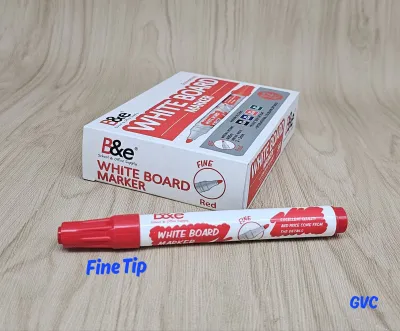
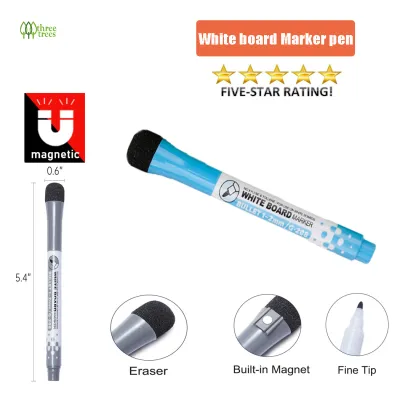
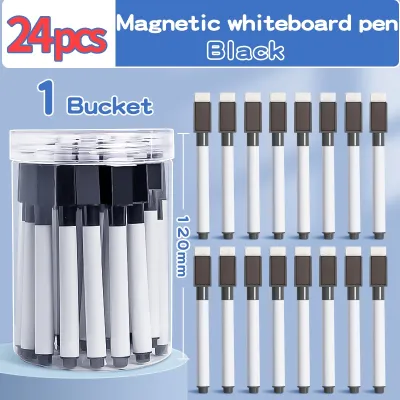
Prices are valid at publication and may change. Please refer to the product page for the latest price.
Tip materials generally fall into two categories: polyester and acrylic. Polyester tips are softer and offer a smoother, more cushioned glide across the whiteboard surface, making them comfortable for quick handwriting. However, they are more prone to fraying over time, especially if used on older, textured boards. Acrylic tips are harder and more rigid, which helps them retain their sharp, fine point even under heavy writing pressure, though they can feel slightly scratchy on exceptionally slick surfaces.
Ink formulation is another critical factor, typically divided into solvent-based and water-based options. Solvent-based inks, which usually employ an alcohol base, dry almost instantly upon contact with the board. This rapid drying is highly advantageous in the humid tropical climate of the Philippines, where excess moisture in the air can otherwise delay drying times and lead to accidental smudging. Water-based inks are virtually odorless and gentler for sensitive users, but they may take slightly longer to dry and can occasionally bead up on high-gloss surfaces.
The shape of the tip also dictates writing precision. Fine bullet tips provide a consistent line width regardless of the angle at which you hold the marker, making them the standard choice for general note-taking. Needle or plastic-point tips offer the ultimate precision for intricate drawings, mathematical formulas, and tight grid lines, but they require a delicate hand to prevent bending or damaging the fine point during fast-paced writing sessions.
Essential Features to Check Before Purchasing
Before buying a set of fine-tip markers, it is important to evaluate their specifications against your actual writing environment. Not all markers labeled “fine” produce the same line width, and physical comfort can vary widely between different barrel designs.

Always check the packaging for explicit line width specifications, which typically range from 0.5 mm to 2.0 mm for fine-tip models. Be aware of whether the manufacturer is listing the physical size of the felt tip or the actual line width produced on the board. A soft polyester tip may compress under pressure, creating a line that is noticeably wider than the physical tip measurement indicates.
Drying time and smudge resistance are crucial considerations, particularly for left-handed writers who risk dragging their hand across freshly written text. In humid conditions, look for quick-drying formulas that set within one to two seconds of application. Testing a marker on a small corner of your whiteboard is the most reliable way to verify its drying speed and ensure it erases cleanly without leaving a stubborn haze.
Visibility and contrast are equally important because fine lines have less surface area and can easily become hard to read from a distance. High-quality markers use dense, concentrated pigments to ensure that even thin lines remain sharp and legible. Standard colors like black, dark blue, and deep red offer the best contrast against white backgrounds, whereas light green or pastel shades can easily wash out under bright fluorescent office lights or LED panels.
Ergonomics and barrel design play a significant role in comfort during extended writing sessions. Slim, pen-like barrels are easy to store and feel natural in the hand, making them ideal for quick annotations and personal planners. However, if you are teaching a long class or leading a lengthy brainstorming session, a slightly thicker barrel with a textured grip can reduce hand fatigue and provide better control over your writing.
Matching Tip Sizes to Your Whiteboard Tasks
Selecting the right tip size is a matter of matching the marker’s output to the physical dimensions of your whiteboard and the layout of your room. Using a tip that is too fine can make your writing invisible to your audience, while a tip that is too thick will clutter a small board.
Ultra-fine tips, generally classified as under 1.0 mm, are specialized tools designed for high-density writing. They are perfect for compact personal planners, small magnetic refrigerator boards, and highly detailed technical diagrams where space is at a premium. These micro-tips allow you to write small, neat characters that remain perfectly legible up close without merging into illegible blobs.
Standard fine tips, ranging from 1.0 mm to 2.0 mm, serve as the versatile workhorse for daily office meetings, tutoring sessions, and medium-sized whiteboards. They offer a balanced compromise, providing enough precision for neat handwriting and detailed flowcharts while remaining thick enough to be read comfortably from a short distance.
Viewing distance is the ultimate deciding factor when choosing a tip size for shared spaces. An ultra-fine line under 1.0 mm is virtually impossible to read from more than two meters away, making it unsuitable for classrooms or conference rooms. If you are writing on a board at the front of a room, you must use a line width of at least 1.5 mm to 2.0 mm to ensure that participants sitting in the back rows can follow along without straining their eyes.
Building a Reliable Shortlist of Available Markers
When shopping for fine-tip whiteboard markers in the Philippines, focusing on reputable stationery brands and verifying product certifications will help you avoid low-quality options that dry out quickly or ruin your boards.
Look for established stationery manufacturers known for consistent ink flow and durable felt tips. Reputable brands invest in high-quality reservoir systems that prevent the ink from pooling or drying out prematurely. While generic markers may seem appealing due to their lower initial cost, they often suffer from inconsistent ink delivery and fragile tips that fray after only a few uses.
Safety certifications are an essential check, especially if the markers will be used by children or in enclosed spaces. Look for non-toxic labels, such as the AP (Approved Product) seal, which certifies that the product has been evaluated by a toxicologist and contains no materials in sufficient quantities to be toxic or injurious. Low-odor formulations are highly recommended for air-conditioned offices, small study rooms, or classrooms with limited natural ventilation.
Consider the cost-efficiency of multi-packs versus individual purchases. While a multi-pack containing black, blue, red, and green offers excellent value per piece in Philippine Pesos (₱), buying individual black or blue markers is often more practical if you primarily write text and rarely use accent colors. This prevents you from accumulating unused colored markers while constantly running out of your primary writing colors.
To ensure you are purchasing authentic stock, source your markers from established national bookstores, dedicated office supply chains, or authorized online storefronts on major ecommerce platforms. When purchasing online, pay close attention to customer reviews regarding packaging quality, as poorly protected markers can lose their caps during transit, resulting in dried-out, unusable products upon arrival.
Extending the Lifespan of Your Fine-Tip Markers
Proper care and maintenance can significantly extend the life of your fine-tip whiteboard markers, saving you money and ensuring they are always ready to write when you need them.
The most common cause of premature marker failure is improper capping. Always press the cap firmly onto the barrel until you hear a distinct, audible click, which confirms that the airtight seal has engaged. Leaving a fine-tip marker uncapped for even a few minutes can cause the solvent in the tip to evaporate, leading to a clogged felt point and poor ink flow.
Storage orientation is another critical factor that affects ink consistency. Store your whiteboard markers horizontally whenever possible. Storing them vertically can cause the ink pigments to settle either at the bottom of the reservoir (resulting in faint, watery lines) or pool entirely at the tip (which can cause leaking, oversaturation, and messy splatters). Horizontal storage keeps the ink mixture perfectly balanced throughout the reservoir.
Finally, keeping your whiteboard surface clean is essential for protecting the delicate felt tips. Dust, skin oils, and leftover residue from old ink can accumulate on the board and clog the fine pores of a polyester or acrylic tip, permanently ruining its writing capability. Clean your board regularly with a dedicated whiteboard cleaning spray or a damp microfiber cloth, and always allow the surface to dry completely before writing on it again.
Frequently Asked Questions (FAQ)
Can I use fine-tip whiteboard markers on glass surfaces?
Yes, standard fine-tip whiteboard markers can be used on glass boards, but the visual results may vary depending on the ink formulation. Because glass is completely non-porous and exceptionally smooth, some low-pigment inks may bead up, run, or appear faint against the reflective background. For optimal visibility on glass surfaces, look for markers specifically formulated with high-opacity inks, or stick to dark, high-contrast colors like black and deep blue.
How do I revive a dried-out fine-tip whiteboard marker?
If a marker has dried out because the cap was left off, you can sometimes revive it by capping it tightly and storing it tip-down for several hours to draw the remaining solvent back to the point. For alcohol-based inks, lightly moistening the very tip with a single drop of isopropyl alcohol can sometimes re-solubilize the dried pigment. However, if the internal ink reservoir is completely depleted, these troubleshooting steps will not work, and replacing the marker is the only viable option.
Community discussion
Share your experience or ask a question. Comments are reviewed before publication.