
Finding the perfect transparent name sticker for your journal or planner in the Philippines requires a careful look at how different materials interact with local climate conditions and various paper types. Whether you are setting up a weekly layout, labeling section dividers, or personalizing your cover, the right sticker should blend seamlessly into the page. A high-quality transparent sticker mimics a direct-print look, keeping your layouts clean, professional, and free of distracting white borders.
In the local creative community, custom name stickers and printable transparent sheets have become essential tools for bullet journaling. However, high relative humidity and varying paper qualities can cause issues like ink smudging, edge curling, or paper tearing. Understanding the technical aspects of these adhesive films ensures your hard work remains intact and beautiful for years to come.
What Makes a Good Transparent Name Sticker for Journaling?
Evaluating transparent name stickers starts with understanding the base material. The two most common plastics used for these stickers are Polyethylene Terephthalate (PET) and vinyl. PET is an ultra-thin, highly rigid plastic that offers exceptional clarity, making the sticker borders virtually invisible once applied to smooth journal pages. Because PET is so thin, it prevents the “bulky journal” effect, allowing you to layer multiple stickers on a single page without creating awkward bumps. Vinyl, on the other hand, is slightly thicker and more flexible, making it highly durable and resistant to tearing, though its edges remain slightly more raised on thin paper.
Products mentioned in this guide
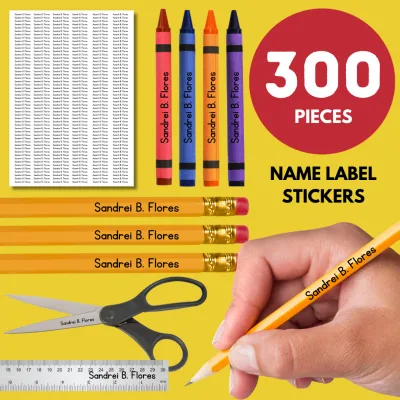
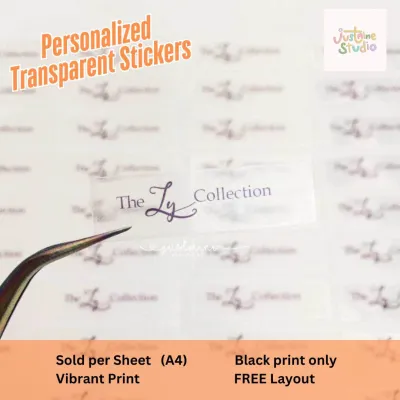
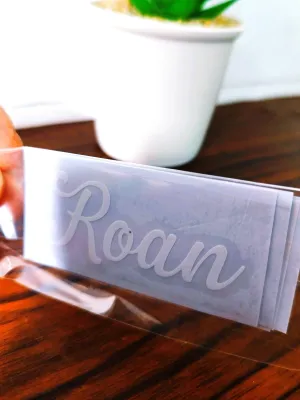
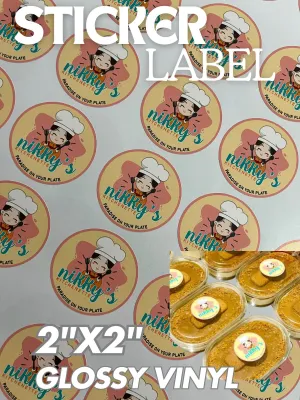
Prices are valid at publication and may change. Please refer to the product page for the latest price.
Adhesive quality is another critical factor, especially when dealing with delicate journaling papers ranging from 52gsm to 160gsm. A premium transparent sticker must balance strong initial tack with clean adhesion. If the adhesive is too aggressive or wet, it can saturate thin paper fibers, causing the page to warp or tear if you attempt to reposition the sticker. Conversely, weak adhesives will fail under the tropical heat and humidity of the Philippines, leading to peeling corners and lifted edges over time. Look for pressure-sensitive acrylic adhesives that cure flat and dry without leaving sticky residue along the borders.
Surface finish determines both the visual aesthetic and the functional compatibility of your stickers. Matte transparent stickers feature a microscopic texture that diffuses light, matching the natural, non-reflective look of uncoated journal paper. This matte coating is highly receptive to hand-written text, allowing you to write over the sticker using gel pens, fine liners, or ballpoint pens without immediate smearing. Glossy transparent stickers offer maximum optical clarity and vibrant color reproduction for printed designs, but their slick surface repels water-based inks, requiring specialized permanent markers or extended drying times if you plan to write on them.
Key Features to Check Before Buying
Before purchasing transparent name stickers, you must match their dimensions to your specific journal layout. Most popular journals and planners in the local market utilize a standard 5mm dot grid or grid pattern. If you are using name stickers for headers, index labels, or daily trackers, check the product specifications for exact millimeter measurements. A sticker height of 1.0 cm to 1.5 cm fits perfectly within two grid rows, leaving ample white space around your text. Pre-cut or kiss-cut sticker sheets are highly convenient for quick setups, while full-sheet printable transparent papers offer the flexibility to cut custom shapes using a craft knife or scissors.

Printer compatibility is a non-negotiable specification that can save you from costly hardware damage. Transparent sticker sheets are engineered specifically for either inkjet or laser printers, and they are rarely interchangeable. Inkjet-compatible transparent sheets feature a specialized, chemically treated topcoat designed to absorb and lock in liquid dye or pigment inks. Laser-compatible sheets are made of heat-stable polyester designed to withstand the high temperatures of a laser printer’s fuser drum without melting. Running an inkjet-specific sheet through a laser printer can melt the plastic onto the internal components, while printing on a laser sheet with an inkjet printer will result in wet ink pooling and running off the surface.
Water and smudge resistance are vital for journals that travel in your bag or sit on busy desks. High humidity levels can significantly prolong ink drying times, making printed stickers vulnerable to smudging during handling. When browsing product listings, look for terms like “water-resistant,” “quick-dry,” or “smudge-proof.” To verify these claims under local conditions, always perform a simple test: print a small sample sheet, allow it to cure completely, and gently rub the surface with a dry finger, followed by a lightly damp cotton swab. This trial helps you determine the actual durability of the ink-and-sticker combination before applying it to your primary journal.
Where to Source Transparent Stickers Locally and Online
Sourcing transparent name stickers in the Philippines involves choosing between physical brick-and-mortar stationery shops and online marketplaces. Local craft stores and specialty stationery boutiques in major metropolitan areas allow you to inspect the material thickness, clarity, and sheet flatness in person before spending your money. Prices in physical stores generally range from ₱80 to ₱350 per pack, depending on the sheet count and brand reputation. While physical shopping offers immediate availability, the selection of specialized transparent finishes or custom name printing services can be limited compared to digital platforms.
Online marketplaces and local e-commerce platforms offer an extensive variety of imported brands, custom printing services, and bulk options. When shopping online, navigating listings requires a discerning eye to avoid low-quality knockoffs that peel or yellow over time. Always scroll past promotional graphics to read verified customer reviews, paying close attention to user-uploaded photos of the actual stickers on paper. Look for feedback specifically mentioning adhesive performance in warm climates, ink drying speeds, and whether the backing paper peels away cleanly without tearing the transparent film.
Logistics and storage also play a role in maintaining the quality of your journaling supplies. During the rainy season, high transit humidity can affect paper backings, causing sticker sheets to curl before you even print on them. Opt for sellers who package their sticker sheets with rigid cardboard backing and moisture-sealed plastic sleeves. If you plan to buy in bulk to save on shipping costs, ensure you have a proper storage solution at home. Keeping your unused transparent sheets flat inside a sealed container with a silica gel packet will preserve the adhesive and surface coating for future use.
Tips for Printing and Applying Transparent Stickers
Achieving professional-looking results with printable transparent stickers requires adjusting your printer settings to accommodate the plastic media. Standard paper settings feed sheets through the printer too quickly and deposit too much ink, leading to pooling, bleeding, and long drying times. Access your printer’s advanced settings menu and select media types such as “Photo Paper,” “Glossy Paper,” or “Label.” These settings instruct the printer to slow down the feeding mechanism and apply ink in precise, controlled layers, which promotes faster drying and sharper text resolution.
Once printing is complete, patience is key to preventing ruined layouts. In tropical climates, even “quick-dry” coatings can benefit from extended curing times. Leave your printed transparent sheets completely flat in a dust-free, well-ventilated room for at least 24 to 48 hours before cutting or handling them. Avoid stacking printed sheets directly on top of one another during this curing phase, as the ink from one sheet can transfer to the backing of the sheet above it. If you are using a cutting machine, perform a test cut on a scrap piece first to ensure the blade depth is calibrated to cut only through the transparent film and not the backing paper.
Applying the sticker to your journal page requires a steady hand and a clean technique to avoid trapping unsightly air bubbles or dust particles. Before peeling the sticker, wash and dry your hands thoroughly to remove natural skin oils, which can leave permanent fingerprints on the adhesive side. Use fine-tipped tweezers to lift the sticker from its backing sheet, holding it by the very edge. Position the sticker over your journal page, lower one edge first, and slowly press it down using a clean finger, a soft cloth, or a plastic scraping tool. Work in a single direction—from the adhered edge to the free edge—to push out any trapped air, ensuring a perfectly flat, bubble-free finish on your page.
Frequently Asked Questions (FAQ)
Can I use transparent stickers on dark or black journal pages?
Standard transparent name stickers do not perform well on dark or black journal pages because standard printer inks are translucent. When applied to a dark background, the dark paper absorbs the light passing through the sticker, making the printed text or design virtually invisible. To achieve visible designs on dark paper, you must use specialized printing methods such as white-toner laser printing, which deposits an opaque white base layer beneath the colors. Alternatively, you can look for opaque pastel sticker sheets, or use light-colored gel pens and metallic markers directly on the dark paper instead of relying on transparent films.
How do I prevent ink from smudging on transparent sticker paper?
Preventing ink smudging requires matching your printer type to the correct sticker paper coating. If you are using an inkjet printer, ensure the packaging explicitly states it is compatible with inkjet technology, and try using pigment-based inks rather than dye-based inks, as pigment inks offer superior water and smudge resistance. Always allow the printed sheets to cure flat in a dry environment for 24 to 48 hours. For ultimate protection against moisture and handling, you can apply a very light, even coat of clear acrylic sealant spray over the printed sheet from a distance of 30 centimeters, allowing it to dry completely before cutting and applying the stickers.

Community discussion
Share your experience or ask a question. Comments are reviewed before publication.