
A wooden desk calendar serves as both a functional planning tool and a tactile centerpiece for your workspace. Choosing the right one requires balancing your daily organizational habits with the physical realities of your desk setup. In the Philippines, where high humidity and warm temperatures can affect natural materials, selecting a calendar with the proper wood finish and structural design is essential for long-term durability. Whether you need a highly detailed daily tracker or a simple visual anchor to complement your digital tools, the ideal wooden calendar should integrate seamlessly into your workflow without cluttering your desk.
Identifying Your Desk Planning Needs and Space Constraints
To choose a wooden calendar that genuinely improves your productivity, you must first analyze how you interact with your schedule throughout the day. Some professionals require a highly detailed, hour-by-hour breakdown of their tasks, while others simply need a quick, high-level reference to check the day of the week. If your planning style relies heavily on digital tools like Google Calendar or Notion, a physical wooden calendar serves best as a static visual anchor—a beautiful, tactile object that keeps you grounded in the present date without requiring you to open another tab.
Conversely, if you prefer analog planning, you must decide whether you want to write directly on the calendar or use it alongside a separate notebook. A wooden calendar that features writable paper inserts allows you to jot down quick reminders, daily habits, or project deadlines. If you already use a dedicated planner or bullet journal, a minimalist wooden block calendar that merely displays the current date and month is often sufficient, preventing redundant tracking and keeping your desk setup clean.
Products mentioned in this guide
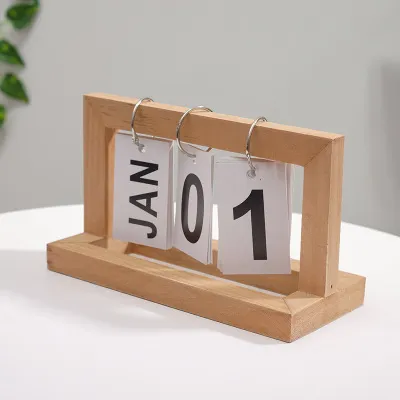
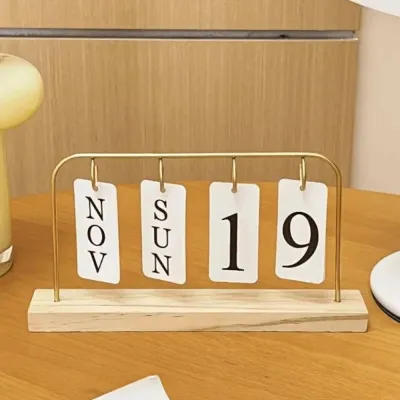
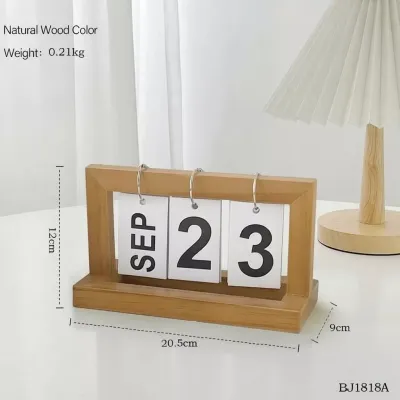
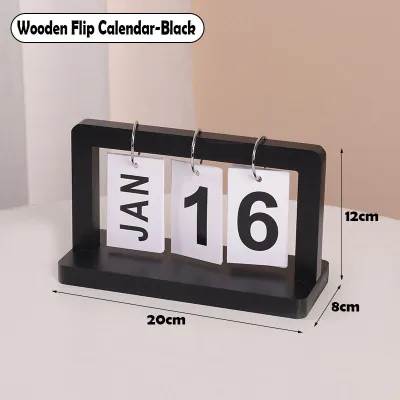
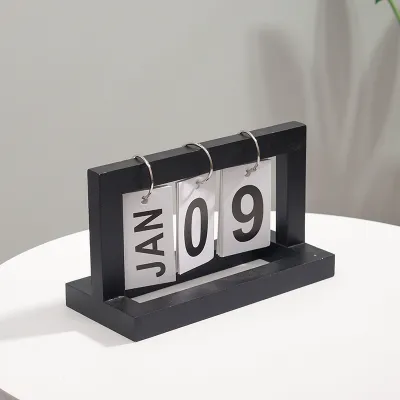
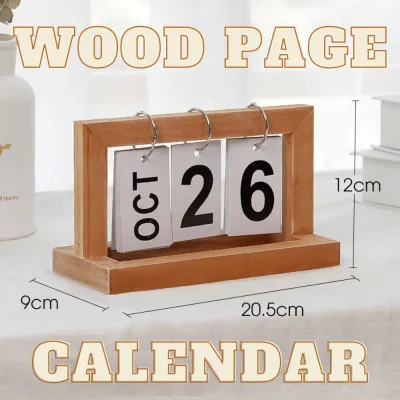
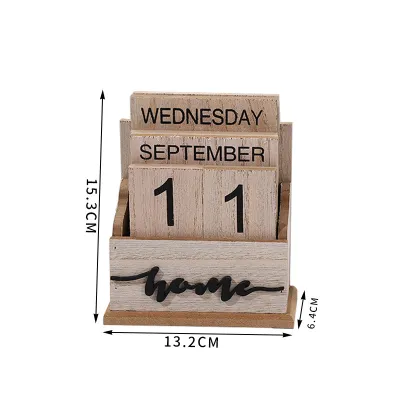
Prices are valid at publication and may change. Please refer to the product page for the latest price.
Physical space is the next critical constraint to evaluate. Before browsing online marketplaces, clear your desk and identify the exact zone where the calendar will sit. Consider the placement of your primary tools, such as your monitor, mechanical keyboard, mousepad, and laptop stand. A calendar that is too large will crowd your workspace, forcing you to push your keyboard into an uncomfortable typing position or block your view of secondary screens.
Take actual measurements of your available desk surface. If you have a compact desk, perhaps a small study table in a shared room or a tight corporate cubicle, look for a calendar with a footprint of less than 15 centimeters in width. For larger executive desks or dedicated home office setups with spacious desk mats, you can comfortably accommodate wider wooden board calendars or easel designs that double as decorative statement pieces.
Comparing Types of Wood Calendars for Different Workflows
Wooden calendars generally fall into three structural categories, each catering to a distinct organizational style and aesthetic preference. Understanding these designs allows you to match the physical format of the calendar to your daily workflow.

The first major type is the perpetual block calendar. These classic designs consist of a wooden frame housing individual wooden cubes painted with numbers, alongside rectangular blocks displaying the months. Because you manually rotate the blocks each morning, these calendars never expire, making them an incredibly sustainable, one-time investment. This manual adjustment can become a mindful morning ritual, helping you mentally transition into your workday. However, because they do not feature grids or writable surfaces, they are strictly visual references and cannot hold task lists or appointment details.
The second type is the wooden board calendar with paper inserts. This hybrid design features a solid wooden base—often made from durable hardwoods like acacia or beech—equipped with metal rings, clips, or slots to hold printed paper calendar sheets. This format gives you the best of both worlds: the warm, premium aesthetic of natural wood combined with the practical utility of writable paper. You can easily write down meetings, color-code tasks, or cross off completed days. At the end of the year, you simply replace the paper inserts while keeping the high-quality wooden base, reducing waste compared to fully disposable paper planners.
The third category involves the structural orientation: standing easel designs versus flat lay designs. Standing easels hold the calendar at an upright angle, typically between 60 and 80 degrees. This vertical orientation maximizes visibility, allowing you to check dates with a quick glance without tilting your head. It also occupies very little desk depth, making it ideal for narrow workspaces. Flat lay designs, on the other hand, sit horizontally on the desk surface, resembling a small wooden tray. While they take up more surface area, they provide a much more stable surface for writing, as the calendar will not wobble or slide backward when you press down with a pen.
Essential Specifications to Check Before Buying
When shopping for a wooden calendar, the beauty of the product can easily distract from its practical limitations. To ensure your chosen calendar integrates smoothly with your existing stationery and workspace, you must verify several physical and functional specifications.
First, if you opt for a calendar that uses paper inserts, you must check the paper compatibility. Look closely at the paper weight, which is measured in grams per square meter (gsm). For writing with gel pens, rollerballs, or fountain pens—which are highly popular among local stationery enthusiasts—aim for paper that is at least 100 gsm, though 120 gsm or higher is preferred to prevent ink bleeding and ghosting. Additionally, examine the binding mechanism. Standard ring binders or disc-bound systems make it easy to find third-party paper refills, whereas proprietary slot designs may lock you into buying expensive refills from the original manufacturer.
Second, pay close attention to the wood finish and texture. A high-quality wooden desk accessory should be sanded smooth to prevent splinters and treated with a protective sealant. Unfinished or raw wood is highly susceptible to absorbing oils from your hands, ink spills, and atmospheric moisture, which can lead to staining and warping. A smooth, matte varnish or lacquer finish protects the wood while preserving its natural grain. If you plan to use sticky notes on your calendar, a sealed, smooth surface is essential; sticky notes will quickly peel off from rough, unpolished, or heavily textured wood.
Finally, double-check the exact dimensions of the calendar, including its height, width, and depth. Do not rely solely on product photos, which are often shot with macro lenses or edited to make the item appear larger or smaller than it actually is. Compare the manufacturer’s measurements against the desk space you measured earlier. If you use a monitor shelf or riser, ensure the height of a standing easel calendar allows it to fit underneath the shelf without blocking your screen or hitting the bottom of the monitor.
Sourcing and Verifying Products on Online Marketplaces
Finding a high-quality wooden calendar on online marketplaces requires a discerning eye, as listings can sometimes be misleading. To avoid low-quality mass-produced items that do not live up to their photos, you must adopt a systematic verification process.
Start by reading the product description with a critical eye. Look for explicit disclosures regarding the type of wood used. Premium options will specify solid hardwoods such as acacia, rubberwood, beech, or walnut. Be cautious of listings that use vague terms like “wooden style” or “wood grain finish,” which often indicate that the product is made of medium-density fiberboard (MDF) or plastic covered in a thin vinyl sticker. While MDF is budget-friendly, it lacks the weight, durability, and unique grain patterns of genuine solid wood, and it is highly prone to swelling if exposed to moisture.
Next, bypass the promotional seller images and dive straight into the user reviews. Look specifically for reviews that include real-world photos and videos taken under natural lighting. These images reveal the true color of the wood, the consistency of the grain, and the quality of the print. Check if the printed numbers on perpetual blocks are aligned properly or if they are blurry, chipped, or off-center. User photos also provide a realistic sense of scale, helping you visualize how the calendar looks on an actual desk rather than in a stylized studio setting.
Additionally, evaluate the seller’s overall rating and return policies, particularly if you are purchasing a handcrafted or custom-engraved wooden item. Artisanal stationery makers often take great pride in their work, but handmade items can have slight variations. Ensure the seller has a reliable track record of responsive customer service and clear policies for replacing items that arrive damaged, warped, or with manufacturing defects. A reputable seller will be transparent about their sourcing and production methods, often answering customer queries directly on the product page.
Basic Care and Maintenance for Wooden Desk Accessories
Natural wood is a living material that responds to its environment. To ensure your wooden calendar remains a beautiful and functional part of your desk setup for years to come, you must establish a simple, low-risk maintenance routine.
Cleaning your wooden calendar should be a gentle process. For routine maintenance, a dry microfiber cloth is usually sufficient to remove dust and lint. If the wood becomes soiled or sticky, lightly dampen the microfiber cloth with plain water, wring it out thoroughly so it is barely damp, and gently wipe the surface. Avoid using harsh chemical household cleaners, alcohol-based sprays, or abrasive scrubbing pads, as these can strip away the protective varnish, leaving the raw wood exposed to damage. Always dry the wood immediately with a clean, dry cloth to prevent water spots.
Environmental placement is crucial, especially in tropical climates characterized by high humidity and intense sunlight. Position your wooden calendar away from direct sunlight streaming through windows, as prolonged exposure to ultraviolet rays can fade the wood’s natural color, dry out the fibers, and cause cracking. Similarly, avoid placing the calendar directly in the path of air conditioning vents or near open windows during the rainy season. Extreme fluctuations in temperature and humidity can cause the wood to expand and contract rapidly, leading to warping or the development of mold.
Finally, handle any moving parts with care. If your calendar features sliding wooden panels, rotating blocks, or metal rings, operate them gently without applying excessive force. Over time, rough handling can wear down the wooden tracks or loosen the binding mechanisms. If a wooden drawer or sliding panel becomes tight or difficult to move due to humidity-induced swelling, applying a tiny amount of natural beeswax or candle wax to the contact points can restore smooth operation without damaging the wood.
Frequently Asked Questions (FAQ)
Can I use dry-erase markers directly on the wood surface?
No, you should never use dry-erase markers directly on raw or standard varnished wood. Raw wood is highly porous and will instantly absorb the liquid ink, leaving permanent stains that cannot be wiped away. Even if the wood has a standard clear coat or varnish, dry-erase ink can seep into microscopic cracks in the finish. You should only use dry-erase markers on the calendar if the product description explicitly states that it features a specialized dry-erase whiteboard coating or a glass overlay designed specifically for dry-erase pens. If you want to write temporary notes on a standard wooden calendar, use sticky notes or paper inserts instead.
How do I know if a wooden calendar accepts standard paper refills?
To determine if a wooden calendar accepts standard paper refills, you must examine its binding mechanism and measure its dimensions. If the calendar uses a standard multi-ring binder mechanism (such as a 3-ring, 6-ring, or disc-bound system), measure the distance between the rings (center to center) and compare it to standard paper sizes like A5, A6, or personal size. If the calendar uses a simple metal clip or a wooden slot, you can easily cut any high-quality paper to the correct width and slide it in. Always check the manufacturer’s documentation or product listing for the exact refill dimensions and punch patterns before purchasing third-party paper inserts.
Community discussion
Share your experience or ask a question. Comments are reviewed before publication.