
Selecting the ideal 2026 wall calendar requires balancing visual appeal with daily utility. A well-chosen calendar serves as a central hub for scheduling, keeping households aligned and professional projects on track. To make the right choice, you must look beyond attractive cover designs and evaluate physical dimensions, paper specifications, and layout structures that match your specific writing tools and environmental conditions.
Key Features to Evaluate Before Buying a 2026 Wall Calendar
Before committing to a specific design, establishing a clear checklist of your physical and functional requirements will save you from purchasing an impractical planner. The first physical attribute to analyze is the overall footprint of the calendar. You must measure the designated wall space in your home or office, keeping in mind that many calendars double in height when hung open. A calendar that is too large can overwhelm a compact workspace, while a tiny option will be difficult to read from a distance.
Next, evaluate the grid size and the actual writing area provided for each day. If you have large handwriting or need to log multiple appointments, family activities, or project deadlines, standard small-grid designs will quickly become illegible. Look for daily blocks that offer clean, unlined spaces or subtle dot grids that help guide your pen without cluttering the page. The dimensions of these blocks should comfortably accommodate your daily planning density.
Products mentioned in this guide
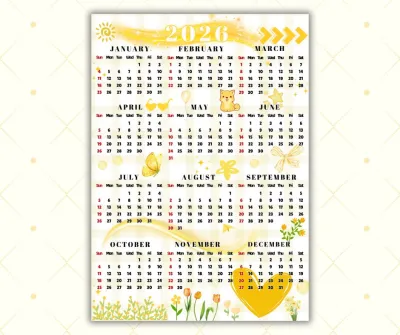
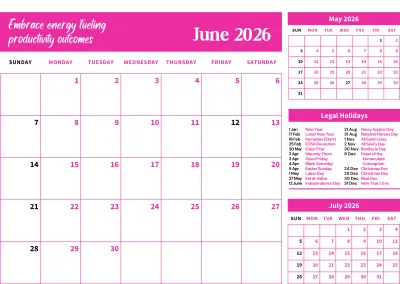
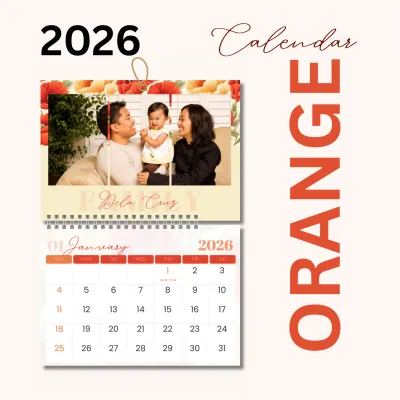
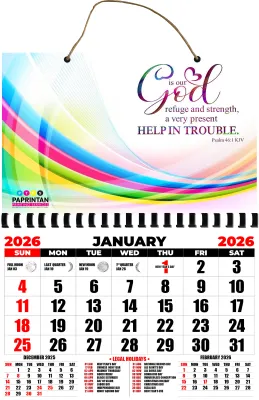


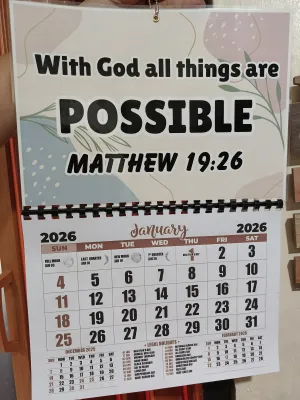
Prices are valid at publication and may change. Please refer to the product page for the latest price.
Another critical factor is the inclusion of localized calendar details. For users in the Philippines, having a calendar that pre-prints national holidays, long weekends, and significant observances is highly beneficial for planning vacations, school activities, and corporate schedules. Additionally, some users require specialized markers such as moon phases for agricultural or personal planning, or academic term indicators if managing school-aged children.
Finally, pay close attention to the binding type, as this directly influences how flat the calendar hangs against your wall. Wire-O and spiral bindings are highly recommended because they allow the pages to turn smoothly and lie completely flat without tension. Top-bound glue bindings or stapled booklets often require manual creasing to prevent the bottom edges from flaring outward, which can lead to tearing over time.
Matching Calendar Types to Your Space and Planning Style
The environment where you hang your calendar dictates the ideal format and design. A busy family kitchen demands high visibility and collaborative spaces, whereas a corporate office or a personal study benefits from clean, distraction-free layouts. Understanding these spatial dynamics helps you narrow down the vast array of options available for 2026.

Large Grid and Family Planners for Busy Households
Multi-person households require a central planning tool that everyone can read at a glance. Family planners often feature column-based layouts where each family member gets their own dedicated vertical column for the day. This structure prevents overlapping schedules from turning into illegible clutter.
Visibility is crucial for shared spaces like hallways or kitchens. Look for calendars with high-contrast typography, bold dates, and clean grids that can be easily read from several feet away. This ensures that children and adults alike can check the day’s schedule without needing to stand directly in front of the wall.
Many family-centric designs incorporate extra functional zones. Look for margins dedicated to weekly meal planning, chore tracking, or shared grocery lists. These additions transform a simple date tracker into an active household management board.
Minimalist and Professional Designs for Office Environments
For corporate offices, co-working spaces, or dedicated home offices, a minimalist aesthetic is often preferred. These calendars feature clean sans-serif typography, neutral color palettes, and generous white space. They blend seamlessly into professional environments without creating visual noise.
Space is often at a premium in office cubicles or above compact desks. Medium-sized or compact wall calendars provide the necessary reference points without dominating the wall. A landscape orientation often works best above a computer monitor, keeping your schedule within your line of sight.
Professional planning often requires looking beyond the current month. Many office-focused wall calendars include small preview grids of the previous and upcoming months at the bottom of each page. Some specialized designs offer quarterly or half-year overviews, which are invaluable for tracking project milestones and business quarters.
Academic and Project-Tracking Calendars for Students and Teams
Students, educators, and project managers often operate on schedules that do not align with the standard calendar year. Academic wall calendars typically cover 18 months, starting in the middle of 2025 and running through the entirety of 2026. This extended coverage ensures that entire school semesters or long-term project phases are captured on a single continuous timeline.
For detailed task management, some specialized wall planners offer bi-weekly or highly detailed weekly spreads. These are ideal for tracking daily assignments, exam schedules, or sprint deadlines. They bridge the gap between a high-level monthly overview and a detailed personal planner.
In collaborative team environments, plans change rapidly. Laminated or dry-erase wall calendars allow teams to update project timelines, shift deadlines, and reassign tasks instantly. These reusable surfaces are excellent for agile project tracking, brainstorming sessions, and shared office spaces where flexibility is key.
Paper Quality, Binding, and Durability Considerations
The physical build of a wall calendar determines whether it will survive 12 months of daily use. Paper weight, measured in grams per square meter (GSM), is the primary indicator of quality. Standard copy paper is around 70 to 80 GSM, which is highly prone to ink bleed-through and ghosting. For a wall calendar, look for paper that is at least 120 GSM, and ideally 150 to 200 GSM if you plan to use heavy markers, fountain pens, or dark gel inks.
The paper’s finish significantly impacts how ink behaves on the surface. Matte paper is highly porous, absorbing ink quickly and making it compatible with almost any writing instrument, including standard ballpoint pens, gel pens, and pencils. Glossy paper, while vibrant and excellent for displaying colorful artwork or photography, has a non-porous coating that resists liquid. Writing on glossy surfaces requires specialized quick-drying markers or fine-liners to prevent smudging.
To verify bleed resistance and drying speed on a newly purchased calendar, conduct a quick trial on an inconspicuous area, such as the notes margin or the back of the December page, using your preferred planning pens before writing major events. This simple test prevents ruined pages and ensures your writing remains legible throughout the year.
In the tropical climate of the Philippines, high humidity levels present a unique challenge for paper products. Thin, low-quality paper easily absorbs moisture from the air, leading to unsightly curling, warping, and sagging. To prevent this, prioritize calendars made with thick, heavy-cardstock pages or those featuring a protective laminated coating.
The hanging mechanism must be robust enough to support the calendar’s weight for an entire year. Cheap plastic hangers or thin wire loops can bend or snap under the weight of heavy paper. Look for sturdy steel wire-o bindings with a built-in hanging hook that distributes the weight evenly, ensuring the calendar remains securely anchored to your wall hook or nail.
Where to Buy and What to Verify Before Checkout
When shopping for your 2026 wall calendar, you have several retail avenues to explore. Local bookstores and office supply chains in the Philippines offer the advantage of physical inspection, allowing you to feel the paper texture and verify the binding quality in person. Online marketplaces and specialized stationery e-commerce platforms provide a wider variety of niche designs, international brands, and unique layouts.
Before finalizing your purchase, double-check the exact year and date range printed on the cover. It is surprisingly easy to accidentally purchase a clearance calendar from the previous year or an academic variant that ends mid-way through 2026. Ensure the calendar covers the full 12 months from January to December 2026.
If buying online, pay close attention to customer reviews and user-submitted photos. Product mockups can sometimes make a calendar look larger or more vibrant than it is in reality. Reading user feedback helps you verify the true-to-life color accuracy, paper thickness, and overall build quality before committing.
Establish a realistic budget based on your requirements. Basic, functional wall calendars can be found for around ₱150 to ₱300, offering standard layouts and decent paper. If you require premium features like ultra-thick 200 GSM paper, specialized layouts, artistic illustrations, or laminated dry-erase surfaces, expect to invest between ₱500 and ₱1,200.
Frequently Asked Questions (FAQ)
How do I prevent my wall calendar from curling at the bottom?
To prevent your calendar pages from curling due to humidity, ensure it hangs completely flat against the wall. You can apply a small piece of non-damaging adhesive putty or a low-tack double-sided tape to the bottom corners of the current month’s page. Avoid hanging your calendar directly beneath or opposite air conditioning units, open windows, or high-humidity zones like kitchens and bathrooms, as rapid temperature and moisture changes accelerate paper warping.
Can I use standard pens on glossy wall calendars without smudging?
Standard ballpoint pens can work on glossy paper, but they require firm pressure and may leave faint lines. Gel pens and liquid ink rollerballs are highly prone to smudging on glossy surfaces because the ink sits on top of the non-porous coating instead of absorbing. If your calendar has a glossy finish, use permanent fine-tip markers, quick-dry pigment liners, or specialized overhead projector pens, and allow the ink to dry completely for a few seconds before touching the page.
What is the difference between a standard and a Julian wall calendar?
A standard wall calendar uses the Gregorian system, organizing the year into twelve months with familiar weekly grids from Sunday to Saturday. A Julian wall calendar, often used in logistics, shipping, and manufacturing, displays the continuous day of the year from 1 to 365 (or 366 in a leap year). For example, February 1st is represented as day 32. Unless your daily work specifically requires tracking continuous days for supply chain or scheduling calculations, a standard monthly grid is much more practical for general home and office use.
Community discussion
Share your experience or ask a question. Comments are reviewed before publication.