
Finding the perfect A4 clearbook capacity is a balancing act between your immediate storage volume, how often you travel with your files, and the physical space you have available. If you choose a book with too few sleeves, you will quickly run out of space and find yourself stuffing multiple sheets into a single pocket, which stretches the plastic and risks tearing. Conversely, choosing a massive 100-pocket book for a light project makes your bag unnecessarily heavy and leaves the plastic covers prone to bending and warping under their own empty weight. To make the right choice, you must evaluate your daily routine, the nature of your documents, and how you plan to store the book.
Assessing Your Document Volume and Storage Needs
To determine the ideal sleeve count, start by sorting your paperwork into active files and archival documents. Active files are those you handle regularly, such as current university course materials, ongoing project briefs, or active client contracts. Archival documents, on the other hand, are items you rarely touch but must keep safe, like birth certificates, land titles, tax receipts, or completed academic transcripts. Active files benefit from smaller, highly portable clearbooks, while archival files are better suited for high-capacity, stationary storage.
Next, decide how you want to display your documents. If you prefer to view your papers single-sided, each sheet of paper will require its own individual sleeve. If you choose double-sided storage—placing two sheets back-to-back in a single sleeve—you can effectively double your storage capacity, meaning a 40-sleeve clearbook can hold up to 80 pages. However, keep in mind that double-sided storage makes the book thicker and heavier, and it may make retrieving a single sheet slightly more cumbersome.
Products mentioned in this guide
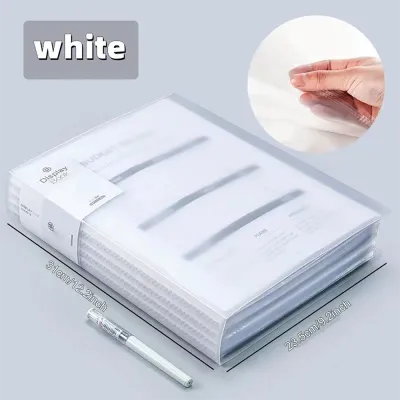
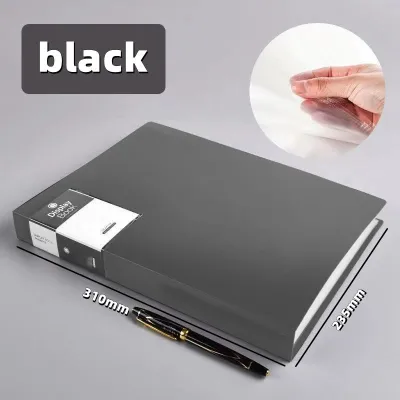
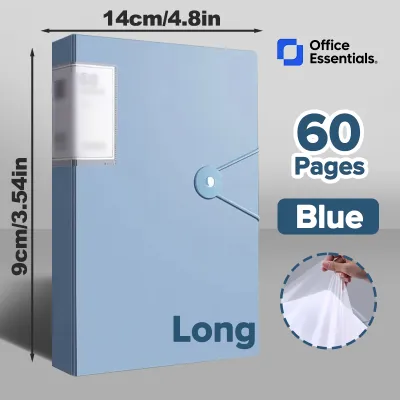
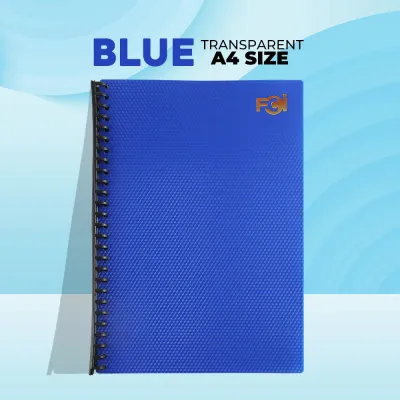
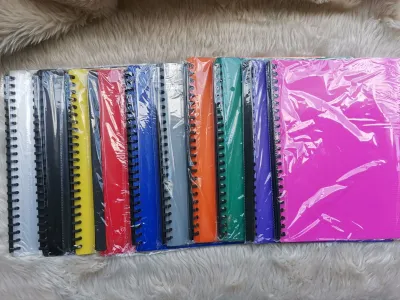
![Clear Book Folder [A4/FC Sizes]](https://img.lazcdn.com/g/p/5056a47c77cba4790cd5190dfb69f6d4.jpg_400x400q80.jpg_.webp)
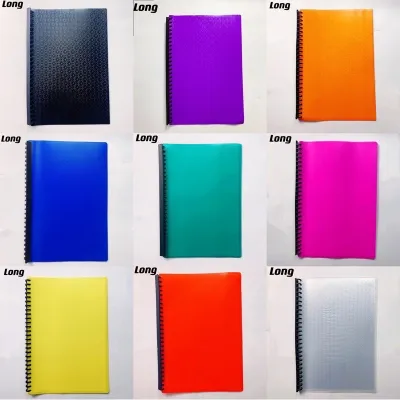
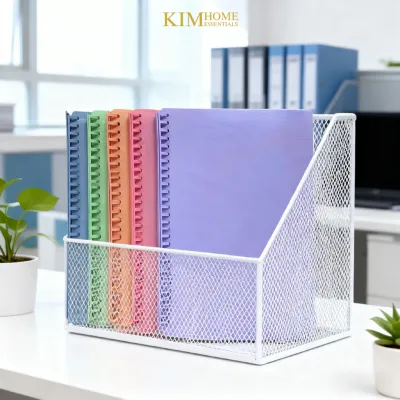
Prices are valid at publication and may change. Please refer to the product page for the latest price.
Finally, always factor in a buffer for future growth. Documents have a habit of accumulating over time, especially during a busy school semester or fiscal quarter. When calculating your required capacity, estimate your document growth over the next three to six months and add a 15% to 20% buffer to your total sleeve count. In humid tropical climates like the Philippines, leaving a little extra breathing room inside each sleeve is also beneficial, as tightly packed papers are more susceptible to moisture retention, which can cause ink transfer or paper sticking over time.
Matching Clearbook Capacities to Common Use Cases
Clearbooks generally fall into three capacity categories, each tailored to specific organizational needs and lifestyles.

Light-duty clearbooks, which typically contain 20 to 40 sleeves, are designed for maximum portability and focused organization. These are ideal for presenting resumes during job interviews, organizing certificates, or keeping a single school subject’s worksheets in order. Because they are thin and lightweight, they slip easily into a backpack or tote bag without adding noticeable bulk, making them perfect for daily commutes on public transit where bag space is limited.
Medium-duty clearbooks offer 60 to 80 sleeves and serve as the workhorses for students and office professionals alike. This capacity is highly suitable for organizing multiple school subjects in one place, storing quarterly financial reports, or keeping track of active business contracts. While they can still be carried in a bag, they are noticeably heavier and thicker than light-duty options, so they are best suited for users who only need to transport them occasionally or who have dedicated desk space.
Heavy-duty clearbooks feature 100 or more sleeves and are built primarily for stationary archiving. These high-capacity binders are excellent for storing full-year academic portfolios, comprehensive medical records, or centralized family documents. Carrying a 100-sleeve clearbook in your bag daily is highly impractical, as the sheer weight can strain your shoulders and the thick spine will consume a significant portion of your bag’s volume. Instead, these books are meant to stand upright on a sturdy shelf or lie flat in a filing cabinet.
When choosing between these capacities, always weigh the trade-off between storage volume and portability. If you must carry your documents through sudden tropical downpours or long commutes, splitting your files into two lighter books is often much more practical than lugging a single, heavy-duty volume.
Key Features to Check Beyond Sleeve Count
While capacity is a primary consideration, several structural and material specifications dictate how well a clearbook will perform in daily use. First, pay close attention to the sleeve opening direction. Top-loading sleeves are the most common and allow for quick document insertion, but side-loading sleeves offer superior security, preventing papers from sliding out if the book is accidentally held upside down or jostled in a bag. Some premium options also feature textured, anti-slip inner surfaces that keep papers firmly in place.
The cover material and spine construction are equally critical. A flimsy, highly flexible cover may seem convenient for stuffing into a crowded bag, but it offers very little protection against bending and creasing. A rigid polypropylene cover is much better at shielding your documents from external impacts and moisture. Additionally, look for a spine design that allows the clearbook to lay completely flat when opened; this makes reading and presenting documents much easier, as you will not have to constantly hold the pages down.
To prevent ink from lifting off printed pages and sticking to the plastic, look for acid-free, copy-safe polypropylene sleeves. You can perform a quick trial with a spare printout to verify that the ink does not transfer to the sleeve after being pressed together in warm, humid conditions. Lastly, consider whether you need a fixed-bound or a refillable clearbook. Fixed-bound models have their sleeves permanently welded to the spine, offering a sleek profile but zero flexibility if you run out of space. Refillable clearbooks utilize a ring-binder or slide-on spine mechanism, allowing you to add, remove, or rearrange sleeves as your storage needs evolve. This modularity can save you money in the long run, as you only need to purchase refill packs rather than an entirely new book.
Common Mistakes When Selecting Clearbook Sizes
One of the most frequent mistakes is blindly purchasing the largest capacity available under the assumption that more space is always better. A massive clearbook that is only partially filled looks untidy, takes up excessive drawer space, and is prone to spine warping because the empty sleeves do not provide structural support. It is far better to match the book’s capacity closely to your actual needs.
Another common error is failing to verify the exact inner dimensions of the sleeves. While a clearbook may be labeled as “A4 size,” manufacturing tolerances vary. Standard A4 paper measures 210 by 297 millimeters. If the inner sleeves are cut too close to these exact dimensions, inserting your papers will be a struggle, and the edges of your documents may protrude, catch on the zipper of your bag, or fold over. Look for clearbooks that specify a slightly generous inner sleeve width to ensure smooth insertion.
Finally, do not overlook the thickness of the documents you plan to store. Clearbook capacity ratings assume you are inserting standard, single sheets of 70 to 80 gsm copy paper. If you intend to store thicker cardstocks, laminated sheets, or stapled multi-page documents, each sleeve will occupy significantly more physical space. In these cases, you must adjust your capacity expectations downward; a 40-sleeve book might only comfortably hold 20 to 25 thicker items before the spine begins to bulge and resist closing properly.
Frequently Asked Questions (FAQ)
Can I add more sleeves to a standard A4 clearbook if I run out of space?
Whether you can add more sleeves depends entirely on the clearbook’s spine construction. Standard, budget-friendly clearbooks are typically fixed-bound, meaning the plastic pockets are permanently welded to the cover and cannot be expanded. If you want the flexibility to add more pages, you must specifically look for refillable clearbooks. These models feature openable ring mechanisms or sliding spine bars. When buying refills, always check the manufacturer’s specifications for the maximum recommended sleeve capacity to ensure the spine can still close securely without damaging the locking mechanism.
Is it better to use one large clearbook or multiple smaller ones for different subjects?
For most active users, utilizing multiple smaller clearbooks is highly preferable to consolidating everything into a single large book. Carrying one heavy-duty book increases physical strain during daily travel and makes finding specific documents more time-consuming. By using separate, lower-capacity clearbooks (such as 20-sleeve or 40-sleeve options) for different subjects, projects, or clients, you can organize your files more efficiently. You can also color-code the covers to identify the correct book at a glance, and you only need to carry the specific files required for that day’s tasks.
Community discussion
Share your experience or ask a question. Comments are reviewed before publication.