
Selecting the perfect acetate box requires balancing precise physical measurements, material behavior, and aesthetic presentation. Whether you are packaging a custom cake, arranging delicate chocolates, or wrapping handmade soap bars, the right box size ensures your items remain secure and visually striking. In warm, humid climates like the Philippines, choosing the correct dimensions is even more critical; insufficient clearance can cause condensation to build up or lead to delicate frostings and chocolate decorations melting against the plastic walls. By understanding how to measure your products and interpret supplier specifications, you can avoid costly packaging mistakes and deliver a professional, pristine product every time.
Understand How Acetate Box Dimensions Are Measured
When browsing online marketplaces or local packaging suppliers, you will find that acetate boxes are typically listed by their flat-pack dimensions or their fully assembled measurements. It is vital to distinguish between the outer dimensions of the box and its actual usable inner space. The outer dimensions represent the total volume the box occupies on a shelf or in a delivery bag, whereas the inner dimensions dictate the maximum size of the item that can safely fit inside.
Most acetate boxes are shipped flat to save on shipping costs and storage space. Folding, scoring, and locking these flat sheets into their final three-dimensional shapes causes the material to curve slightly at the creases. This process, combined with interlocking tabs, reduces the internal usable space by a few millimeters on each side. Purchasing a box that matches your item’s dimensions exactly will likely result in a tight squeeze that deforms the box.
Products mentioned in this guide
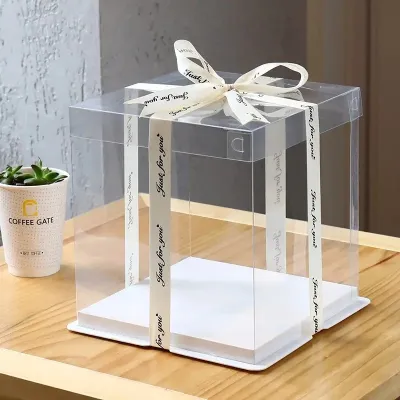
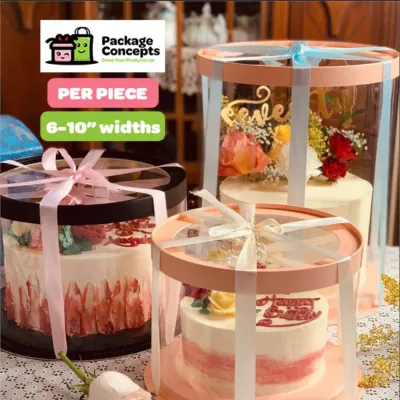
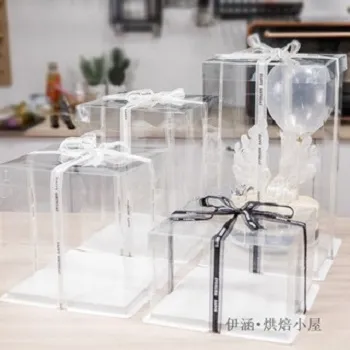
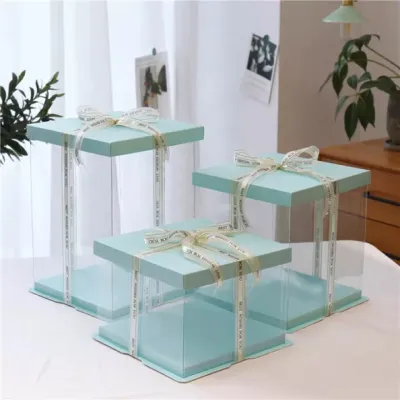
Prices are valid at publication and may change. Please refer to the product page for the latest price.
Standard packaging notation always lists dimensions in a specific order: Length x Width x Height (L x W x H). The length and width refer to the base of the box, while the height represents the vertical depth from the bottom panel to the top lid. When selecting a container for vertical items like tiered cakes or tall candles, the height is the most critical axis to verify. Always confirm with your supplier whether their listed measurements represent the flat sheet size, the external assembled dimensions, or the true internal clearance.
Measure Your Items Accurately Before Buying
To establish the minimum required box capacity, physically measure your products at their widest, longest, and tallest points. Do not rely on estimated dimensions or baking pan sizes. For instance, a cake baked in an 8-inch pan measures larger once you apply frosting, fondant, or decorative borders. Use a rigid metal ruler or a sliding caliper to capture these measurements, as flexible tape measures can sag and give inaccurate readings for small, precise items like macarons or soap bars.

When measuring, pay close attention to any protruding elements that could easily break or smudge. This includes fragile cake toppers, delicate chocolate curls, piped buttercream stars, or decorative ribbons tied around a gift item. If a candle has a long wick or a soap bar features dried botanicals on top, these elements must be included in your total height measurement.
Once you have the absolute maximum dimensions of your item, add a standard clearance margin. For small items like chocolates, macarons, or single soap bars, a clearance of 2 to 3 millimeters on all sides is usually sufficient to prevent friction. For larger, delicate items like frosted cakes, a clearance of at least 10 to 15 millimeters is recommended. This buffer zone ensures that the acetate walls do not touch delicate surfaces during transport.
Match Box Shapes and Sizes to Common Products
Different products require distinct packaging strategies to ensure they look appealing and remain stable during transit. For cakes and pastries, base your box size on the dimensions of the cake board or base pad, not just the cake itself. The acetate box must fit the cake board perfectly to prevent sliding. If you use a 10-inch round cake board, you will need a square acetate box that measures exactly 10 x 10 inches at the base, regardless of the cake’s actual diameter.
For chocolates, truffles, and macarons, the box shape depends on your desired presentation style. To showcase a single-layer display where every piece is visible, choose a shallow, wide rectangular box. This style keeps items flat and prevents them from piling on top of one another, which causes scuffing. If you prefer a stacked arrangement, such as a tower of macarons, select a deeper, vertical box, and use internal plastic trays or dividers to keep the stacks from collapsing.
Small gift items like artisanal soap bars, wax sachets, and candles benefit from snug-fitting cubic or rectangular acetate boxes. Because these items are relatively heavy, too much empty space inside the box will cause them to slide around, potentially scratching the clear plastic or damaging corners. If you package a standard soap bar, look for a box that matches its dimensions closely, leaving just enough room to slide the bar in and out without scraping.
Account for Inserts, Padding, and Assembly Clearance
Many packaging setups require more than just the outer acetate shell to protect and present the product. If you plan to use internal dividers, cupcake inserts, or corrugated base pads, factor their thickness into your final size calculations. A cupcake insert elevates the cupcake slightly off the bottom of the box, reducing the vertical clearance for tall frosting or decorative toppers. Always measure the height of your cupcake from the bottom of the insert rather than the bottom of the box.
External decorations also influence the required box size. If your packaging design involves wrapping a thick satin ribbon, rustic twine, or a decorative paper sleeve around the assembled box, this can compress the acetate slightly. Heavier-gauge acetate sheets offer better structural support and resist this compression, but they also require more force to fold, resulting in slightly larger crease allowances that reduce the internal space.
If you use crinkle paper, shredded tissue, or wood filler to cushion delicate gift items, select a box that is slightly deeper than the item itself. The padding material needs space to loft and cushion the product without pressing it against the top lid. Testing the arrangement with a prototype box is the most reliable way to ensure the padding provides adequate support without overcrowding the display.
Common Sizing Mistakes to Avoid
One of the most frequent errors when purchasing acetate packaging is confusing the diameter of a round cake with the required width of a square box. A round cake board with a 9-inch diameter will not fit into a square box with a 9-inch diagonal measurement; it requires a box that is at least 9 x 9 inches at the base. A square box’s width and length must equal or exceed the diameter of your round base board.
Another common mistake is forgetting to measure the total height of the item after it has been placed on its final display base. A cake measured on the kitchen counter might seem to fit a standard 8-inch tall box, but once it is placed on a thick, corrugated cake board or a footed cake stand, the total height increases. Always take your final measurements with the item fully assembled on its transport base to avoid a crushed topper or a lid that will not close.
Finally, never assume that “standard” size labels are uniform across different online stores or packaging manufacturers. A “small cupcake box” from one supplier may have completely different dimensions and folding tolerances than the same labeled size from another vendor. Always check the exact millimeter or inch measurements in the product specifications, and perform a physical test with a single sample before committing to a bulk purchase.
Frequently Asked Questions (FAQ)
Can I use the same acetate box size for different types of gifts?
Yes, you can standardize your packaging by using a single, slightly larger acetate box size for various gift items, provided you use internal stabilization. To make a larger box work for smaller items, fill the space with decorative crinkle paper, shredded tissue, or custom cardboard inserts. This prevents the items from shifting and getting damaged during transit while creating a curated, professional gift basket appearance. However, avoid using highly oversized boxes for very small, heavy, or fragile items, as excessive movement can still cause damage despite the padding.
How do I determine the final box size if I only have the flat template?
To estimate the final assembled dimensions from a flat, die-cut acetate sheet, you must identify the main panels and separate them from the glue tabs, fold lines, and locking flaps. The main panels represent the length, width, and height of the finished box. Measure the distance between the scored fold lines on these primary panels using a rigid ruler. To find the true internal capacity, subtract approximately 1 to 2 millimeters from each measured dimension to account for the thickness of the acetate sheet and the natural curvature that occurs when the plastic is folded at a 90-degree angle.
Community discussion
Share your experience or ask a question. Comments are reviewed before publication.