
Choosing the right acetate box for souvenir packaging is a balance of aesthetics, structural support, and precise measurement. In tropical climates where high humidity can soften delicate paper packaging, clear acetate boxes are a popular choice for weddings, baptisms, and birthdays because they showcase the souvenir while protecting it from moisture and dust. To find an ideal fit, you must measure your souvenir at its widest points, add a small clearance margin, and match these dimensions to the box’s internal measurements.
How to Measure and Calculate the Ideal Box Dimensions
To ensure your event favors look neat and remain secure, start by taking three-dimensional measurements of the souvenir using a standard ruler or caliper. Measure the absolute widest points of the item: the length, the width, and the height. If your souvenir has protruding elements, such as a decorative bow on a candle or a flared lid on a jar, make sure to measure across those exact points rather than just the main body.
Once you have the base measurements, calculate the necessary clearance space. A box that is too tight will be difficult to pack and may scratch the souvenir, while a box that is too loose will allow the item to slide around. For small, lightweight items, adding a clearance of 2 mm to 3 mm on all sides is generally sufficient. For larger, heavier, or more fragile items, a clearance of 5 mm is recommended to allow for easy insertion and removal without scraping the plastic walls.
Products mentioned in this guide
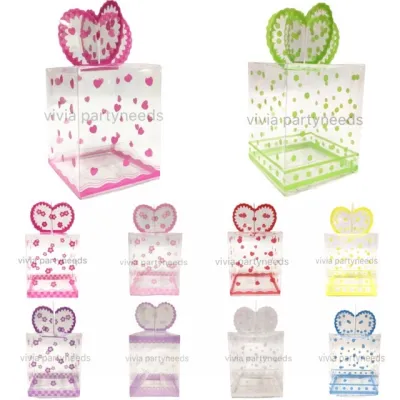
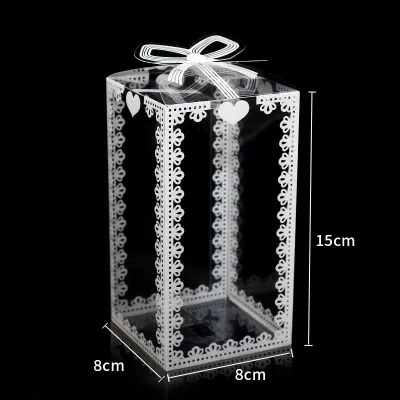
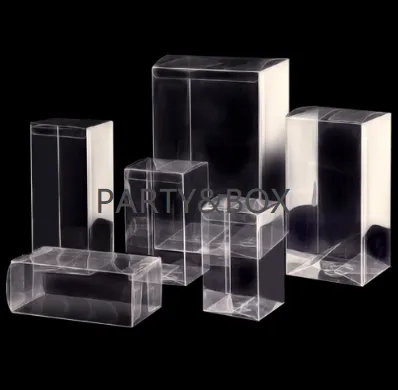
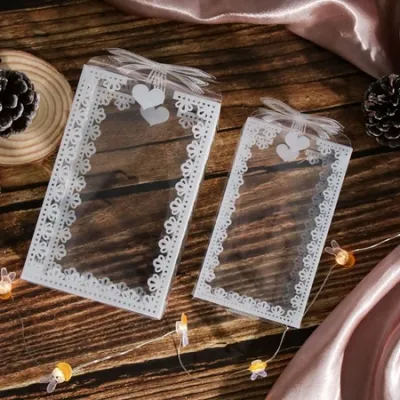
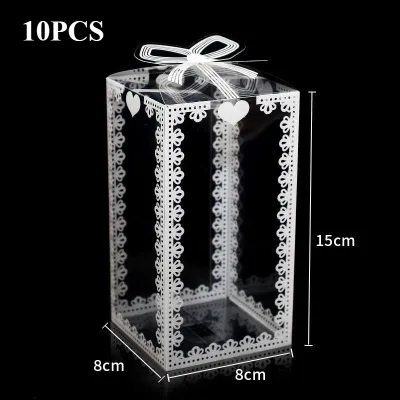
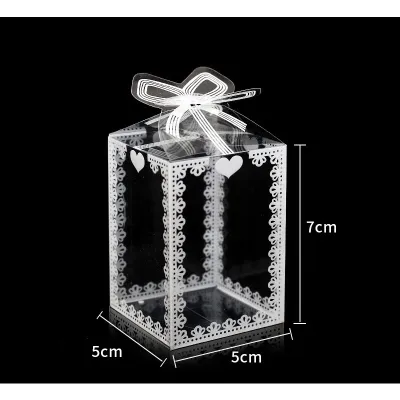
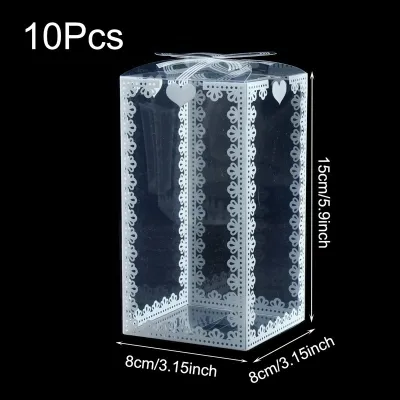
Prices are valid at publication and may change. Please refer to the product page for the latest price.
Always verify the internal dimensions of the acetate box before purchasing. Manufacturers often list external dimensions, which do not account for the thickness of the folded plastic sheets or the interlocking tabs at the seams. Depending on the thickness of the acetate, the internal usable space can be 1 mm to 3 mm smaller than the external measurements. Checking these specifications prevents the frustration of receiving boxes that are just slightly too small for your items.
Sizing Considerations for Common Event Souvenirs
Selecting the right packaging requires evaluating the physical characteristics of your favors. The shape, fragility, and weight of the souvenir dictate the structural strength and dimensions of the box you need. Delicate items require more clearance and cushioning, while heavy items need thicker plastic to prevent the bottom from buckling.

Grouping your souvenirs into general size categories simplifies the selection process. Most event favors fall into small, medium, or large categories. By identifying where your item fits, you can narrow down your packaging options and plan your assembly line more efficiently.
Small Favors Like Candies and Chocolates
Compact treats like wrapped chocolates, hard candies, pastillas, or dragées often have irregular shapes that do not conform to standard box dimensions. When packaging these items, consider how they will settle inside the box. If you are filling the box with loose candies, the depth of the box must be sufficient to hold the desired quantity without crushing the top layer when the lid is closed.
The arrangement of the treats also dictates the box shape. Decide whether you want a single, elegant layer—such as a row of macarons—or a stacked arrangement like a pile of colorful candies. For stacked arrangements, choose a box with a secure bottom lock to handle the shifting weight of the contents during transit.
Medium Items Like Candles, Soaps, and Trinkets
Solid, structured items like artisanal soaps, votive candles, and small resin trinkets require a snug fit to prevent them from sliding. Sliding can scuff the smooth surfaces of wax or soap, ruining the presentation. Match the base of the acetate box as closely as possible to the footprint of the item.
Pay close attention to vertical clearance. A candle might have a body height of 5 cm, but a cotton or wooden wick can add another 1 cm. Similarly, decorative soap bars with piped tops or embedded dried botanicals need extra height clearance so the delicate details are not flattened against the top lid.
Factor in the thickness of the acetate material. Medium-sized items are heavier than candies, so they require a thicker gauge of acetate—typically 0.3 mm or more. This thickness ensures the box walls remain rigid and do not bow outward when guests handle the favors.
Larger Gifts Like Dessert Cups and Gift Sets
Bulky or multi-component souvenirs, such as dessert cups or curated gift sets, require spacious boxes with robust structural integrity. When packaging dessert cups, measure the widest part of the container, which is often the rim of the dome lid or an external decorative sleeve, rather than the narrow base.
For gift sets containing multiple distinct items—such as a combination of a small towel, a soap bar, and a candle—lay the items out on a flat surface exactly as you want them arranged. Measure the total footprint of this arrangement, noting the maximum length, width, and the height of the tallest item to find a box that accommodates the entire set comfortably.
Because larger boxes have more surface area, they are more prone to sagging or bowing under weight. Ensure the acetate thickness is sufficient to support the load. Using a sturdy cardboard insert card at the bottom of the box can help distribute the weight and keep the base flat.
Accounting for Inserts, Ribbons, and Packaging Layers
Secondary packaging materials add bulk and must be factored into your final size calculations. If you plan to use shredded paper, wood wool, or crinkle cut filler to cushion a fragile item, you must add at least 1 cm to 2 cm to both the height and width of your box measurements to accommodate this protective layer.
Custom cardboard inserts or die-cut paper holders are excellent for keeping items like cupcakes or perfume bottles centered. These inserts require a precise match with the box’s inner perimeter. If the box is even slightly too large, the insert will slide, defeating its protective purpose; if it is too small, the insert will buckle and ruin the look.
External embellishments can also affect how the box closes and holds its shape. Wrapping thick satin ribbons, abaca cords, or personalized gift tags tightly around the box can compress the flexible acetate. If the box is packed to its absolute limit, this compression can cause the plastic to crease or the lid to pop open. Leave a small margin of breathing room if you plan to use heavy external decorations.
Common Sizing Mistakes to Avoid
One of the most frequent errors is confusing external box dimensions with internal usable space. Always double-check the manufacturer’s specifications for internal measurements, especially when buying in bulk, to avoid receiving boxes that are slightly too small for your souvenirs.
Another mistake is ignoring the shape mismatch between a round souvenir and a square box. Placing a circular tin or a round candle into a square box leaves empty corner spaces. If the item is not secured, it will roll around, which can scuff the clear plastic walls. Use circular cardboard inserts or decorative filler to stabilize round items in square packaging.
Finally, do not overlook the structural limits of thin acetate. Thin-gauge plastic (under 0.25 mm) is highly flexible and cost-effective, but it cannot support heavy items like glass jars of jam or heavy stone coasters. Using thin plastic for heavy favors results in a flimsy presentation and increases the risk of the box breaking during the event.
Frequently Asked Questions (FAQ)
Can I use the same acetate box size for different souvenirs?
Yes, standardizing your box sizes is a practical way to save money when purchasing packaging in bulk. If you have different types of souvenirs for different guest tiers—such as small keychains for general guests and larger scented candles for sponsors—you can use a single medium-sized box. For the smaller items, simply use decorative fillers like shredded paper, tissue, or custom cardboard platforms to elevate the item and fill the empty space, maintaining a cohesive look across all your favors.
How do I prevent items from sliding inside a slightly oversized acetate box?
To secure items in a slightly larger box, place a layer of crinkle paper or folded tissue paper at the bottom to create a snug nest. For non-edible items like soaps, candles, or resin coasters, applying a small piece of double-sided tape or a clear glue dot to the bottom of the item will keep it firmly anchored to the base of the box without affecting the clean, transparent aesthetic.
Community discussion
Share your experience or ask a question. Comments are reviewed before publication.