
Selecting the right bead set for your daughter requires balancing her current developmental stage, fine motor skills, and safety needs. A set that is too complex leads to frustration and abandoned projects, while one that is too simple fails to engage her creativity. By matching bead sizes, threading tools, and project complexity to her specific age group, you can provide an enriching, safe, and highly rewarding crafting experience.
Crafting with beads is a classic childhood activity that offers far more than just a quiet afternoon of play. For a young girl, designing and assembling her own jewelry builds essential fine motor skills, strengthens hand-eye coordination, fosters patience, and encourages creative self-expression. However, walking down the toy or craft aisle can quickly become overwhelming. With thousands of options ranging from chunky plastic snap beads to microscopic glass seed beads, choosing the wrong set can lead to immediate frustration, messy spills, or even safety hazards.
To select the most suitable bead set for your daughter, you must evaluate three primary factors: her chronological age, her current fine motor dexterity, and her specific crafting goals. A toddler requires large, tactile pieces that focus on basic coordination without the risk of choking, while an older child or teenager needs the challenge of intricate patterns, smaller components, and realistic jewelry hardware. By understanding how bead sizes, stringing materials, and kit accessories align with these developmental stages, you can confidently choose a set that keeps her engaged, safe, and proud of her handmade creations.
Products mentioned in this guide
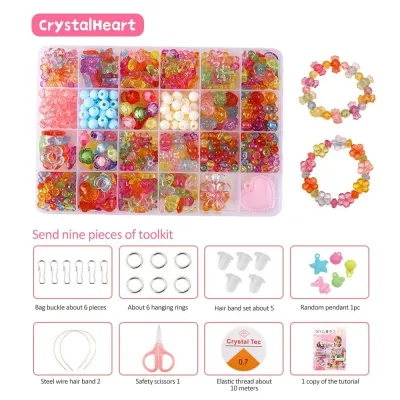
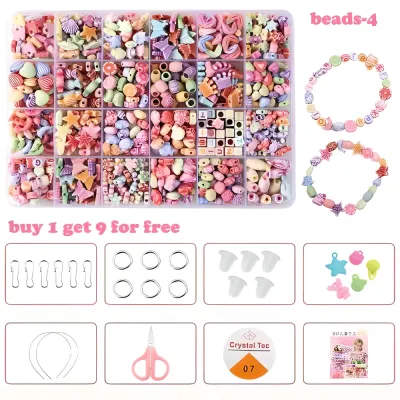
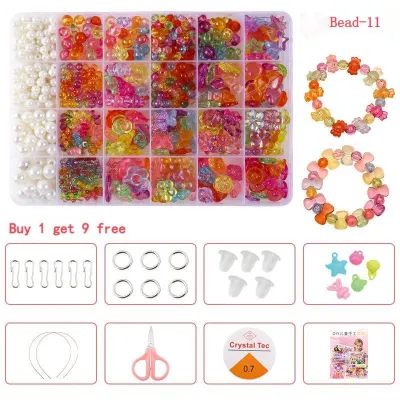
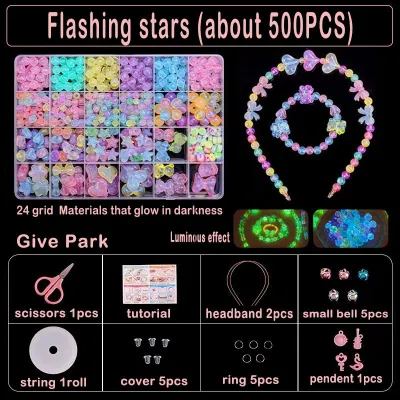
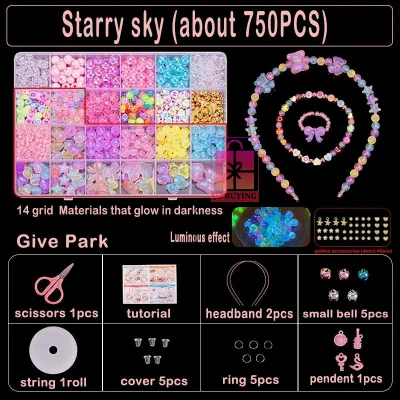
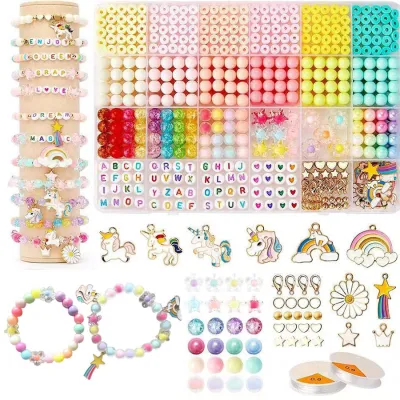
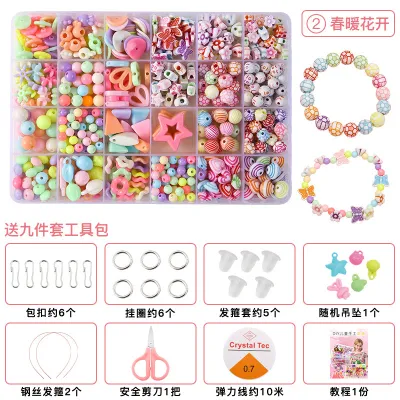
Prices are valid at publication and may change. Please refer to the product page for the latest price.
Understanding Bead Sizes and Safety Standards by Age
When introducing beads into your home, safety must always be the starting point. Manufacturers place age grading labels on their packaging for critical reasons, primarily to address choking hazards. Any bead set containing small parts that can fit inside a standard choke test cylinder is legally required to carry a warning for children under three years of age. As a parent, you should treat these age recommendations as strict safety boundaries rather than mere suggestions of difficulty. Even if your younger daughter shows advanced coordination, small beads pose an ongoing risk if there are toddlers or pets in the household who might access the crafting area.
To simplify your search, categorize bead sets into distinct size brackets that correspond to developmental milestones. For toddlers and preschoolers aged two to four, jumbo interlocking beads or pop beads are a highly appropriate choice. These oversized pieces do not require a string; instead, they snap together using simple peg-and-socket joints. They are large enough to eliminate choking risks entirely while helping young children develop bilateral coordination as they push the pieces together with both hands.
For early school-age children aged five to seven, standard pony beads are an excellent option. Typically measuring between six and nine millimeters in diameter, pony beads feature exceptionally large center holes. This generous spacing allows children to practice threading without the intense visual strain or physical precision required by smaller beads. At this stage, children are learning to recognize patterns and sequences, and the bold, bright colors of pony beads make these educational concepts highly accessible and fun.
As your daughter reaches the ages of eight to twelve, her fine motor skills are highly refined, allowing her to transition to medium-sized novelty beads, flat clay heishi beads, and larger glass or acrylic beads. These sets introduce a wider variety of shapes, such as letters, flowers, and animals, which allow her to personalize her designs. Finally, for teenagers aged thirteen and older, small seed beads (ranging from size 11/0 to 8/0) and delicate glass beads offer the complexity they crave. These tiny components require high levels of patience and precision, allowing teens to create sophisticated, retail-quality jewelry that they will actually want to wear or gift to friends.
Beyond size, the physical material of the beads requires close inspection. Look for sets that explicitly state they use non-toxic, BPA-free plastics, lead-free paints on wooden components, or high-grade acrylics. Examine the finish of the beads whenever possible; high-quality sets feature smooth, rounded edges without sharp plastic seams or rough wooden splinters that could irritate sensitive skin. In the warm, humid climate of the Philippines, wooden beads require careful storage in dry, well-ventilated spaces to prevent mold growth, making washable, high-quality acrylic or plastic beads an exceptionally durable and low-maintenance alternative for everyday play.
Matching the Stringing Tool to Skill Level
The success of a jewelry-making session often depends entirely on the stringing tool provided in the kit. If a child cannot easily thread the string through the bead, they will quickly lose interest and abandon the activity. Matching the stringing mechanism to your daughter’s current manual dexterity ensures a smooth, frustration-free experience that builds her confidence step by step.

For beginners and younger crafters, traditional floppy string is incredibly difficult to manage. Instead, look for kits that utilize rigid or semi-rigid threading guides. Pipe cleaners, also known as chenille stems, are an excellent introductory tool. Their wire core holds its shape, preventing the end from drooping, while the fuzzy texture provides natural friction that keeps threaded beads from sliding off the opposite end. Another excellent beginner option is a blunt plastic needle paired with thick yarn or nylon cord. The needle acts as a stiff guide that easily navigates through large pony bead holes, keeping the process simple and satisfying. For the youngest crafters, snap-together pop beads bypass the need for any stringing tool entirely, focusing purely on hand strength and finger coordination.
As your daughter’s coordination improves, she can transition to intermediate stringing materials that offer more flexibility and realistic jewelry outcomes. Cotton strings and waxed cords are excellent for school-age children because they are easy to knot, do not slip easily, and offer enough stiffness to be threaded without a needle. Elastic silicone cords are the most popular choice for making stretch bracelets, but they require a bit more skill. Elastic can be slippery, meaning standard knots can easily unravel if not tied tightly or secured with a drop of craft glue. For older children and teenagers, flexible nylon-coated beading wire provides the ultimate durability for necklaces and structured bracelets, though it requires the use of metal crimp beads and jewelry pliers to secure the ends.
Before finalizing any purchase, always verify the relationship between the bead’s hole diameter and the thickness of the included string. A common manufacturing flaw in cheap bead sets is including string that is too thick for the bead holes, or beads with inconsistent, clogged openings. Ideally, the string should be approximately 0.1mm to 0.2mm thinner than the bead’s inner hole. This slight clearance allows the bead to slide smoothly along the cord without snagging, while still preventing the bead from wobbling excessively. If your daughter plans to create complex patterns that require passing the string through a single bead multiple times, the string’s diameter must be less than half of the bead’s hole diameter to accommodate the double pass.
Evaluating Set Contents and Project Goals
A great bead set should be a self-contained creative studio, providing everything your daughter needs to complete her projects from start to finish. When evaluating a kit, look beyond the total piece count advertised on the box. A set boasting thousands of pieces may consist almost entirely of microscopic spacer beads, leaving her with very few focal charms or letter beads to actually personalize her creations.
Begin by assessing the variety and distribution of the components against your daughter’s specific project goals. If she is excited about making personalized name bracelets for her school friends, verify that the kit includes a generous supply of alphabet beads, with a realistic distribution of common vowels and consonants. A set that only provides a single random assortment of letters will quickly leave her frustrated when she runs out of essential letters like ‘A’, ‘E’, or ‘S’. Look for kits that offer a thoughtful balance of colorful spacer beads, accent shapes, and focal charms so she can design cohesive, visually appealing patterns.
Next, check for the inclusion of essential jewelry hardware, often referred to as findings. For basic stretch bracelets, elastic cord is usually sufficient on its own. However, if she wants to create necklaces, anklets, or non-stretch bracelets, the kit must include functional closures such as lobster clasps, jump rings, and fold-over cord ends. Without these small metal components, she will not be able to finish her jewelry securely, requiring an unexpected trip to a local craft store. Additionally, look for kits that supply basic, child-safe tools. A pair of small, blunt-nosed scissors that can cleanly cut slippery elastic cord, along with plastic tweezers or a bead scoop for picking up tiny pieces, will make the crafting process significantly more enjoyable and organized.
Finally, never underestimate the importance of the storage container included with the set. Small beads have a natural tendency to scatter across tables and disappear into carpets, creating a messy cleanup and potential safety hazards for younger siblings. A high-quality bead set should come housed in a sturdy, compartmentalized plastic organizer box with a secure, snap-locking lid. Individual compartments keep different colors and shapes separated, preventing hours of tedious sorting. In the humid tropical climate of the Philippines, a tight-sealing plastic container is also essential for protecting metal findings from premature tarnishing and preventing elastic cords from dry-rotting or losing their stretch over time.
Building Your Shortlist: What to Verify Before Buying
Once you have identified a few bead sets that match your daughter’s age and skill level, it is time to build a shortlist and perform some final verifications before checking out. Online product listings on e-commerce platforms can sometimes present idealized images that do not fully reflect the physical product you will receive. Taking a few minutes to cross-reference the specifications will save you time and ensure a successful purchase.
Start by reading through customer reviews, paying close attention to real-life photos uploaded by other parents. These photos provide an accurate sense of scale, helping you confirm whether the beads are the size you expect or if they are much smaller than the stylized marketing images suggest. Look for specific feedback regarding the quality of the bead holes—frequent complaints about clogged holes, sharp interior edges that cut the string, or highly inconsistent sizes are clear indicators of poor manufacturing. Similarly, check what reviewers say about the durability of the included elastic cord, as brittle string that snaps easily during assembly can ruin hours of hard work.
Next, establish a realistic budget in Philippine Pesos (₱) and evaluate the overall value of the set. Basic starter kits containing plastic pony beads and simple cords typically range from ₱150 to ₱300, making them excellent, low-risk options for younger children. Mid-range sets featuring clay heishi beads, acrylic charms, and basic metal findings generally cost between ₱400 and ₱700. Premium, multi-tier organizer sets filled with thousands of glass seed beads, specialized tools, and high-quality hardware can range from ₱800 to ₱1,500 or more. To determine the true value, calculate the cost per project rather than just the cost per bead; a slightly more expensive kit that includes durable clasps, strong string, and a reusable storage box is far more economical than a cheap bag of loose beads that requires you to purchase all the accessories separately.
Finally, verify the authenticity and reliability of the seller on your chosen online marketplace. Look for sellers with high positive ratings, quick response times, and a history of secure packaging to ensure the plastic storage box arrives intact without cracking during transit. Check the estimated shipping times to ensure the package will arrive in time for any planned birthdays or holiday celebrations. Reviewing the platform’s return policy is also a wise precaution, giving you peace of mind in case the set arrives with missing components or damaged storage compartments.
Frequently Asked Questions (FAQ)
Can I use regular sewing thread for kids' bead projects?
No, regular sewing thread is generally unsuitable for children’s bead projects. It is too thin, lacks structural rigidity, and frays easily when rubbed against the sharp inner edges of plastic or wooden bead holes. This leads to broken bracelets and spilled beads, causing significant frustration. Instead, opt for dedicated crafting alternatives like waxed cotton cord, elastic silicone string, or colorful pipe cleaners, which are designed to withstand the friction of active wear and are much easier for young fingers to manipulate.
How do I store leftover beads and finished jewelry safely?
To keep small parts organized and safe, use clear, compartmentalized plastic storage boxes with individual snap-tight lids for each section. This prevents different bead styles from mixing if the box is dropped. For extra security, store the entire organizer box on a high shelf out of reach of toddlers and pets to eliminate choking hazards. In tropical climates, adding a small, food-safe silica gel packet inside the storage container helps absorb excess humidity, protecting metal clasps from tarnishing and keeping elastic cords in optimal condition.
Community discussion
Share your experience or ask a question. Comments are reviewed before publication.