
Choosing the right binder clip size depends on your document stack’s thickness and the clip’s jaw width. To secure papers without damage or losing grip, match the stack’s height to the clip’s capacity. A clip too small overstretches the spring steel, while one too large fails to grip and leaves creases.
By matching these fasteners to your document thickness, you keep office files, school modules, and archives organized. This guide covers standard clip dimensions, page capacities, and measurement steps to help you select the ideal size.
Understanding Binder Clip Measurements and Anatomy
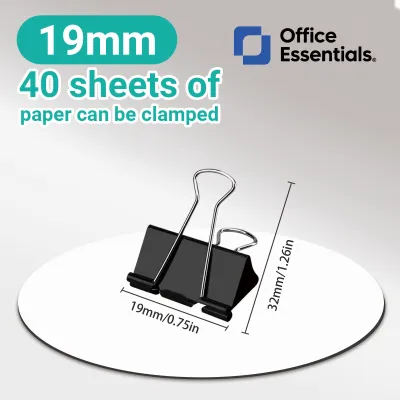
When shopping for binder clips, the listed size refers to the width of the black metal base, not the silver wire handles. For example, a 19mm clip has a triangular steel body exactly 19 millimeters wide. This width directly correlates with the jaw opening capacity, which determines how thick of a document stack the clip can safely pinch.
Products mentioned in this guide
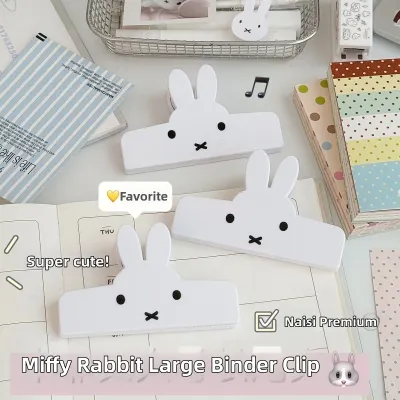
259 Lazada user ratings
Price:very affordable Design:simple but usable Durability:I think Thank you so much seller and store for sending good condition and complete…Read full reviewShow less
Price:very affordable Design:simple but usable Durability:I think Thank you so much seller and store for sending good condition and complete orders, appreciated. Thanks for on time delivery and service. Thanks courier and Lazada 👍👍👍👍👍
sturdy. works well. cheap and gets the job done. repeat customer here and will probably purchase more soon. Ideal for office use,
the product is great! delivery is quite fast and the packaging is safe! item is as per advertised.
Durability:legit mayroon na magamit sa trabaho pang clip sya po..tnx👍🌞😎
nice packaging. thank u seller.. no damage.. delivery also good
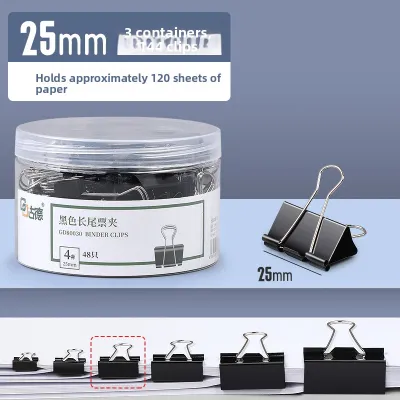
21 Lazada user ratings
Great product, really good quality, and the clips are large and very practical! I'll definitely buy again next time!
The product is good, and the customer service is nice. Totally worth buying!
Great value for the money, the clips are big and practical! Will buy again!
Got it, and I really like it!
375 Lazada user ratings
Strong grip without damaging paper, Multi-functional usage options, and the kids were you going backwards compatible okay with you I think t…Read full reviewShow less
Strong grip without damaging paper, Multi-functional usage options, and the kids were you going backwards compatible okay with you I think tomorrow would be better for you
size 51mm pero hindi 60 pieces 12 lang ang isang plastic container. Strong grip without damaging paper, Multi-functional usage options,
Strong grip without damaging paper, Available in multiple sizes, Multi-functional usage options,
Available in multiple sizes, Multi-functional usage options, Strong grip without damaging paper,
Design: 10 Price: 10 Durability: 10 Excellent durability,
Prices are valid at publication and may change. Please refer to the product page for the latest price.
The anatomy relies on basic mechanical principles. The triangular body is tempered spring steel, designed to open under pressure and snap back with significant clamping force. Squeezing the silver wire handles opens the jaw, and folding them flat allows compact storage. You can also remove the handles entirely for a semi-permanent, tamper-resistant binding. The black oxide coating on the steel body provides basic corrosion resistance and a smooth finish, though it can wear down with heavy use.
At the base, the metal curves outward to form a smooth, rounded lip. This lip prevents the sharp steel edges from cutting into your paper and helps slide pages smoothly into the jaw. Forcing a clip onto a stack that is too thick compromises both the paper and the clip.
Standard Binder Clip Sizes and Page Capacities
Standard page capacities assume regular 80 gsm (20 lb) copy paper. If you use thicker materials like cardstock, textured presentation paper, or laminated sheets, the actual page capacity will be lower. Conversely, thin newsprint or tracing paper allows you to hold more sheets within the same clip size. In the Philippines, standard copy paper is often sold in sub-20 or sub-24 weights (such as 70 gsm or 80 gsm), so knowing your paper’s specific weight helps you estimate capacity more accurately.

Because steel thickness, tension, and manufacturing tolerances vary across brands, always check the manufacturer’s packaging for exact capacity limits. However, standard sizes follow predictable capacity ranges that serve as an excellent starting point.
Small Binder Clips (15mm and 19mm)
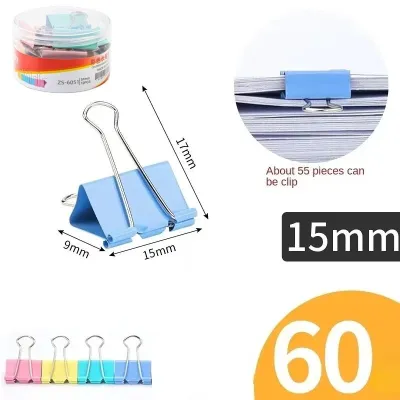
Small binder clips (15mm and 19mm) are designed for light-duty tasks. A 15mm clip is the smallest standard size, ideal for holding 10 to 30 pages. The 19mm version comfortably secures up to 40 pages, providing a firm grip without bulk. Because they are lightweight, they do not weigh down thin documents, making them easy to carry in a pencil case or portfolio.
These compact clips are highly versatile. In the office, they keep receipts organized, secure small memos, or group thin handouts. At home, their strong spring tension makes them excellent for sealing opened snack bags, organizing charging cables, or holding recipe cards upright.
Medium Binder Clips (25mm and 32mm)
Medium binder clips (25mm and 32mm) are the workhorses of the office and classroom. A 25mm clip manages stacks of 40 to 80 pages, while the 32mm clip securely holds up to 100 pages. These sizes offer the ideal balance between clamping force and physical size, making them easy to handle. Their medium size also makes them highly compatible with standard clipboards, allowing you to secure a stack to the board without the clip protruding excessively.
These mid-sized clips are indispensable for managing monthly reports, bank statements, and project files. Teachers use them to organize class worksheets, and students use them to keep modules together. They provide substantial holding power without taking up excessive space.
Large and Jumbo Binder Clips (41mm and Above)
Large and jumbo binder clips (41mm and above) are the only reliable option for heavy-duty stacks or bulky materials. A 41mm clip holds up to 150 pages, while 51mm clips manage 200 to 250 pages or more. Squeezing these large clips requires significant hand strength, but it ensures heavy files remain perfectly aligned. When using these larger sizes, be mindful of the physical weight they add to your files, as a single jumbo clip can make a folder significantly heavier and harder to file in standard drawers.
These heavy-duty fasteners are designed for thick manuscripts, legal briefs, bound booklets, and complete financial audits. Beyond paper, their extreme clamping force makes them useful for securing cable bundles behind desks, holding backdrops to stands in photography studios, or clamping glued wood pieces during DIY projects.
Step-by-Step Guide to Measuring Your Document Stack
To choose the correct clip size without guessing, follow this simple, repeatable method to measure your document stack.
First, align the pages neatly by tapping the stack on a flat surface. This removes air gaps between the sheets and ensures all edges are perfectly flush, which is essential for an accurate measurement.
Second, measure the physical thickness of the aligned stack using a ruler or caliper. Place the ruler against the edge of the paper pile and read the thickness in millimeters. This represents the minimum jaw opening your binder clip must have. If you do not have a ruler handy, you can estimate the thickness by knowing that a standard ream of 500 sheets of 80 gsm paper is approximately 50mm thick, meaning 100 sheets is roughly 10mm.
Third, compare your measured thickness to the clip’s maximum jaw capacity, leaving a small safety margin. If your stack measures 8mm, a clip with a 10mm jaw capacity is ideal, allowing the smooth lip to close securely without overstretching the steel.
Fourth, test the grip by gently shaking the clipped stack over a desk. If pages slip or the clip slides off easily, the clip is too large or has lost its tension. If the clip is difficult to open or remains permanently bent after removal, step up to the next larger size.
Common Mistakes to Avoid When Using Binder Clips
One common mistake is overstuffing a binder clip beyond its intended jaw capacity. Forcing a massive stack of paper into a small clip overstretches the tempered steel body, causing it to lose its spring tension permanently. Once bent out of shape, it will no longer hold smaller stacks securely. Overstretched clips also pose a safety hazard, as the weakened steel can snap unexpectedly under pressure, potentially causing minor injury or sending papers flying across the room.
Conversely, using a clip that is far too large for a thin stack of paper creates other problems. The wide silver handles of an oversized clip can press deeply into the paper, leaving permanent creases. Additionally, if the jaw does not close fully, pages can easily slide out, leading to lost files.
Another error is forcing a binder clip onto a stack from the side rather than sliding it straight down from the top edge. Pushing a clip sideways can catch the delicate edges of the paper on the sharp corners of the steel body, resulting in tears. Always squeeze the handles to open the jaw completely, position it over the edge, and release it gently.
When to Consider Alternative Fastening Methods
While binder clips are incredibly useful, they are not always the best tool for every task. If you are preparing a document for a professional presentation, a client proposal, or a permanent archive, thermal or comb binding is a much better choice. These methods provide a clean, book-like finish that allows pages to turn smoothly.
If your documents need to lay completely flat for scanning, photocopying, or feeding through an automatic document feeder, binder clips are impractical. In these situations, staple-less staplers or smooth, vinyl-coated paper clips are excellent alternatives. They keep pages together during handling but can be removed instantly without leaving bulky bumps or heavy creases.
For delicate, historical, or photographic documents, the intense pressure of metal binder clips can cause irreversible damage. The high tension can indent fragile fibers, and the metal itself can react with chemical emulsions over time. For these sensitive materials, opt for archival-safe plastic clips, acid-free folders, or protective polyester sleeves. For quick, temporary grouping where you want zero bulk, magnetic clips or simple band fasteners can also keep documents together on a metal surface or whiteboard without clamping the paper directly.
These alternative fastening tools are widely available in local office supply stores and online marketplaces. Basic paper clips and standard staplers are highly affordable, often costing under ₱50 for a bulk pack, while specialized binding services or archival storage materials may require a slightly larger budget depending on your specific project needs.
Frequently Asked Questions (FAQ)
Can I use a large binder clip on a very thin stack of paper?
Using a large binder clip on a thin stack of paper is not recommended because the excessive clamping force and oversized jaw can damage the sheets. The wide silver handles will press into the paper, leaving permanent creases and indentations. Furthermore, if the stack is too thin, the clip’s jaw may not close completely, leaving the pages loose and prone to falling out.
How do I remove a tight binder clip without tearing the paper?
To remove a tight binder clip safely, always squeeze the silver wire handles firmly together until the black steel jaw opens completely. Once the jaw is fully open, lift the clip straight up and away from the paper edge. Never pull or slide the clip off while it is still partially closed, as the friction from the steel edges will tear or crumple the top and bottom pages.
Do binder clips rust in humid climates?
Standard binder clips made of black oxide or painted carbon steel can develop rust over time when exposed to high humidity, which is common in tropical climates like the Philippines. To prevent rust from staining your important documents, store your clips in dry drawers or airtight containers. For long-term archiving or use in humid environments, consider purchasing nickel-plated, stainless steel, or plastic-coated binder clips, which offer superior resistance to moisture.

Community discussion
Share your experience or ask a question. Comments are reviewed before publication.