
Choosing the right binder notebook can transform how you manage your coursework, keep track of handouts, and study for exams. Unlike traditional bound notebooks, a binder system allows you to rearrange pages, insert printed syllabus sheets, and archive old notes when a semester ends. The ideal choice for a college student balances portability with writing space, matching a durable cover with a ring mechanism that fits readily available paper refills.
Your decision ultimately depends on your major, your preferred writing tools, and how much weight you want to carry across campus. By focusing on key specifications like paper size, ring capacity, and material durability, you can build a highly efficient note-taking system that lasts throughout your college years.
Key Specifications to Check Before Buying
Before purchasing a binder notebook, it is essential to look past aesthetic designs and evaluate the technical specifications. Checking dimensions, ring configurations, and material labels ensures that your binder will fit your backpack, accommodate your favorite pens, and survive daily wear and tear.
Products mentioned in this guide
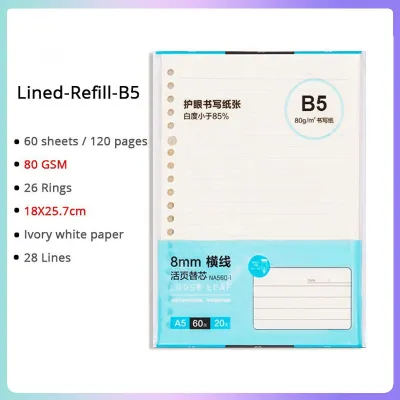
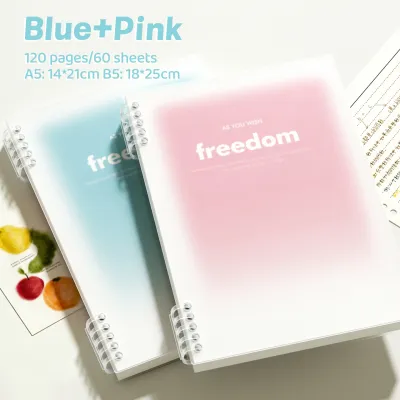
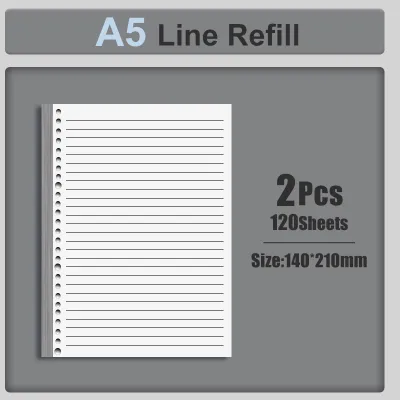
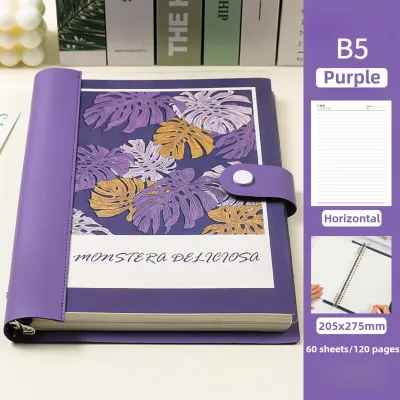
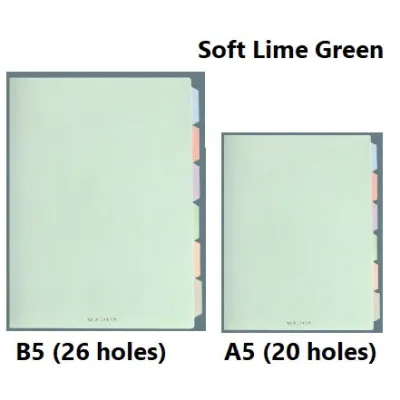
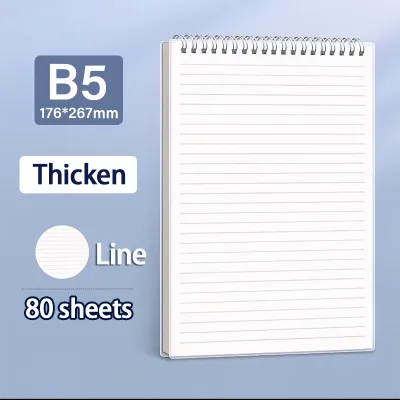
Prices are valid at publication and may change. Please refer to the product page for the latest price.
Using a systematic checklist helps you avoid the common frustration of buying a binder cover only to find that standard refill paper does not align with the rings.
Paper Size and Ring Capacity
Paper size dictates both your writing comfort and how easily the binder fits onto small lecture hall desks. The most common sizes for college binders are A4, B5, and A5. A4 is the largest, offering ample space for detailed diagrams and extensive text, but it can be bulky to carry. B5 is widely considered the sweet spot for university students, providing a balanced canvas that is slightly smaller than standard letter paper but highly portable. A5 is highly compact and excellent for quick journaling or vocabulary lists, though it may feel cramped for long lecture notes.
Ring capacity determines how many sheets of paper your binder can hold without tearing. Multi-ring binders typically feature 20 holes for A5, 26 holes for B5, or 30 holes for A4 configurations. A binder with a slim 15mm ring diameter generally holds around 50 to 70 sheets, keeping your profile sleek and lightweight. If you need to carry multiple subjects in one place, look for a larger 20mm or 25mm ring capacity, which can comfortably hold 100 to 150 sheets.
Before committing to a specific size, measure the main compartment of your school backpack and consider your printing habits. If you plan to print out slides or syllabus guides and insert them directly into your binder, an A4 binder is easier to pair with standard office printer paper, whereas B5 and A5 will require custom trimming or scaling before printing.
Paper Quality and Punch Compatibility
Refill compatibility is a critical factor when choosing a multi-ring binder system. Standard office hole punches typically create two or three holes, which will not align with Japanese or Korean-style multi-ring binders that require 20, 26, or 30 holes. Always verify the exact hole count and spacing (usually a 9.5mm pitch) printed on the refill packaging to ensure a perfect fit with your binder spine.
Paper weight, measured in grams per square meter (GSM), directly influences how your ink behaves on the page. Standard loose-leaf paper is often around 70 GSM, which is lightweight but prone to ghosting or bleeding when used with liquid gel pens, fountain pens, or heavy highlighters. Opting for 80 GSM to 100 GSM paper provides a sturdier surface that minimizes ink penetration, allowing you to write on both sides of the sheet comfortably.
Because paper performance depends on the specific combination of paper fibers and pen ink, it is wise to conduct a quick trial. Write a few test lines with your preferred gel pen or highlighter on a single sheet to observe the drying speed and check for feathering. In humid tropical climates, paper can absorb ambient moisture, which sometimes slows down ink drying times and increases the risk of smudging.
Cover Material and Durability
The cover material protects your hard work from the elements and the friction of daily commutes. Polypropylene (PP) is a highly popular choice because it is lightweight, flexible, and naturally water-resistant. A PP cover easily deflects accidental spills and protects your notes during sudden tropical downpours on the way to class.
Rigid PVC covers offer excellent structural support, allowing you to write comfortably on your lap when lecture hall desks are unavailable. However, PVC can sometimes warp if left in direct sunlight or inside a hot vehicle, and lower-quality PVC may stick to printed toner over time. Fabric or canvas covers provide a classic, tactile aesthetic but are more susceptible to staining and absorbing moisture in high-humidity environments.
Faux leather (PU) covers offer a professional, sophisticated appearance suitable for internships and presentations. When evaluating PU leather or fabric options, check the product descriptions for reinforced stitched edges and sturdy spine hinges, as these areas experience the most stress when the binder is repeatedly opened and closed inside your bag.
Matching Binder Types to College Majors and Workflows
Every academic discipline demands a different style of organization, note-taking, and document storage. A medical student drawing anatomical structures needs a different page layout than a law student analyzing case files or an art student sketching concepts.

Aligning your binder’s physical features with your specific major ensures that your stationery actively supports your daily academic workflow rather than hindering it.
STEM and Technical Majors
Students in science, technology, engineering, and mathematics fields frequently transition between text, complex equations, and detailed diagrams. For these workflows, grid or dot-grid refill paper is highly recommended over traditional ruled lines. The subtle grid lines provide a structured guide for plotting graphs, drawing chemical structures, and keeping mathematical formulas neatly aligned.
Because STEM courses often involve thick lab manuals, weekly problem sets, and printed reference charts, a high-capacity ring mechanism is essential. Look for binders with durable metal rings that can handle constant page-turning and heavy paper loads.
Additionally, prioritize binders that include built-in plastic pockets or slide-in rulers. These accessories allow you to store loose handouts, periodic tables, or formula sheets safely without needing to punch holes in them immediately during a fast-paced lecture.
Humanities and Law Students
Humanities, social sciences, and law majors require extensive reading, essay drafting, and case analysis, resulting in a high volume of written text. To maximize the amount of information you can fit on a single page, choose narrow-ruled (6mm) or medium-ruled (7mm) loose-leaf paper. This keeps your handwriting compact and organized, allowing you to review long arguments more efficiently.
Organizing multiple subjects or lengthy legal cases within a single binder requires a robust indexing system. Look for binders that come with sturdy, color-coded plastic dividers or index tabs. These dividers let you segment your binder by course, topic, or chronological era, making it easy to flip to specific lecture notes during open-book exams or study sessions.
To protect these extensive archives over several semesters, select a binder with a rigid, durable cover and a secure locking ring mechanism. This prevents the binder from flexing excessively in your bag, keeping your historical timelines and case digests flat and free from creased corners.
Art and Design Students
Art, architecture, and design majors require a binder that accommodates visual media, quick sketches, and material swatches. Blank, unlined paper is the standard choice here. To prevent markers, ink washes, or charcoal from bleeding through to the next page, select high-weight paper of at least 100 GSM to 120 GSM, or look for specialized mixed-media loose-leaf refills.
When sketching or drafting layouts, a bulky binder spine can obstruct your hand and make writing uncomfortable. Look for binders featuring flexible spines or soft-ring designs that can fold back 360 degrees, allowing the notebook to lay completely flat on your drafting table.
Portfolio-style binders with expandable side gussets or integrated clear plastic display sleeves are also highly beneficial. These features allow you to store loose sketches, color palettes, and reference photographs securely without risking smudges or tears to your original artwork.
Budgeting and Sourcing in the Philippines
Navigating the cost of college supplies requires balancing initial expenses with long-term utility. In the Philippines, binder notebooks and refills are widely available across local brick-and-mortar stationery stores, department store school supply sections, and online marketplaces. Prices can vary significantly, with basic plastic binders starting around ₱150, while premium imported systems or faux-leather organizers can range from ₱500 to over ₱1,000.
When planning your budget, consider the long-term cost-benefit of a binder system compared to standard spiral notebooks. While a high-quality binder shell requires a larger upfront investment, it only needs to be purchased once. Over a four-year college program, refilling a durable binder with loose-leaf paper packs (which typically cost between ₱50 and ₱150) is often much more economical than buying five or six new bound notebooks every single semester.
To get the best initial value, look for starter sets. These packages usually bundle the binder cover with a small pack of ruled paper, index dividers, and a plastic pocket sleeve, saving you the expense of buying these accessories individually.
If you prefer shopping on online marketplaces, pay close attention to seller ratings and read customer reviews to verify how items are packaged for shipping. Binders with rigid plastic or cardboard covers are prone to bending or cracking during transit if they are not shipped with protective bubble wrap or cardboard backing. Checking the return policies of the online store before finalizing your purchase provides an extra layer of security.
Maintenance and Refill Strategies for Long-Term Use
To ensure your binder notebook survives the rigors of college life, proper handling of the ring mechanism is essential. For plastic multi-ring binders, avoid pulling the rings open directly from the center, as this can warp the alignment or snap the plastic teeth over time. Instead, locate the slide-lock or pinch-tabs at the top and bottom of the spine to open and close the mechanism smoothly. For metal rings, always press the lever tabs at both ends simultaneously to distribute the pressure evenly.
Preventing page damage requires mindful paper management. Avoid overstuffing your binder past its recommended sheet capacity; when a binder is too full, pages cannot slide freely along the rings, causing the paper holes to pull and tear. If you notice the punch holes on important pages beginning to wear down, apply adhesive hole reinforcement stickers to restore the paper’s strength.
Implementing an archiving strategy keeps your daily carry light and manageable. At the end of each midterm or semester, transfer completed notes and graded quizzes from your active binder into inexpensive cardboard storage boxes or simple two-ring folders kept at home. This practice ensures your daily backpack load remains lightweight while keeping your historical coursework organized for final exam reviews.
Finally, protect your paper supply from environmental factors. The tropical climate in the Philippines brings high humidity, which can make loose-leaf paper damp, limp, and more prone to ink bleeding. Store your spare paper refills in their original sealed plastic packaging, or keep them in a dry drawer with a few silica gel packets to absorb excess moisture and preserve a crisp writing surface.
Frequently Asked Questions (FAQ)
Can I use standard hole-punched paper in a multi-ring binder?
Generally, standard office-punched paper will not fit multi-ring binders. Standard office hole punches are designed for two-hole or three-hole binders, which use much larger rings spaced far apart. In contrast, multi-ring binders (such as 26-ring B5 or 20-ring A5 systems) use a much tighter 9.5mm hole spacing to distribute page tension evenly.
Attempting to force mismatched paper into these rings will cause the pages to bunch up, tear, and potentially damage the binder mechanism. If you want to insert custom printed handouts or standard paper into your multi-ring binder, you will need to purchase a dedicated multi-ring punch tool designed specifically for 20, 26, or 30-hole configurations.
How do I prevent binder rings from snapping open in my backpack?
Accidental opening of binder rings usually happens due to overstuffing or external pressure from other heavy items in your bag. To prevent this, avoid filling the binder beyond its rated sheet capacity, as excess paper pushes outward against the rings.
Additionally, look for binders that feature built-in security measures, such as elastic band closures, snap buttons, or slide-locking ring mechanisms. When packing your bag, place the binder vertically in a dedicated laptop sleeve or snug against the back panel of your backpack. This positioning prevents heavy textbooks from shifting and pressing directly against the binder spine during your commute.
Community discussion
Share your experience or ask a question. Comments are reviewed before publication.