
Quick Guide to Binder Refill Compatibility
Finding the perfect binder refill for your notebook or planner prevents the frustration of buying paper that does not fit. To ensure a seamless match, you must look at two primary compatibility factors: the physical dimensions of the paper and the specific punch configuration of the holes.
Before purchasing refills from an online marketplace, take a close look at your binder’s spine, the ring mechanism, and the overall cover size. A mismatch in any of these areas can lead to pages that stick out, tear easily, or refuse to turn.
You can easily verify compatibility at home without specialized tools by counting the rings, noting their spacing, and measuring the height and width of your current pages.
Products mentioned in this guide
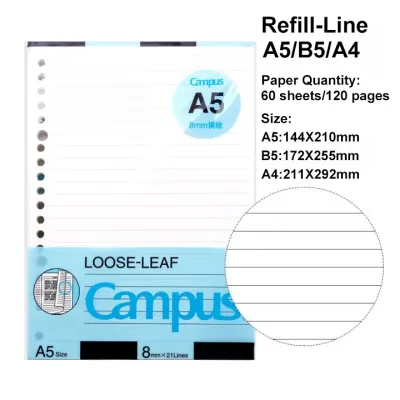
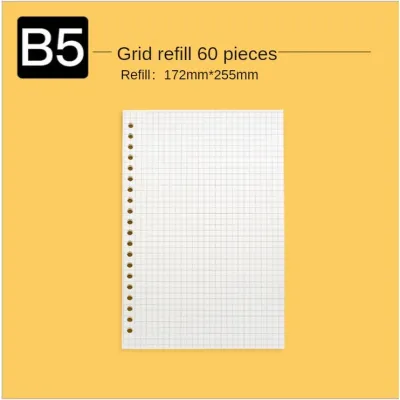
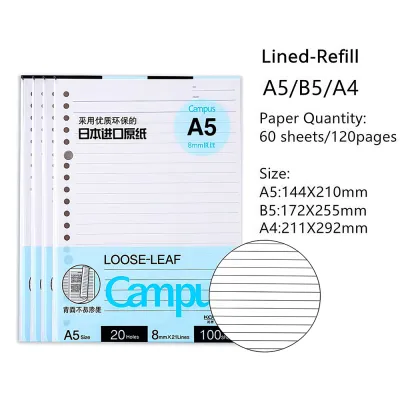
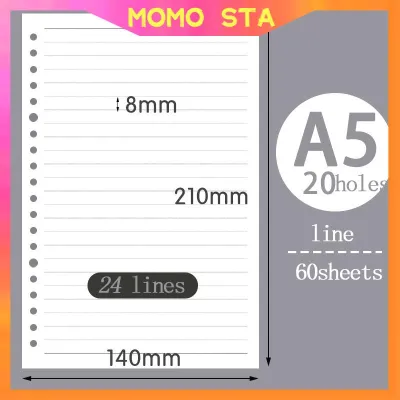
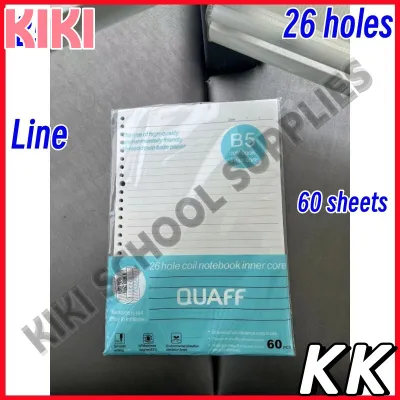
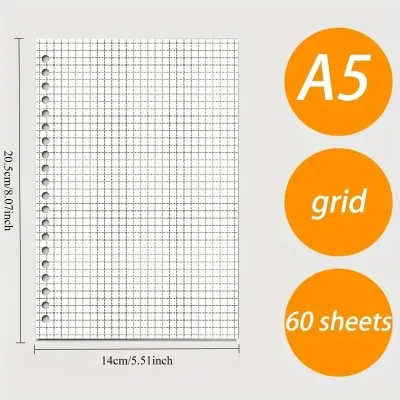
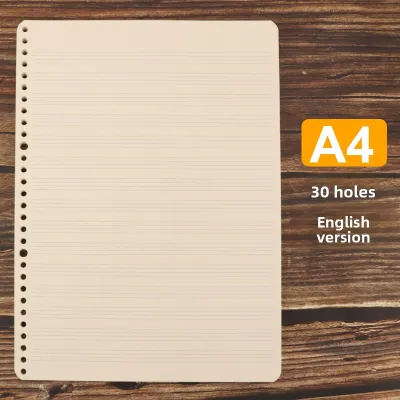
Prices are valid at publication and may change. Please refer to the product page for the latest price.
Understanding Standard Paper Sizes for Binders
Selecting the correct paper size is the first step in restoring your loose-leaf notebook. In the Philippines, school and office supplies generally follow either international ISO standards or traditional North American sizes, and mixing them up can cause alignment issues.

International sizes like A4, A5, and B5 are highly popular for academic and professional use. A4 is the standard for formal reports, while the compact A5 size is a favorite for personal journals and daily planners. B5 sits comfortably in between, offering a balanced canvas that is widely used for school notebooks and lecture notes because it fits easily into backpacks.
In contrast, North American sizes like Letter (8.5 by 11 inches) and Legal (8.5 by 14 inches) remain common in corporate offices. Because Letter size is wider and shorter than A4, refills designed for one will not sit neatly in a binder built for the other.
When choosing refills, remember that binder covers are intentionally designed to be slightly larger than the paper they hold. This extra margin provides essential edge protection, preventing your pages from fraying or bending when you carry the binder in a bag. Always measure your actual paper sheets rather than the outer binder cover to determine the exact refill size you need.
Decoding Hole Patterns and Ring Configurations
Once you have identified the correct paper size, you must match the paper’s punched holes to the binder’s specific ring mechanism. A mismatch here means the paper simply will not slide onto the rings, rendering the refill unusable.
Standard office binders typically use simple 2-hole or 3-hole patterns, which are ideal for archiving large volumes of documents. However, modern personal organizers and Japanese-style multi-hole loose-leaf systems utilize high-density configurations such as 6-hole, 20-hole, 26-hole, or 30-hole patterns. These multi-hole systems distribute the weight of the paper more evenly, reducing the risk of the pages tearing at the punch sites.
The distance between the holes, known as the pitch, along with the hole diameter, directly affects how smoothly your pages turn. High-density rings require smaller, precisely spaced holes to prevent the paper from catching on the metal joints. If the hole diameter is too small for the ring thickness, the pages will bind and resist turning; if the holes are too large, the pages will sag and align poorly.
Be particularly cautious with multi-hole systems, as some brands use proprietary spacing that does not conform to standard international pitches. Before purchasing bulk refills, check the manufacturer’s packaging or product specifications online to confirm whether your binder requires a specialized proprietary pattern or a standard open-market refill.
How to Measure and Verify Your Existing Binder
If your binder lacks clear labeling or packaging, you can easily determine the required refill specifications with a few simple measurements. Taking these steps beforehand saves time and prevents purchasing incompatible paper.
Start by measuring the distance between the centers of the rings. For standard binders, measure from the center of the top ring to the center of the bottom ring, or measure the gap between adjacent rings to identify the pitch. Accurate center-to-center measurements are crucial because even a millimeter of deviation can prevent the paper from sliding onto the rings smoothly.
Next, count the total number of rings and observe their layout. Some binders feature grouped ring clusters, such as two groups of three rings common in personal organizers, rather than a continuous, evenly spaced row. Note down the exact grouping pattern, as a standard 6-hole refill may have different spacing than a specialized planner binder.
To guarantee a perfect fit before investing in a large pack of refills, use a spare sheet of paper cut to your desired dimensions. Align it against the rings, mark the ring positions with a pencil, and punch the holes manually. This physical template allows you to test the hole alignment, page rotation, and ring clearance inside the closed binder cover.
Troubleshooting Common Compatibility Issues
Even with careful planning, you might encounter issues where your refill paper does not function perfectly. In the humid tropical climate of the Philippines, paper can absorb moisture from the air, making it softer and more prone to tearing at the rings under stress.
If you notice paper tearing at the holes, it is often due to a mismatch between the ring diameter and the paper thickness. Heavyweight paper stocks require larger rings to turn smoothly, while thin paper can easily rip if the rings have sharp or misaligned joints. Using adhesive reinforcement rings can strengthen the punch holes and extend the life of your pages.
When paper edges stick out or get caught in the binder cover, the paper size is likely too wide for the binder’s design, or the ring mechanism is too small for the volume of paper inserted. Overloading a binder forces the pages outward, causing them to crumple when the cover is closed.
If you end up with a mismatched hole count, you do not necessarily have to discard the paper. You can use an adjustable multi-hole punch to customize the hole pattern of unpunched paper, or consider switching to a disc-bound or spiral system if your current binder setup proves too restrictive.
Frequently Asked Questions (FAQ)
Can I use A4 paper in a letter-size binder?
While you can physically force A4 paper into some letter-size binders, they are not truly compatible. A4 paper is narrower and taller than Letter paper, meaning the top and bottom edges of the A4 sheet will likely protrude past the binder cover, leaving them vulnerable to damage. Additionally, standard 3-hole punches designed for Letter paper will not align correctly with the dimensions of an A4 sheet, leading to crooked pages and poor turning.
What is the difference between 2-hole and 3-hole punch paper?
The primary difference lies in regional standards and binder stability. The 2-hole configuration is widely used in European and Asian filing systems for archiving documents, whereas the 3-hole system is the standard for school and office binders in North America. Because a 3-hole system supports the paper at three distinct points, it provides superior stability and weight distribution, preventing the pages from sagging or tearing when turning through heavily loaded binders.
Community discussion
Share your experience or ask a question. Comments are reviewed before publication.