
Choosing the right chameleon powder paint depends on matching the scale of your art project, your experience with mixing dry pigments, and the specific visual effect you want to achieve. These color-shifting pigments, which change hue depending on the angle of light, are available in both entry-level and professional grades. Understanding how these grades differ in particle size, lightfastness, and medium compatibility will help you select the ideal powder for your creative work without overspending.
Diagnosing Your Project Needs and Skill Level
Before purchasing chameleon powder paint, evaluate the scale and permanence of your project. Temporary crafts, phone cases, or experimental resin coasters do not require the same archival stability as a fine art canvas or a custom automotive paint job intended for long-term display. If your work is meant to withstand years of exposure, investing in a grade designed for durability is essential.
Your comfort level with handling dry pigments also plays a major role in your choice. Working with loose powder requires precise measuring and thorough mixing into a liquid binder, such as acrylic medium, epoxy resin, or varnish. If you are new to this process, starting with a beginner-grade powder allows you to practice dispersing the pigment without the risk of wasting expensive, high-end materials.
Products mentioned in this guide
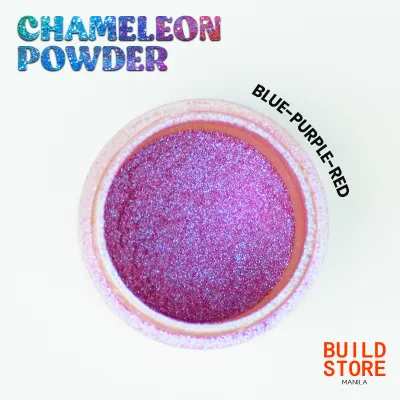
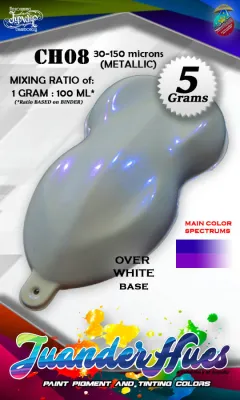
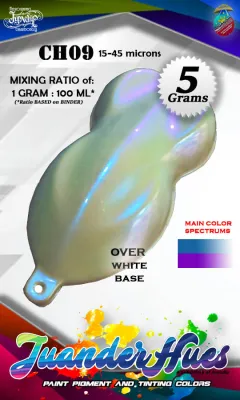
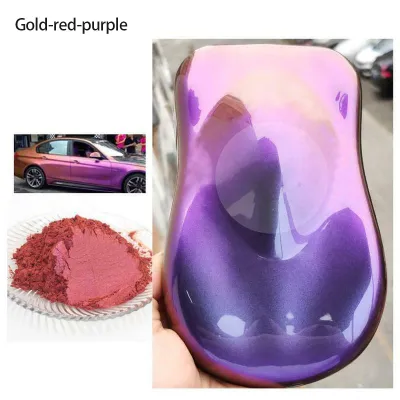
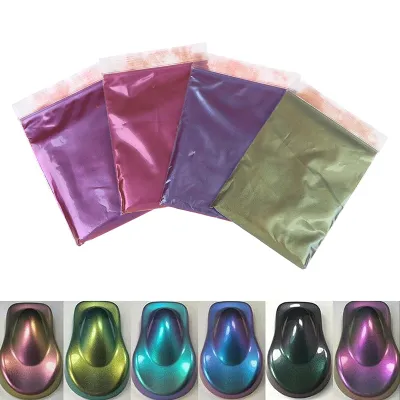
Prices are valid at publication and may change. Please refer to the product page for the latest price.
The surface material, or substrate, of your project also influences which grade is most suitable. Porous surfaces like wood, paper, or unglazed ceramics absorb liquid binders quickly, which can cause dry pigments to settle unevenly if not mixed correctly. Non-porous surfaces like glass, metal, or plastic require a highly uniform pigment dispersion to prevent running or pooling, making the consistent quality of professional-grade powders highly advantageous for these challenging materials.
Finally, consider the visual intensity and color-shift complexity your artwork demands. Beginner-grade powders often feature simpler two-tone shifts and a more subtle shimmer. Professional-grade options, on the other hand, typically offer multi-tone transitions that shift through three or more distinct colors under different lighting angles, providing a more dramatic and opaque finish.
Decoding Beginner vs. Professional Grade Specifications
When comparing chameleon powders on an online marketplace or at a local art supply store, check the manufacturer’s specifications for particle size. The particle size, usually measured in micrometers, determines the texture and smoothness of the finished surface. Smaller, more consistent particle sizes yield a highly reflective, liquid-like metallic finish, whereas larger particles create a distinct, glittery sparkle. Professional grades generally offer a more refined, uniform grind that disperses evenly without clumping.

Lightfastness and UV resistance are critical factors to verify on the product label. Standard craft pigments may fade over time when exposed to sunlight, which is a common concern in bright, tropical environments. Professional-grade pigments are formulated to resist UV degradation, ensuring that the color-shifting effect remains vibrant for years. Always look for explicit lightfastness ratings or UV-stable designations if your artwork will be displayed near windows or outdoors.
You must also review the recommended binder compatibility of the powder. While many chameleon pigments are versatile, some are specifically treated to disperse better in water-based mediums like acrylics, while others are optimized for solvent-based varnishes or epoxy resins. Checking these compatibility guidelines on the packaging prevents issues like pigment separation, poor adhesion, or a dull finish after the medium cures.
Additionally, pay attention to the opacity and base coat requirements specified by the manufacturer. Chameleon powders are naturally semi-transparent and rely on a dark, preferably black, base coat to absorb light and allow the color-shifting interference colors to stand out. Professional-grade powders often feature higher pigment concentration, meaning you need less powder to achieve full opacity over your base coat compared to beginner-grade alternatives.
Balancing Your Budget and Usage Frequency
Budgeting for your project requires looking at the total volume of pigment needed. If you are working on a large-scale project, such as a custom car part or a large sculpture, you will need a substantial amount of powder, making bulk purchasing a key consideration. For small accent details on jewelry or miniature figurines, a tiny vial of high-grade pigment will suffice.
Weigh the cost-per-use of professional-grade powders against the lower upfront cost of beginner sets. Professional pigments carry a higher price tag per gram, which might not be justified if you only paint occasionally or are just experimenting with the medium. Beginner sets often package multiple colors in smaller quantities, allowing you to explore different color-shifting combinations at a fraction of the cost.
Consider the long-term shelf life of dry pigments when planning your budget. Unlike pre-mixed liquid paints, dry chameleon powders do not dry out or spoil over time if kept free from moisture. This long shelf life makes purchasing a larger, professional-grade jar a viable long-term investment if you plan to use the color consistently across multiple projects over several years.
To make a financially sound decision, consider starting with smaller trial sizes. Many manufacturers offer sample packs containing a few grams of different chameleon powders. Testing these smaller quantities first allows you to observe the color shifts and verify compatibility with your chosen binder before committing to a larger, more expensive volume.
Essential Mixing and Application Checks
To avoid wasting materials, always perform a small-batch compatibility test before applying the mixture to your final piece. Mix a tiny amount of the chameleon powder with your liquid medium in a small cup, checking for clumping, separation, or unexpected changes in texture. A successful mix should result in a smooth, brushable, or pourable consistency where the pigment remains suspended without settling too quickly.
Your chosen application method will also dictate the ideal pigment-to-binder ratio and the necessary powder grade. For instance, if you plan to use an airbrush, you must use an extremely fine, professional-grade powder to prevent clogging the delicate nozzle of your spray gun. For hand-brushing or resin pouring, beginner-grade powders with slightly larger particles are often easier to manage and do not require specialized spraying equipment.
Observe the color-shift effect under the specific lighting conditions where your artwork will live. Chameleon pigments rely on light refraction, meaning their appearance changes dramatically under direct sunlight, fluorescent studio lights, or dim indoor lighting. Testing a painted swatch in different environments ensures the final piece delivers the visual impact you expect.
Working with fine dry powders requires careful handling to protect your health. Because these micro-particles can easily become airborne, always consult the manufacturer’s Safety Data Sheet (SDS) for specific handling instructions. Work in a well-ventilated space, wear a suitable dust mask or respirator, and use protective gloves to prevent inhalation and prolonged skin contact during the mixing process.
Frequently Asked Questions (FAQ)
Can I mix beginner and professional grade powders together?
Yes, you can mix different grades of chameleon powder, but doing so may compromise the uniformity of the visual effect. Because beginner and professional powders often have different particle sizes and densities, they may settle differently within your liquid medium. This variation can lead to an uneven color shift or a textured finish, so it is best to mix a small test batch first to observe how the combined pigments behave.
How should I store unused chameleon powder to maintain its properties?
To keep your dry pigment powders stable, store them in airtight containers in a cool, dry place away from direct sunlight. High humidity, which is common in tropical climates, can cause the powder to clump or absorb moisture, making it difficult to disperse evenly in the future. Keeping the containers tightly sealed and stored in a drawer or cabinet will preserve the quality of the pigment for your next project.
Community discussion
Share your experience or ask a question. Comments are reviewed before publication.