
Choosing the right clear book in the Philippines requires balancing strict school guidelines with daily durability. Whether you are compiling a portfolio for a senior high school capstone project, organizing weekly worksheets for elementary subjects, or submitting a final compilation in college, the right folder keeps your documents pristine. In a tropical climate where high humidity can cause papers to warp and ink to stick to plastic, making an informed choice prevents ruined assignments and wasted money.
Decoding Your School's Specific Submission Rules
Teachers in the Philippines often have highly specific requirements for clear book submissions to streamline grading. Before purchasing any stationery, consult your course syllabus, classroom orientation notes, or subject group chats. Teachers frequently assign specific cover colors to different subjects—such as blue for English, red for Mathematics, and green for Science—to help them quickly sort through stacks of student submissions.
Beyond color, pay close attention to institutional rules regarding binding types and cover designs. Some schools mandate fixed-sleeve clear books to prevent students from accidentally losing pages or altering their portfolios after submission. Other institutions might require clear, transparent front covers so that a student-designed title page is immediately visible, while some prefer solid, opaque covers for a uniform, professional appearance.
Products mentioned in this guide
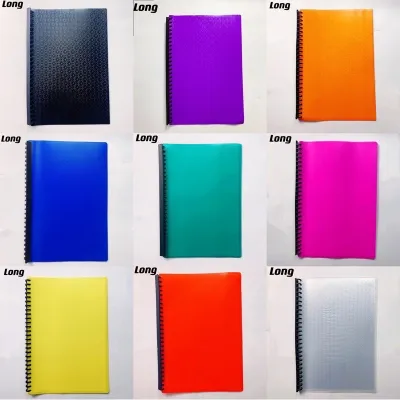
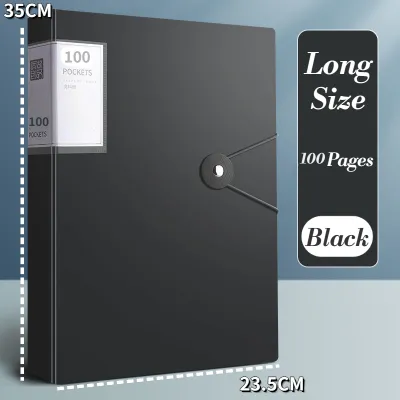
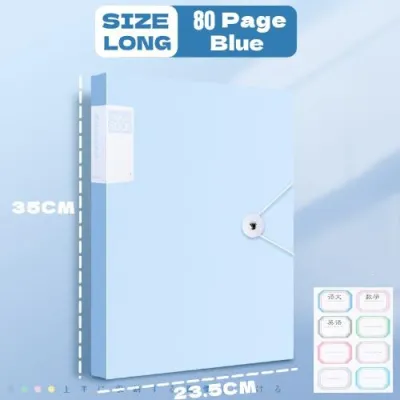
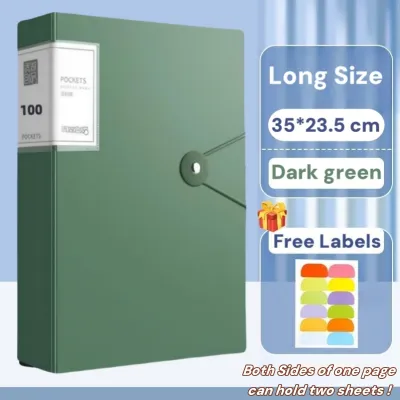
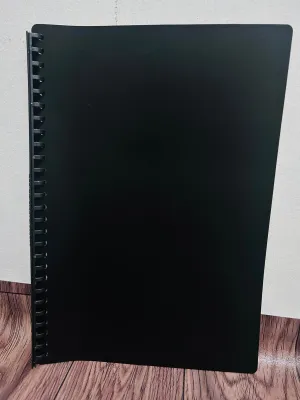
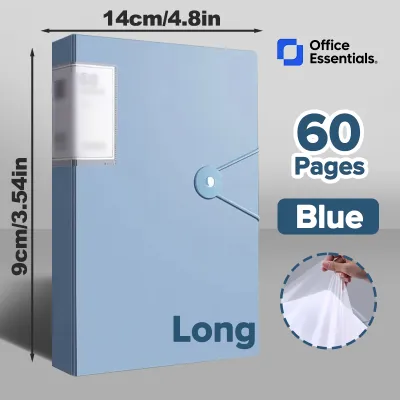
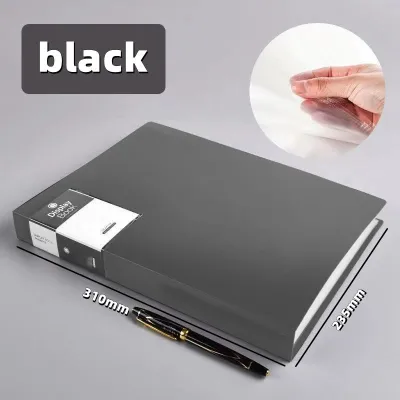
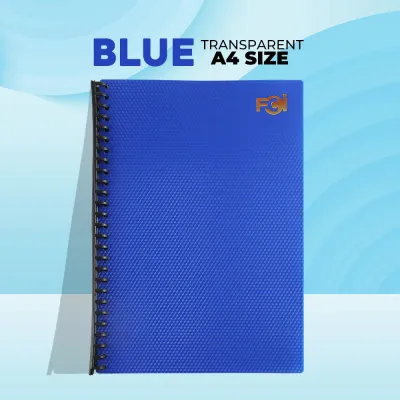
Prices are valid at publication and may change. Please refer to the product page for the latest price.
In Philippine schools, clear books are not just for storage; they are often a formal part of the grading rubric. For instance, Senior High School students compiling their Work Immersion portfolios or college students preparing their final internship reports must present their documents in a highly structured format. A single misplaced page or an incorrect folder color can result in point deductions. Understanding whether your teacher views the clear book as a temporary submission tool or a permanent archive will help you decide how much to invest in its durability.
It is also essential to check if your school requires external labeling features. Look for clear books that feature a spine pocket or a front cover insert slot if your teacher requires a printed name tag, section label, or subject title. Distinguishing between these strict, non-negotiable submission rules and your personal organization preferences will save you from buying a folder that your teacher might reject on submission day.
Matching Sleeve Count to Your Semester Workload
Selecting the correct sleeve count is a balance between meeting your workload demands and avoiding an unnecessarily bulky folder. Clear books typically come in standard capacities of 20, 40, 60, or 100 pockets. To determine the size you need, estimate the total number of worksheets, laboratory reports, or art plates you expect to produce for the subject over the grading period or semester.

When calculating capacity, consider how you plan to load your documents. Single-sided loading—placing one sheet of paper per plastic sleeve—offers maximum visibility for single-page documents but cuts your total page capacity in half. Double-sided loading involves placing two sheets back-to-back in a single sleeve, which effectively doubles the document capacity of your clear book. However, double-sided loading requires sturdier sleeves that can handle the extra thickness without stretching or tearing at the seams.
Weight distribution is another practical factor to consider, especially for students who commute daily. Carrying three 100-sleeve clear books in a backpack can quickly become heavy and strain your shoulders during long walks or transit rides. If your school requirements allow it, distributing your subjects across multiple 20-sleeve or 40-sleeve clear books is often more manageable. This approach not only lightens your daily load but also minimizes the risk of losing all your academic work at once if a single folder is misplaced.
The thickness of the paper you use also dictates the ideal sleeve count and pocket durability. Standard school handouts are often printed on lightweight paper (around 70 gsm to 80 gsm), which easily slides into standard sleeves. If your coursework involves heavy cardstock, thick drawing paper, or multi-page modules tucked into a single pocket, the seams of the plastic sleeves will experience significant stress. Overstuffing a 20-pocket clear book with thick materials can warp the cover and split the plastic welds, so opting for a larger capacity or a sturdier ring-bound system is advisable for heavy workloads.
Selecting the Correct Size and Orientation
In the Philippines, school documents do not follow a single universal paper standard, making size compatibility a critical factor. The three most common paper sizes you will encounter are Letter (often called ‘short bond paper,’ measuring 8.5 by 11 inches), A4 (the international standard, measuring 8.27 by 11.69 inches), and Legal or Folio (commonly referred to as ‘long bond paper,’ measuring 8.5 by 13 inches). Inserting an A4 sheet into a Letter-sized clear book will cause the top of the paper to protrude and crumple, while using a Legal-sized sheet in an A4 folder is impossible without folding the document.
Always verify the exact paper size specified by your teacher before buying. If your school uses ‘long bond paper’ for modules or certificates, you must search specifically for ‘long’ or Legal-sized clear books, which are widely available in local Philippine stationery shops but less common internationally. For standard printed worksheets and research papers, A4 or Letter-sized clear books are generally the safest options.
A common point of confusion for students in the Philippines is the difference between standard US Legal paper and local ‘long bond paper.’ While US Legal paper measures 8.5 by 14 inches, the standard long bond paper used in local schools and government offices is typically 8.5 by 13 inches (sometimes referred to as Folio size). Many imported clear books labeled as ‘Legal’ are designed for the longer 14-inch standard, which leaves extra empty space at the bottom when holding local 13-inch documents. To ensure a snug fit and prevent your papers from sliding around, look for clear books specifically manufactured for the Philippine 13-inch long paper standard.
Orientation is another key detail that affects how easily your teacher can read your work. Most clear books are designed in portrait orientation, which is ideal for essays, reports, and standard worksheets. If your coursework involves engineering lettering, architectural sketches, accounting spreadsheets, or landscape art plates, look for landscape-oriented clear books.
Finally, consider the physical dimensions of the clear book’s spine and how it fits into your daily routine. A 100-pocket clear book has a thick, rigid spine that may not lay completely flat when open, making it difficult to read or grade. Ensure the overall dimensions of the folder—especially when fully loaded—can slide easily into your school backpack without bending the corners of the cover, particularly during crowded jeepney or tricycle commutes.
Assessing Cover and Sleeve Durability for Daily Use
A clear book must survive the physical demands of a school semester, including frequent packing, humid weather, and rainy-season travel. The outer cover serves as the primary shield for your documents. Look for covers made from thick, high-density polypropylene (PP) that offer a balance of flexibility and stiffness. A cover that is too flimsy will bend inside your backpack, creasing the papers inside, while a cover that is too brittle may crack along the spine hinge when exposed to temperature changes or rough handling.
The longevity of a clear book depends heavily on the welding quality of its inner sleeves. Examine the heat-sealed seams along the bottom and inner edges of the plastic pockets. High-quality clear books feature reinforced, double-sealed welds that resist splitting when papers are repeatedly inserted and removed. If the welds look thin, uneven, or easily peel apart under light pressure, the sleeves are likely to tear early in the semester.
The rainy season in the Philippines presents unique challenges for student stationery. During heavy downpours, water can easily seep into backpacks, risking water damage to your printed modules and certificates. A clear book with a fully enclosed design, such as one featuring a secure button closure or a zippered edge, offers an extra layer of defense against moisture. While standard open-edge clear books provide quick access, they leave the top of the sleeves exposed to humidity and stray raindrops, making a water-resistant cover material a vital feature for students commuting during the wet months.
In the humid climate of the Philippines, the material properties of the plastic sleeves are incredibly important. Cheap plastic pockets tend to cling to printed text, especially documents printed on inkjet printers. Over time, the humidity causes the ink to transfer and stick to the plastic, ruining both the document and the sleeve. To prevent this, look for sleeves labeled as ‘copysafe,’ ‘non-stick,’ or ‘acid-free.’ Additionally, an anti-glare or matte finish on the sleeves reduces reflections under harsh classroom fluorescent lights, making it much easier for your teacher to read your work without eye strain.
Building Your Shortlist and Verifying Before Purchase
To ensure you buy the correct clear book, compile a quick checklist based on your school’s requirements and your daily travel habits. Note down the required paper size (Short, A4, or Long), the minimum sleeve count, the mandatory cover color, and any specific binding rules. Having this checklist ready prevents impulse buys that do not meet classroom standards.
If you are shopping in a physical department store or local stationery shop, take the time to inspect the physical samples. Open the clear book completely to check if the spine hinge flexes smoothly without showing signs of stress whitening. Run your fingers along the edges of the plastic sleeves to test the seam strength, and check if the folder includes built-in index tabs or write-on labels, which are highly useful for organizing multiple topics within a single book.
When purchasing from online marketplaces, read the product descriptions and customer reviews carefully. Pay close attention to the dimensions listed in the specifications, as product photos can sometimes make ‘short’ and ‘long’ clear books look identical. Verify the exact sleeve count and check the seller’s return policy in case the item arrives damaged or does not match the specified size. Investing a little extra time to verify these details ensures your clear book will protect your hard work all semester long.
Frequently Asked Questions (FAQ)
Can I add or remove sleeves from a standard clear book?
Most standard clear books feature permanently welded sleeves that cannot be added or removed without damaging the spine. If your page count fluctuates frequently or you expect to expand your portfolio over the school year, look for refillable clear books or multi-ring binders. These alternative designs allow you to open the binding mechanism to insert, remove, or rearrange individual plastic pockets as needed.
How do I prevent ink from smudging inside the sleeves?
To prevent ink from smudging or transferring to the plastic, always ensure that printed or written pages are completely dry before inserting them into the sleeves. Inkjet prints and gel pen inks require extra drying time, especially during the humid rainy season in the Philippines. For long-term preservation, choose clear books with non-stick, acid-free, or copysafe sleeves, and store your folders in a cool, dry place away from direct sunlight.
Community discussion
Share your experience or ask a question. Comments are reviewed before publication.