
Selecting the right clipboard for paper is more than just picking a flat surface with a clamp; it is about matching your document workflow, mobility requirements, and physical environment to the correct board structure. The ideal choice directly depends on whether you are managing high-volume files on the move, securing single-sheet forms in breezy outdoor settings, or organizing clinical charts that require frequent sanitization. By evaluating clip mechanisms, storage capacities, and material compositions, you can select a tool that serves as a highly functional, portable desk.
To make an informed decision, you must analyze how you handle documents throughout the day. A stationary office worker has vastly different requirements than an inspector navigating a construction site or a medical professional moving between hospital wards. Choosing incorrectly can lead to torn documents, lost pens, or warped boards that ruin your writing surface. This guide breaks down the essential features of modern clipboards to help you build a customized shortlist tailored to your daily paper management needs.
Quick Guide: Matching Clipboard Types to Your Organization Needs
When evaluating a clipboard for paper organization, three primary decision axes dictate performance: clip mechanism strength, storage capacity, and material durability. Standard flat boards are designed for quick, single-sheet tasks where portability is straightforward and environmental hazards are minimal. Conversely, heavy-duty storage clipboards act as self-contained mobile offices, protecting multiple document sets while housing writing utensils and small tools.
Products mentioned in this guide
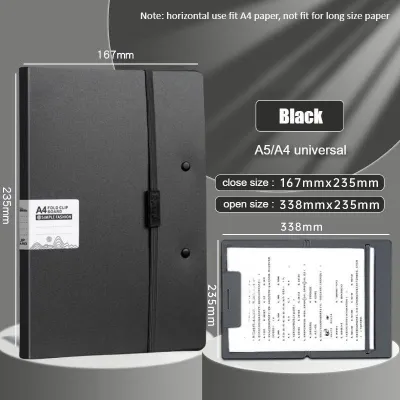
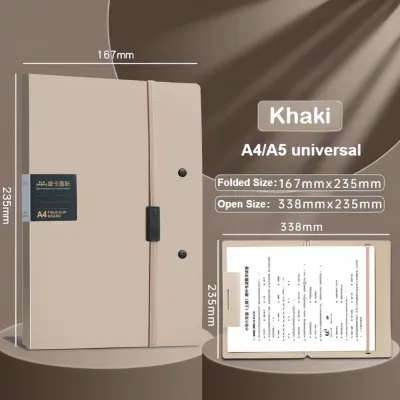
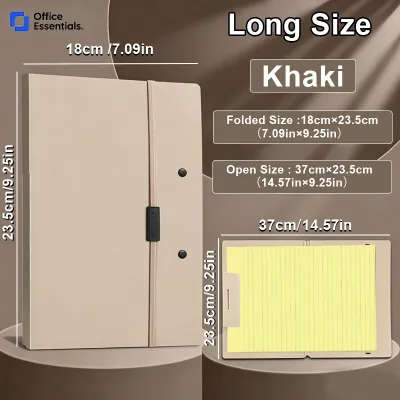
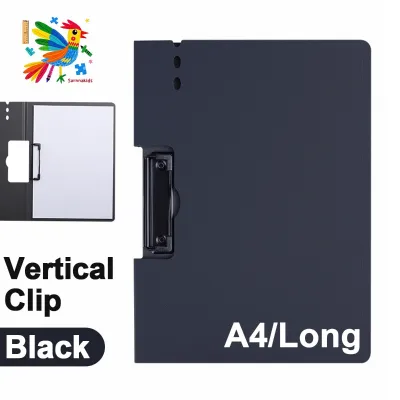
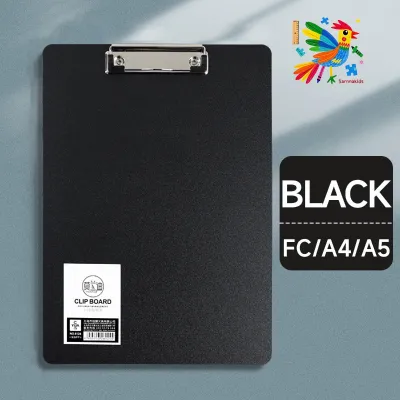
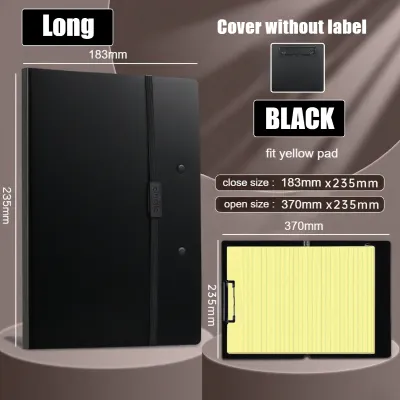
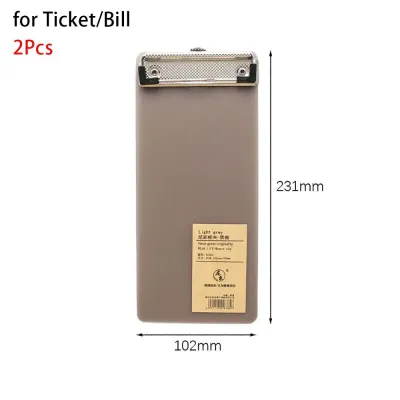
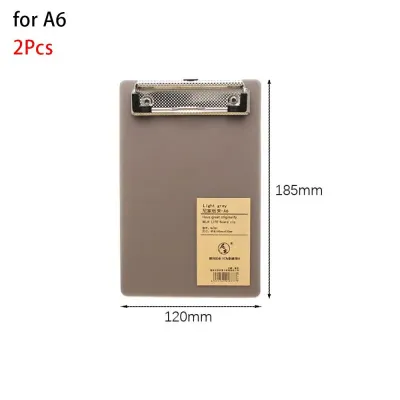
Prices are valid at publication and may change. Please refer to the product page for the latest price.
Your physical environment is the ultimate deciding factor in this selection process. If you work primarily at a stationary desk, a lightweight hardboard or plastic clipboard with a low-profile clip allows for easy stacking and quick document retrieval. For professionals in active environments—such as clinical settings, outdoor inspections, or logistics hubs—a specialized clipboard with protective covers or internal compartments is necessary to keep documents secure, dry, and organized.
Rather than relying on a single, generic design for every task, understanding the specific trade-offs of each clipboard type will help you select the right tool. The following sections detail how different clip mechanisms, storage configurations, and material builds impact daily usability, allowing you to choose a model that seamlessly integrates into your professional workflow.
Clip Mechanisms: Choosing the Right Grip for Your Papers
The clip mechanism is the heart of any clipboard, determining how securely your documents are held and how easily you can swap pages during active tasks. Choosing the wrong clip style can result in slipping pages, damaged paper edges, or unnecessary bulk.

Standard Clamp Clips (Spring-Loaded)
Traditional spring-loaded clamps, often made of nickel-plated steel or heavy-duty plastic, are the most common mechanism found on standard clipboards. These clips utilize a powerful internal spring to press a wide metal bar flat against the top of the board, creating a high-friction grip that keeps papers from sliding.
- Operational Benefits: These clamps offer rapid, one-handed operation. You can easily pull the lever back with one hand to slide a new document in or out, making them ideal for high-traffic areas like reception desks, visitor sign-in stations, or quick inventory checks.
- Physical Limitations: Standard clamps are highly efficient for thin paper stacks but struggle as document volume increases. Overfilling the clamp can permanently stretch the internal spring, reducing its tension and rendering the clipboard useless for holding single sheets securely. Additionally, the metal teeth of the clamp can leave deep indentations or tears on the top sheet of paper if the clip lacks protective rubber corner grips.
Binder Clip and Lever-Clip Mechanisms
For users managing thicker document sets, binder-style and lever-clip mechanisms offer a more robust clamping alternative. These designs use mechanical leverage rather than a simple pulling motion to open and close the gripping jaws, distributing pressure evenly across a larger surface area.
- Leverage and Capacity: Lever-clip mechanisms feature a small, fold-down metal arm that acts as a lever to open the clamp. When the lever is pressed flat, it locks the clamp down with immense force, easily securing stacks of up to 100 sheets of paper without slipping. This mechanical design prevents the spring fatigue common in standard clamps.
- Document Navigation: One of the primary advantages of binder-style clipboards is the ability to flip through pages like a book without removing the entire document set from the board. This is highly useful for reference manuals, multi-page reports, or sequential inspection forms. Before purchasing, always verify the manufacturer's specified maximum sheet capacity to ensure the jaw opening matches your typical document volume.
Magnetic and Dual-Clip Systems
Specialized clipboards incorporate alternative gripping technologies to solve specific workflow challenges, particularly in active, outdoor, or high-movement environments.
- Dual-Clip Configurations: Standard clipboards secure paper only at the top, leaving the bottom of the sheets free to flap, curl, or tear. Dual-clip systems feature a primary clip at the top and a secondary clip or elastic band at the bottom or side. This design is highly beneficial for outdoor work in breezy conditions, preventing wind from lifting and folding your papers while you write.
- Magnetic Clips: Some modern clipboards utilize high-strength neodymium magnets embedded within the top border instead of a mechanical spring. Magnetic clips provide a completely flat profile, making them exceptionally easy to stack and pack. They are highly efficient for holding a few sheets of paper, receipts, or magnetic accessories like specialized pens and stylus tools, though they are not suited for heavy, high-volume document stacks.
Storage and Organization Features for Portable Filing
If your daily routine requires you to carry more than just a single form, a standard flat clipboard may fall short. Storage and organization-focused clipboards combine a rigid writing surface with internal compartments to serve as a portable filing cabinet.
Storage Clipboards with Hidden Compartments
Storage clipboards feature a hollow, box-like design with a hinged top or side opening, providing a secure internal compartment beneath the primary writing surface.
- Internal Capacity: The hollow interior of a storage clipboard is designed to hold spare blank forms, completed documents, and essential tools such as pens, rulers, calculators, or mobile devices. This keeps all your critical workflow items protected in a single, self-contained unit.
- Weight and Portability Trade-offs: While storage clipboards offer unparalleled organization, they are significantly thicker and heavier than standard flat boards. Carrying a fully loaded storage clipboard during long walking inspections can cause hand and wrist fatigue. When selecting a storage model, balance the depth of the internal compartment against the physical demands of your daily mobility.
Multi-Page and Binder-Style Clipboards
Multi-page clipboards bridge the gap between a standard writing board and a traditional binder, incorporating internal rings, dividers, or clear plastic sleeves.
- Document Segmentation: These clipboards often feature a standard exterior clamp for immediate writing tasks, paired with an interior folder containing multi-ring binders or multi-pocket dividers. This layout allows you to categorize papers by project phase, department, or urgency, ensuring that sensitive documents remain separated and organized.
- Verification Steps: When choosing a binder-style clipboard, verify the ring diameter and spacing to ensure compatibility with your local paper punching standards. Additionally, check that the internal sleeve depth can accommodate your document volume without causing the clipboard cover to bulge or fail to latch properly.
Folding and Cover-Flap Designs
Folding clipboards, also known as folio clipboards, feature a protective front cover that folds back 360 degrees to reveal the writing surface.
- Environmental and Privacy Protection: The primary benefit of a folding cover is document protection. In tropical climates prone to sudden rain showers or high humidity, a closed cover shields your papers from water droplets, dust, and physical creasing. Furthermore, folding designs provide crucial privacy for sensitive information, such as patient medical charts or confidential client agreements, by keeping the document face hidden when not in use.
- Usability Considerations: Folding clipboards require you to open the cover flap before you can write or read. In fast-paced environments requiring rapid, repetitive data entry, this extra step can become tedious. Ensure the hinge mechanism is durable and allows the cover to fold completely flat against the back of the board to maintain a comfortable grip.
Build Materials: Balancing Weight, Durability, and Professionalism
The material of your clipboard determines its structural rigidity, weight, lifespan, and how well it withstands the physical demands of your specific work environment.
Hardboard and MDF (Medium-Density Fiberboard)
Hardboard and MDF are classic, wood-based materials manufactured by bonding wood fibers under high heat and pressure, resulting in a dense, uniform board.
- Writing Quality and Cost: Hardboard clipboards are highly popular due to their smooth, ultra-rigid writing surface and extreme affordability. They provide excellent resistance to bending, allowing you to write cleanly even when holding the board with one hand.
- Environmental Vulnerability: Wood-based fibers are highly susceptible to moisture. In humid tropical environments, untreated hardboard can absorb atmospheric moisture over time, leading to swelling, warping, and soft, peeling edges. If dropped frequently, the corners of MDF boards are prone to chipping and splitting. They are best reserved for dry, climate-controlled indoor offices.
Plastics (Polypropylene and ABS)
Plastic clipboards are highly versatile, lightweight, and engineered to withstand demanding physical and chemical environments.
- Material Differences: Polypropylene is highly flexible, chemically inert, and virtually shatterproof, making it excellent for daily utility. ABS (Acrylonitrile Butadiene Styrene) is a tougher, high-impact plastic that provides a rigid writing surface similar to wood but without the weight or environmental vulnerabilities.
- Sanitization and Durability: Plastic boards are completely waterproof and easy to clean, making them the industry standard for healthcare settings, food service, and wet-weather field inspections. They can withstand regular wiping with disinfectants without degrading. When purchasing, avoid ultra-thin, cheap plastics that flex under heavy writing pressure; instead, look for models with reinforced structural ribs molded into the back of the board.
Aluminum and Faux Leather
For specialized applications, aluminum and faux leather represent the opposite ends of the durability and aesthetic spectrum.
- Aluminum Utility: Aluminum clipboards offer an exceptional strength-to-weight ratio. They are rust-proof, dent-resistant, and highly durable, making them the premier choice for rugged industrial sites, auto repair shops, and construction zones. They also provide a firm, unyielding writing surface that does not degrade over years of heavy use.
- Faux Leather Aesthetics: Faux-leather (polyurethane or PU) wrapped clipboards are designed for executive settings, boardrooms, and client-facing presentations where a premium appearance is desired. They offer a soft, comfortable grip and a professional look. However, you must verify that the internal core of the leather board is made of a rigid plastic or composite material to ensure it does not bend or sag when writing.
Scenario-Based Recommendations: Which Type Should You Get?
To simplify your purchasing decision, match your specific professional role and daily workflow to one of these optimized clipboard configurations.
For Office Administrators and Receptionists
Office administrators, receptionists, and HR professionals typically operate in controlled indoor environments where documents are processed quickly at a desk or counter.
- Recommended Setup: A standard hardboard or premium acrylic flat clipboard with a low-profile metal clamp.
- Key Features: Look for a lightweight design with a built-in retractable hanging loop at the top of the clip. This allows you to easily hang the clipboard on wall hooks or organizer racks when not in use. Since documents are rarely carried long distances, heavy storage compartments or folding covers are unnecessary and will only add unwanted bulk to your desk space.
For Field Inspectors, Nurses, and Contractors
Professionals in healthcare, construction, and field inspection require a clipboard that can withstand constant movement, physical impacts, and varying environmental conditions.
- Recommended Setup: A heavy-duty storage clipboard made of impact-resistant ABS plastic or anodized aluminum, featuring a secure latching mechanism.
- Key Features: Prioritize models with a weather-resistant seal around the internal compartment to protect spare documents from rain, dust, and spills. Ensure the clipboard includes an integrated pen compartment, stylus holder, or built-in pen loop to prevent writing tools from falling out during active movement. For clinical environments, opt for smooth, non-porous ABS plastic that can be quickly sanitized with medical-grade wipes.
For Students and Researchers
Students, academic researchers, and surveyors need a portable, lightweight solution that fits easily into a backpack or messenger bag while keeping notes organized across various locations.
- Recommended Setup: A lightweight folding folio clipboard or a slim, multi-page binder-style clipboard made of flexible polypropylene.
- Key Features: Select a model with a protective front cover flap to prevent your notes, reference papers, and homework assignments from getting crumpled, torn, or stained during daily commutes on public transit. Avoid heavy metal or thick, boxy storage boards that add unnecessary weight to your bag. A slim profile ensures the clipboard slides effortlessly alongside textbooks and laptops.
Frequently Asked Questions (FAQ)
What is the maximum paper capacity for a standard clipboard?
The maximum paper capacity of a standard clipboard depends entirely on the design of the clip mechanism and the thickness of the paper being used. Most standard spring-loaded metal clamps are designed to hold between 50 and 100 sheets of standard 80gsm copy paper. Exceeding this limit can permanently deform the internal spring, reducing its gripping tension and causing future documents to slip out. For workloads exceeding 100 sheets, select a specialized lever-clip or heavy-duty binder-style clipboard designed specifically for high-volume document management.
Can I use a standard clipboard for legal-sized or A4 documents?
Standard clipboards are typically sized to fit either Letter (8.5 x 11 inches) or A4 (8.3 x 11.7 inches) paper. In regions like the Philippines, where long bond paper (8.5 x 13 inches) is widely used for legal, administrative, and academic documents, a standard clipboard will leave the bottom portion of the paper unsupported. This unsupported overhang makes the paper highly susceptible to creasing, tearing, and bending. Before purchasing, verify the physical dimensions of the board to ensure it fully supports the length of your specific paper size, opting for dedicated legal-sized clipboards if you regularly handle long documents.
How do I clean and maintain a plastic or aluminum clipboard?
To clean a plastic or aluminum clipboard, wipe the surface with a soft microfiber cloth dampened with warm water and a mild dish soap. Always check the manufacturer’s care label before applying harsh chemical solvents, bleach, or abrasive scrubbers, as these can degrade plastic polymers or strip protective anodized coatings from aluminum. To maintain the clip mechanism, periodically check and tighten any loose screws or rivets securing the metal clip to the board. Keep the spring mechanism free of dust and moisture to prevent rust, and avoid overextending the clip to preserve its original clamping tension.
Community discussion
Share your experience or ask a question. Comments are reviewed before publication.