
Choosing the right coloring book for your child requires balancing their physical development with the physical design of the book itself. If a design is too complex, a young child may become frustrated and abandon the activity; if it is too simple, an older child may quickly lose interest. By matching line thickness, page dimensions, and illustration density to your child’s current motor skills, you can transform coloring from a simple pastime into an engaging tool for artistic growth.
When selecting school art supplies, parents often focus solely on the coloring tools, but the paper medium is equally important. A well-matched coloring book supports hand-eye coordination, builds finger strength, and prepares children for writing. Evaluating a few physical characteristics of a book before purchasing ensures it will be a source of pride rather than frustration for your young artist.
Assess Your Child's Fine Motor Skills and Coloring Readiness
Observe how your child holds a coloring tool to understand their current level of physical control. Toddlers typically start with a palmar grasp, wrapping their entire fist around a thick wax crayon. This grip relies on large shoulder and elbow movements, resulting in broad, sweeping strokes that require large coloring spaces.
Products mentioned in this guide
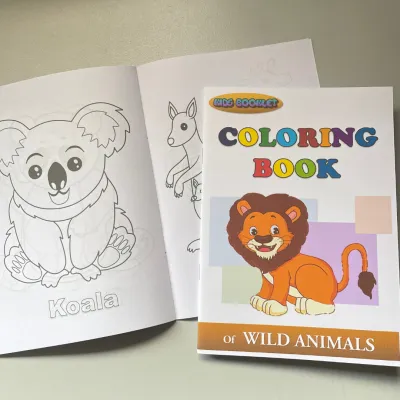
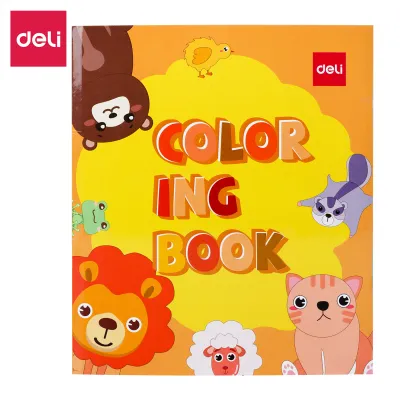
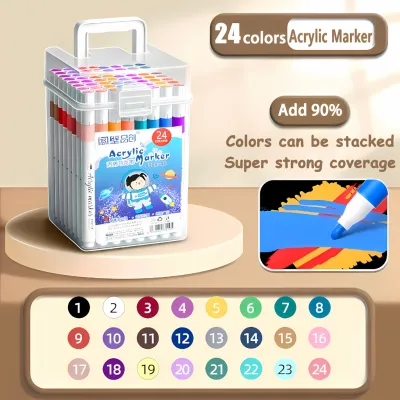
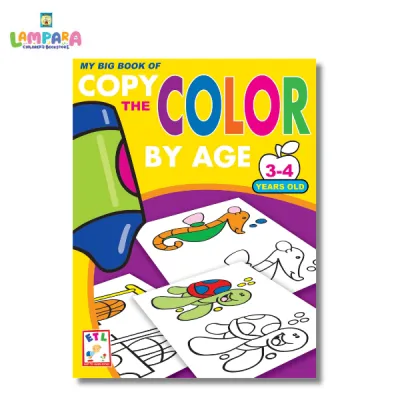
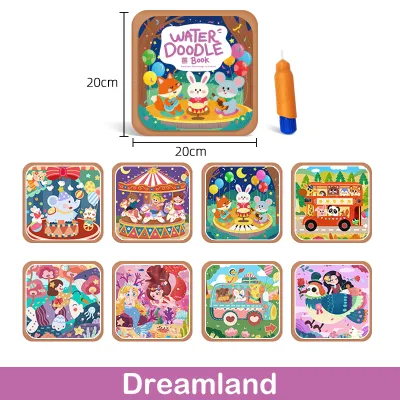
Prices are valid at publication and may change. Please refer to the product page for the latest price.
As hand muscles strengthen, children transition to a pincer grasp, using their thumb and index finger to pinch the tool. This shift allows for finer wrist and finger movements, making it possible to control thinner tools like colored pencils and navigate smaller, more detailed spaces.
Attention span is another critical indicator of readiness. A child who enjoys quick, high-energy activities may feel overwhelmed by a thick book filled with dense illustrations. For these children, single-page sheets or books with easily detachable pages are ideal, as they offer a clear sense of completion.
Watch for the transition from random scribbling to intentional boundary awareness. When a child begins to slow down their hand movements near printed lines, they are demonstrating the visual-motor integration needed for more structured coloring books.
Your child’s physical posture also plays a role in their coloring control. If they are slouching or their feet do not comfortably reach the floor, their shoulder stability is compromised, which directly impacts their hand control. Ensuring a comfortable seating arrangement can immediately improve their ability to stay within the lines.
Match Design Complexity and Line Thickness to Developmental Stages
For early scribblers, typically ages two to three, look for books featuring extra-thick outlines, ideally around three to five millimeters wide. These heavy borders act as visual and physical buffers, giving toddlers a forgiving margin as they practice stopping their hand movements. The illustrations should consist of single, isolated objects like a simple ball, a star, or a large leaf, without any internal divisions.

As children develop better hand-eye coordination, usually around ages four to five, they can transition to medium-weight lines and more defined subjects. Books in this category should feature recognizable scenes with simple internal sections, such as a house with a separate roof and door, or an animal with large, distinct spots. This stage encourages children to select different colors for different parts of a single image.
When moving from thick lines to medium lines, look for books that introduce simple background elements, like a cloud in the sky or grass under a character’s feet. These elements help teach spatial relationships and encourage children to think about the context of the illustration.
For children with refined motor skills, typically ages six and up, standard or thin outlines are appropriate. These books feature detailed scenes, intricate patterns, and smaller coloring fields that require precise wrist control and a steady grip. At this stage, children can comfortably use fine-tipped colored pencils or gel pens to fill in complex landscapes or geometric patterns.
To verify if a book matches your child’s current level, print or copy a sample page and observe their coloring process. If they frequently cross boundaries with frustration, or if they struggle to fill the large empty spaces of a simple book, adjust the complexity level accordingly.
Select Page Size, Orientation, and Binding for Art Class Use
The physical format of the coloring book must suit the environment where it will be used, such as a compact school desk or a small study table at home. Jumbo-sized books, often larger than A4, are excellent for floor coloring at home where a child can use their entire arm, but they can easily slide off small classroom desks. For school art classes, standard letter or A4 sizes are much more manageable.
Page orientation is another practical consideration. Landscape orientation is often easier for younger children because it matches the natural side-to-side sweeping motion of their arms. Portrait orientation is better for older children who have developed vertical wrist control and can navigate more complex layouts.
Binding plays a crucial role in how easily a child can color. Traditional perfect-bound books with glued spines often resist lying flat, forcing the child to use one hand constantly to hold the book open. Spiral-bound books or those with perforated edges are highly recommended for classroom settings, as they lay completely flat and allow pages to be cleanly removed for individual work or display.
Consider the humidity of tropical environments, which can make paper slightly more pliable and prone to tearing. Pages that are easy to detach prevent the child from tearing the paper accidentally when trying to show their finished artwork to their teacher or family.
Verify Paper Thickness and Tool Compatibility on the Label
Paper quality directly affects how well a coloring book handles different mediums. Standard, lightweight paper, often around 70 to 80 gsm, is suitable for dry mediums like wax crayons and colored pencils, but it will quickly buckle, pill, or bleed when exposed to wet mediums.
If your child prefers washable markers, brush pens, or watercolor pencils, look for books that specify a heavier paper weight, ideally 100 gsm or higher. High humidity can prolong the drying time of water-based markers, increasing the risk of the ink soaking through the fibers and ruining the illustration on the reverse side.
In humid climates, paper fibers absorb moisture from the air, making them softer and more susceptible to tearing under the friction of heavy coloring. Choosing a slightly higher paper weight or using a protective plastic sheet underneath can prevent tearing and preserve the artwork.
Always check the product packaging or description for single-sided printing. Single-sided pages are essential when using markers, as they ensure that any bleed-through does not ruin a second drawing. To be safe, teach your child to perform a quick corner test with their preferred marker on an unused edge of the page, and place a scrap sheet of cardboard behind the active page to protect the rest of the book.
Frequently Asked Questions (FAQ)
Should I buy coloring books with pre-printed color guides for my child?
Color-by-number books and pre-shaded guides can be highly beneficial for building specific cognitive skills, such as number recognition, matching, and following multi-step instructions. They are excellent for children who enjoy structured tasks and feel satisfied by achieving a predictable, realistic result. However, to foster independent creativity and self-expression, ensure these are balanced with blank, unguided coloring books where your child can freely experiment with unusual color combinations and imaginative shading.
How can I tell if a coloring book is too difficult for my child?
Pay close attention to your child’s behavioral cues during the activity. If they frequently abandon pages halfway through, press down excessively hard with their crayons until the tips break, or completely avoid the coloring book in favor of other toys, the design complexity may be too advanced. If you notice these signs of frustration, gently pivot to a simpler book with thicker lines and larger shapes, presenting it as a fun, low-pressure alternative to rebuild their artistic confidence.
Community discussion
Share your experience or ask a question. Comments are reviewed before publication.