
Selecting the right deep hole marker pen for metalworking and machining requires matching the physical dimensions of the marker’s tip to the geometry of your workpiece while ensuring the ink formulation can withstand the demanding conditions of a Philippine workshop. High humidity, elevated ambient temperatures, and constant exposure to cutting fluids, lubricants, and metal shavings mean that a standard office marker will quickly fail. By understanding the mechanical and chemical specifications of specialized industrial markers, you can ensure clean, legible layout lines that remain visible throughout the machining process.
Whether you are marking drill points through thick steel templates, layout lines on raw iron castings, or identification codes on finished aluminum profiles, the correct tool prevents errors and saves valuable material. This guide breaks down the essential selection criteria, from physical tip dimensions to ink chemistry and storage practices, helping you build a reliable toolkit for your workshop.
Understanding Core Specifications of Deep Hole Markers
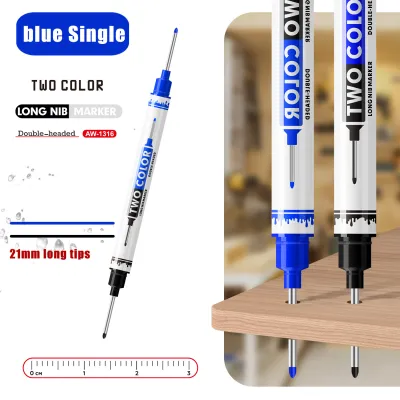
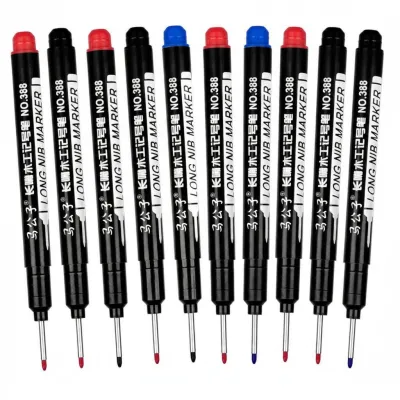
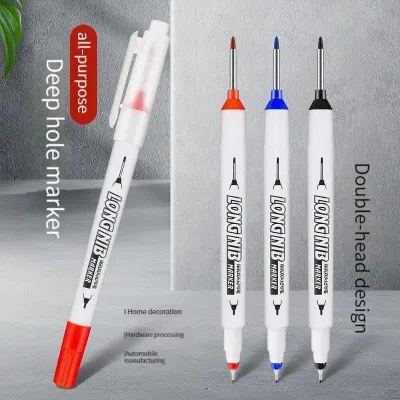
Deep hole markers are engineered specifically to overcome the physical limitations of standard writing instruments when marking through templates, brackets, or pre-drilled holes. A standard permanent marker features a tapered plastic nose cone that prevents the tip from reaching more than a few millimeters into a narrow opening. In contrast, a deep hole marker utilizes an elongated, slim stainless steel or reinforced plastic sleeve that houses a long-reach fiber or acrylic nib. This structural design allows the pen to slide deep into narrow cavities without scraping the sides of the hole, ensuring the ink actually contacts the target surface.
Products mentioned in this guide
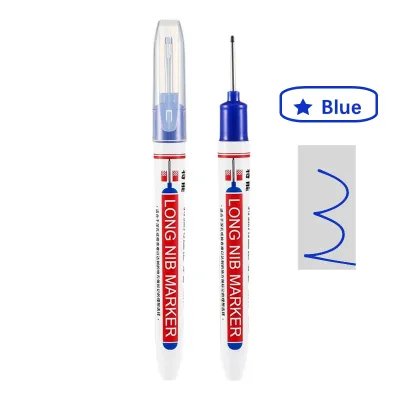
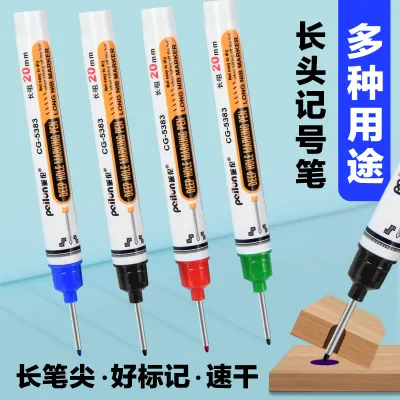
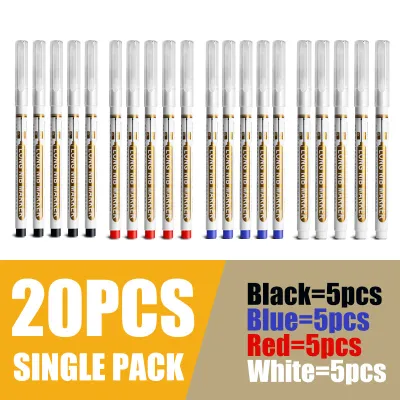
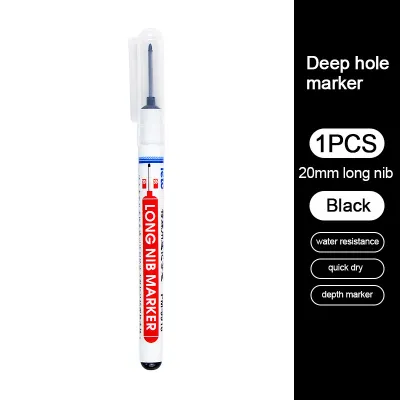
Prices are valid at publication and may change. Please refer to the product page for the latest price.
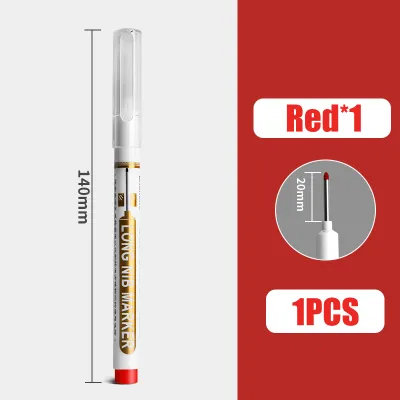
When evaluating manufacturer specifications, pay close attention to three critical dimensions: the tip diameter, the extended sleeve length, and the overall barrel thickness. The tip diameter, which typically ranges from 1.0 mm to 2.5 mm, determines the minimum hole diameter the marker can enter. The extended sleeve length, often between 20 mm and 45 mm, dictates the maximum depth the marker can reach. If you attempt to use a marker with a sleeve diameter that matches the hole diameter too closely, capillary action can draw the ink up the outside of the sleeve, leading to messy smudges and rapid ink depletion.
Beyond the tip, the construction of the pen barrel and grip area plays a vital role in daily usability. In the tropical climate of the Philippines, workshops frequently experience high humidity, and operators often work with sweaty or oil-slicked hands. Look for markers featuring high-impact ABS plastic or anodized aluminum barrels that resist crushing if stepped on or dropped onto concrete floors. A textured, non-slip grip zone—either molded directly into the plastic or provided via a rubberized sleeve—ensures precise control when wearing heavy work gloves or handling oily workpieces.
Matching Ink Formulations to Your Machining Environment
The surface condition of the metal you are marking dictates the type of ink formulation required for a lasting, visible line. Industrial deep hole markers generally fall into three chemical categories: dye-based permanent inks, liquid paint formulations, and solid paint or grease-based compounds. Each of these formulas behaves differently when exposed to the heat, friction, and chemical solvents common in machining environments.

Dye-based permanent inks are highly fluid and dry almost instantly, making them excellent for clean, dry, and bright metal surfaces such as aluminum, brass, or stainless steel. Because they dry via solvent evaporation, they form a thin, low-profile mark that does not interfere with precision measurements or physical fitment. However, these inks can dissolve or bleed when exposed to aggressive cutting fluids, rust preventatives, or active coolants during the drilling or milling process. If your workflow involves heavy flood cooling, verify that the marker label explicitly states resistance to water-soluble coolants and cutting oils.
For rough, dark, oxidized, or rusty metals like hot-rolled steel and cast iron, liquid paint markers are far more effective. These markers utilize a suspended pigment formulation that deposits a thick, opaque layer of paint over the surface. This paint layer sits on top of rust and mill scale rather than soaking into it, providing excellent contrast and visibility. Liquid paint is also highly resistant to weathering, UV exposure, and direct contact with water or oil. The trade-off is a longer drying time, which can range from thirty seconds to several minutes depending on ambient humidity, and a slightly thicker mark that may not be suitable for high-precision layout work.
To verify the performance of any ink formulation in your specific shop conditions, always perform an empirical test on a scrap piece of the target metal. Apply a sample mark, allow it to dry according to the manufacturer’s instructions, and then expose it to the specific cutting fluid, water, or heat cycle used in your production line. Observe whether the mark smears, fades, or lifts off the metal. This simple verification step prevents costly layout errors caused by disappearing marks mid-job.
Selecting the Right Tip Length and Material for Specific Tasks
Choosing the correct tip configuration is a balance between physical clearance and structural durability. Before purchasing a deep hole marker, establish a practical measurement framework based on your most common workpieces. Measure the depth of the deepest template or bracket you regularly work with, and add a safety margin of at least 5 mm to account for the angle at which you hold the pen. If you frequently mark through 30 mm thick steel plates, a marker with a 20 mm extended tip will fail to reach the substrate, forcing you to guess the center point and risking misalignment.
The material of the marking nib itself directly impacts how well the pen resists wear when dragged across abrasive metal edges. Hard acrylic or polyester fiber tips are the most common, offering a good balance of ink flow and shape retention. However, if these fiber tips are repeatedly pressed against sharp metal burrs or rough cast surfaces, they can fray, split, or clog with fine metal dust. For highly abrasive surfaces, a metal ball-valve tip is highly durable; it uses a spring-loaded steel ball to dispense paint, resisting wear indefinitely but requiring a firmer, perpendicular pressing motion to write.
Consider also the trade-offs between fine tips and broad tips for your specific application. Fine tips (0.7 mm to 1.5 mm) are indispensable for precision layout work, sheet metal fabrication, and tool-and-die making where a fraction of a millimeter matters. However, these delicate tips carry less ink and can dry out quickly if left uncapped. Broad tips (2.0 mm to 4.0 mm) are better suited for structural steel fabrication, pipe fitting, and general inventory marking where high visibility from a distance is more important than absolute dimensional precision.
Building Your Shortlist: Key Features to Verify Before Buying
When sourcing deep hole markers from local industrial suppliers or online marketplaces, look beyond the basic product description to verify key operational features. Start by inspecting the packaging or product documentation for clear activation instructions. Many high-performance paint markers utilize a valve-action mechanism that requires you to shake the pen to mix the internal pigments and then press the tip repeatedly against a hard surface to prime the ink flow. Ensure these instructions are clear, as improper activation can lead to either a dry tip or a sudden flood of ink that ruins your workpiece.
For industrial environments, check if the manufacturer provides a Safety Data Sheet (SDS). This document is essential for compliance with workshop safety regulations, detailing the chemical composition of the solvents used and outlining proper ventilation and handling procedures. Avoid markers that contain high concentrations of restricted solvents like xylene or toluene if your workshop lacks dedicated extraction systems or if you have strict environmental health and safety policies in place.
Additionally, evaluate the physical design of the marker for practical, everyday convenience on the shop floor. A secure, heavy-duty pocket clip prevents the marker from falling out of your pocket when you bend over to inspect a machine. A non-roll barrel design—such as a triangular body or a cap with molded ridges—prevents the pen from rolling off slanted machine beds, workbenches, or structural beams. Finally, some premium deep hole markers offer replaceable tips and refillable ink reservoirs, which can significantly reduce long-term consumable costs in high-volume production environments.
Proper Storage and Maintenance to Prevent Clogging
To maximize the lifespan of your deep hole markers and ensure a consistent ink flow, establish proper storage and maintenance habits within your workshop. The chemical solvents in industrial inks are highly volatile, meaning they evaporate rapidly when exposed to air. Always recap the marker immediately after use, listening for an audible click that confirms the cap is fully sealed. In hot, tropical environments, even a few minutes of exposure can cause the ink in the extended sleeve to dry solid, blocking the flow from the main reservoir.
The correct storage orientation depends entirely on the marker’s internal ink delivery mechanism. Capillary-action markers, which rely on a continuous fiber wick to draw ink from the barrel to the tip, are best stored horizontally. Storing them tip-down can cause the tip to become oversaturated and leak, while storing them tip-up can cause the ink to drain back into the barrel, resulting in a dry start. Valve-action paint markers, however, should generally be stored horizontally or tip-up to prevent heavy pigments from settling in the valve mechanism and causing a permanent clog.
If a fiber tip does become clogged with dried ink or contaminated with metal dust and cutting oil, do not attempt to clean it with aggressive solvents like lacquer thinner or gasoline, as these chemicals can dissolve the plastic barrel or destroy the internal seals. Instead, check if the tip is reversible; many industrial markers allow you to gently pull the fiber nib out with a pair of clean pliers, flip it around, and reinsert it to expose a fresh, clean marking point. If the tip is not reversible, try wiping the nib gently with a lint-free cloth moistened with isopropyl alcohol to dissolve the surface crust, then press the tip on a scrap piece of cardboard to draw fresh ink through the channel.
Over time, all markers will eventually reach the end of their usable life. Visual signs of expiration include a permanent separation of the ink pigment and solvent (resulting in a watery, translucent mark even after thorough shaking), a completely hardened nib that refuses to absorb ink, or a cracked barrel that allows air to dry out the internal reservoir. Recognizing these signs early allows you to replace the marker before it fails mid-project, ensuring your layout work remains accurate and uninterrupted.
Frequently Asked Questions (FAQ)
Can standard markers with extended tips replace deep hole markers?
Standard permanent markers with modified or extended tips cannot reliably replace purpose-built deep hole markers in a professional machining environment. Standard markers lack the protective, narrow metal sleeve that supports the extended nib, making them highly susceptible to bending, creasing, or snapping when forced into deep, narrow cavities. Furthermore, standard markers rely on simple capillary action without a regulated valve mechanism, which often leads to ink starvation when writing at steep downward angles or rapid tip drying when exposed to the dusty, warm air of a metalworking shop.
How to safely remove permanent marker mistakes from machined parts?
To safely remove marking errors without damaging the metal substrate, first identify the surface finish and material of the workpiece. For unfinished metals like raw steel or cast iron, you can use a clean microfiber cloth moistened with isopropyl alcohol, acetone, or a manufacturer-approved solvent specified in the marker’s Safety Data Sheet. Gently wipe the mark until dissolved. If the metal has a sensitive polished finish, an anodized coating, or a painted surface, avoid aggressive solvents that could dull or strip the finish; instead, opt for mild rubbing alcohol or a light mechanical eraser, testing a small, inconspicuous area first to ensure no surface degradation occurs.
Community discussion
Share your experience or ask a question. Comments are reviewed before publication.