
Choosing the right Deli acrylic marker set requires matching the physical properties of your drawing surface with the specific capabilities of the paint pens. Acrylic markers package dense, opaque acrylic paint into the convenient, mess-free form of a pen. Because different projects demand varying levels of precision, coverage, and ink adhesion, selecting a set is not a one-size-fits-all decision.
In the Philippines, where the tropical climate and high ambient humidity can influence paint drying times and surface adhesion, making an informed choice is even more critical. Whether you are planning to decorate smooth glassware, customize canvas sneakers, or paint intricate designs on local beach pebbles, analyzing your project’s specific needs will guide you to the perfect marker configuration. By evaluating tip styles, paint finishes, and color selections, you can ensure your creative designs look professional and stand the test of time.
Match Tip Sizes to Your Surface Texture and Detail Level
The physical nib of your marker determines both the precision of your linework and how easily you can cover large areas. Deli acrylic markers come in several tip configurations, and choosing the wrong one can lead to frustration, premature nib wear, or uneven paint application.
Products mentioned in this guide
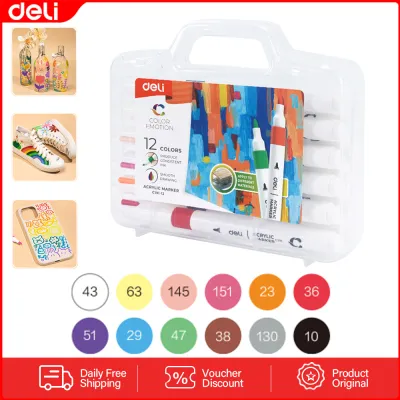
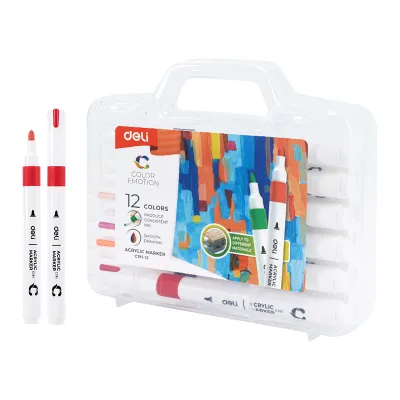
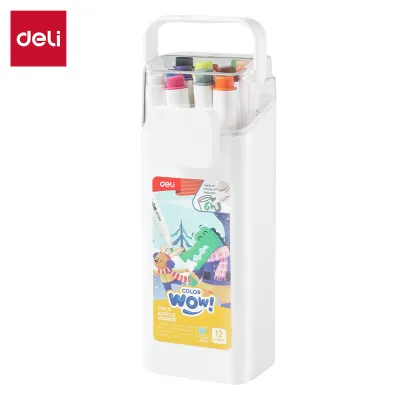
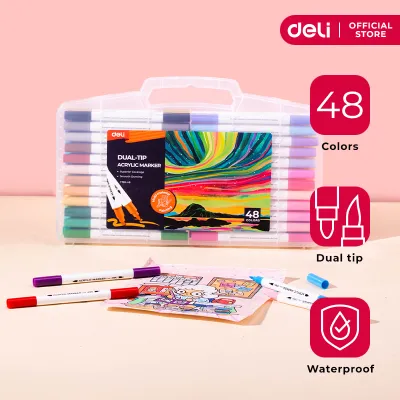
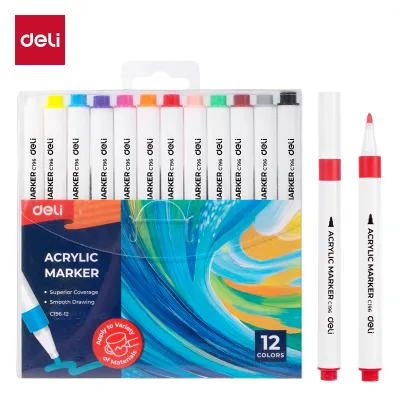
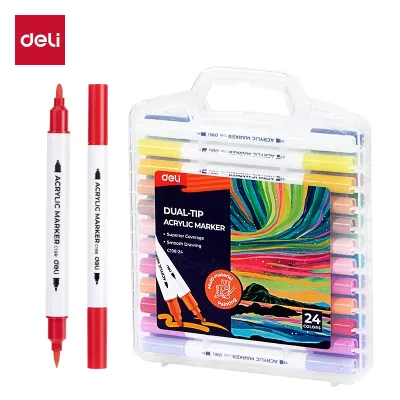
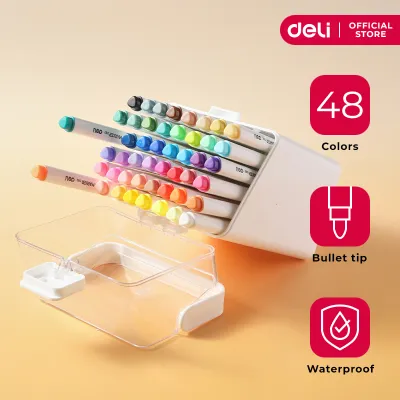
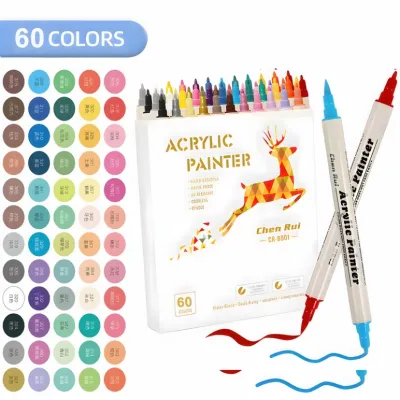
Prices are valid at publication and may change. Please refer to the product page for the latest price.
Fine and extra-fine tips, typically ranging from 0.7mm to 1.0mm, are engineered for intricate details, fine outlines, and writing. These tips are usually made of rigid plastic or dense, fine fiber, which allows for highly controlled ink delivery. They perform exceptionally well on smooth, non-porous surfaces like glazed ceramics, plastic phone cases, and polished metal, where excess paint would otherwise pool or run. If your project involves complex mandalas, fine lettering, or delicate facial features, a set featuring extra-fine tips is indispensable.
Medium and bullet tips, generally measuring between 2.0mm and 3.0mm, serve as the workhorses of the crafting world. These rounded fiber nibs provide a balanced flow of paint that is perfect for general coloring, bold outlines, and standard illustrations. They glide smoothly over semi-porous surfaces like heavy cardstock, primed canvas, and smooth wood. A medium bullet tip allows you to fill in medium-sized shapes efficiently while still maintaining enough control to stay within your sketched guidelines.
Broad, chisel, or brush tips are designed for expressive strokes, calligraphy, and covering large surface areas. Chisel tips allow you to alternate between thick block lines and thinner edges, making them highly versatile for signage. Brush tips excel at blending colors and creating organic, sweeping strokes. When working on highly textured or rough surfaces like raw canvas, coarse stone, or unfinished wood, these broader fiber tips are ideal because they can deposit a generous layer of paint into the surface’s crevices without wearing down as quickly as delicate fine tips.
Before making your purchase, always verify the exact nib dimensions and shape printed on the product packaging. Terms like “fine” or “medium” are not universally standardized and can vary between different Deli product lines. Checking the millimeter measurement ensures you get the exact line width your project requires.
Select the Ideal Color Count and Paint Finish
Deli offers a wide array of options, from compact starter packs to massive professional assortments. Choosing the right color count is a balance between your project’s complexity and your budget. Smaller, curated sets of 12 to 24 colors are excellent for beginners, casual crafters, or projects that rely on a specific, limited color palette. These sets are highly portable, easy to store, and very affordable, typically ranging from ₱150 to ₱400 in the local market. Conversely, larger sets containing 36, 48, or more colors are highly recommended for detailed illustrations, portrait work, and complex shading. Having a wider spectrum of intermediate shades allows you to create smooth gradients and realistic depth without needing to physically blend wet paint on your surface.

The paint finish you select will define the final look of your artwork. Matte finishes are the standard for most acrylic markers, drying to a flat, velvety texture that reduces glare under indoor lighting. Glossy finishes cure with a slight sheen that mimics enamel paint, giving your designs a vibrant, high-contrast pop that works wonderfully on decorative objects. Metallic and neon finishes are specialized options; metallics offer excellent reflectivity and premium appeal, while neons provide high visibility and glow under UV light.
Keep in mind that smoothness, bleed resistance, drying speed, water resistance, and erasability depend entirely on the exact material combination of your surface and the marker ink. Because these performance factors vary, always perform an observable trial on a scrap piece of the same material to verify how the paint behaves before starting your main project. Highly porous materials like terracotta or raw wood will absorb the liquid binder, which can make a glossy paint cure to a semi-matte finish. Conversely, non-porous surfaces like polished glass or plastic will preserve the paint’s natural gloss. To avoid unexpected results, always check the manufacturer’s label for specific finish claims and perform a quick test on a scrap piece of the same material first.
Match Marker Variants to Popular DIY and Crafting Scenarios
Different crafting projects present unique physical challenges, from rough textures that eat up ink to slick surfaces that resist paint adhesion. Matching the specific traits of your Deli acrylic marker set to your intended scenario is the best way to guarantee a successful outcome.
Rock Painting and Canvas Art
Painting on rocks and canvas is a popular hobby in the Philippines, often utilizing natural materials collected from local beaches or standard stretched canvases from art supply shops. These surfaces are characterized by their porous, uneven, and highly textured physical structures.
For these projects, a combination of medium and fine tips is highly effective. You will want to use medium or broad bullet tips to lay down your base colors and cover the textured canvas weave or rough stone surface quickly. Once the base coat has dried completely, you can transition to fine or extra-fine tips to apply detailed patterns, sharp outlines, or intricate lettering on top.
High-opacity ink is absolutely critical for rock painting. Natural river stones and beach pebbles often have dark grey, brown, or speckled undertones. Deli’s highly pigmented acrylic formulas are designed to provide excellent coverage, allowing you to achieve vibrant, solid hues in just one or two coats.
Keep in mind that highly absorbent, unprimed surfaces will consume significantly more ink than smooth, sealed materials. If you are planning a large-scale canvas project or a large batch of painted rocks, your markers will deplete much faster. It is wise to check the marker’s physical ink volume or capacity specifications on the packaging, or opt for a larger set to ensure you do not run out of key colors mid-project.
Glass, Ceramic, and Smooth Surfaces
Decorating glassware, mugs, glazed ceramic tiles, and metal tins requires a completely different approach because these surfaces are non-porous and incredibly slick. On these materials, there are no fibers or pores for the paint to sink into, meaning the ink must rely entirely on surface adhesion to stay in place.
Fine or medium bullet tips are highly recommended for smooth surfaces. Because slick materials do not absorb liquid, excess ink can easily pool, run, or bleed if it is over-applied. The controlled, metered flow of a bullet tip prevents these puddles, allowing you to draw clean, crisp lines.
Glossy and metallic finishes generally offer the best visual results on glass and glazed ceramics. The reflective qualities of these finishes complement the polished nature of the substrate, creating a seamless, professional look. Gold and silver metallic markers look particularly striking on dark-colored glazed mugs or clear glassware.
However, you must keep durability and safety in mind. Unbaked acrylic paint on non-porous surfaces is highly susceptible to scratching, chipping, and peeling when handled. Always check the applied product’s label and the treated item’s manufacturer instructions first. If instructions conflict, the item is unidentified, or the use is not covered, stop and consult the manufacturer. For items like mugs or plates, the design should be restricted to areas that do not come into contact with food, beverages, or your lips. To protect your finished design from wear and tear, apply a compatible clear acrylic sealer once the paint has fully cured, and always wash these items gently by hand.
Customizing Shoes, Fabric, and Phone Cases
Customizing everyday personal items like canvas sneakers, denim jackets, and plastic phone cases is a fantastic way to express your personal style. These projects involve mixed materials that are frequently handled, flexed, or exposed to the elements.
Fine tips are essential for these compact, curved surfaces. Whether you are drawing a detailed character on the side of a shoe or outlining a pattern on a TPU phone case, a fine 0.7mm tip provides the precision needed to navigate seams, eyelets, and tight corners.
While Deli acrylic markers can adhere beautifully to fabric fibers, rubber, and plastics, the long-term durability, washability, and scratch resistance of your design depend heavily on the ink’s flexibility. Standard acrylic paint dries into a rigid plastic film; if applied too thickly to flexible areas like the toe crease of a shoe or a soft silicone phone case, the paint will inevitably crack and peel as the material bends.
Before starting, inspect the marker packaging for fabric-specific instructions or compatibility claims. Many acrylic markers require a heat-setting process—such as running a warm iron over the reverse side of the fabric or using a household hairdryer on high heat—to lock the pigment into the fibers and make it resistant to gentle washing. For high-wear plastic phone cases, applying a flexible, scratch-resistant clear topcoat is highly recommended to protect your artwork from the friction of being slid in and out of pockets.
Practical Tips for Priming, Using, and Storing Your Markers
To get the longest lifespan and the most consistent performance out of your Deli acrylic marker set, proper care and maintenance are essential. Because these pens use a valve-action system to keep the paint fresh, they require a specific handling routine.
The standard priming process must be done carefully. Keep the cap securely on and shake the marker vigorously for 20 to 30 seconds to redistribute the heavy pigments. Remove the cap, place the pen vertically on a scrap piece of paper, and press the nib down gently until it retracts slightly into the marker body. Repeat this pumping action slowly. You will see the colored paint begin to flow down and saturate the white tip. Avoid rapid, aggressive pumping, as this can cause a sudden rush of paint to flood the collar, resulting in messy leaks.
Always store acrylic paint pens horizontally. If you store them vertically with the tip pointing down, the heavy paint pigments will pool in the nib, which can clog the valve. If you store them vertically with the tip pointing up, the paint will drain away from the nib, causing it to dry out. Horizontal storage keeps the pigment and binder perfectly balanced along the pen barrel.
Finally, snap the caps on tightly immediately after use; even a few minutes of exposure to the air can cause the water-based binder to dry and harden on the nib. If you notice a buildup of dried paint on the tip that is restricting the ink flow, gently pull the fiber nib out of the marker, rinse it under lukewarm water until the dried paint dissolves, dry it thoroughly with a paper towel, and slide it back in. This simple step will instantly restore a smooth, consistent paint flow.
Frequently Asked Questions (FAQ)
Are acrylic markers permanently waterproof on all surfaces?
Once fully cured, acrylic paint is highly water-resistant because the acrylic polymer binder dries into a water-insoluble plastic film. However, its permanent waterproof status depends heavily on the surface’s porosity. On porous materials like raw wood, terracotta, and canvas, the paint binds deeply with the fibers and is extremely difficult to wash away. On non-porous surfaces like glass, glazed ceramic, and metal, water can eventually seep under the edges of the paint film, causing it to lift and peel. For any project that will be kept outdoors or exposed to moisture, always check the packaging for explicit waterproof claims and apply a compatible clear, waterproof sealant to protect your work.
How do I get opaque coverage on dark materials?
Achieving vibrant, solid colors on dark paper, black canvas, or dark rocks requires high-opacity paint. Look for Deli marker sets specifically labeled as highly pigmented, matte, or metallic, as these formulations contain a higher concentration of solid pigments. When applying the paint, do not press down hard on the nib, as this will not increase opacity and will only damage the fiber tip. Instead, apply a thin base layer of white acrylic paint or a white marker first, let it dry completely, and then paint your colored marker over it. Alternatively, apply your color in multiple thin layers, allowing each layer to dry fully before applying the next to prevent the wet ink from lifting the previous coat.
Community discussion
Share your experience or ask a question. Comments are reviewed before publication.