
Choosing the right Deli pencil requires matching the specific lead formulation, barrel shape, and mechanical design to your daily writing or drawing tasks. In the tropical climate of the Philippines, where high humidity can affect paper texture and lead performance, selecting a pencil that resists smudging and maintains structural integrity is essential. Whether you are a student preparing for standardized exams, an architect drafting precise schematics, or an artist layering vibrant colors, understanding the physical properties of each pencil type ensures a smooth, reliable experience.
By evaluating how different graphite grades, barrel materials, and mechanisms interact with your paper, you can avoid common issues like frequent lead breakage, hand fatigue, and smudged work. This guide breaks down the primary categories of Deli pencils, matches them to specific daily applications, and outlines the key specifications to verify before making your purchase.
Understanding the Main Types of Deli Pencils
Wooden graphite pencils remain the traditional standard for general writing, academic exams, and basic sketching. These pencils typically feature a casing made from softened wood, such as basswood, which allows for smooth, even sharpening without splintering. The core consists of a mixture of graphite and clay, with the ratio determining the hardness and darkness of the mark. Deli offers these in various barrel shapes, including hexagonal designs that prevent the pencil from rolling off slanted desks, and triangular designs that encourage a natural, ergonomic grip for younger students.
Products mentioned in this guide
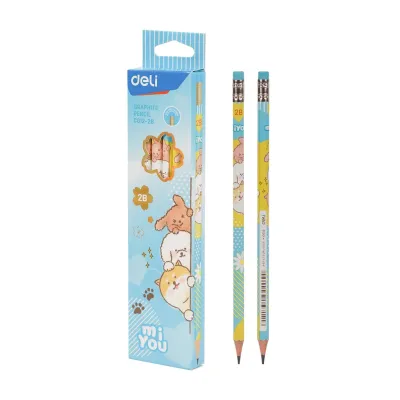
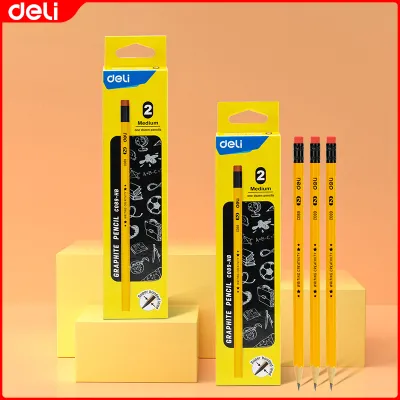
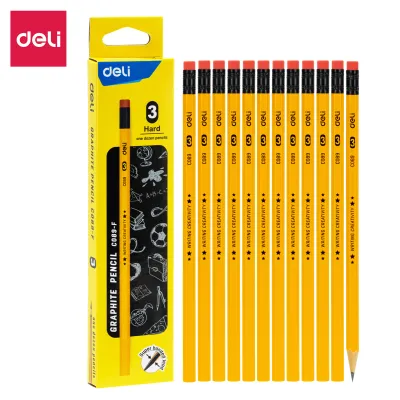
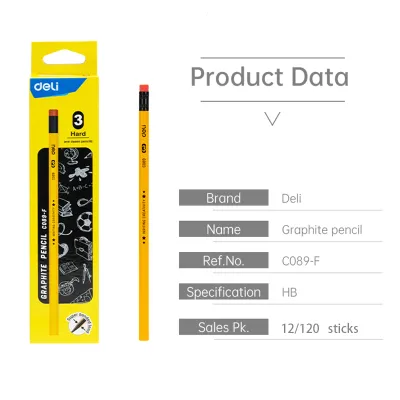
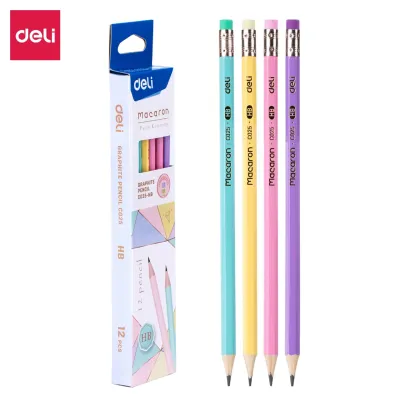
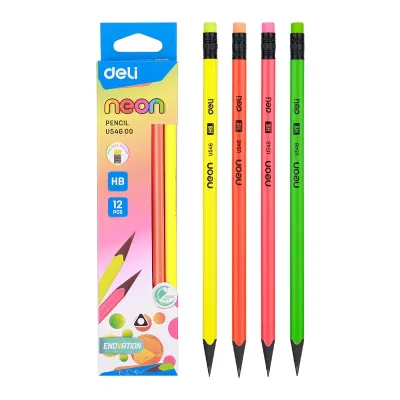
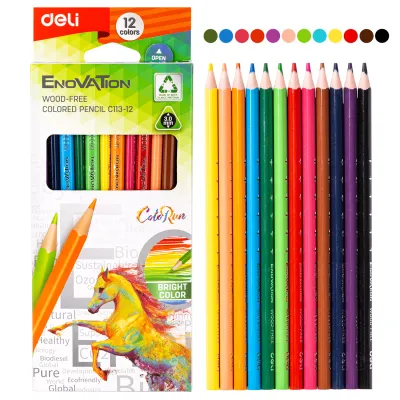
Prices are valid at publication and may change. Please refer to the product page for the latest price.
Mechanical pencils provide a modern, convenient alternative by utilizing a retractable lead mechanism that eliminates the need for a sharpener. These tools are engineered to deliver consistent line widths, making them highly suitable for technical drawing, accounting ledger entries, and neat handwriting in small-grid notebooks. They feature internal clutch mechanisms, often made of brass or durable plastic, which advance the lead in precise increments when the cap is clicked. This format is ideal for individuals who require a clean, continuous line without the changing thickness associated with wearing wooden tips.
Colored pencils are formulated with wax-based or oil-based binders rather than graphite, allowing for vibrant pigment laydown, blending, and layering. These pencils are widely used for school art projects, creative journaling, highlighting text, and professional illustrations. The choice of binder significantly influences the drawing experience; wax-based cores offer a softer, creamier application that blends easily, while oil-based cores provide a slightly harder lead that holds a sharp point longer and resists breaking under pressure.
Specialty sketching and charcoal pencils are designed specifically for artistic applications that require deep contrast, rich textures, and expressive shading. Graded graphite pencils in this category range from hard, light-marking leads to very soft, dark-marking leads, allowing artists to build depth gradually. Charcoal variants utilize charred organic material bound with gum or clay, producing a matte, intense black finish that is perfect for high-contrast portraits, landscape drawings, and quick gesture sketches.
Matching Pencil Types to Your Specific Use Cases
For schoolwork and daily note-taking, comfort and reliability are the primary considerations. Students in the Philippines often write for extended periods in warm classroom environments, making ergonomic barrel designs highly beneficial. A triangular wooden pencil with an HB graphite core is an excellent choice for primary school students, as it helps develop proper finger placement and resists breaking under heavy writing pressure. For high school and university students, a lightweight 0.5mm or 0.7mm mechanical pencil with a rubberized grip section provides a clean, smudge-free writing experience during fast-paced lectures.

In office and professional environments, neatness and efficiency take precedence. Professionals who handle physical documentation, sign forms, or mark up printed blueprints benefit from the precision of a mechanical pencil. A 0.5mm lead size ensures that numbers and small annotations remain legible within tight margins. For tasks that require signing official documents or writing on carbon-copy forms, a premium wooden pencil with a consistent, break-resistant HB core provides the necessary firmness and dark line quality without tearing through thin paper layers.
Artistic endeavors, sketching, and crafting require a versatile selection of tools to achieve different tones and textures. Sketching on textured paper or in a personal journal is best supported by a set of graded graphite pencils, allowing you to transition from light guidelines with an H-grade pencil to deep, rich shadows with a 4B or 6B pencil. For coloring and detailed illustrations, oil-based colored pencils perform exceptionally well in humid conditions, as they are less prone to developing a cloudy wax residue over time, ensuring your artwork remains vibrant and clear.
To help you quickly identify the most suitable option for your needs, the table below compares the main Deli pencil types based on their primary use cases, lead formats, and key selection criteria:
| Pencil Type | Primary Use Case | Lead Format | Key Selection Criteria |
|---|---|---|---|
| Wooden Graphite | Standard writing, exams, and basic sketching | Solid graphite-clay core in wood casing | Barrel shape (triangular vs. hexagonal), wood quality, and lead grade (HB/2B) |
| Mechanical Pencil | Technical drawing, neat note-taking, and drafting | Retractable polymer or resin lead refills | Lead diameter (0.5mm/0.7mm), clutch material, and grip comfort |
| Colored Pencil | Coloring, highlighting, and artistic illustrations | Wax-based or oil-based pigment core | Pigment vibrancy, blending capability, and break resistance |
| Specialty Sketching | Professional art, shading, and high-contrast drawing | Soft graphite or compressed charcoal | Graded hardness scale (H to B), charcoal density, and blending texture |
Key Specifications and Features to Check Before Buying
When selecting a Deli pencil, evaluating the lead hardness and diameter is the first step toward ensuring compatibility with your tasks. The standard graphite scale ranges from hard, light-marking “H” grades to soft, dark-marking “B” grades, with “HB” serving as the balanced middle ground for everyday writing. If you are purchasing a mechanical pencil, you must verify the exact lead diameter required by the mechanism, such as 0.5mm for fine detail, 0.7mm for general writing, or 2.0mm for utility marking, to ensure you buy the correct refill sizes.
Barrel ergonomics and material composition directly impact comfort and durability during long writing sessions. Wooden pencils are typically crafted from lightweight, seasoned wood that is easy to sharpen, but you should check that the barrel is straight and free of visible cracks. Mechanical pencils are available in plastic, rubberized, or metal barrels. A metal barrel offers a satisfying weight and long-term durability, while a rubberized grip section prevents fingers from slipping, which is particularly helpful in humid tropical climates.
Mechanism reliability and refill compatibility are critical factors for mechanical pencils. The internal clutch mechanism, which holds and advances the lead, should operate smoothly with a positive click. Metal clutches generally offer superior durability and a tighter grip on the lead compared to plastic alternatives, reducing the likelihood of the lead sliding back into the barrel when writing pressure is applied. Ensure that the pencil accepts standard polymer or resin refills, which are widely available and easy to source.
Packaging and safety labels should be verified, especially when purchasing colored pencils or stationery intended for children. Look for clear indications of non-toxic formulations, such as conformity to international safety standards like EN71 or ACMI AP seals, printed on the packaging. This ensures that the pigments, binders, and lacquers used in the manufacturing process are safe for daily handling and do not contain harmful heavy metals or solvents.
Purchasing Tips and Verifying Product Authenticity
To ensure you receive genuine Deli products that perform reliably, it is best to purchase from official brand stores or authorized stationery retailers on reputable online marketplaces. Counterfeit stationery items often look identical on the outside but utilize inferior materials, resulting in off-center leads that break constantly during sharpening, brittle plastic barrels, or rough, scratchy graphite cores that tear paper.
Upon receiving your purchase, carefully inspect the packaging for clear, high-quality printing, official logos, legible batch numbers, and intact safety seals. Genuine packaging should feel sturdy and feature accurate product descriptions without spelling errors or blurry graphics. If you are purchasing wooden pencils in bulk, check that the boxes are not crushed or damp, as moisture can warp the wood and weaken the internal graphite cores.
Before committing to a large project or exam, perform a physical inspection and a quick paper trial. For wooden pencils, roll the pencil across a flat surface to ensure it is perfectly straight, and check that the graphite core is centered within the wood at both ends. For mechanical pencils, click the mechanism several times to verify that the lead advances smoothly without jamming or breaking inside the tip.
Finally, test the pencil on a scrap piece of the paper you intend to use. Observe how smoothly the lead glides across the surface, how dark the mark is, and how cleanly it erases. Because paper can absorb ambient moisture in humid environments, a quick trial helps you determine if the lead hardness matches your paper’s texture, ensuring you achieve clean, legible results without smudging or tearing.
Frequently Asked Questions (FAQ)
What is the difference between HB and 2B Deli graphite pencils?
The primary difference lies in the hardness of the lead and the darkness of the mark it leaves on paper. HB pencils feature a balanced ratio of graphite and clay, producing a medium-gray line that is highly resistant to smudging, making them the standard choice for everyday writing, note-taking, and document scanning. 2B pencils contain a higher proportion of graphite, resulting in a softer lead that produces a darker, bolder line. This makes 2B pencils ideal for shading in sketches and filling out standardized test sheets quickly, though they may smudge more easily under heavy hand pressure.
Can I use standard lead refills in Deli mechanical pencils?
Yes, you can use standard polymer or resin lead refills in Deli mechanical pencils, provided the refill diameter matches the specification of your pencil. If your mechanical pencil is designed for 0.5mm leads, you must use 0.5mm refills; attempting to use 0.7mm leads will jam the mechanism, while 0.3mm leads will slip through the clutch. Always check the barrel or packaging of your pencil to confirm the correct lead diameter before purchasing refills.
Are Deli colored pencils wax-based or oil-based?
Deli produces both wax-based and oil-based colored pencils to cater to different user preferences and skill levels. Their student-grade and school colored pencil sets are typically wax-based, offering a soft, creamy texture that is easy for children to blend and apply. Their higher-end or professional-grade lines often feature oil-based cores, which are harder, hold a sharp point longer for detailed work, and are highly resistant to humidity, preventing the cloudy white residue known as wax bloom from forming on the surface of drawings.
Community discussion
Share your experience or ask a question. Comments are reviewed before publication.