
Selecting the right Dong A gel pen is a highly personal decision that directly impacts your writing comfort, speed, and neatness. Because gel ink combines the smoothness of water-based ink with the vibrant pigment of oil-based ink, its performance depends heavily on how your hand moves and the paper you use. In warm, humid environments, factors like ink drying time and paper absorption become even more critical to prevent smudging and feathering. By analyzing your physical writing mechanics and understanding how different pen specifications interact with your daily tasks, you can easily find a variant that feels like a natural extension of your hand.
Diagnose Your Personal Writing Habits
Before browsing the stationery aisle, take a moment to observe how you write during a typical session. Your writing speed is the first major variable to consider. Fast writers, such as students rushing to copy lecture notes or professionals jotting down minutes in a meeting, require an ink formula that flows instantly and dries almost immediately upon contact with the page. If you write slowly and deliberately, perhaps practicing calligraphy or filling out official forms, you can afford to use a slower-drying, highly saturated ink that delivers rich, unbroken lines.
Next, evaluate your grip pressure and how quickly your hand begins to feel tired. Heavy-handed writers tend to press the pen firmly into the paper, which can cause thin metal tips to scratch the fibers or bend over time. If you notice deep indentations on the back of your paper or experience cramping in your fingers after just a few minutes, you likely need a pen body designed to absorb some of that physical force. Conversely, light-handed writers who glide across the page need a highly responsive tip that releases ink with minimal downward pressure.
Products mentioned in this guide
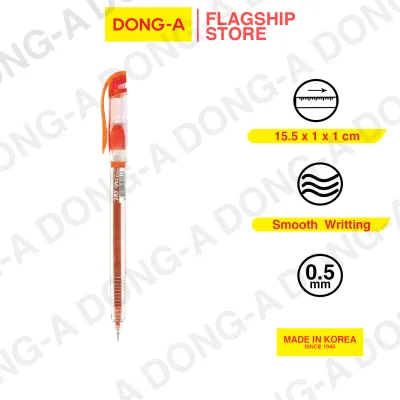
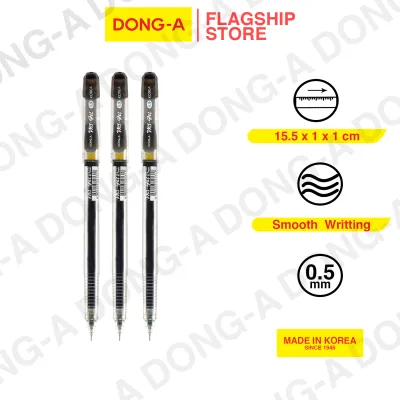
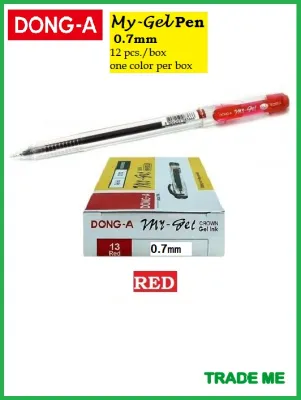
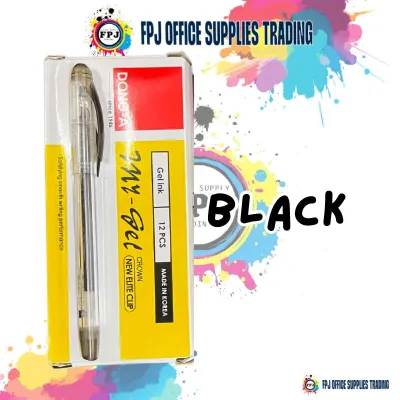
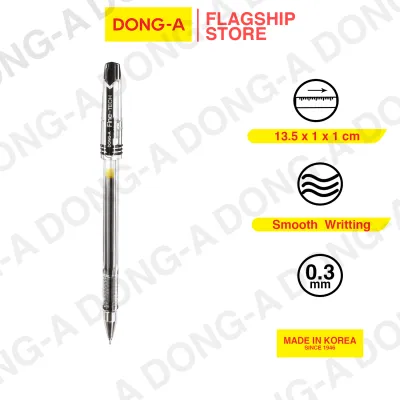
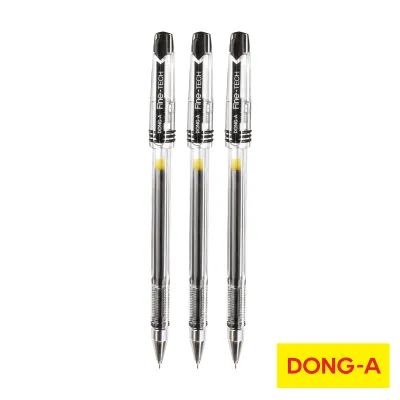
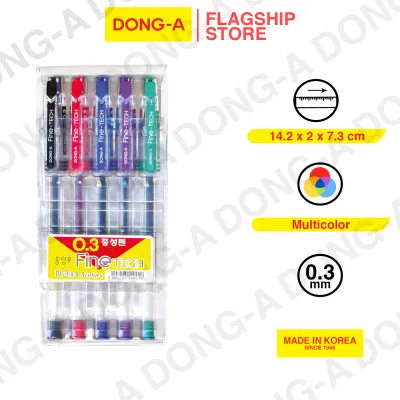
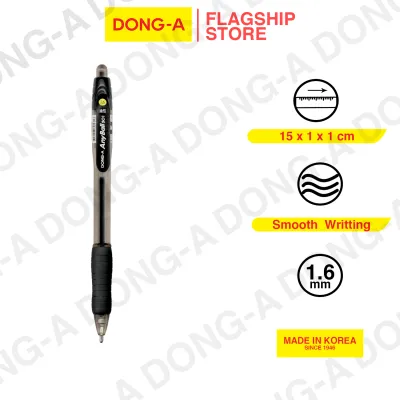
Prices are valid at publication and may change. Please refer to the product page for the latest price.
Finally, consider where you do most of your writing. A stationary desk setup allows you to use capped pens without much risk of losing the cap, whereas on-the-go environments—like conducting inventory in a warehouse, doing fieldwork, or moving between classrooms—demand the quick deployment of a retractable click mechanism. High humidity levels, common in tropical climates like the Philippines, can also influence how paper fibers hold moisture, making your choice of ink and paper compatibility a vital part of your daily routine.
Decode Key Gel Pen Specifications on the Label
Understanding the technical details printed on gel pen packaging allows you to filter out unsuitable options before you even try them. The most prominent specification is the tip size, usually measured in millimeters. Fine tips, ranging from 0.3mm to 0.4mm, are engineered for ultra-precise work, small handwriting, and detailed diagrams. These sizes restrict the volume of ink deposited on the page, making them excellent for thin paper. Medium tips, typically 0.5mm, offer a balanced middle ground for general note-taking, while bold tips of 0.7mm or larger deliver a plush, highly visible line that is ideal for signatures and bold headings.

Ink properties are another critical specification to decode. Look for labels indicating specialized formulations such as quick-dry ink, water-resistant pigment, or archival quality. Quick-dry technology is achieved through solvents that penetrate paper fibers rapidly, reducing the window of time in which a stray hand can smudge the line. Water-resistant gel inks utilize pigment-based colorants that bind permanently to the paper fibers once dry, ensuring that accidental spills or high humidity do not wash away your hard work.
The physical construction of the pen barrel also plays a major role in long-term comfort. Examine the grip section: a simple plastic barrel is lightweight and easy to clean, but a rubberized or textured grip provides essential friction to prevent your fingers from slipping down the barrel as you write. Additionally, consider the retraction mechanism. Retractable pens use a spring-loaded system that shields the tip when not in use, while capped pens often feature a tighter seal that prevents the gel ink from drying out during long periods of storage.
Match Your Diagnosed Needs to Pen Features
Once you have diagnosed your habits and decoded the specifications, you can systematically match your needs to the right pen features. If you are a fast writer who frequently struggles with ink smudges on the side of your hand, your primary goal is rapid drying. You should prioritize Dong A variants that explicitly feature quick-dry ink formulas paired with a finer tip size, such as a 0.3mm or 0.4mm needle tip. The smaller tip limits the volume of ink pooling on the paper surface, allowing the quick-dry solvents to work almost instantaneously.
For heavy-handed writers, durability and smooth gliding are the top priorities. A very fine tip can feel scratchy or dig into the paper under heavy pressure, so you should look for reinforced cone tips in a 0.5mm or 0.7mm size. The broader surface area of a larger tip distributes your downward force more evenly, preventing the metal housing from cutting into the paper fibers and ensuring a consistently smooth glide even when you press down hard.
If your daily routine involves long, continuous writing sessions, physical comfort must take precedence. Look for models featuring a soft, ergonomic rubber grip that cushions your fingers and reduces the pinch force required to hold the pen. A slightly wider barrel can also help distribute hand pressure more comfortably, preventing the muscle fatigue associated with thin, hard plastic pens. For those who frequently write on the move, a retractable model with a sturdy pocket clip ensures the pen remains securely attached to your notebook or shirt pocket without the risk of a lost cap.
Verify Compatibility and Performance Before Committing
Because gel ink performance is highly dependent on the interaction between the ink chemistry and the paper fibers, you should always run a few simple tests before purchasing pens in bulk. Start by testing the pen on the exact paper stock you use daily, whether it is standard 70gsm copy paper, a lined school notebook, or a premium journal. Observe how the ink behaves: if you notice the ink spreading outward (feathering) or showing through clearly on the reverse side of the page (bleed-through), the paper may be too porous or the ink flow too heavy for that specific combination.
Next, conduct a quick physical test to check for skipping and scratchiness. Draw a series of rapid, continuous loops and sharp directional changes on a scrap piece of your daily paper. A high-quality gel pen should maintain a continuous, unbroken line without skipping or catching on the paper fibers. If the pen feels scratchy or leaves blank gaps in your lines during fast strokes, the tip design or ink viscosity may not be fully compatible with your writing speed or angle.
Finally, evaluate the reliability of the pen’s sealing mechanism. For capped pens, ensure the cap snaps securely into place with a distinct click, indicating an airtight seal that will prevent the water-based gel from evaporating. For retractable models, click the mechanism several times to verify that the internal spring operates smoothly without sticking. If you live in a warm, humid environment, storing your pens horizontally when not in use can help maintain an even distribution of ink and prevent air bubbles from forming near the tip.
Frequently Asked Questions (FAQ)
How can I revive a Dong A gel pen that has stopped writing?
First, inspect the clear window on the pen barrel to confirm that there is still ink remaining in the cartridge. If ink is present but has stopped flowing, try rolling the pen barrel briskly between your palms for thirty seconds to warm the gel ink and lower its viscosity. Next, scribble firmly in a circular motion on a high-friction surface, such as a clean rubber eraser or the sole of a shoe, which can help dislodge any microscopic paper fibers or dried ink clogging the ball point. If the metal tip is visibly bent, split, or completely depleted of ink, the pen cannot be safely revived and should be replaced.
Does gel ink last longer than standard ballpoint ink?
Generally, gel ink cartridges do not last as long as standard oil-based ballpoint refills under identical writing conditions. Gel ink is water-based and has a much lower viscosity than thick, oil-based ballpoint ink, which means it flows onto the paper much more generously to create its signature smooth, vibrant line. This higher flow rate naturally consumes the ink supply more rapidly. To maximize the lifespan of your gel pen, choose a finer tip size like 0.3mm or 0.5mm, which restricts the volume of ink released per millimeter of writing, and store your pens horizontally to prevent ink separation.

Community discussion
Share your experience or ask a question. Comments are reviewed before publication.