
Finding a pen that feels like a natural extension of your hand is a highly personal journey. When choosing a Dr. Groot pen, the decision relies on matching your physical writing posture, daily tasks, and the specific paper you use with the pen’s physical engineering. In the Philippines, where high humidity levels can compromise paper texture and cause ink to dry differently, selecting the correct pen specifications becomes even more critical. This guide provides a systematic approach to evaluating your writing habits, understanding key technical specifications, and matching them to your daily routines to find the ideal model.
Assess Your Writing Habits and Ergonomic Requirements
Before comparing specific pen features, it is essential to evaluate your personal writing patterns. Start by assessing your typical writing duration. If your daily routine consists of signing a few delivery slips, filling out bank forms, or jotting down quick bullet points during brief huddles, your primary need is immediate ink deployment and a secure cap or retraction mechanism. Conversely, if you are a student preparing for board exams, a researcher drafting long-form notes, or a professional transcribing hours of meetings, you require a pen designed to minimize fatigue over extended periods.
Next, observe your grip style and how you hold your writing instrument. Do you pinch the barrel tightly near the tip, or do you maintain a relaxed, higher grip? Writers who apply intense downward pressure often suffer from hand fatigue, finger cramping, and calluses. If you experience strain in your thumb joint or wrist after fifteen minutes of writing, you need to look closely at the barrel diameter and grip contouring. A pen that is too narrow forces your hand into a tight, claw-like pinch, while an overly thick barrel can strain smaller hands.
Products mentioned in this guide
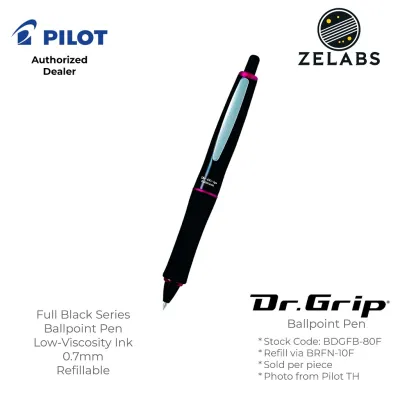
Prices are valid at publication and may change. Please refer to the product page for the latest price.
Finally, consider the environmental factors unique to the Philippines. The tropical climate presents specific challenges for stationery. High relative humidity means that paper stored in open offices or classrooms naturally absorbs moisture from the air. This dampness alters the paper’s fibers, making them more receptive to ink absorption, which can lead to feathering (where ink spreads sideways) and bleed-through (where ink penetrates to the back of the page). Furthermore, warm temperatures often lead to sweaty hands, meaning a pen with a slick, untextured grip will slide between your fingers, forcing you to grip harder and accelerating physical fatigue.
Key Specifications to Evaluate in Dr. Groot Pens
To make an informed decision, you must look past aesthetic appeal and examine the technical and ergonomic dimensions that define high-quality writing instruments. These specifications are typically detailed on product labels, packaging, or manufacturer specification sheets.

Grip Material and Ergonomic Design
The material wrapping the pen’s grip section directly dictates your control and comfort, especially during humid afternoons. Silicone and rubber grips offer excellent cushioning and high surface friction, which prevents slipping even when your hands are damp. However, low-quality elastomer grips can degrade, become sticky, or attract dust over time when exposed to tropical heat. Textured plastic grips, featuring ridges or matte finishes, offer a durable, easy-to-clean alternative that provides moderate slip resistance without the risk of material degradation. Metal grips, while aesthetically pleasing and highly durable, can become exceptionally slippery if they lack knurling or textured engraving.
When purchasing, do not rely on generic marketing terms like “ergonomic.” Instead, check the manufacturer’s official specifications for precise design elements. Look for features such as a gently flared front collar, which prevents your fingers from sliding forward onto the nib, or a triangular grip profile that naturally guides your hand into a healthy dynamic tripod grip.
To verify suitability, try to test the pen in a local retail store whenever possible. If you are purchasing online through an ecommerce platform, carefully examine the product dimension charts. Measure a pen you currently find comfortable and compare its grip diameter (usually measured in millimeters at the narrowest and widest points of the grip section) to the Dr. Groot model you are considering.
Nib Type, Size, and Ink Compatibility
The nib or tip configuration is the point of contact between your thoughts and the page, determining both line quality and writing feedback. Fine nibs (typically 0.3mm to 0.5mm) produce thin, precise lines, making them highly suited for compact handwriting, mathematical formulas, and lower-grade, highly absorbent paper where ink spread must be minimized. Medium nibs (around 0.7mm) offer a balanced compromise, delivering a smoother feel on the page while remaining practical for everyday office forms. Broad nibs (1.0mm or larger) yield thick, rich lines that showcase ink color and shading beautifully, making them excellent for signatures and expressive writing, though they require high-quality, heavy-weight paper to prevent bleeding.
Ink formulation is equally critical. You must verify refill compatibility and ink characteristics by checking the product packaging or manufacturer’s official documentation. Gel inks offer vibrant colors and an incredibly smooth glide but have longer drying times, which can lead to smudging for left-handed writers or when closing notebooks quickly. Ballpoint inks use a thicker, oil-based paste that dries almost instantly and resists water, making them highly reliable for official documents, though they require more downward pressure to write.
In the Philippines, matching ink viscosity to your typical paper quality is essential. If you frequently use standard 70 GSM copy paper or local school notebooks, a high-viscosity ballpoint ink or a very fine gel pen is preferable. Using a wet, low-viscosity rollerball or broad gel pen on damp, thin paper will almost certainly cause feathering, turning your neat handwriting into blurry, illegible lines. To verify these characteristics under local conditions, perform a simple grid test: draw a grid on a scrap piece of your target paper, wait three, five, and ten seconds, and gently rub each section to observe the drying speed and smudge resistance.
Weight, Balance, and Barrel Dimensions
A pen’s physical dimensions and weight distribution dictate how it behaves in motion. The center of gravity is a crucial, often overlooked specification. A front-heavy pen, where the weight is concentrated near the tip, naturally pulls the pen downward toward the paper, reducing the amount of hand pressure required to maintain a consistent line. This is highly beneficial for long, continuous writing sessions. Conversely, a back-heavy pen—often caused by posting a heavy metal cap on the back of a lightweight barrel—can feel unstable, constantly pulling the tip upward and forcing your hand muscles to work harder to maintain control.
Verify the overall length and barrel thickness to ensure compatibility with your hand size. A pen that is too short may rest awkwardly against the web of your hand, while a pen that is too long can feel top-heavy.
Consider the trade-offs between different materials. Lightweight pens, typically constructed from high-grade plastics, acrylics, or resins, allow for rapid, agile hand movements with minimal muscle strain, making them ideal for fast note-taking. Heavier pens, crafted from brass, aluminum, or stainless steel, provide a reassuring heft that slows down your hand, promoting deliberate, controlled strokes that are perfect for formal signatures or calligraphy, though they may tire your hand during long writing sessions.
Match Pen Features to Your Daily Writing Scenarios
By identifying your primary writing environment, you can narrow down the technical configurations that will serve you best.
Heavy Note-Taking and Long Study Sessions
For students, reviewers, and professionals who spend hours transcribing lectures, summarizing documents, or drafting reports, physical endurance is the primary concern. In this scenario, you should prioritize a pen configuration that features a lightweight resin or plastic barrel to minimize the overall load on your hand. Look for models equipped with a soft, cushioned silicone or rubber grip to absorb excess writing pressure and prevent finger fatigue.
The ink system should require minimal effort to flow. A high-quality, low-viscosity gel ink or a smooth rollerball tip allows the pen to glide across the page under its own weight, eliminating the need to press down.
Additionally, check the capacity of the ink reservoir. During intense study sessions, running out of ink can disrupt your concentration. Prioritize models that accept high-capacity refills or feature clear barrel windows so you can monitor the remaining ink level and replace cartridges before they run completely dry.
Professional Document Signing and Office Work
In a corporate, legal, or administrative environment, your writing instrument serves as both a functional tool and a professional statement. Here, the focus shifts toward premium materials, absolute reliability, and a clean, sophisticated aesthetic. Look for models constructed from polished metals, matte-finished aluminum, or classic high-gloss resins that complement professional attire and office settings.
The ink must be highly reliable, producing consistent, skip-free lines from the very first stroke. For signing contracts, deeds, and official records, verify that the pen is compatible with document-grade, water-resistant archival ink. This ensures that signatures remain legible and tamper-proof over decades of storage.
Safety features are also paramount in an office setting. If you frequently carry your pen in a shirt pocket, a leather planner, or a laptop bag, choose a model with a secure screw-on cap or a highly reliable, heavy-duty retractable click mechanism. This prevents accidental deployment and catastrophic ink leaks that can ruin expensive fabrics or documents during hot, pressurized daily commutes.
Creative Journaling and Expressive Writing
For those who use writing as a creative outlet—such as bullet journaling, daily planning, sketching, or creative writing—versatility and sensory feedback are the most important factors. You should look for pen configurations that support a variety of nib sizes, allowing you to switch between a fine tip for compact calendar entries and a broader tip for expressive headers or reflective prose.
Color options and ink saturation play a major role in creative layouts. Ensure the model you select has a wide range of compatible ink colors, from deep forest greens to vibrant warm tones, allowing you to color-code or illustrate your pages effectively.
When engaging in creative journaling, always cross-reference your pen’s ink flow with your journal’s paper specifications. Many popular journals feature paper weights ranging from 80 GSM to 160 GSM. If your journal uses thinner paper, opt for a finer nib and drier ink formulation to prevent ghosting. If you use thick, premium paper, you can safely enjoy the rich, wet lines of a broad gel or rollerball pen.
Verification, Authenticity, and Basic Maintenance
To ensure you receive a genuine product that performs according to manufacturer specifications, always purchase your pens and refills from official brand stores, authorized stationery retailers, or reputable online malls in the Philippines. Buying from unauthorized sellers increases the risk of receiving counterfeit products that suffer from poor ink flow, fragile barrels, or incompatible refill sizes, which will void any warranty coverage.
Maintaining your specialty pen is straightforward and significantly extends its lifespan. Always cap the pen immediately after use or retract the tip; leaving the nib exposed to the air allows the ink to dry and clog the feed. Store your pens horizontally or with the nib pointing downward to ensure the ink remains in contact with the writing tip, preventing dry starts. If you notice the pen skipping or if paper fibers have accumulated on the tip, gently wipe the nib with a soft, lint-free cloth dampened with clean, room-temperature water.
Never use harsh chemical solvents, such as rubbing alcohol, acetone, or household cleaners, to clean your pen, as these substances can chemically degrade plastic barrels, melt silicone grips, and strip protective coatings from metal finishes. Avoid disassembling the internal spring, feed, or housing of the pen beyond the standard, low-risk steps outlined in the manufacturer’s instructions for replacing the ink cartridge.
Frequently Asked Questions (FAQ)
Can I use third-party ink refills in a Dr. Groot pen?
To determine if a third-party refill will fit, you must check the exact cartridge dimensions, length, and connector shape against the original refill or the specifications listed on the pen’s packaging. While some pens utilize standard international sizes, others require proprietary shapes. Be aware that using non-original refills can alter the ink flow rate, cause internal leaks, or void the manufacturer’s warranty. If you choose to use a third-party refill, always conduct a brief trial on a piece of scrap paper to verify that the ink flows smoothly and does not bleed excessively before writing on important documents.
How do I clean the nib if the ink stops flowing smoothly?
If your pen experiences a minor ink clog or dry start, the safest solution is to gently wipe the tip with a soft, lint-free cloth or paper towel dampened with clean water. This helps dissolve dried ink crust and removes trapped paper dust. Never use sharp metal objects, such as needles, pins, or paperclips, to clear the ink channel, as this can permanently warp the metal tip, damage the delicate ball mechanism, or scratch the feed, leading to permanent leaking or scratchiness. If the ink flow does not improve after a gentle wipe, consult the manufacturer’s care instructions or contact an authorized service center for assistance.
Community discussion
Share your experience or ask a question. Comments are reviewed before publication.