
Selecting the right drawing board for your child is more than just finding a flat surface to hold paper. It requires matching the board’s physical design, weight, and material to your child’s developmental stage, motor skills, and preferred artistic mediums. A toddler exploring sensory play needs a completely different tool than a pre-teen learning perspective drawing. By choosing a board tailored to their age, you encourage creative expression while ensuring safety and comfort.
To make an informed purchase, parents should evaluate how different board types support specific motor skills, how they perform under local environmental conditions, and how to verify their safety. This guide breaks down the selection process by age group, provides actionable safety checks, and answers common maintenance questions.
Quick Selection Guide: Matching Boards to Developmental Stages
Choosing the right drawing board involves understanding your child’s physical capabilities and artistic needs. The table below summarizes the most suitable board types for each age group, mapping them to key developmental focuses and ideal surface materials.
Products mentioned in this guide

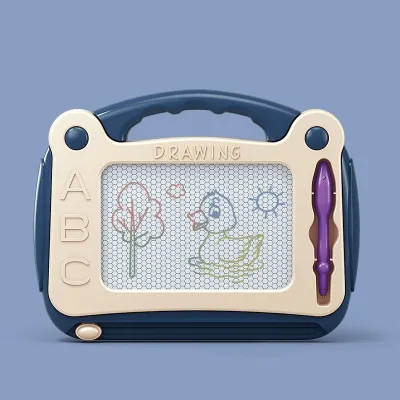
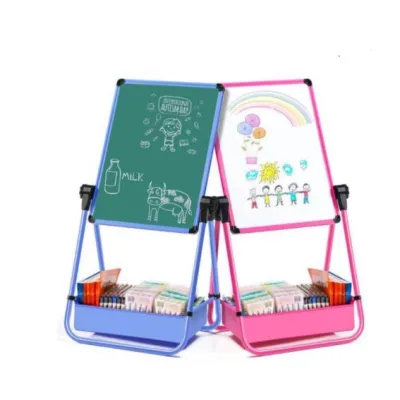
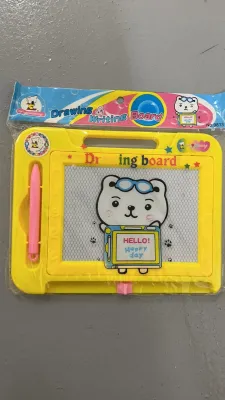
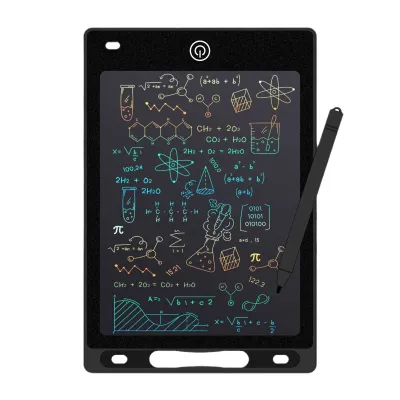
Prices are valid at publication and may change. Please refer to the product page for the latest price.
| Age Group | Recommended Board Type | Key Developmental Focus | Ideal Surface Material |
|---|---|---|---|
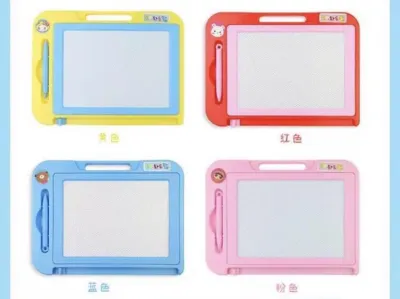
| Ages 2–5 | Magnetic Boards, LCD Tablets | Gross motor skills, palmar grasp, mess-free play | Shatter-resistant plastic, magnetic film |
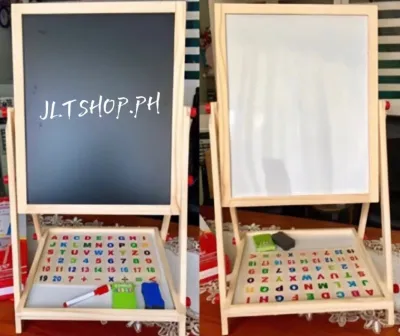
| Ages 6–9 | Double-sided Easels, Lap Desks | Fine motor skills, pincer grasp, mixed-media | Dry-erase laminate, smooth plastic, lightweight wood |
| Ages 10–12+ | Wooden Sketch Boards, Drafting Boards | Precision sketching, perspective, medium control | Textured wood, rigid MDF, water-resistant coatings |
Toddlers use a palmar grasp (fist grip), requiring thick styluses and large, forgiving drawing areas. As they transition to early elementary school, they develop the pincer grasp (finger grip), allowing them to use markers, crayons, and chalk on vertical easels or flat lap desks. Pre-teens possess refined hand-eye coordination and require stable, angled surfaces to practice shading, line weight, and scale.
For toddlers, look for boards under 30 cm in width and weighing less than 400 grams to prevent fatigue. Elementary kids can handle boards up to 40 cm, while older children practicing formal sketching often require standard A3-sized boards (approximately 30 x 42 cm) to accommodate larger drawing pads. In tropical climates like the Philippines, high relative humidity can cause cheap cardboard backings to sag or warp; choosing rigid plastics, sealed medium-density fiberboard (MDF), or treated wood ensures the drawing surface remains flat.
Drawing Boards for Toddlers and Preschoolers (Ages 2–5)
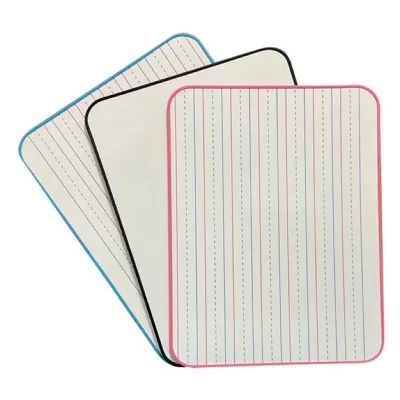
At this stage, art is primarily an exploratory, sensory experience. Children are learning to coordinate their arm movements and discover cause-and-effect through scribbling. Magnetic drawing boards and LCD writing tablets are excellent choices because they offer endless opportunities to draw and erase without generating paper waste or pigment messes on walls and furniture. Large, reusable wipe-clean boards with water-based markers also work well, provided the markers are easily washable from skin and fabrics.

Safety is the paramount consideration for this age group. Look for boards constructed with thick, impact-resistant ABS plastic and rounded edges to prevent injury during inevitable drops. The drawing stylus must be chunky enough for a toddler’s palmar grasp and securely attached to the board with a durable, tangle-free cord to prevent it from becoming a choking hazard or getting lost under the sofa. Any sliding eraser mechanisms should operate smoothly without pinching small fingers.
Traditional paper-and-clipboard setups are generally unsuitable for toddlers. Young children often press down with immense force, which easily tears standard drawing paper and leads to frustration. Standard metal clips on office clipboards present a severe pinching hazard for tiny fingers, and the heavy weight of masonite or metal clipboards makes them difficult and unsafe for a toddler to carry independently.
To verify surface compatibility and erasability on wipe-clean boards, perform a small spot test before full use. Apply a single stroke of the intended washable marker to an inconspicuous corner of the board. Allow it to sit for five minutes, then attempt to wipe it away with a dry cloth or a damp microfiber towel. If ghosting or staining occurs, the surface material may be too porous for that specific marker brand, and you should stick to the manufacturer-provided writing tools.
Drawing Boards for Early Elementary Kids (Ages 6–9)
As children enter school, their fine motor skills progress rapidly. They begin to experiment with structured shapes, letters, and a wider variety of coloring tools. Double-sided easel boards—featuring a blackboard on one side and a magnetic dry-erase whiteboard on the other—are highly versatile options for this stage. They allow kids to switch between chalk, dry-erase markers, and paper rolls, accommodating different creative moods and learning activities.
Lap desks with built-in storage compartments are also excellent for early elementary students. These boards provide a stable writing surface that can be used on the living room floor, on a bed, or during long car trips. When evaluating these boards, check how securely they hold different mediums. A quality board should feature a low-profile clip or a non-slip border that keeps standard drawing paper, construction paper, or coloring book pages from sliding around while the child works.
Portability becomes a key factor as children start bringing their art supplies to school, tutoring sessions, or family gatherings. Look for lightweight plastic or thin, high-density fiberboard options that fit easily into a standard school backpack. If the board is intended for travel, integrated handles and secure latches for the storage compartments are essential to prevent crayons and markers from spilling out in transit.
In the humid climate of the Philippines, moisture resistance is a critical factor for longevity. High humidity can soften paper fibers, making them more prone to tearing when subjected to heavy pencil pressure. A drawing board with a completely smooth, non-porous backing helps support damp paper and prevents tearing. If your child uses spiral-bound sketchbooks, ensure the board’s clip or mounting mechanism can accommodate the extra thickness of the binding without bending or losing its grip.
Drawing Boards for Older Kids and Pre-Teens (Ages 10–12+)
Older children and pre-teens often transition from casual coloring to structured sketching, perspective drawing, and mixed-media art. To support this developmental shift, they require professional-style drawing surfaces. Traditional wooden sketch boards made of lightweight basswood, lime wood, or high-quality MDF provide the rigid support needed for detailed work. Portable art portfolios with built-in rigid backings are also excellent for pre-teens who attend art classes and need to transport their work safely.
When selecting a board for older kids, check how it accommodates standard paper sizes like A4 or A3. A board that is slightly larger than the paper size allows room for securing the sheets with drafting tape or clips without covering the drawing area. The texture, or “tooth,” of the board surface is critical when working with advanced mediums. For graphite, charcoal, or colored pencils, a slightly textured wooden or matte plastic surface prevents the drawing paper from slipping and helps the child control their stroke precision.
If your child enjoys light watercolor washes or ink sketching, the board must be highly water-resistant. In humid environments, untreated wood can absorb moisture from both the air and wet mediums, leading to warping and mold growth. Look for boards with sealed, moisture-resistant coatings or clear polyurethane varnishes. You can verify water resistance by placing a few drops of water on the board’s surface; if the water beads up rather than soaking into the wood, the board is sufficiently sealed.
Ergonomics play a vital role as drawing sessions grow longer and more detailed. Drawing on a flat table forces children to hunch over, leading to neck, shoulder, and eye strain. Adjustable drafting boards or easels that can be set at angles between 15 and 30 degrees promote better posture by bringing the work closer to the child’s natural line of sight. Ensure the adjustment mechanisms are sturdy and easy for a pre-teen to operate safely without trapping their fingers.
How to Verify Safety and Material Specifications
Before purchasing any drawing board, parents should carefully inspect the manufacturer’s labels and product specifications. Look for recognized non-toxic certifications, such as ASTM D-4236 (standard for labeling art materials for chronic health hazards) or EN71 (European toy safety standard). These certifications verify that the paints, plastics, and protective coatings used on the board do not contain harmful levels of heavy metals or volatile organic compounds (VOCs).
Inspect the physical construction of the board for structural integrity. For wooden boards, run your hand along the edges and corners to ensure they are completely smooth and splinter-free. If the board features folding legs, adjustable stands, or easels, check that the hinges are robust and lock securely into place to prevent accidental collapse. For digital or LCD boards, verify that the screen is made of shatter-resistant polymer rather than glass, which can break under impact.
Electronic drawing tablets and LCD boards require extra scrutiny regarding battery safety. These devices typically run on small button cell batteries, which pose a severe chemical and choking hazard if swallowed. Ensure the battery compartment is secured with a robust screw lock that requires a screwdriver to open, preventing curious children from accessing the battery. Avoid any electronic board that relies on a simple slide-and-click battery cover.
Frequently Asked Questions (FAQ)
How do I clean a magnetic drawing board that has faded lines?
Faded lines on a magnetic drawing board are often caused by trapped magnetic dust or a misaligned sliding eraser. To restore clarity, slide the eraser slowly back and forth across the screen several times to redistribute the internal magnetic particles. If the surface is dirty, wipe it gently with a soft, slightly damp microfiber cloth. Avoid using harsh chemical solvents, alcohol, or abrasive scrubbers, as these can strip away the protective plastic coating and permanently cloud the screen.
Can a regular clipboard work as a drawing board for young children?
While a standard office clipboard is a cheap alternative, it is generally not recommended for young children under the age of six. Standard clipboards often have sharp metal corners, high-tension spring clips that can easily pinch small fingers, and heavy materials like masonite or metal that can cause injury if dropped. For older children (ages 8 and up), a standard clipboard can work well for quick outdoor sketching, but younger kids are much safer using specialized plastic boards with rounded edges and low-tension, child-safe clips.
What size drawing board is best for travel?
The ideal travel drawing board should balance a usable creative area with compact dimensions that fit comfortably on a child’s lap or a vehicle’s tray table. Look for boards measuring approximately 25 x 35 cm (slightly larger than an A4 sheet of paper). The board should weigh under 500 grams and feature integrated storage, such as a built-in stylus holder, paper clips, or a zippered pocket on the back, to keep all drawing accessories organized and secure during transit.
Community discussion
Share your experience or ask a question. Comments are reviewed before publication.