
Choosing the right elastic garter per yard depends on matching the elastic’s construction and width to your fabric’s weight and the garment’s function. For waistbands, a wide woven or knitted garter prevents rolling. For cuffs and necklines, soft, narrow knitted elastic offers comfort. For face masks, lightweight, latex-free knitted loops prevent ear irritation. Buying by the yard allows you to test the stretch recovery and purchase only what your specific project demands.
Quick Guide: Matching Elastic Garter Types to Sewing Projects
Understanding the basic construction of elastic is the first step to a successful sewing project. Elastic garters generally fall into four categories: braided, knitted, woven, and clear. Each type behaves differently when stretched, sewn, or washed, making them suitable for distinct applications.
Braided elastic is characterized by parallel ribs running along its length. It narrows significantly when stretched and tends to lose its elasticity if pierced directly by a sewing needle. Knitted elastic, on the other hand, is soft, lightweight, and retains its width when stretched. It does not lose its elasticity when sewn, making it highly versatile.
Products mentioned in this guide
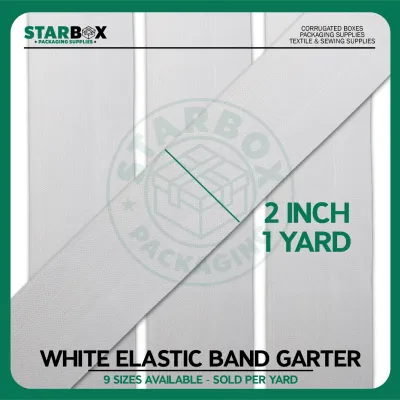
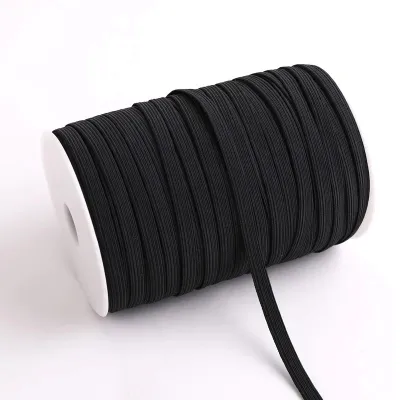
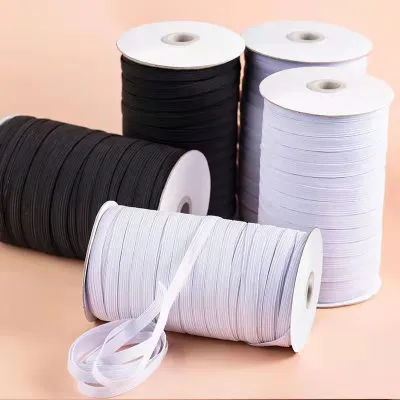
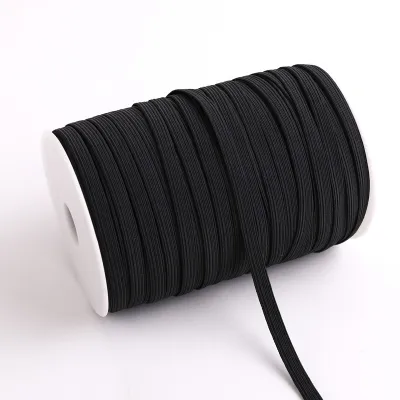
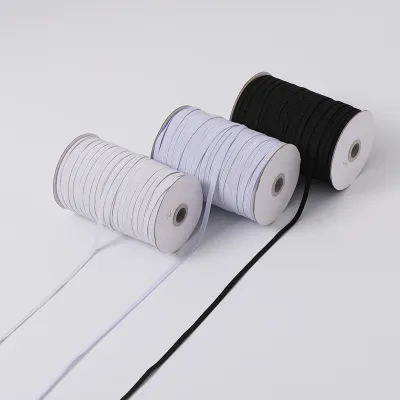
![[5yards] Crochet Garter Elastic Knit Sewing Band for Garment Sewing Flat and High Elasticity Band Tape 5 yrds approx. per pack 1.2cm 2cm 2.5cm 3cm 3.8cm 5cm](https://img.lazcdn.com/g/ff/kf/Se12682bcf98044d3a681b414f589fe7aM.jpg_400x400q80.jpg_.webp)
Prices are valid at publication and may change. Please refer to the product page for the latest price.
Woven elastic is the heaviest and strongest option, easily identified by its thick, grid-like weave. It maintains its width under tension and offers excellent recovery. Clear elastic is a thin, transparent polyurethane strip that provides lightweight gathering and seam stabilization without adding bulk.
To verify the quality of an elastic garter before purchasing it by the yard, perform a quick tactile check. Run your fingers along the strip to ensure the weave is consistent and free of exposed rubber threads. Pull a small section firmly; it should snap back to its original length immediately without warping or leaving wavy edges.
How to Diagnose Your Project Needs Before Buying
Before heading to the fabric store or ordering online, take a moment to analyze your project’s structural requirements. The weight of your base fabric and the stress placed on the garment will dictate the type of elastic you need.

Heavy fabrics like denim, canvas, or thick linen require a stiff elastic with strong tension to support the weight. Conversely, lightweight fabrics like rayon, chiffon, or thin cotton jersey demand a soft, low-tension elastic to prevent the fabric from puckering or dragging downward.
Evaluating Width and Stretch Requirements
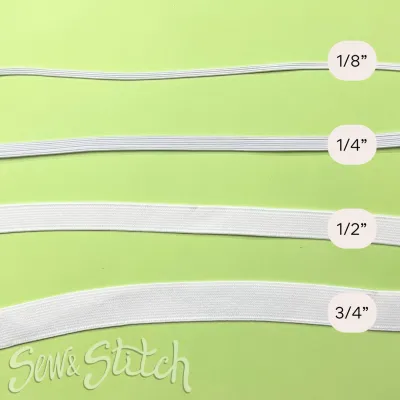
Matching the elastic width to your garment’s casing is critical for comfort and durability. As a general rule, the casing should be approximately 1/8 inch to 1/4 inch wider than the elastic itself. This small clearance allows the garter to slide through smoothly during construction while preventing it from twisting or folding over during wear.
Different garments require different stretch percentages and recovery speeds. For activewear or fitted waistbands, you need an elastic with high recovery speed that snaps back quickly to hold the garment secure. For relaxed loungewear or sleepwear, a gentle, high-stretch elastic is more comfortable as it expands easily without digging into the skin.
You can easily test a sample yard for narrowing by holding a section between your hands and stretching it to its limit. If the width shrinks noticeably, it is a braided elastic and should only be used inside a casing. If the width remains constant, it is a knitted or woven elastic, which can be sewn directly to the fabric.
Choosing the Right Material and Construction
The manufacturing method of the elastic determines how it interacts with your sewing machine needle and how it feels against the body. Braided elastic is best reserved for casings in lightweight sleeves, necklines, or hem bands where the needle will not pierce the elastic fibers.
Knitted elastic is a suitable choice for direct-to-garment sewing. Because it is manufactured by knitting the fibers around the rubber or spandex cores, a sewing needle can pass through the loops without damaging the elastic properties. It is also exceptionally soft, making it comfortable for garments worn close to the skin.
Woven elastic is ideal for heavy-duty applications. Its dense construction prevents it from rolling or twisting, even when subjected to heavy wear and frequent laundering. It is commonly used in waistbands for trousers, heavy skirts, and uniforms.
Clear elastic is highly effective for stabilizing seams in knit garments, such as shoulder seams on t-shirts. It prevents the knit fabric from stretching out of shape over time. It is also resistant to chlorine and salt water, making it a common choice for swimwear gathering.
Selecting the Best Elastic for Common Garment Areas
Selecting the right elastic for specific garment areas ensures that the finished piece is both functional and comfortable to wear. The tension of the elastic must match the natural movement of the body part it secures.
In hot and humid climates like the Philippines, garments undergo frequent washing to stay fresh. This constant laundering can degrade low-quality elastic quickly. Always check the care requirements of both your fabric and the elastic to ensure they can withstand the same washing and drying temperatures.
Waistbands and Heavy-Duty Applications
Waistbands bear the most tension and movement of any garment area, requiring a robust elastic that resists rolling. Wide woven or non-roll knitted elastics, typically ranging from 1 inch to 2 inches in width, are the standard choices for skirts, pants, and shorts. These elastics distribute pressure evenly across the waist, preventing the band from digging in uncomfortably.
To calculate the exact yardage needed for a waistband, wrap the elastic around your waist at the desired tightness. Mark the point where the ends meet, then add 1 inch to this measurement to account for the seam overlap. This ensures a secure fit without making the waistband too tight after sewing.
Before finalizing your purchase, check the elastic’s recovery by stretching it repeatedly. A high-quality waistband garter should return to its exact original length. If it remains slightly elongated or shows signs of rippling along the edges, it will likely sag after a few washes and fail to hold up heavier fabrics.
Cuffs, Necklines, and Lightweight Edges
For sleeve cuffs, ankle cuffs, and necklines, comfort and a low profile are more important than heavy support. Narrow knitted elastics, ranging from 1/4 inch to 1/2 inch, are ideal for these areas because they are soft and highly flexible. Plush-backed elastics, which feature a brushed, velvety side, are excellent for direct skin contact.
When applying elastic to cuffs, you can either thread it through a narrow casing or sew it directly to the fabric edge using a zigzag stitch. Threading through a casing allows the elastic to move freely, which is often more comfortable for children’s clothing. Direct sewing keeps the gather flat and prevents the elastic from shifting during wear.
When working with delicate fabrics like chiffon, silk, or light jersey, keep the elastic tension relatively loose. Applying too much tension will cause the lightweight fabric to bunch up excessively, creating bulky, uncomfortable gathers and distorting the natural drape of the garment.
Face Masks and Sensitive Skin Contact
Items worn directly against the face or for extended periods require careful material selection to prevent skin irritation. For face mask ear loops, prioritize ultra-soft, latex-free knitted elastics. These are typically round or flat cords measuring 1/8 inch or 1/16 inch in width, designed to stretch easily without putting excessive pressure on the back of the ears.
Before purchasing a large quantity of elastic by the yard for masks or intimate apparel, perform a simple sensitivity test. Rub a small piece of the elastic against the sensitive skin of your inner wrist. If it feels scratchy or stiff, it is likely to cause chafing and discomfort during prolonged wear.
If standard elastic garters cause irritation, consider using fold-over elastic (FOE) as an alternative. Fold-over elastic has a crease down the center, allowing it to bind raw fabric edges easily while providing a soft, stretchy finish. Alternatively, you can sew fabric ties from soft cotton jersey, which offer adjustable comfort without relying on synthetic elastic fibers.
Tips for Buying and Measuring Elastic Garter Per Yard
Purchasing elastic garter by the yard is highly economical, but it requires careful handling to avoid waste. When elastic is wound tightly onto spools at the store, it is held under tension. When the shopkeeper measures and cuts it, the elastic may still be slightly stretched.
To get an accurate measurement, allow the cut elastic to sit flat on a table for a few hours before cutting it for your project. This allows the fibers to relax back to their natural, unstretched state. Skipping this step can result in cutting pieces that end up too short once they fully contract.
When comparing prices, consider the differences between local fabric shops and online craft stores. Local dry goods stores in public markets or textile hubs like Divisoria often sell basic elastic garters for ₱10 to ₱30 per yard. Buying locally allows you to physically test the stretch and quality before paying. Online marketplaces offer a wider variety of specialized elastics, but you must factor in shipping costs and potential delays.
Proper storage is essential for preserving the lifespan of your elastic yards. Store unused elastic in a cool, dry drawer or container away from direct sunlight and high tropical humidity. Exposure to heat and UV rays degrades the rubber or spandex core, causing the elastic to become brittle, sticky, or lose its stretch entirely.
Finally, consider pre-washing your elastic before sewing. Cotton-blend elastics can shrink slightly during their first wash. Pre-washing ensures that the elastic and the fabric shrink compatibly, preventing puckered seams and distorted waistbands in your finished garments.
Frequently Asked Questions (FAQ)
Can I sew directly through braided elastic garter?
Sewing directly through braided elastic is not recommended because the needle pierces and damages the parallel rubber threads inside. This damage causes the elastic to lose its stretch and narrow excessively, leading to a distorted garment. If your project design requires you to stitch directly through the elastic, it is best to use knitted or woven elastic. These types are constructed to withstand needle punctures without losing their structural integrity. If you must use braided elastic, always thread it through a casing instead of sewing it directly.
How do I calculate the exact yardage needed for multiple identical garments?
To calculate the total yardage needed for a production run, use a simple formula: multiply the cut length of the elastic per garment (including the seam allowance) by the total number of garments, then add a 10% buffer for cutting errors and shrinkage. For example, if one waistband requires 30 inches of elastic, and you are making 5 skirts, you will need 150 inches of elastic. Adding a 10% buffer brings the total to 165 inches. Since local fabric shops in the Philippines sell elastic by the yard (one yard equals 36 inches), divide your total inches by 36 and round up to the nearest whole yard. In this case, 165 divided by 36 is 4.58, so you should purchase 5 yards of elastic.

Community discussion
Share your experience or ask a question. Comments are reviewed before publication.