
Choosing the right writing tool for a young learner is a foundational step in their educational journey. Giant pencils, often referred to as jumbo or beginner pencils, are specifically designed to bridge the gap between a toddler’s developing motor skills and the precise demands of early writing. In the Philippines, where young children often begin tracing and writing exercises in preschool, selecting the correct pencil size can prevent early frustration, hand fatigue, and poor grip habits that become difficult to correct later in life. By matching the pencil’s physical dimensions to your child’s hand size and developmental stage, you can make their early writing experiences comfortable, engaging, and successful.
Assess Your Child's Hand Size and Grip Strength
Before purchasing a pack of giant pencils, take a close look at your child’s hands. A child’s hand size and physical strength dictate how easily they can maneuver a writing instrument. To perform a quick visual assessment, place a standard pencil in your child’s hand and observe how their fingers wrap around the barrel. If their fingers overlap significantly or if they have to curl their fingers tightly into their palm to secure a grip, the pencil is too thin. Conversely, if their fingers cannot comfortably meet around the barrel, the tool is too thick.
Observe your child during drawing or coloring sessions to identify signs of muscle fatigue or excessive tension. In the warm, humid tropical climate of the Philippines, sweaty hands can cause a pencil to slip easily. To compensate, children often squeeze the barrel with excessive force. Look for physical indicators of strain, such as white knuckles, deep indentations on the fingertips, or a tightly clenched fist. If your child frequently stops to shake out their hand, rubs their palm, or complains of discomfort after only a few minutes of writing, their hand muscles are working too hard to stabilize the tool.
Products mentioned in this guide
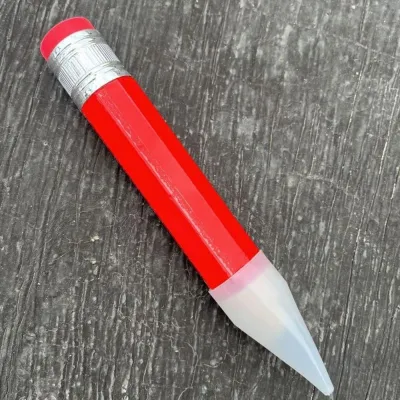
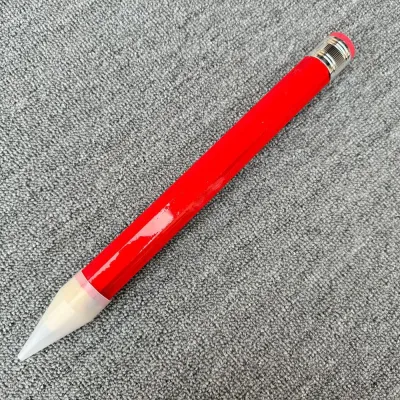
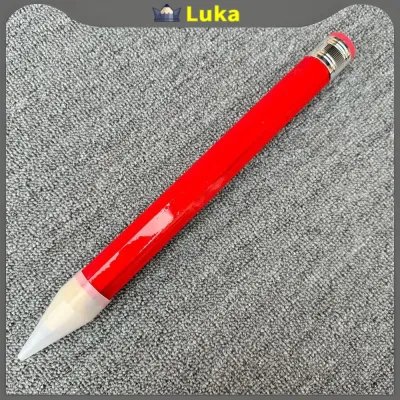
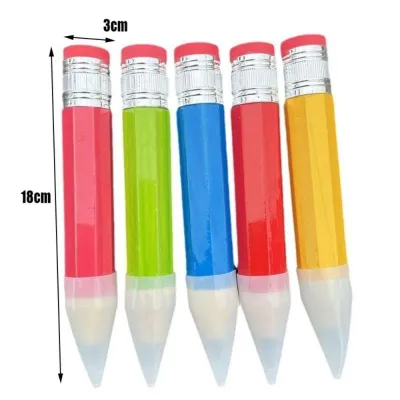
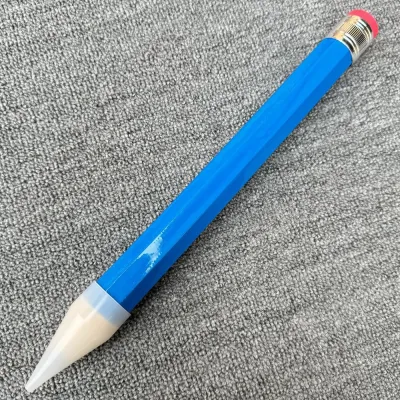
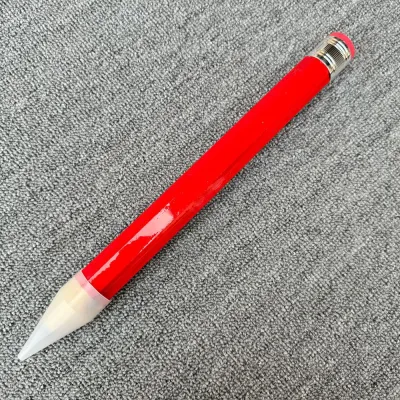
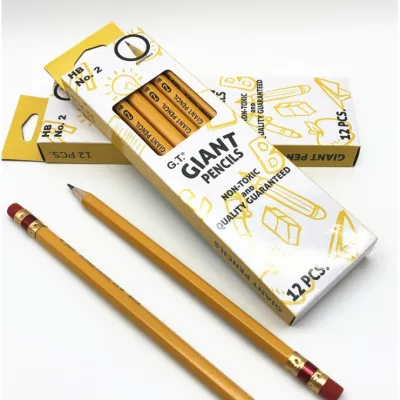
Prices are valid at publication and may change. Please refer to the product page for the latest price.
Weight management is another critical factor in this assessment. A pencil that is too heavy will drag the back of the hand down toward the paper, forcing the child to write using their entire forearm or shoulder rather than making controlled movements with their wrist and fingers. You can test this by observing the lines they produce. If the lines on the paper are incredibly faint, your child may lack the hand strength to press down while supporting a heavy pencil. If they press so hard that they consistently tear the paper, they may be overcompensating for a lack of control over a bulky barrel.
Identify Your Child's Current Writing Stage
Children progress through distinct fine motor stages as they learn to write, and each stage benefit from different pencil characteristics. In the earliest stage, typically seen in toddlers, children use a palmar grasp, clutching the pencil in a closed fist with their palm facing down. At this point, writing or scribbling is controlled entirely by the shoulder and elbow. A very thick, short, and round giant pencil is ideal for this stage, as it provides a substantial surface area that fits naturally into a small fist without requiring precise finger coordination.
As hand muscles mature, children transition to a digital pronate grasp, where the fingers point down toward the paper, but the pencil is still held primarily with the palm and fingers acting as a single unit. Gradually, they move toward a static tripod grasp, using the thumb, index, and middle fingers to hold the pencil, though the wrist and forearm still drive the movement. During these transitional phases, a giant pencil with a structured shape, such as a triangular barrel, helps guide the fingers into their proper positions without forcing them into a rigid, uncomfortable posture.
Recognizing when your child is ready to transition to a more advanced tool requires careful observation of their writing movements. Look for signs of finger dexterity, such as the child using only their fingers to make small, precise strokes rather than moving their entire arm. If your child can easily control a giant pencil to write letters within the lines of their writing pad, they are demonstrating excellent fine motor control. However, if the bulkiness of the giant pencil begins to block their view of the paper or limits their ability to write smaller, neater letters, it is a clear indicator that they are outgrowing the oversized tool.
Match Pencil Dimensions and Features to Their Needs
When selecting a giant pencil, the physical specifications of the tool must align with your child’s developmental needs. Standard pencils typically have a diameter of around 7mm, whereas giant pencils generally range from 9mm to over 10mm. For younger children or those with weaker grip strength, a larger diameter of 10mm reduces the distance the fingers must close, making it easier to hold. As their grip matures and their hands grow, transitioning to a slightly slimmer 9mm intermediate pencil can help them prepare for standard stationery.
The shape of the pencil barrel plays a significant role in guiding finger placement and preventing slippage. Triangular barrels are highly recommended for beginners because their three flat sides naturally accommodate the thumb, index, and middle fingers, encouraging the development of a proper tripod grip. Hexagonal barrels also offer flat edges that provide excellent grip stability, which is particularly helpful in preventing the pencil from rolling off school desks. Round barrels offer the most freedom of movement but require more active finger control to prevent slipping, especially when hands get warm and damp.
Length and weight are equally important for maintaining control. Standard pencils are often too long for young children, creating a top-heavy lever effect that wobbles as they write. Giant pencils designed for early learners are frequently shorter, measuring around 12cm to 15cm. This shorter length keeps the center of gravity closer to the paper, giving the child significantly more control over their pencil strokes. Additionally, look for pencils with soft, thick graphite leads, such as 2B or B. These softer leads require much less downward pressure to produce a dark, legible line on the paper, which directly reduces hand fatigue during long writing sessions.
Safety and material quality should also guide your purchase. Ensure the pencils are made from high-quality, straight-grained wood that sharpens smoothly without splintering, as rough edges can irritate sensitive skin. The paint or lacquer coating on the barrel must be non-toxic, as young children frequently chew on the ends of their pencils. While built-in grip zones—such as raised rubber dots or molded finger indentations—are excellent for preventing slips, they should not force the fingers into unnatural positions. If your child struggles with a specific grip issue, a separate, soft silicone grip aid can be added to a standard giant pencil to provide targeted support.
Signs It Is Time to Transition to a Standard Pencil
While giant pencils are invaluable for early development, they are temporary tools. Keeping a child on oversized pencils for too long can eventually restrict their writing speed and fluid movement. The primary indicator that your child is ready for a standard pencil is the consistent, unprompted use of a dynamic tripod grasp. In this mature grip, the pencil is held comfortably between the thumb and index finger, resting on the middle finger, with the ring finger and pinky curled gently into the palm to provide stability. If your child can write smoothly using only small movements of their fingers while keeping their wrist resting comfortably on the desk, their fine motor skills are ready for a smaller tool.
Another sign that it is time to transition is the changing nature of their schoolwork. In Philippine elementary schools, children eventually transition from wide-ruled writing pads to standard blue-and-red lined pad paper with much narrower spacing. Writing small, precise letters within these tight lines is incredibly difficult with a thick giant pencil, as the bulky tip blocks the child’s view of the baseline. If you notice your child struggling to keep their writing neat, or if their letters are overlapping because the pencil lead is too thick, introducing a standard-sized pencil will immediately improve their precision.
To make the transition smooth and stress-free, introduce standard pencils gradually. Start by having your child use a standard pencil for short, low-pressure activities, such as drawing a quick picture or writing their name, while allowing them to keep using their familiar giant pencil for longer writing tasks. You can also look for intermediate-sized pencils, which bridge the gap between giant and standard diameters. Monitor their hand for signs of fatigue or a regression in grip quality during this transition period. If they begin clutching the standard pencil in a fist or complaining of hand pain, return to the giant pencil for a few more weeks to allow their hand muscles more time to strengthen.
Frequently Asked Questions (FAQ)
Can a giant pencil correct a poor pencil grip?
A giant pencil is an excellent preventative tool and can guide a child toward a proper grip, but it cannot automatically correct an established poor grip on its own. The wider barrel and structured shapes, like triangular designs, make it physically easier for a child to place their fingers correctly. However, if a child has already developed a habit of wrapping their thumb over their index finger or clutching the pencil in a fist, they will likely carry that same habit over to the giant pencil. In these cases, consistent parental guidance, visual reminders, or specialized silicone grip aids are necessary alongside the giant pencil to retrain the hand muscles.
Are triangular giant pencils always better for beginners?
Triangular giant pencils are highly effective for most beginners because their three flat sides provide an intuitive, physical guide for the thumb, index, and middle fingers. This shape naturally encourages a tripod grip and prevents the pencil from rolling off slanted school desks. However, they are not a universal solution. Some children find the defined edges of a triangular pencil uncomfortable, especially if their natural finger placement does not align perfectly with the flat planes. If your child complains of discomfort or resists using a triangular pencil, a hexagonal or round giant pencil with a soft, non-slip grip zone is an excellent and comfortable alternative.
How do I know if the giant pencil is too thick for my child?
A giant pencil is too thick if your child cannot maintain control over their writing strokes or if their hand tires quickly. Visually, look at the gap between their thumb and index finger; if their fingers are stretched wide apart or cannot comfortably meet around the barrel, the pencil is too large. You may also notice that their writing looks incredibly shaky, or that they struggle to start and stop their lines precisely. If your child has to use their entire arm to drag the pencil across the paper because they cannot pinch the barrel securely, you should transition to a slightly slimmer intermediate pencil.
Community discussion
Share your experience or ask a question. Comments are reviewed before publication.