
Selecting your first professional or semi-professional watercolor set can feel like a daunting step, especially when navigating a heritage brand like Holbein. For most beginners, the Holbein Artist Watercolor 12-Color Set (in either tubes or pans) is the absolute best starting point. This configuration offers professional-grade pigment concentration and exceptional color-mixing capabilities without overwhelming you with unnecessary hues or exceeding a reasonable starter budget.
Unlike many Western watercolor brands, Holbein does not add ox gall (a wetting agent) to its paints during manufacturing. This unique formulation gives you far more control over your brushstrokes, as the paint disperses more slowly and predictably across wet paper. In tropical climates like the Philippines, where high humidity can make water control challenging on the page, this slower dispersion rate is a significant advantage for beginners trying to master smooth washes and precise details.
Understanding the differences between Holbein’s product tiers, physical formats, and color counts will help you make an informed purchase that supports your creative growth. By focusing on quality over sheer quantity, you can build a solid foundation in color theory and watercolor techniques from your very first brushstroke.
Products mentioned in this guide
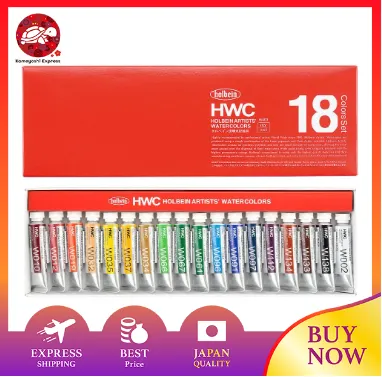
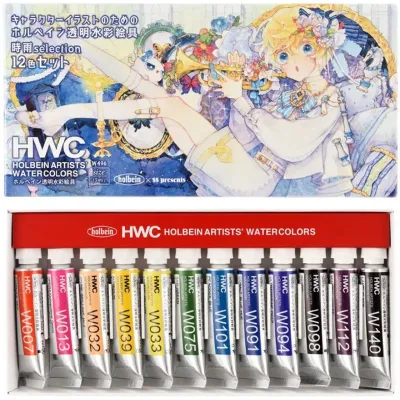
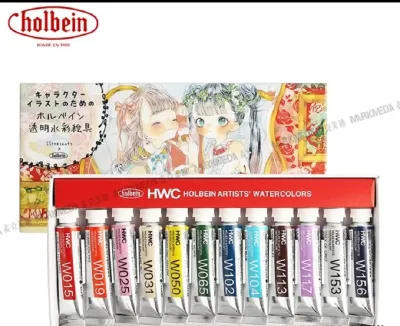
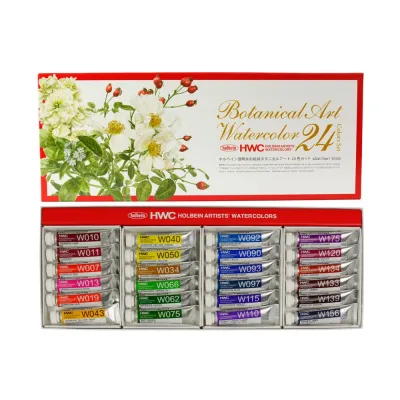

Prices are valid at publication and may change. Please refer to the product page for the latest price.
Holbein Artist vs. Student Grade: Which Line Fits Your Needs?
Before choosing a specific color palette, you must decide between Holbein’s two primary product lines: the professional-grade Artist Watercolor and the student-grade Academic or Student line. This choice directly impacts how the paint behaves on your paper, how easily colors mix, and how long your finished artwork will last without fading.
Holbein Artist Watercolor represents the brand’s flagship professional line. These paints are formulated with highly concentrated, finely ground pigments suspended in a premium gum arabic binder. Because there are minimal fillers or opacifiers, the colors remain incredibly vibrant, transparent, and clean even when mixed extensively. A tiny dab of professional-grade paint goes a long way, meaning a small set can last a beginner for months or even years of regular practice.
Holbein Student Watercolor is designed as a budget-friendly alternative for classroom settings and casual hobbyists. To keep costs low, the manufacturer replaces a portion of the expensive pigments with mineral fillers and synthetic extenders. While these paints are excellent for learning basic brush control, color mixing can sometimes result in muddy or chalky washes due to the higher ratio of fillers to pure pigment.
For beginners committed to mastering the watercolor medium, investing in a smaller, high-quality Artist set is almost always more beneficial than purchasing a massive Student set. Professional-grade paints respond predictably to water and paper, preventing the frustration of muddy mixtures that often plague beginners using lower-quality materials. If your budget allows, starting with a 12-color professional set will give you a much truer sense of what makes watercolor such a captivating and fluid medium.
Deciding on the Right Set Size and Format
Once you have selected your paint grade, the next step is determining the optimal color count and physical format for your painting environment. Overcomplicating your palette early on is a common mistake that can actually hinder your progress.

Finding the Color Count Sweet Spot
A set containing 12 to 18 colors is the ideal range for beginner watercolorists. This selection provides a balanced mix of warm and cool primaries, essential earth tones, and a few convenience greens or blues. It forces you to learn how to mix your own custom hues, which is a fundamental skill in watercolor painting.
Avoid purchasing sets with 36 or more colors when starting out. Having too many options on your palette often leads to decision paralysis and discourages you from understanding how colors interact. Furthermore, large sets are significantly more expensive and often contain highly specific convenience colors that you may rarely use in your day-to-day practice.
Choosing Between Pans and Tubes
Holbein paints are available in both solid pans (dry cakes) and squeeze tubes. Each format has distinct practical advantages depending on where and how you plan to paint.
- Pans (Solid Cakes): These are highly portable, dry to the touch, and exceptionally easy to set up. You simply wet the dry paint with a damp brush to activate it. Pans are incredibly forgiving for beginners because they prevent you from accidentally squeezing out too much paint and wasting expensive materials. They are perfect for sketching on the go or working in limited spaces.
- Tubes (Liquid Paint): Tubes offer fresh, creamy paint that is ideal for mixing large, intense washes or working on large-scale paper. Because the paint is already wet, you can easily load your brush with a high concentration of pigment. Tubes are also highly economical in the long run, as you can squeeze them into empty plastic pans, let them dry, and use them exactly like pan paints.
In humid, tropical climates, tube paint that has been squeezed and dried into a palette may remain slightly tacky or soft. However, Holbein’s unique formulation generally dries down to a stable, non-sticky finish that rewets beautifully with a drop of water. Before finalizing your purchase on an online marketplace or at a local art boutique, always check the product description to confirm whether the set contains tubes or pans.
Top Holbein Watercolor Set Configurations for Beginners
To help you choose the exact product that aligns with your creative goals and budget, we have broken down the three most popular Holbein configurations for beginner painters.
The Budget-Friendly Starter: Holbein Student Grade (12 to 18 Colors)
This configuration is designed specifically for those who want to explore watercolor painting as a casual hobby without making a major financial commitment upfront.
- Ideal for: Casual hobbyists, school students, and anyone testing the waters of the medium before investing heavily.
- Pros: Highly affordable, accessible, and provides a generous amount of paint for practicing basic washes, gradients, and brush strokes.
- Limitations: The lower pigment concentration means you will need to use more paint to achieve deep, saturated values. Colors may appear slightly chalky when heavily diluted, and they lack the archival longevity required for professional gallery work.
- Buying Tip: Look for a 12-color set that features a clean split-primary palette (a warm and cool version of red, yellow, and blue) to maximize your color-mixing practice.
The Long-Term Investment: Holbein Artist Grade (12 to 18 Colors)
This is the gold standard for serious beginners who want to experience the full potential of professional-grade watercolor paint from day one.
- Ideal for: Dedicated art students, aspiring professionals, and beginners who want vibrant, lightfast, and highly predictable results.
- Pros: Exceptional pigment load, brilliant color clarity, and superior mixing capabilities. The paint rewets effortlessly and flows beautifully across the paper.
- Limitations: A higher initial price point requires a larger upfront investment. Because the pigments are highly concentrated, you must practice careful brush hygiene to avoid contaminating your lighter colors.
- Buying Tip: A 12-color set is more than enough to learn foundational color theory. If you prefer painting landscapes, upgrading to an 18-color set can provide helpful convenience greens and rich earth tones like Burnt Sienna and Raw Umber.
The Minimalist Sketcher: Holbein Artist Pocket Set (5 Colors)
For artists who prioritize mobility or prefer working with a highly disciplined, limited color palette, this ultra-compact pocket set is an excellent choice.
- Ideal for: Urban sketchers, travel journalers, and outdoor painters who want to capture quick scenes in a pocket notebook.
- Pros: Extremely lightweight, fits easily into a small bag or pocket, and encourages you to master the art of color mixing using a highly intentional primary palette.
- Limitations: The extremely limited color selection means you must mix almost every hue you need, which can be time-consuming. The small pan sizes can also make it difficult to use large, broad brushes for expansive washes.
- Buying Tip: Verify that the five included colors consist of a balanced primary triad (such as a primary yellow, magenta, and cyan or their equivalents) along with a neutral or earth tone to ensure you can mix a wide range of natural shades.
Quick Comparison of Beginner-Friendly Holbein Configurations
To help you quickly evaluate your options, the table below summarizes the key features of the three recommended Holbein configurations.
| Configuration | Best For | Pigment Quality | Portability | Key Limitation |
|---|---|---|---|---|
| Student Grade (12–18 Colors) | Casual hobbyists & budget-conscious students | Standard (uses fillers) | Moderate (usually tubes) | Mixtures can become muddy; not archival |
| Artist Grade (12–18 Colors) | Dedicated learners & aspiring artists | Professional (high purity) | High (available in compact pans/tubes) | Higher initial financial investment |
| Artist Pocket Set (5 Colors) | Travel journalers & urban sketchers | Professional (high purity) | Excellent (pocket-sized) | Highly limited color range; small pans |
Note: Prices and availability can vary based on local import factors and shipping. We recommend checking reputable local art supply stores or official online distributors in the Philippines to compare current pricing (₱) and stock levels.
Essential Accessories to Pair With Your Holbein Set
Even the highest-quality Holbein paint will not perform well if paired with subpar accessories. To avoid common beginner frustrations, ensure you have these essential supplementary supplies ready before you begin painting.
100% Cotton Watercolor Paper This is the single most important accessory you will buy. Cheap wood-pulp paper (often labeled as “student grade” or “cellulose”) cannot handle multiple layers of water; it buckles, pills, and causes paint to pool unevenly. For the best results, choose a cold-press paper made of 100% cotton with a weight of 300gsm (140lb). Cotton fibers absorb water evenly, allowing your Holbein paint to blend smoothly and dry without harsh, uncontrolled edges.
High-Quality Synthetic Round Brushes You do not need a massive collection of cheap brushes. Instead, invest in two or three high-quality synthetic or synthetic-blend round brushes (such as sizes 6, 8, and 10). Synthetic brushes offer excellent spring, hold their shape well, and come to a sharp point, allowing you to paint both broad washes and fine details with the same brush.
A Deep-Welled Palette and Dual Water Jars If you choose tube paints, you will need a plastic or ceramic palette with deep wells to keep your color mixtures from running into one another. Ceramic palettes are highly recommended because they do not stain and prevent the paint from pooling or heading. Always use two jars of water: one for rinsing dirty paint off your brush, and one containing clean water for mixing fresh washes and wet-on-wet techniques.
Frequently Asked Questions (FAQ)
Can I mix Holbein Student and Artist watercolors?
Yes, you can safely mix Holbein Student and Artist watercolors on your palette without any chemical compatibility issues. However, keep in mind that mixing them will dilute the high pigment concentration and lower the overall lightfastness of the professional-grade paint. For practice pieces and sketchbooks, mixing the two lines is a great way to stretch your budget, but for finished artwork intended for display or sale, it is best to stick entirely to the professional Artist line.
Should I buy tubes or pans as a beginner?
For most absolute beginners, pans are highly recommended because they are easier to manage, highly portable, and minimize paint waste. They allow you to control exactly how much paint you lift with your brush. However, if you plan to work on large sheets of paper, prefer painting rich, dark values, or want to customize your own palette layout, buying tubes is the more versatile and economical choice over time.
Are Holbein watercolors lightfast?
Holbein Artist watercolors are highly regarded in the art community for their excellent lightfastness, meaning they resist fading when exposed to light over time. However, lightfastness is a property of the specific pigment used rather than the brand itself. Some organic or historic pigments are naturally less lightfast than modern synthetic alternatives. Always check the individual lightfastness ratings printed on the side of each tube or pan packaging before starting a piece intended for long-term display. Student-grade paints generally feature lower lightfastness ratings and are not recommended for archival work.

Community discussion
Share your experience or ask a question. Comments are reviewed before publication.