
Selecting the ideal planner for the upcoming year is a highly personal decision that directly impacts your daily productivity, mental clarity, and peace of mind. To find the right kinbor 2027 planner layout, you must carefully align the format with your daily task density, scheduling granularity, and long-term tracking habits. Choosing the wrong setup often leads to empty pages and eventual abandonment, while the right layout transforms your planner into a seamless, satisfying extension of your daily routine.
The daily layout is built for high-density, hour-by-hour scheduling and extensive personal reflection, making it a favorite for students, busy professionals, and creative journalers who enjoy documenting their days in detail. The weekly layout offers a balanced, birds-eye view of your commitments, serving as an excellent middle ground for managing multiple projects without carrying excessive physical weight. Meanwhile, the monthly layout is designed for minimalist planning, high-level deadline tracking, and long-term goal setting, providing a clean overview that pairs perfectly with digital tools.
By evaluating how you naturally organize your thoughts, manage your time, and handle physical notebook logistics, you can select a format that supports your lifestyle. Whether you prefer the detailed canvas of a daily page or the streamlined efficiency of a monthly grid, understanding the unique strengths of each kinbor 2027 layout ensures your planning system remains sustainable, functional, and rewarding throughout the year.
Products mentioned in this guide
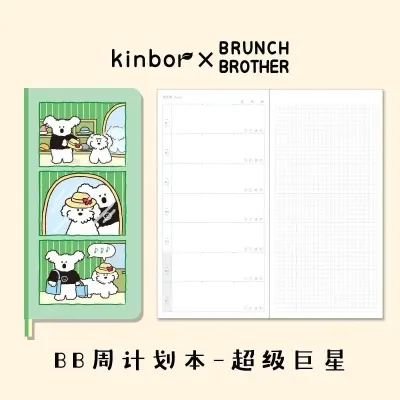
Prices are valid at publication and may change. Please refer to the product page for the latest price.
Identify Your Planning Style Before Choosing a Kinbor 2027 Layout
Before committing to a specific planner format, you must analyze your daily task volume and cognitive style. Many people choose a planner based on aesthetic appeal or social media trends, only to abandon it a few weeks into the year. This mismatch usually occurs because the layout does not match their actual scheduling needs. A sustainable planning system must accommodate your natural workflow rather than forcing you to adopt an artificial routine.
Start by evaluating your daily task density and the level of detail your schedule demands. Ask yourself if your days are filled with time-sensitive appointments, or if you primarily work with flexible, self-paced to-do lists. If you manage multiple client meetings, classes, or specific hourly commitments, you require a layout that supports strict time-blocking. If your days are more fluid, a rigid hourly structure might feel restrictive, leaving you with large patches of empty space that can feel discouraging.
Consider the balance between macro-level goal tracking and micro-level daily execution. Some planners excel at keeping long-term milestones, project deadlines, and habit trackers visible at all times. Others focus heavily on the minutiae of daily life, providing space for gratitude lists, meal tracking, and detailed diary entries. Understanding where you sit on this spectrum prevents the frustration of cramped writing spaces or the pressure of filling blank pages when you have nothing to write.
Physical logistics and your environment also play a crucial role in your choice. If you commute daily, study on the go, or work from multiple locations, the weight and size of your planner are major considerations. Standard paper sizes like A5 (148mm x 210mm) offer ample writing space but are heavier to carry. In contrast, smaller sizes like A6 (105mm x 148mm) or Traveler’s Notebook (TN) formats are highly portable but offer less writing area. Additionally, in high-humidity environments like the Philippines, paper can absorb ambient moisture, which can affect ink drying times and paper texture. Choosing a layout that matches your mobility needs ensures your planner remains a practical tool rather than a physical burden.
Ultimately, a planner is only effective if you use it consistently. Choosing a layout that matches your natural habits reduces the friction of opening the book each day. By identifying your planning style first, you establish clear, practical criteria that make selecting your next layout a logical, stress-free decision.
Daily Layout: Best for Hour-by-Hour Task Management
The daily layout in the kinbor 2027 collection is designed for those who require granular, hour-by-hour scheduling and extensive space for daily notes. Each day typically receives a dedicated page, usually featuring a subtle 3.7mm or 4mm grid pattern. This grid provides a clean, unobtrusive structure that accommodates both neat handwriting and creative layouts. A vertical timeline running down the side of the page allows you to map out your day with hourly precision, making it easy to implement time-blocking techniques.

This format is ideal for individuals managing complex, high-density schedules. University students balancing lectures, study groups, exams, and extracurricular activities will find the daily page invaluable for keeping track of overlapping commitments. Similarly, professionals with back-to-back meetings, freelancers managing multiple client deliverables, and creative journalers who enjoy memory keeping, sketching, or using stickers will appreciate the abundant space. The daily page allows you to separate your professional tasks from personal reflections, health tracking, and creative writing.
However, the primary trade-off of a daily planner is its physical bulk and weight. A book containing over 360 pages of high-quality paper is naturally thicker and heavier than other formats. Carrying a full-sized A5 daily planner in a backpack or tote bag during a busy daily commute can be physically demanding. To ensure the planner remains portable, you should check the binding type and page specifications. Kinbor daily planners are highly regarded for their lay-flat thread sewing, which allows the book to open completely flat on any surface, but the overall weight remains a key factor for mobile users.
If you love the daily format but want to minimize weight, consider alternative sizes or split editions. An A6 daily planner offers a much smaller footprint while retaining the one-page-per-day structure, making it easy to slip into a small bag. Alternatively, look for half-year split editions that divide the year into two separate, lightweight books. This allows you to enjoy the high detail of a daily layout without the physical burden of carrying a massive volume everywhere you go.
Weekly Layout: Ideal for Balanced Work and Life Scheduling
The weekly layout is widely considered the most versatile and popular option, offering a balanced middle ground between daily detail and monthly overview. A standard weekly spread displays all seven days across two facing pages, allowing you to visualize your entire week at a single glance. This layout typically comes in three main configurations: weekly vertical, weekly horizontal, and the weekly memo format.
The weekly vertical layout divides the spread into vertical columns for each day, often with hourly markings. This is the ultimate tool for time-blocking, as it helps you see open gaps in your schedule and prevents over-scheduling. The weekly horizontal layout features horizontal boxes for each day, which is excellent for task lists, brief diary entries, and flexible notes. The weekly memo format features the seven days of the week on the left page and a full page of grid paper on the right. This is highly versatile, allowing you to note appointments on the left and use the right page for meeting notes, mind maps, or weekly shopping lists.
This format is ideal for project managers, freelancers, and anyone balancing multiple life areas, such as work, family, and personal hobbies. Seeing your week laid out as a single unit makes it much easier to spot busy days, plan ahead for upcoming deadlines, and allocate preparation time. The weekly rhythm matches the natural cadence of modern work and school schedules, helping you transition smoothly from Monday morning tasks to weekend personal commitments without losing track of your priorities.
Portability is a major advantage of the weekly layout. Because it requires significantly fewer pages than a daily planner, a weekly book is much thinner and lighter. It easily fits into a standard tote bag, backpack, or portfolio, making it an excellent choice for everyday carry. The space efficiency means you do not have to sacrifice paper quality for portability, allowing you to enjoy a smooth writing experience on a lightweight, travel-friendly notebook. To maximize your weekly spread, utilize the margins and extra spaces for high-level organization, such as habit tracking or color-coding with different ink colors.
Monthly Layout: Perfect for Big-Picture Goals and Deadlines
The monthly layout is the ultimate tool for high-level planning, minimalist scheduling, and long-term milestone tracking. This format dedicates a two-page spread to each month, featuring a clean grid of daily boxes. Rather than focusing on hourly schedules, the monthly layout prioritizes key dates, major deadlines, exams, travel itineraries, and significant life events. It provides a visual map of your month, helping you understand your time availability at a glance.
This layout is highly effective for individuals who prefer a minimalist approach to paper planning or those who use a digital calendar for their daily tasks. A monthly planner serves as an excellent physical backup to digital tools, allowing you to track bills, monitor habits, or record major achievements without the clutter of daily lists. It is also ideal for long-term project planning, such as tracking academic semesters, fitness programs, or content creation schedules over several months.
The obvious limitation of a monthly layout is the lack of space for detailed daily notes. Squeezing a long list of tasks, meeting details, and personal thoughts into a small daily square is practically impossible. If your routine requires detailed daily execution tracking, you will need to pair your monthly planner with a secondary system. This can be as simple as a blank grid notebook for daily brain dumps, or a digital task management application on your phone or computer.
When choosing a monthly planner, pay close attention to the auxiliary pages. Many high-quality monthly planners include dedicated notes sections, yearly overviews, and blank pages between the months. These extra spaces are invaluable for setting monthly goals, conducting reviews, budgeting, and sketching out project timelines. By utilizing these pages effectively, you can turn a simple monthly grid into a powerful, comprehensive planning system that keeps your long-term vision clear and focused.
Layout Comparison: Match Your Routine to the Right Format
To help you finalize your decision, it is helpful to compare the core characteristics of each layout side by side. The table below outlines how the daily, weekly, and monthly formats perform across key decision dimensions, allowing you to match your specific routine to the most suitable structure.
| Layout Type | Detail Level | Portability & Weight | Best User Profile | Primary Use Case |
|---|---|---|---|---|
| Daily | Very High (Hourly tracking, long notes) | Heavy (Thicker book, best for desk use) | Students, busy professionals, journalers | Granular scheduling, daily journaling, time-blocking |
| Weekly | Moderate (Daily lists, weekly view) | Medium (Slimmer profile, highly portable) | Freelancers, project managers, multi-taskers | Balanced work-life scheduling, weekly task management |
| Monthly | Low (High-level dates, milestones) | Very Light (Ultra-slim, easy pocket carry) | Minimalists, digital-first users, project planners | Long-term tracking, bill monitoring, event planning |
If you find yourself torn between two layouts, consider how you handle physical writing and portability. For instance, if you require daily detail but dread carrying a heavy book, choosing a weekly layout paired with a small pocket notebook for daily lists often provides the best balance of portability and function. Alternatively, choosing a smaller size like A6 in a daily format can give you the granular space you need without the physical bulk of an A5 volume.
If you are transitioning between layouts, give yourself a few weeks to adjust. For example, moving from a daily to a weekly format can initially feel restrictive. To make the transition easier, try using pens with finer tips, such as 0.38mm or 0.5mm gel pens, to keep your handwriting compact and neat. Many stationery enthusiasts also adopt a hybrid approach, keeping a monthly planner in their bag for quick scheduling on the go, while maintaining a daily planner on their desk at home for deep-dive tracking and reflection.
Frequently Asked Questions (FAQ)
Can I combine different layouts in one Kinbor planner?
Standard bound planners typically feature one primary layout throughout the book to maintain a consistent structure and manageable thickness. However, some specialized editions or hybrid planners may include a basic monthly overview at the beginning of the book followed by your chosen daily or weekly spreads. If you require a highly customized combination of layouts, you may want to look into modular notebook systems, or simply use a slim monthly planner alongside a separate daily or weekly notebook to create a personalized, multi-book planning setup.
What paper specifications should I check for fountain pen compatibility?
When evaluating a planner for fountain pen use, you should check the product specifications for paper weight, which is measured in grams per square meter (GSM), and the specific paper finish. Heavier paper, typically around 80 GSM or higher, generally offers better resistance to ink bleed-through and ghosting. However, paper smoothness and ink absorption properties also play a major role in how your pen performs. Because different ink formulas and pen nib sizes can react uniquely to any paper surface, it is always best to perform a small test in an inconspicuous area, such as a back notes page, to verify drying times and feathering before writing on your main calendar pages. Additionally, in humid tropical climates like the Philippines, paper naturally absorbs a small amount of ambient moisture from the air. This moisture can slightly increase the drying time of fountain pen inks, making fast-drying inks or finer nib sizes highly recommended to avoid accidental smudging.
Community discussion
Share your experience or ask a question. Comments are reviewed before publication.