
Choosing the right Kokuyo pen depends on matching your physical writing style—such as your grip pressure and writing speed—with the specific ink formulation and tip design required for your daily tasks. Whether you are a student taking rapid lecture notes, a professional signing official documents, or an artist executing precise annotations, the ideal choice lies in evaluating observable specifications like tip shape, ink viscosity, and barrel ergonomics.
In tropical climates like the Philippines, high humidity can significantly affect how ink behaves on paper. Gel inks may take longer to dry, while standard paper fibers can absorb moisture and become more prone to feathering or bleed-through. Understanding these environmental factors, alongside your personal writing habits, ensures that your chosen writing instrument performs consistently without smudging or skipping.
By analyzing the technical details printed on manufacturer packaging and matching them to your primary paper types, you can build a reliable stationery setup. This guide provides a practical framework to evaluate Kokuyo’s diverse range of writing instruments, helping you make an informed decision based on physical specifications, ergonomic designs, and real-world writing scenarios.
Products mentioned in this guide
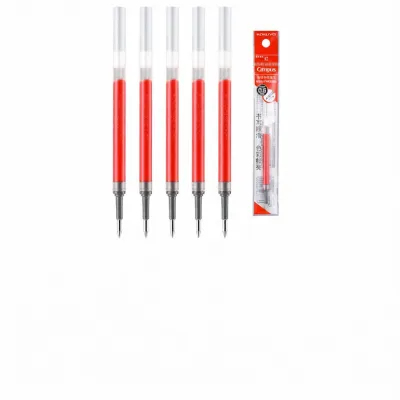
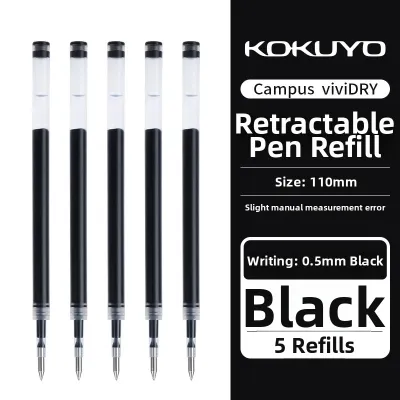
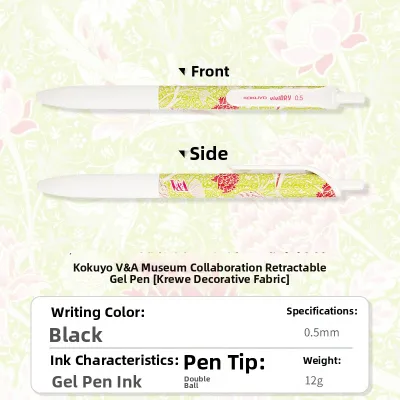
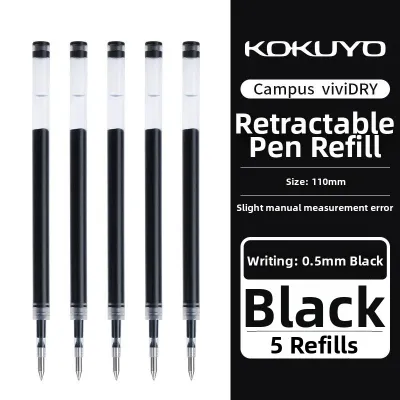
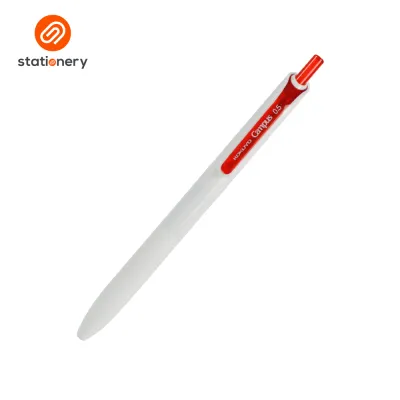
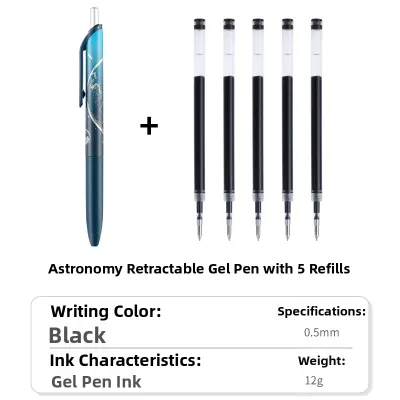
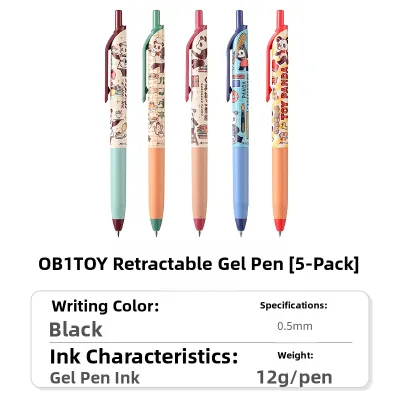
Prices are valid at publication and may change. Please refer to the product page for the latest price.
Understanding Your Writing Style and Task Requirements
Before browsing any stationery aisle or online catalog, you must analyze how you physically interact with a pen. Writing pressure is a critical variable. If you tend to grip your pen tightly and press down heavily, a delicate needle-point tip may feel scratchy or bend under the strain. Conversely, if you have a light hand, a free-flowing gel ink pen or a low-viscosity ballpoint will allow you to write effortlessly without needing to apply tiring downward force.
Your typical writing speed and session length also dictate your ergonomic needs. Fast, continuous writing—such as taking minutes during a meeting or copying lecture slides—requires a pen with a comfortable, slip-resistant grip and a lightweight barrel to prevent hand fatigue. For shorter, intermittent tasks like signing forms, a slightly heavier, capped pen can provide a satisfying sense of balance and control without causing long-term strain.
The paper you use most frequently plays an equally important role. Standard copy paper and budget-friendly notebooks often have loose, absorbent fibers that pull wet ink, leading to feathering and bleed-through. For these thinner paper weights, prioritize fine tip sizes and quick-drying or oil-based inks. Premium, high-density paper can handle wetter, more vibrant gel inks, allowing you to enjoy a smoother writing experience without worrying about ruining the reverse side of the page.
Finally, consider the specific ink behaviors required for your tasks. If you are left-handed, quick-drying ink is an absolute necessity to prevent your hand from smearing the text as it moves across the page. For official records or personal journals that you want to preserve for years, look for pigment-based inks that offer water resistance and lightfastness. Identifying these requirements beforehand prevents the frustration of purchasing a pen that fails to perform on your preferred medium.
Core Specifications to Evaluate in Kokuyo Pens
When evaluating Kokuyo pens, understanding the technical specifications listed on the packaging is key to finding your ideal match. The tip of the pen is the primary point of contact with your paper, and its shape heavily influences your writing feel. Conical tips are robust and distribute pressure evenly, making them highly durable and suitable for everyday writing, carbon copies, or heavy-handed users. Needle-point tips feature a slim, cylindrical shape that offers an unobstructed view of the paper, making them excellent for precise lines, mathematical formulas, and writing in tight spaces.

Tip size is another crucial specification that directly affects line width and ink flow. Ultra-fine tips, such as 0.3 mm or 0.4 mm, produce crisp, delicate lines that are highly suited for small handwriting and detailed annotations, though they may feel slightly feedback-heavy on textured paper. Medium tips, ranging from 0.5 mm to 0.7 mm, offer a much smoother, wetter writing experience that is ideal for bold signatures and expressive journaling, but they require thicker paper to prevent bleed-through.
The type of ink inside the pen determines its flow characteristics and compatibility with different environments. Gel ink consists of water-based biopolymers suspended with pigments, offering vibrant colors and a smooth glide, though it generally has a longer drying time. Ballpoint ink utilizes an oil-based solvent, which dries almost instantly upon contact with the paper and offers excellent water resistance, making it highly reliable for everyday office tasks. For those who prefer mechanical pencils, the lead grade (such as HB, B, or 2B) and lead diameter (ranging from 0.3 mm to 1.3 mm) must be matched to your writing pressure to prevent frequent lead breakage.
Ergonomics and barrel construction should also be carefully inspected. Look for pens featuring soft elastomer or rubberized grips if you suffer from finger fatigue. The shape of the barrel—whether round, hexagonal, or triangular—affects how your fingers naturally rest, with triangular shapes promoting a more ergonomic grip. Additionally, consider the convenience of a retractable click mechanism versus the secure seal of a capped pen, which prevents the ink from drying out during long periods of storage.
Pen Categories Matched to Common Writing Scenarios
To simplify your search, Kokuyo’s writing instruments can be grouped into functional categories designed for specific writing environments. Each category balances different trade-offs between writing smoothness, line precision, and ink longevity. By identifying which scenario matches your daily routine, you can quickly narrow down your choices to the most suitable physical designs and ink formulations.
When browsing these categories, always check the manufacturer’s packaging for specific use-case endorsements and refill compatibility codes. Investing in a pen body that supports widely available refills saves money over time and allows you to customize your writing experience by swapping ink colors or tip sizes. Keep in mind that no single pen is universally suited for every task; a highly precise drafting pencil may not be the most effective tool for signing official documents, just as a bold gel pen may fail when writing in the tiny margins of a compact planner.
Fast Note-Taking and Student Journaling
For students and avid journalers, the primary goal is to maintain a fast, uninterrupted writing flow without experiencing hand strain. During long study sessions, a pen with a soft, cushioned grip is essential to absorb excess finger pressure. Lightweight plastic barrels minimize the momentum your hand must control, reducing fatigue over hours of continuous use.
The ink formulation for fast note-taking must balance smoothness with rapid drying times. Quick-drying gel inks or low-viscosity hybrid ballpoint inks are ideal, as they glide across the paper with minimal resistance while drying fast enough to prevent smudging when you turn the page. If you prefer the flexibility of a mechanical pencil for math or science notes, look for models with slightly thicker leads, such as 0.7 mm or 0.9 mm, which provide a smooth, pencil-like feel and are far less likely to snap during hurried writing.
Professional Document Signing and Office Use
In a professional office setting, your writing instrument must deliver clean, authoritative lines that project competence and ensure long-term legibility. Document signing requires ink that is highly resistant to water, fading, and chemical alteration. Look for packaging labels that explicitly state “pigment ink,” “archival quality,” or “document proof” to ensure your signatures remain intact on official contracts and certificates for decades.
The physical design of an office pen should reflect its formal environment. A slightly heavier barrel made from matte-finished polymers or metal accents provides a balanced feel, helping you execute smooth, controlled strokes. Medium tip sizes, such as 0.7 mm, are preferred for signatures as they produce a bold, continuous line easily captured by document scanners. Capped designs are particularly well-suited for office desks, as the physical cap provides an airtight seal that keeps the tip moist even when the pen sits unused in a drawer for weeks.
Precision Drafting and Detailed Annotations
When your work demands absolute accuracy—such as drawing technical diagrams, filling out compact planners, or writing detailed annotations in the margins of a textbook—precision is paramount. For these tasks, a needle-point tip is highly recommended. The ultra-slim profile of a needle point allows you to see exactly where the ink meets the paper, giving you maximum control over tight curves and tiny characters.
To support this precision, the pen barrel must offer exceptional stability. Any internal play or wobble at the tip can lead to wavy lines. Look for pens with integrated tip cones or fixed metal sleeves that hold the writing point firmly in place. If you are using a mechanical pencil for drafting, consider models equipped with auto-rotating lead mechanisms; these internal gears rotate the lead slightly with every stroke, maintaining a consistently sharp, conical point and ensuring your line width remains completely uniform.
Comparison Matrix: Matching Pen Traits to User Needs
The following table summarizes how different pen specifications align with specific writing scenarios, helping you quickly identify the key features and potential limitations of each option.
| Writing Scenario | Recommended Tip/Ink Type | Key Ergonomic Feature | Primary Limitation |
|---|---|---|---|
| Student Note-Taking | 0.5 mm Quick-Dry Gel | Soft Rubber Grip | Faster ink consumption |
| Document Signing | 0.7 mm Pigment Ballpoint | Weighted Matte Barrel | Requires more writing pressure |
| Margin Annotations | 0.3 mm Needle-Point Gel | Slim Hexagonal Body | Can feel scratchy on rough paper |
| Technical Drafting | 0.5 mm Mechanical Pencil | Fixed Metal Sleeve | Lead requires regular advancement |
Purchasing Tips and Verifying Product Authenticity
To ensure you receive a genuine, high-quality writing instrument, always purchase your stationery from authorized retailers, official brand stores, or highly rated sellers on reputable online marketplaces. Because premium stationery brands are popular targets for counterfeiting, buying from unverified third-party sources increases the risk of receiving pens with dry ink, scratchy tips, or fragile plastic barrels that crack easily under pressure.
When your package arrives, take a few moments to verify the product’s authenticity before opening the sealed packaging. Genuine Kokuyo products feature crisp, high-resolution printing on the backing, with accurate logos and clear instructions. Inspect the pen barrel for clean molding lines, a solid weight, and official batch codes or holographic security seals. The retractable click mechanism should feel smooth and positive, without any gritty resistance or loose rattling.
If you are planning to buy pens or refills in bulk for the school year or office supply cabinet, it is wise to check the seller’s return and exchange policies beforehand. Test a single pen from the batch immediately upon receipt to ensure the ink flows smoothly and has not suffered from improper storage conditions during transit. When budgeting for your purchase, compare prices across official distributor channels to ensure you are paying a fair retail rate in ₱, avoiding deals that seem too good to be true.
Frequently Asked Questions (FAQ)
How do I prevent my gel pen from skipping or drying out?
To keep your gel pen writing smoothly, always store it horizontally or tip-down as recommended by the manufacturer’s packaging instructions. Storing a pen tip-up can cause gravity to pull the ink away from the ballpoint, creating tiny air bubbles in the cartridge that lead to skipping. Always retract the tip or replace the cap firmly immediately after use to prevent the ink at the tip from drying out. Additionally, protect your pens from extreme heat, direct tropical sunlight, or direct exposure to air conditioning vents, as severe temperature fluctuations can cause the ink to expand, leak, or dry out prematurely.
Can I use Kokuyo gel refills in other brand pen bodies?
Cross-brand refill compatibility is not guaranteed and depends entirely on the exact physical dimensions of the refill cartridge. Before attempting to swap refills, you must compare the overall length, the outer diameter of the plastic tube, the placement of the spring stops, and the shape of the tip. Many manufacturers print official compatibility charts on their packaging or websites, which you should consult first. Forcing an incompatible refill into a pen body can compress the internal spring, cause the tip to wobble, or result in slow ink leaks that can permanently ruin your favorite pen barrel.
What is the best way to test a pen before buying in bulk?
The most reliable way to test a pen is to bring a sample of the exact paper you use daily, as the testing pads provided in retail stores are often made of different paper weights and textures. Write a full paragraph at your normal writing speed rather than just scribbling a few loops; this allows you to accurately assess how the grip and barrel weight feel over a sustained period. Observe the ink’s behavior closely: check for feathering along the edges of your letters, look at the back of the page to inspect for bleed-through, and run your finger over the text after a few seconds to measure the actual drying speed under your typical writing pressure.
Community discussion
Share your experience or ask a question. Comments are reviewed before publication.