
Selecting the right kraft paper for packaging requires matching the material’s weight, treatment, and composition to your specific task. A wrapping paper that excels at securing heavy shipping boxes will likely be too stiff for delicate gift wrapping, while standard retail paper will fail to protect oily food items. By evaluating key physical properties such as thickness, coatings, and manufacturing source, you can ensure your items remain secure, presentable, and undamaged throughout their journey.
Understanding Kraft Paper Variants and Core Properties
To make an informed choice, you must first understand the three primary variants of kraft paper: virgin, recycled, and bleached. Virgin kraft paper is made directly from raw wood pulp, resulting in long, unbroken fibers that provide maximum tear resistance and tensile strength. Recycled kraft paper utilizes post-consumer waste, which shortens the fibers; while environmentally conscious, it offers lower tear strength and is ideal for lighter wrapping or void fill. Bleached kraft paper undergoes a chemical treatment to strip away the natural brown lignin, leaving a clean white surface ideal for high-contrast printing and premium retail presentation.
Paper weight is measured in grams per square meter (gsm), which indicates thickness and load capacity. When reviewing product labels on online marketplaces, look for the gsm rating to determine if the paper can support your item’s mass. Light papers (30 gsm to 50 gsm) are highly flexible, excellent for delicate wrapping or interleaving. Medium weights (60 gsm to 90 gsm) offer a balanced compromise of flexibility and strength, suitable for standard retail bags and general wrapping. Heavy-duty options exceeding 100 gsm are stiff and puncture-resistant, designed primarily for shipping sacks and structural packaging.
Products mentioned in this guide
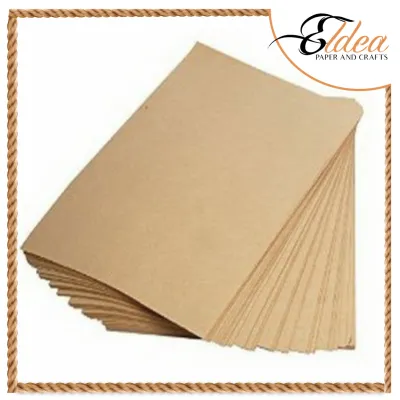
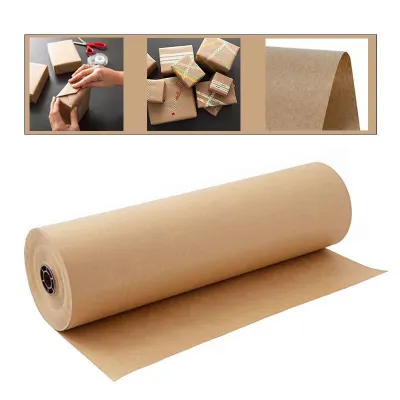
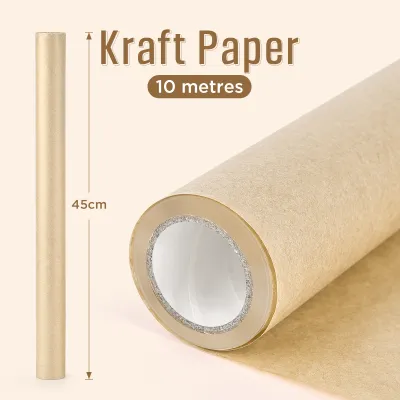
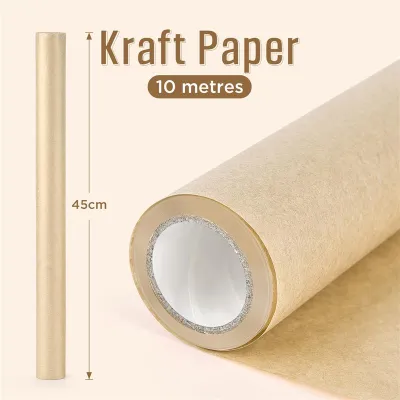
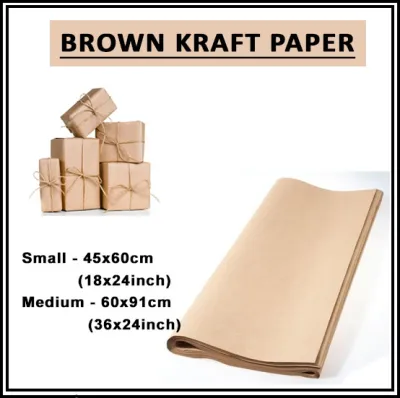
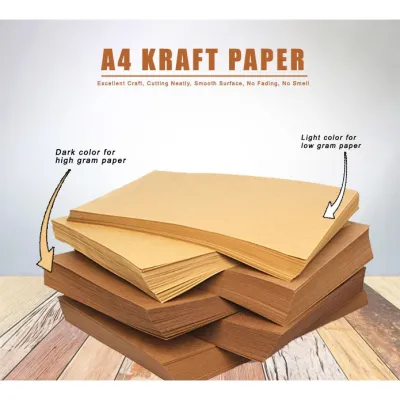
Prices are valid at publication and may change. Please refer to the product page for the latest price.
Choosing between natural brown and bleached white options involves balancing aesthetic goals with functional requirements. Natural brown kraft paper conveys an organic, rustic image that aligns well with artisanal goods. Bleached white kraft paper provides a neutral background that makes colored inks and brand logos stand out vividly, though the bleaching process can slightly reduce the paper’s overall tensile strength compared to its virgin brown counterpart.
Matching Kraft Paper to Food Packaging Scenarios
When using kraft paper for food packaging, safety must be your primary priority. You must strictly verify that the paper carries explicit “food-grade” or “food-safe” certifications on its product label or manufacturer specification sheet before allowing it to come into contact with consumables. Standard industrial or craft-grade kraft papers often contain chemical residues, sizing agents, or recycled fibers that are unsafe for direct food contact. Ensuring the paper complies with recognized food safety standards guarantees that no harmful substances will migrate into the food.

The physical state of the food dictates the type of barrier coating required. For oily, wet, or warm foods—such as local fried delicacies, pastries, or warm bread—uncoated kraft paper will quickly absorb moisture and grease, leading to structural failure and unsightly stains. In these scenarios, check the manufacturer’s specifications for specialized coatings, such as a thin vegetable-based wax, polylactic acid (PLA), or other food-safe grease-resistant barriers. These coatings prevent oils and steam from weakening the paper fibers, keeping the package intact and clean during transport.
It is also important to distinguish between direct wrapping and indirect container lining. Direct wrapping requires a highly flexible, certified food-grade paper that can tightly conform to the food item without tearing. For indirect uses, such as lining bamboo trays, wooden baskets, or cardboard boxes, you can utilize a slightly heavier uncoated food-grade paper to absorb minor condensation. However, if the food is highly greasy, even indirect liners must feature a greaseproof barrier to prevent the outer container from becoming saturated and structurally compromised.
Selecting Kraft Paper for Gift Wrapping and Retail Presentation
For retail presentation and gift wrapping, the paper’s surface texture and printability are critical for creating a memorable unboxing experience. Uncoated kraft paper has a slightly rough, porous surface that readily absorbs inks, making it excellent for custom branding with rubber stamps, water-based inks, or handwritten personalized notes. However, this high absorbency means you must test your writing instruments and stamping inks beforehand; highly fluid inks may bleed or feather along the paper fibers, while slow-drying inks might smudge if handled too quickly. Opting for a smooth-finished or machine-glazed (MG) kraft paper can help achieve sharper print lines and faster drying times.
Tear resistance at the folds and edges is another vital consideration when wrapping gifts or retail products. When you fold heavy or awkwardly shaped items, the paper is subjected to localized stress along the creases. If the paper is too thin or brittle, it will split open at the corners, especially when tensioned with decorative ribbons, natural jute twine, or adhesive bows. To prevent this, select a medium-weight virgin kraft paper (around 70 gsm to 80 gsm), which possesses the long-fiber strength needed to hold sharp creases without tearing, while remaining pliable enough to fold neatly around corners.
You should also evaluate whether standard wrapping rolls or pre-cut sheets most effectively serve your workflow. Wrapping rolls offer maximum flexibility, allowing you to cut custom lengths for unusually shaped items, which minimizes material waste. However, for high-volume retail environments, pre-cut sheets save significant time, ensure consistent presentation, and lay flatter out of the package, reducing the frustration of dealing with tightly coiled paper edges during a busy wrapping session.
Choosing Heavy-Duty Kraft for Shipping and Void Fill
Shipping and transit packaging demand maximum physical durability to protect goods from external impacts and rough handling. When selecting kraft paper to wrap heavy, fragile, or sharp-edged items for shipping, pay close attention to the tensile and tear strength indicators on the product specifications. Heavy-duty virgin kraft paper, typically rated at 115 gsm or higher, is engineered to resist punctures and abrasions. Wrapping individual items in this robust material creates a protective barrier that prevents surface scratching and cushions minor impacts during transit through local courier networks.
For void fill and shock-absorbing cushioning inside shipping boxes, the paper’s stiffness and crumple profile are the most important factors. To create effective void fill, you need a paper that, when crumpled, retains its three-dimensional volume and resists collapsing under the weight of the packaged product. A medium-to-heavy weight paper (around 80 gsm to 100 gsm) is ideal for this purpose; it is stiff enough to spring back and absorb shocks, yet flexible enough to be easily crumpled by hand or dispenser. Light papers will simply flatten under pressure, offering virtually no protection, while excessively heavy papers are too rigid to crumple efficiently and will add unnecessary weight to your shipment.
Maintaining structural integrity throughout the shipping journey is essential for ensuring your items arrive undamaged. In transit, packages are subjected to continuous vibrations and stacking pressure. By choosing a high-quality, long-fiber virgin kraft paper for your cushioning needs, you ensure that the crumpled paper maintains its supportive structure and protective qualities from the moment the box is sealed until it is opened by the recipient. Whether you are budgeting ₱100 for a small roll or purchasing bulk sheets for a commercial operation, matching the paper weight to your specific item prevents costly shipping damage.
Cross-Scenario Compatibility and Storage Guidelines
If you manage a small business or home workshop, maintaining multiple specialized rolls of kraft paper may not be practical. In such cases, a single mid-weight, uncoated virgin kraft paper of approximately 70 gsm to 80 gsm can serve as a highly versatile compromise for non-food packaging scenarios. This weight is thin enough to fold neatly for gift wrapping, porous enough to accept custom ink stamps, and strong enough to provide light cushioning or wrapping for non-fragile shipping items. However, remember that this utility paper must never be used for direct contact with moist or oily foods unless it is explicitly certified as food-grade.
Proper storage is critical to preserving the quality of your kraft paper, particularly in warm, humid tropical climates. Kraft paper is highly hygroscopic, meaning it readily absorbs moisture from the surrounding air, causing it to lose stiffness and curl along the edges. To prevent this, store your paper rolls and sheets in a cool, dry indoor location away from open windows and concrete floors, ideally inside sealed plastic bins. Regularly inspect your stock and discard any paper that has become damp or water-stained, as moisture permanently compromises its tensile strength and can trap humidity against wrapped products.
Frequently Asked Questions (FAQ)
Is all brown kraft paper compostable or recyclable?
Plain, uncoated, and unbleached natural brown kraft paper is fully compostable and widely accepted in standard paper recycling streams because it consists of natural wood fibers. However, any kraft paper that features a plastic lining, wax coating, synthetic laminate, or heavy metallic ink printing cannot be easily recycled or composted. Always check the manufacturer’s specifications to confirm the absence of synthetic additives before disposing of the paper in organic or recycling bins.
How do I prevent kraft paper from curling in humid weather?
To prevent kraft paper from curling in high humidity, store your rolls and sheets in airtight plastic storage containers or heavy-duty resealable bags when not in use. When working with cut sheets, use heavy flat weights, such as metal rulers or paperweights, to hold the corners down on your work surface. Keeping the paper stored in a climate-controlled room with a dehumidifier can also help maintain its flatness and structural stiffness.
Community discussion
Share your experience or ask a question. Comments are reviewed before publication.