
Choosing the right “long” clear book in the Philippines requires matching the specific dimensions of your documents, calculating the appropriate pocket capacity, and selecting materials that can withstand local tropical humidity. While many buyers assume all clear books are identical, selecting the wrong cover rigidity, pocket count, or plastic formulation can lead to crumpled papers, torn bindings, or ruined documents due to ink transfer. By understanding how your filing environment—whether a school classroom, a busy corporate office, or a home storage shelf—interacts with these stationery specifications, you can secure a filing system that keeps your records pristine and easily accessible.
Decoding "Long" Size Dimensions to Ensure Paper Compatibility
In the Philippines, the term “long” paper size refers to a specific standard that differs significantly from international paper formats. While much of the world uses A4 or US Letter, local schools, government offices, and businesses heavily rely on “long bond paper,” which measures 8.5 by 13 inches (215.9 mm x 330.2 mm). This size is virtually identical to the traditional Folio size and is longer than both US Letter (often called “short” size at 8.5 by 11 inches) and A4 (8.27 by 11.69 inches). Purchasing a clear book labeled for A4 or Letter documents will leave your long documents protruding from the top, exposing them to dust, moisture, and physical damage.
To ensure your documents fit perfectly, you must distinguish between the outer cover dimensions of the clear book and the inner pocket dimensions. The outer cover is naturally larger to provide a protective border around the pockets, typically measuring around 9.5 by 14 inches. However, the critical specification is the inner pocket dimension. If a manufacturer skimps on the pocket width or height, inserting a standard 8.5 by 13-inch sheet will be a tight squeeze, causing the paper to buckle or the plastic seams to split. Always verify that the usable pocket area is explicitly rated to accommodate documents up to 13 inches in length.
Products mentioned in this guide
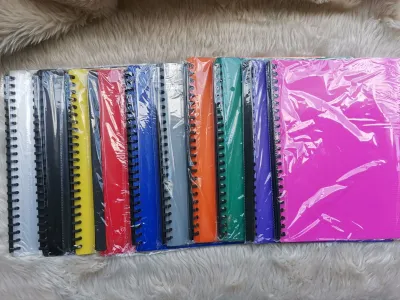
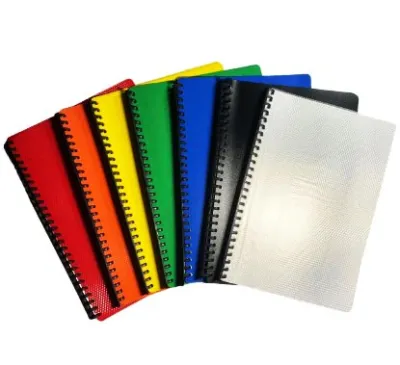
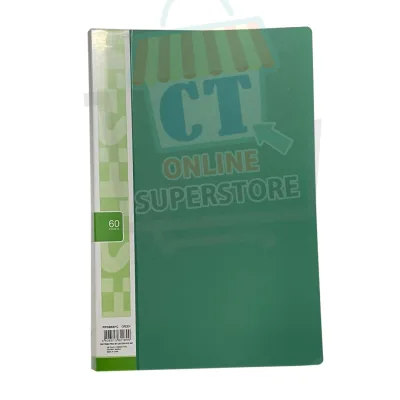
Prices are valid at publication and may change. Please refer to the product page for the latest price.
Before browsing online marketplaces, make it a habit to measure the longest edge of the actual documents you intend to store. Some regional manufacturers label their products as “long” or “legal,” but their actual pocket dimensions might conform to US Legal size (8.5 by 14 inches) or a slightly shorter hybrid standard. Measuring your documents beforehand prevents the common frustration of buying a folder that is either too short for your long bond papers or excessively tall, which wastes valuable shelf space.
Calculating the Right Pocket Count for Your Document Volume
Determining the ideal pocket count is a balancing act between storage capacity, structural integrity, and portability. While a single plastic pocket can physically hold multiple sheets of standard 80gsm copy paper—often between 5 and 10 sheets back-to-back—overstuffing is the primary cause of clear book failure. When you force too many sheets into a single pocket, the plastic stretches, the clear view becomes distorted, and excessive tension is placed on the spine’s binding seams. This eventually leads to the pockets tearing away from the spine, rendering the entire clear book unusable.

To find your ideal capacity, use a simple calculation method. First, count or estimate the total number of pages you need to file. Decide on a safe, loose distribution—such as 2 sheets per pocket (one facing forward, one facing backward) for clear readability, or up to 4 sheets for grouped documents like multi-page reports. Divide your total page count by this sheets-per-pocket target to determine your minimum pocket count, then add a 10% to 20% buffer. This buffer ensures you have room for future document additions without being forced to buy a completely new clear book or overstuff your existing pockets.
To help you visualize your options, consider this quick-reference guide for standard pocket capacities based on typical 80gsm paper usage:
| Pocket Count | Safe Sheet Capacity (Double-Sided) | Recommended Sheet Limit (Grouped) | Ideal Use Cases |
|---|---|---|---|
| 20 Pockets | 40 pages | 80 pages | Student term projects, resume portfolios, quick presentations |
| 40 Pockets | 80 pages | 160 pages | Subject-specific school binders, home utility bills, appliance manuals |
| 60 Pockets | 120 pages | 240 pages | Corporate contracts, tax records, standard office archives |
| 100 Pockets | 200 pages | 400 pages | Comprehensive legal archives, master thesis drafts, extensive reference manuals |
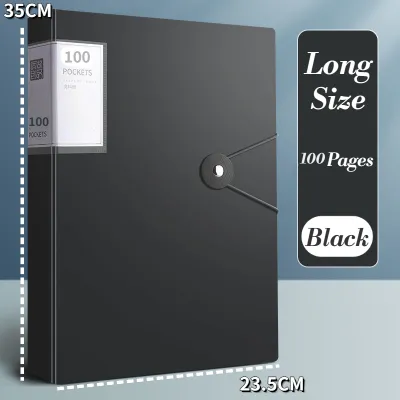
While a 100-pocket clear book might seem like the ultimate storage solution, avoid buying excessively high-pocket models for lightweight daily use. A fully loaded 100-pocket clear book becomes heavy, thick, and cumbersome to carry in a bag. The weight of 400 sheets of paper puts constant downward pressure on the binding when stored vertically, which can cause the spine to warp or sag over time if the cover is not exceptionally rigid.
Matching Clear Book Specifications to Your Filing Context
Different filing environments demand different physical properties. Matching the clear book’s specifications to your daily routine ensures that your documents remain protected without causing unnecessary physical strain or organization headaches.
For Student Submissions and Academic Portfolios
For high school and university students in the Philippines, portability and ease of customization are paramount. A 20-pocket or 40-pocket long clear book is the sweet spot, providing ample space for semester-long projects, DepEd portfolios, or laboratory reports without weighing down a backpack. Carrying heavy binders across campus can cause physical fatigue, making lightweight, flexible polypropylene (PP) covers the ideal choice.
Look for clear books that feature a transparent insert pocket on the front cover. This allows you to slide in a customized, printed title page containing your name, subject, and teacher’s name, giving your academic submissions a professional, polished look. Flexible covers also bend slightly under pressure, making them resilient when crammed into crowded school bags alongside heavy textbooks.
For Office Records and Contract Filing
In a professional corporate or legal setting, clear books must withstand frequent handling, desk stacking, and long-term vertical storage. For these demanding tasks, choose 60-pocket to 100-pocket long clear books equipped with heavy-duty, rigid polypropylene covers. A rigid cover acts as a supportive exoskeleton, allowing the clear book to stand perfectly upright on office shelves without slumping or warping under the weight of thick contracts and multi-page corporate reports.
To streamline your workflow, look for designs that incorporate built-in index tabs, colored edge markers, or spine label slots. These features allow you to categorize sections—such as sorting contracts by client, department, or fiscal quarter—enabling rapid document retrieval during busy meetings. Reinforced spine bindings are also critical here, as they prevent the heavy pages from tearing loose during rapid page-turning.
For Personal Archiving and Home Organization
Organizing personal documents at home—such as birth certificates, land titles, appliance warranties, and health records—requires a balance between moderate capacity and long-term preservation. A 40-pocket or 60-pocket clear book is usually sufficient for a single household’s vital records, fitting neatly onto standard home bookshelves or inside document safes.
For home use, opaque or colored covers are highly recommended. They provide an immediate layer of privacy, preventing sensitive personal information from being visible to casual visitors or house guests. Furthermore, you can use color-coding to organize your household files, such as using blue for medical records, green for property documents, and red for financial statements.
When archiving irreplaceable personal documents, pay close attention to the chemical composition of the plastic pockets. Ensure the manufacturer specifies that the pockets are “acid-free” or “non-PVC” (polyvinyl chloride). Standard PVC pockets can release volatile plasticizers over time, especially in hot and humid tropical climates. These chemicals can chemically bond with the toner or ink on your certificates, causing the text to lift off the paper and stick permanently to the plastic pocket when you try to slide the document out.
Evaluating Build Quality and Design Features Before Buying
When shopping on online marketplaces, you cannot physically touch the stationery to test its durability. However, you can make an informed decision by carefully analyzing the product descriptions, specifications, and customer feedback.
The binding method is the single most important factor determining a clear book’s lifespan. High-quality clear books use heat-welded or stitched and taped spines, where the plastic pockets are fused directly into the core of the cover using thermal bonding or heavy-duty thread. This creates a highly resilient connection that resists pulling forces. In contrast, cheap clear books often rely on simple glued bindings, which dry out, crack, and fail rapidly under the weight of loaded pockets, especially in warm climates.
Next, examine the pocket welding design. Premium clear books feature reinforced welds along the bottom and side edges of each pocket. This precise heat-sealing prevents smaller items—such as receipts, business cards, or government IDs—from slipping out of the bottom or sliding horizontally into adjacent pockets. Look for close-up product photos showing a distinct textured pattern along the pocket borders, which indicates a robust, multi-point thermal weld.
Cover material thickness is another critical metric, typically measured in microns (µm) or millimeters (mm). A cover thickness of 0.5 mm or less is highly flexible and lightweight, suitable for small portfolios. For medium to high pocket counts (60 to 100 pockets), seek a cover thickness of at least 0.75 mm to 1.0 mm. A thicker cover ensures the clear book maintains its structural shape on a shelf, protecting your documents from bending or creasing under external pressure.
Finally, leverage the power of user reviews on e-commerce platforms. Filter reviews to look for specific keywords like “torn,” “detached,” “thin,” or “pages falling out.” If multiple buyers complain that the plastic pockets ripped at the seams upon first use, or that the cover arrived warped, it is a clear sign of poor manufacturing quality, regardless of how attractive the product listing appears.
Frequently Asked Questions (FAQ)
Can I put A4 documents in a long clear book?
Yes, you can physically insert A4-sized documents into a long clear book. Because A4 paper (8.27 x 11.69 inches) is narrower and shorter than the standard Philippine long size (8.5 x 13 inches), it will easily slide into the larger pocket. This makes a long clear book a highly versatile option if you frequently handle a mix of different paper sizes.
However, using mismatched sizes has a distinct practical drawback. Because the long pocket has extra space at both the side and the bottom, smaller A4 papers will slide around, shift, or sit crookedly inside the pocket. This can look untidy during professional presentations. If your collection consists entirely of A4 documents, it is highly recommended to purchase an A4-specific clear book to keep your pages perfectly aligned and securely held in place.
How do I prevent my clear book pockets from sticking together?
In the hot and humid tropical climate of the Philippines, plastic clear book pockets are highly susceptible to sticking or fusing together over time. This sticking is caused by a combination of high ambient temperatures, humidity, and physical pressure, which softens the plastic polymers (especially in cheaper PVC materials) and causes them to adhere to adjacent pockets.
To prevent this, always store your clear books vertically upright on a shelf in a cool, dry, and well-ventilated room, away from direct sunlight. Avoid stacking multiple loaded clear books horizontally on top of one another, as the heavy, continuous pressure forces the plastic layers together, accelerating the fusing process. If you plan to store an empty clear book for an extended period, place a single sheet of plain, clean bond paper inside each pocket. This paper acts as a dry physical barrier, keeping the plastic layers separated and preventing them from sticking together.
Community discussion
Share your experience or ask a question. Comments are reviewed before publication.