
Quick Guide: Matching Envelopes to Your Filing Needs
Selecting the ideal long expanded envelope depends on matching the gusset width to your document volume, choosing a material that suits your storage environment, and selecting a closure mechanism aligned with how often you need to access the contents. When handling bulky documents, using a standard flat envelope often leads to split seams, crumpled pages, and torn edges. An expanded envelope solves this by utilizing flexible, accordion-style sides that expand to accommodate thick stacks of paper while keeping the overall profile neat and manageable.
For most office and archival applications, the primary goal is protecting and organizing bulky legal or folio-sized documents. If you are storing files in a dry, temperature-controlled cabinet, traditional heavy-duty kraft paper offers excellent breathability and structural support. If your work involves frequent travel, field inspections, or exposure to the humid and rainy Philippine climate, water-resistant poly or plastic envelopes provide the necessary barrier against moisture. Matching these material properties with the correct expansion size ensures your documents remain pristine and your filing system stays organized.
Understanding Long Dimensions and Gusset Capacity
In the Philippine stationery and office supply market, the term “long” has a specific meaning that differs from international standards. Locally, “long bond paper” refers to the legal or folio format, which measures 8.5 x 13 inches (216 x 330 mm). This is slightly shorter than the standard US Legal format, which measures 8.5 x 14 inches. Long expanded envelopes are specifically manufactured to accommodate these 13-inch-long documents, often providing a slight margin of extra space so that papers slide in and out smoothly without catching on the seams.
Products mentioned in this guide
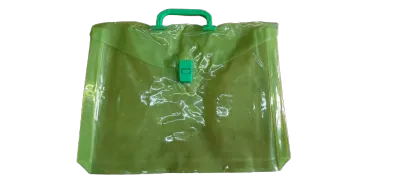
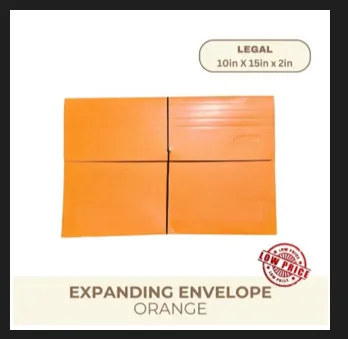
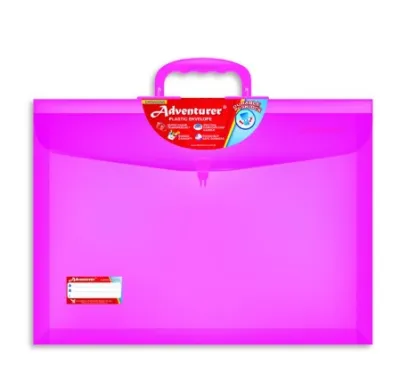
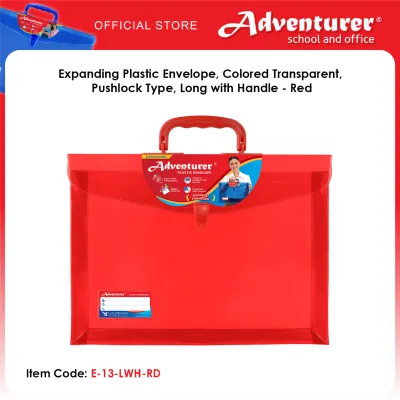
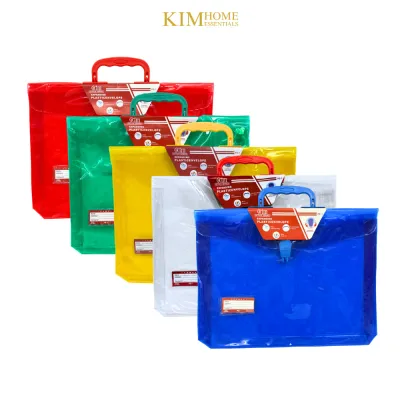
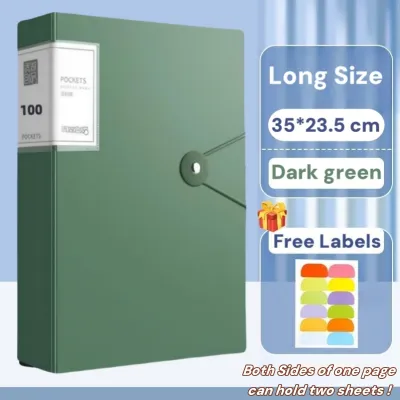
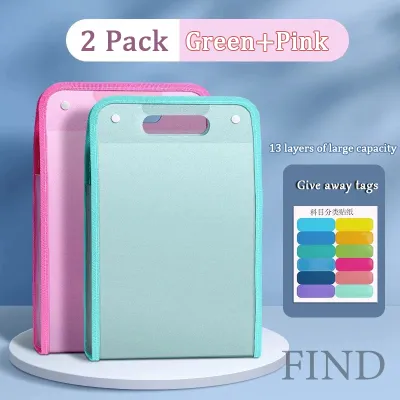
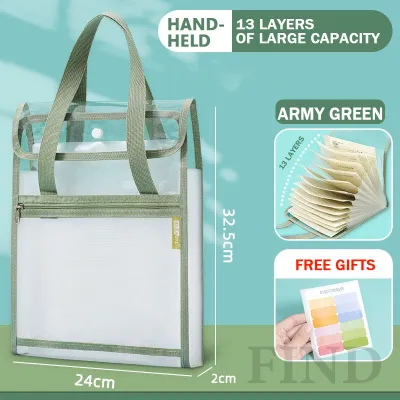
Prices are valid at publication and may change. Please refer to the product page for the latest price.

The defining feature of an expanded envelope is its “gusset,” which refers to the pleated, accordion-style folds along the sides and bottom. Unlike a standard flat envelope that has a fixed two-dimensional capacity, the gusset allows the front and back panels to move apart while remaining parallel. This design ensures that even when the envelope is filled with hundreds of pages, it maintains a flat, box-like profile. This structural stability is essential for filing cabinets, as it prevents the envelopes from sagging, slipping under one another, or crowding the drawer.
It is important not to confuse standard flat long envelopes with expanded long envelopes when purchasing filing supplies. Flat envelopes are designed for mailing thin items, such as single-page letters, small brochures, or simple contracts. Attempting to force a thick stack of documents into a flat envelope stretches the paper material, stresses the glued seams, and inevitably causes the envelope to tear. Expanded envelopes are engineered with reinforced bottoms and scoring lines that distribute the weight of heavy paper stacks evenly, making them the correct choice for high-volume storage.
Key Specifications to Evaluate Before Buying
Gusset Width and Document Capacity
Gusset widths for long expanded envelopes generally range from 1 inch to 2 inches, with some heavy-duty specialty models expanding up to 3 inches. A 1-inch gusset is generally sufficient for smaller files, comfortably holding approximately 150 to 200 sheets of standard 70gsm or 80gsm copy paper. For larger project files, legal briefs, or accounting records, a 1.5-inch gusset accommodates up to 300 sheets, while a 2-inch gusset can hold 400 sheets or more.
To determine the exact gusset width you need, measure the physical thickness of your document stack with a ruler. When doing this, remember to account for the thickness of any additional items that will go inside, such as manila folders, plastic sheet protectors, index tabs, or binding clips. It is always best to select a gusset size that is slightly larger than your current document stack; an under-filled expanded envelope will simply compress flat in your cabinet, whereas an overstuffed envelope will suffer from strained seams and torn corners.
Material Durability and Paper Weight
Traditional kraft paper is the most common material used for expanded envelopes, valued for its strength, affordability, and classic professional appearance. Kraft paper is highly breathable, which is a critical factor for long-term archival storage in tropical climates. This breathability allows natural moisture to escape, preventing the paper documents inside from yellowing or becoming damp. However, kraft paper offers very little protection against liquid water and can tear if subjected to rough handling or sharp objects.
Polyethylene or polypropylene (poly) envelopes offer a modern, highly durable alternative to paper. These plastic envelopes are completely waterproof, tear-resistant, and highly flexible, making them excellent for transporting documents outdoors or storing them in high-humidity environments. The primary trade-off is their lack of breathability; if documents are inserted while slightly damp, the plastic barrier will trap the moisture, which can lead to mold growth or ink transfer over time.
When evaluating kraft paper envelopes, pay close attention to the paper weight, which is measured in grams per square meter (gsm). Standard office-grade kraft envelopes typically range from 90gsm to 120gsm, which is suitable for light to moderate handling. For heavy-duty archiving or frequent retrieval, look for premium kraft envelopes with a weight of 150gsm or higher. Thicker paper provides greater puncture resistance against stapled document corners and maintains its structural shape much better when filed vertically.
Closure Mechanisms for Security and Access
Metal clasps consist of a two-pronged metal fastener secured to the back of the envelope and a reinforced metal eyelet on the flap. This mechanism is highly reusable, making it the ideal choice for files that must be opened and closed multiple times a day. The metal prongs are simply bent flat to secure the flap and lifted straight to open it. While highly convenient, repeated bending will eventually fatigue the metal, and the prongs can sometimes catch on adjacent files if not pressed completely flat.
Button and string closures utilize two durable plastic or fiber buttons—one attached to the flap and the other to the body of the envelope—connected by a long, sturdy string. To close the envelope, you wrap the string around the buttons in a figure-eight pattern. This traditional closure is highly reliable, adjusts easily to varying expansion thicknesses, and does not wear out as quickly as metal clasps. However, because it does not seal the sides of the flap, it does not provide a completely airtight or dust-proof seal.
Peel-and-seal closures feature a strip of strong adhesive on the inside of the flap, protected by a removable paper backing. To close the envelope, you simply peel off the backing and press the flap down firmly. This creates a highly secure, tamper-evident seal that is perfect for mailing, courier transport, or permanent archiving. The major limitation is that peel-and-seal envelopes are strictly single-use; once sealed, the envelope must be torn or cut open, rendering it useless for daily filing. Additionally, stored adhesive can degrade or dry out over time if kept in hot, humid storage rooms.
Recommended Envelope Types for Specific Use Cases
Heavy-Duty Kraft for Archival and Legal Documents
For long-term storage of critical business records, land titles, notarized contracts, or historical archives, heavy-duty kraft expanded envelopes are the industry standard. For these applications, select envelopes made from thick, unbleached brown kraft paper with a weight of at least 120gsm to 150gsm. Ensure the envelope features a reinforced metal clasp with a fiber patch backing around the eyelet to prevent the metal from tearing through the paper under the weight of heavy documents.
These envelopes are designed to sit neatly inside steel filing cabinets or heavy-duty cardboard archival boxes. Because kraft paper is naturally breathable, it allows air to circulate, which helps maintain a stable moisture level within the paper documents. This is particularly important in the Philippines, where high ambient humidity can easily cause trapped moisture to degrade paper fibers over several years. Storing your legal archives in breathable kraft envelopes helps preserve the legibility of signatures and official seals.
However, kraft paper has clear physical limits. It must be kept in a dry, pest-controlled environment, as it is highly vulnerable to water damage from ceiling leaks, flooding, or high humidity in non-air-conditioned rooms. If your archival storage area is located in a basement or a facility prone to dampness, you must take extra precautions, such as elevating the storage boxes off the floor and using silica gel desiccant packs inside the boxes to absorb excess moisture.
Poly or Plastic for Field Work and Frequent Transport
For mobile professionals, real estate agents, field auditors, couriers, and students who must carry important documents through daily commutes, poly expanded envelopes are highly recommended. Look for envelopes made from durable, semi-flexible polypropylene with a secure snap-button or zip-lock closure. These envelopes are designed to withstand the physical demands of being slid in and out of backpacks, messenger bags, or car seats.
In a tropical climate characterized by sudden downpours and high humidity, a poly envelope acts as a reliable shield. It prevents rainwater, sweat, and accidental beverage spills from ruining important contracts, certificates, or thesis drafts. Furthermore, the tear-resistant nature of plastic means that sharp objects inside your bag, such as keys or pens, will not easily puncture the envelope and damage the documents inside.
Despite their durability, poly envelopes require careful management regarding internal moisture. If you place papers that are damp from sweat or high humidity into a plastic envelope and seal it, the trapped moisture cannot escape. This can cause the paper to warp, the ink to bleed, or mold to develop. To prevent this, always ensure that your documents are completely dry before sealing them inside a plastic envelope, and avoid leaving sealed plastic envelopes inside hot, parked vehicles for extended periods.
Peel-and-Seal for Secure Dispatch and Mailing
When sending sensitive legal briefs, financial audits, medical records, or confidential corporate documents via local courier services or postal mail, security is the top priority. For these situations, a single-use peel-and-seal expanded envelope is the most secure option. Look for envelopes made from high-strength kraft paper or tear-resistant synthetic materials that feature a strong, pressure-sensitive adhesive strip.
The primary benefit of a peel-and-seal closure is its tamper-evident design. Once the adhesive strip is pressed down, it forms a permanent bond with the paper fibers. Any attempt to open the envelope during transit will tear the paper or distort the flap, making it immediately obvious to the recipient that the contents have been compromised. Many high-quality mailing envelopes also feature reinforced side seams to prevent the envelope from bursting open if dropped or compressed during transit.
While highly effective for secure transport, peel-and-seal envelopes are not suitable for general office filing because they cannot be reused. Additionally, if you plan to purchase these envelopes in bulk, you must store them in a cool, dry, air-conditioned space. In hot and humid climates, the adhesive on stored envelopes can degrade, melt, or lose its stickiness over time, causing the flaps to fail when you eventually try to use them.
Material Comparison for Quick Decision-Making
To help you choose the right material for your specific filing environment and workflow, the table below compares the three primary materials used for long expanded envelopes based on their physical properties and best use cases.
| Material | Water Resistance | Tear Strength | Archival Breathability | Best Use Case |
|---|---|---|---|---|
| Kraft Paper | Low (absorbs water quickly) | Moderate (can tear under high stress) | High (prevents moisture buildup) | Long-term cabinet storage of legal and business archives |
| Poly / Plastic | High (waterproof barrier) | High (stretches and resists tearing) | Low (can trap internal moisture) | Fieldwork, daily commuting, and transit in wet weather |
| Tyvek (Premium) | High (water-resistant fibers) | Extremely High (virtually tear-proof) | Moderate (breathable yet water-resistant) | High-value document transit and premium archival storage |
While kraft paper and poly are the most common options, Tyvek represents a premium synthetic material made from flash-spun high-density polyethylene fibers. Tyvek combines the best properties of both worlds: it is extremely lightweight and breathable like paper, yet completely waterproof and virtually impossible to tear by hand. While Tyvek envelopes are more expensive, they offer the highest level of protection for invaluable documents that must be transported or archived under challenging conditions.
Best Practices for Loading and Storing Your Files
To extend the life of your long expanded envelopes and protect the documents inside, always align the edges of your paper stack before inserting them. Loose sheets with misaligned edges can catch on the interior accordion folds of the gusset, causing the paper to crumple or the envelope seams to puncture. If your documents contain staples, paper clips, or binder clips, try to position them toward the center of the stack rather than near the edges to prevent concentrated pressure points from tearing the envelope.
Avoid overstuffing the envelope beyond its natural expansion limit. Forcing a 2.5-inch stack of paper into a 1.5-inch expanded envelope forces the gusset to stretch past its design capacity, putting immense tension on the glued seams at the bottom and sides. Over time, this tension will cause the seams to split, especially when the envelope is pulled from a tight filing drawer. If your document stack is too thick, divide the contents into two separate envelopes with smaller gusset widths.
For optimal organization and durability, store your expanded envelopes vertically in a filing cabinet or storage box rather than stacking them horizontally in tall piles. Vertical storage distributes the weight of the documents evenly and allows you to retrieve individual envelopes without dragging or compressing others, which minimizes friction wear. If you are using envelopes with metal clasps, ensure the prongs are folded completely flat against the paper backing to prevent them from catching on adjacent envelopes and scratching or tearing them during retrieval.
Frequently Asked Questions (FAQ)
Can I use a long expanded envelope for A4 or Letter size documents?
While A4 and Letter-sized documents will physically fit inside a long expanded envelope, doing so is generally not recommended for active storage or transport. Because a long envelope is designed for 13-inch-long paper, smaller sheets like A4 (11.7 inches) or Letter (11 inches) will have several inches of empty space to slide around inside. This constant movement can cause the corners of your documents to bend, dog-ear, or crumple when the envelope is carried or shifted. For the best protection and a snug fit, always match your envelope size directly to your paper format, using standard A4 or Letter expanded envelopes for those specific document sizes.
How do I prevent the metal clasp from tearing the envelope over time?
To prevent the metal clasp from tearing through the paper backing, always make sure the metal prongs are pressed completely flat and smooth against the envelope body after closing. If the prongs are left bent at an angle, they will catch on filing cabinet dividers, folders, or other envelopes, causing the paper around the eyelet to rip. Additionally, avoid bending the metal prongs back and forth unnecessarily; if you are storing files for long-term archiving and do not need frequent access, you can leave the clasp unbent and simply let the weight of the flap keep the envelope closed. When shopping, look for envelopes that feature a heavy-duty fiber reinforcement patch glued directly behind the metal eyelet, which helps distribute the pulling force and prevents the metal from tearing through the kraft paper.
Community discussion
Share your experience or ask a question. Comments are reviewed before publication.