
Finding the correct long plastic envelope size requires matching the physical dimensions of your papers to the internal usable space of the envelope. In the Philippines, the term “long” typically refers to standard long bond paper, which measures 8.5 by 13 inches. However, official legal documents often use US Legal paper, which is slightly longer at 8.5 by 14 inches. Choosing the wrong size can lead to bent corners, creased edges, or documents that simply will not fit.
Using a plastic envelope is especially practical in tropical climates where sudden downpours and high humidity can easily ruin unprotected paper. A well-fitting envelope acts as a shield against moisture, dust, and daily wear during commutes. To keep your important files pristine, you must look beyond the generic “long” label and evaluate the exact dimensions, closure styles, and material thickness.
Identify Your Document Dimensions Before Buying
Before purchasing any filing supplies, you must establish the exact measurements of the papers you intend to store. Relying on generic terms can lead to frustrating mismatches. For instance, many local school and office forms are printed on standard long bond paper, which measures 8.5 by 13 inches (215.9 by 330.2 mm). This is distinct from US Legal paper, which measures 8.5 by 14 inches (215.9 by 355.6 mm) and is commonly used for court pleadings, land titles, and formal contracts.
Products mentioned in this guide
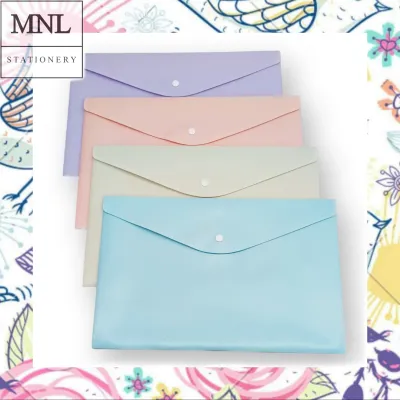
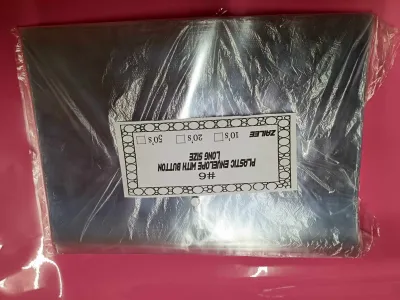
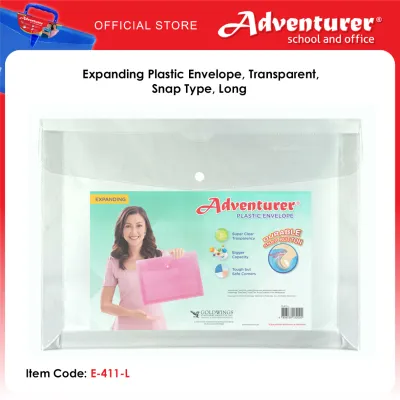
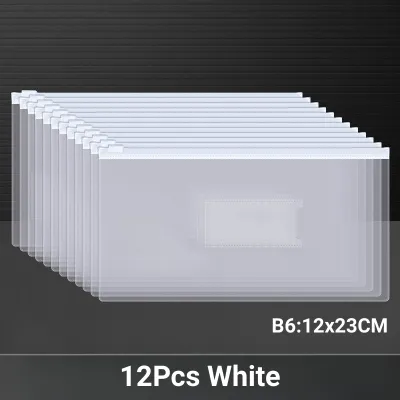
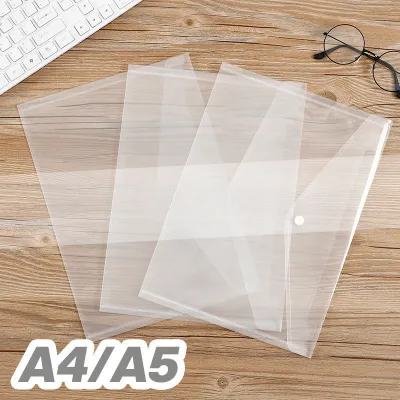
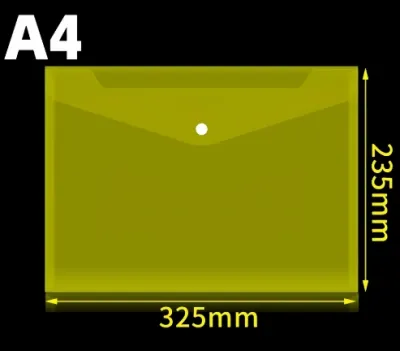
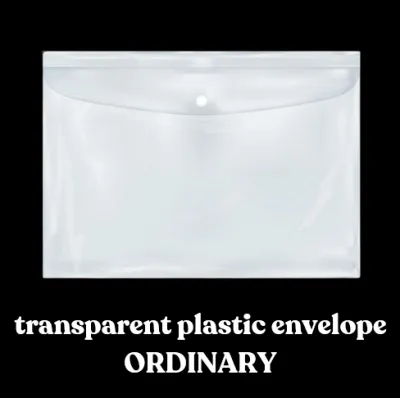
Prices are valid at publication and may change. Please refer to the product page for the latest price.
Certificates, diplomas, and merit awards present an even greater sizing challenge. These documents do not follow a single universal standard. A university diploma might be printed on A4 paper, while a professional certification might use a custom oversized layout. Furthermore, these documents often feature thick decorative borders or are mounted on rigid cardboard backing. Attempting to slide these into a standard envelope without measuring first can damage their delicate edges.
You must also distinguish between an envelope’s advertised external size and its actual internal usable space. Manufacturers measure the external dimensions from edge to edge, including the heat-sealed seams. These seams typically consume about 0.25 to 0.5 inches of space on the sides and bottom. If an envelope has an external width of 9 inches, the actual opening might only accommodate a document that is 8.5 inches wide. Always look for the internal dimensions to ensure a comfortable fit.
Match the Envelope to Your Specific Document Type
Different types of paperwork require specific envelope designs to ensure they remain flat and undamaged. Matching your document type to the right envelope style helps preserve your files during storage and transit.

Legal Documents and Official Contracts
Official contracts, notarized deeds, and legal briefs require maximum protection to maintain their professional appearance. Before buying an envelope, verify whether your legal papers are printed on 8.5 x 13-inch or 8.5 x 14-inch sheets. Storing a 14-inch US Legal document in an envelope designed only for 13-inch long bond paper will leave the top edge exposed to dirt and bending.
To ensure smooth handling, select an envelope that provides at least a 0.25-inch to 0.5-inch margin on all sides. This extra space allows you to slide the documents in and out without scraping the edges against the plastic seams. Repeated friction against tight seams can cause paper edges to fray or curl over time.
Privacy is another critical consideration for legal paperwork. Clear plastic envelopes expose sensitive personal data to anyone nearby. When carrying contracts or personal identification documents, opt for opaque, colored, or textured plastic envelopes. These designs prevent the text from being read through the plastic while keeping your documents safe from external elements.
School Papers and Long Forms
Students and parents frequently handle a high volume of school requirements, worksheets, and enrollment forms. Always confirm whether the school specifically requires long bond paper or standard A4 and Letter sizes. Mixing these sizes in a single container can make organization difficult and lead to smaller sheets getting lost or crumpled at the bottom.
When selecting an envelope for school use, factor in the cumulative thickness of your documents. A single flat plastic envelope is ideal for a few sheets of paper, but it will stretch and warp if forced to hold thick modules, report cards, and attached receipts.
For bulky school records or multi-page projects, look for envelopes featuring expandable gussets. These accordion-style sides allow the envelope to expand up to an inch or more. This design accommodates thick stacks of paper flatly, preventing the envelope from bulging and keeping the contents from bending at the corners.
Certificates, Diplomas, and Awards
Certificates and diplomas are often printed on heavy cardstock or textured parchment paper, making them highly susceptible to permanent creasing. When preparing to store these items, measure the entire document, including any rigid backing boards or protective paper frames.
Avoid tight fits at all costs. If an envelope is too small, the pressure from the heat-sealed plastic seams can press directly into the edges of the cardstock, leaving permanent indentations. The document should slide in effortlessly without requiring you to bend or squeeze the sides.
To protect these valuable papers during transit, prioritize envelopes made from thicker, rigid plastic materials. Thin, flimsy plastic sleeves offer minimal structural support and can easily fold inside a backpack. A rigid plastic envelope acts as a firm backing, keeping your certificates flat even when carried alongside heavier items.
Evaluate Closure Types and Usable Internal Space
The sealing mechanism of a plastic envelope does more than just keep the flap closed; it directly affects the usable internal length and how safely your documents are stored. Different closure types interact with your papers in distinct ways.
Button-and-string closures are highly secure and adjustable, making them a popular choice for archiving. However, the plastic buttons are secured with metal rivets that protrude into the interior of the envelope. If the envelope is packed tightly, these rivets can press against your documents, leaving permanent circular indentations on the top pages.
Snap button closures offer quick and convenient access, but they require physical pressure to snap shut. Pressing down on the button can crease or dent the papers directly underneath if the envelope is filled to capacity. Zipper closures provide excellent protection against dust and tropical humidity, but the zipper track itself occupies about half an inch of vertical entry space, reducing the effective height of the envelope.
Always check if the closure flap folds down smoothly without pressing against the top edge of your papers. A stiff or poorly positioned flap can force the top of your documents to bend or bow over time. Ensure there is sufficient clearance between the top of your document stack and the fold line of the envelope flap.
Your Pre-Purchase Sizing and Verification Checklist
To ensure you purchase the correct envelope size from online marketplaces or local stationery stores, follow this systematic verification workflow:
- Step 1: Measure the document stack. Lay your papers flat on a table. Measure the longest and widest points of the stack, taking into account any staples, paperclips, or protective plastic sleeves already attached to the sheets.
- Step 2: Add a safety buffer. Add a minimum of 0.5 inches to both the width and the length of your measurements. This buffer ensures that your documents can be inserted and removed smoothly without catching on the edges.
- Step 3: Verify the internal dimensions. Check the product specifications carefully. If the listing only provides external dimensions, subtract at least 0.5 inches from both the width and length to estimate the actual usable internal space.
- Step 4: Check closure clearance and thickness. Ensure the closure mechanism sits well above the top edge of your documents. Select a plastic thickness that matches your carrying needs, opting for heavier, rigid plastic for single certificates and expandable gussets for thick stacks.
Frequently Asked Questions (FAQ)
Can I use a long plastic envelope for standard A4 or Letter-size documents?
While A4 and Letter-size papers will physically fit inside a long plastic envelope, the excess vertical space can cause issues. Because the envelope is significantly longer than the paper, the sheets will slide around freely inside.
When you carry the envelope upright in a bag or backpack, this constant sliding allows the bottom edges of the papers to crumple or bend under their own weight. The lack of a snug fit defeats the purpose of using a protective envelope.
For the best results, use standard-size envelopes designed specifically for A4 or Letter papers. If you must use a long envelope, consider placing a rigid piece of cardboard or a standard folder inside to act as a spacer, preventing the smaller papers from shifting and bending.
Community discussion
Share your experience or ask a question. Comments are reviewed before publication.