
A mini notebook is a highly practical tool for capturing thoughts, tasks, and sudden ideas before they slip away. Choosing the right one is not just about finding the smallest option on the shelf; it requires a deliberate match between the notebook’s physical design and your daily writing habits. By evaluating how size, paper weight, and binding interact with your preferred pens and carrying environments, you can find a compact companion that fits naturally into your daily routine.
Assess Your Daily Note-Taking Habits and Environments
Before looking at specific products, think about what you write and where you write it. Are you jotting down quick, single-line to-do lists, or are you drafting paragraphs during a daily commute? If you primarily capture fleeting thoughts, phone numbers, or quick reminders, a pocket-sized option is highly efficient. For detailed meeting minutes, structured sketches, or creative journaling, you will need slightly more surface area to avoid constant, disruptive page-turning.
Your physical environment also dictates the type of notebook you need. In the tropical climate of the Philippines, daily commutes on public transit or walking outdoors can expose your stationery to high humidity, sweat, and sudden rain. If you often write while standing, waiting in line, or working in the field, you will need a notebook with a rigid backing to support your hand.
Products mentioned in this guide
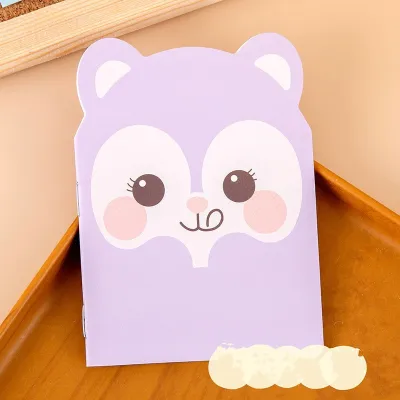
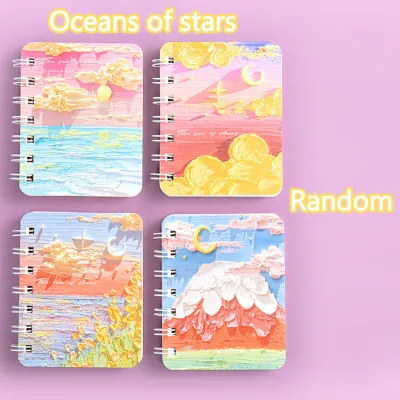
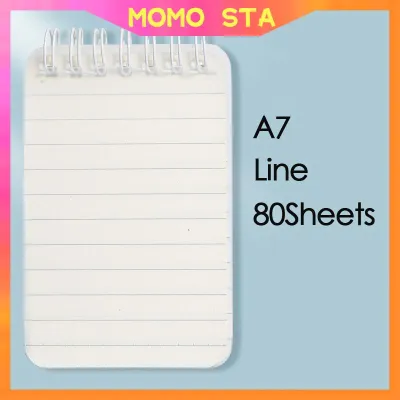
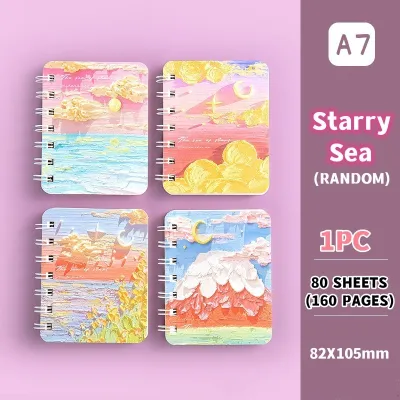
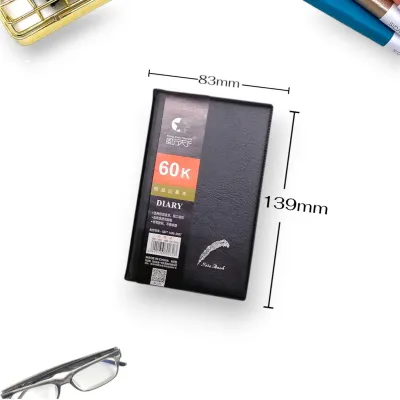
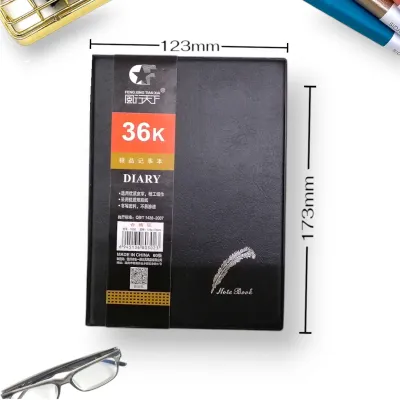
Prices are valid at publication and may change. Please refer to the product page for the latest price.
Your writing posture and dominant hand also play a role in your comfort. Left-handed writers often struggle with bulky central bindings, making top-bound or lay-flat options much more comfortable. Additionally, if you write with large, sweeping handwriting, narrow line spacing will feel restrictive, whereas tiny print fits easily into tight grid layouts.
Match Notebook Sizes to Your Portability and Writing Needs
Mini notebooks come in several standard sizes, each offering a different balance of writing space and portability. An A6 notebook, measuring roughly 105 by 148 millimeters, fits comfortably in most small bags, pouches, or deep cargo pockets. B7 sizes, around 88 by 125 millimeters, and A7 sizes, at 74 by 105 millimeters, are true pocket companions that slide easily into a standard shirt pocket or a small clutch.

The trade-off between portability and comfort is immediate. While an A7 notebook is incredibly easy to carry everywhere, writing a complete sentence across its narrow width can feel cramped. If you prefer writing long-form thoughts, an A6 size provides enough horizontal space to prevent awkward word hyphenation at the end of every line.
Pay attention to the aspect ratio and orientation of the pages. Most mini notebooks are portrait-oriented, which works well for vertical lists and standard text. However, landscape-oriented notebooks are excellent for quick horizontal diagrams, mind maps, or wide tables, allowing you to maximize the limited page width without feeling restricted by the margins.
Select the Right Paper Type for Your Preferred Pens
The interaction between your pen and the paper determines how clean and legible your notes look. Paper weight is measured in grams per square meter (GSM). For standard ballpoint pens, a lighter paper of 60 to 70 GSM is usually sufficient, but gel pens and liquid ink rollers require thicker paper, typically 80 GSM or higher, to prevent ink from bleeding through to the other side.
The page layout guides your writing style and organization. Ruled pages are excellent for structured, linear text and quick lists. Grid and dotted layouts offer subtle guidance for both writing and quick sketching without cluttering the page, making them highly versatile. Blank pages provide complete freedom, which is ideal for quick diagrams or unstructured brainstorming.
Surface texture affects writing speed and control. Smooth, coated papers allow gel pens and fine-liners to glide effortlessly, which is great for fast note-taking. Toothy, textured papers provide more resistance, giving you better control when using pencils or ballpoint pens, though they can cause some fine felt-tip pens to wear down faster.
Choose a Binding Style That Fits Your Daily Workflow
Binding dictates how the notebook opens and how long it lasts under daily use. Thread-sewn bindings are highly durable and allow the notebook to lie completely flat when open, which is essential if you want to write comfortably across the entire page. Perfect binding, which uses adhesive to hold the pages to the spine, is common and affordable, but it can resist lying flat and may crack over time with heavy use.
Wire-o or spiral bindings allow you to fold the notebook completely back on itself, giving you a 360-degree writing surface. This is incredibly useful when writing on your lap or while standing. However, the metal or plastic coils add physical bulk to the spine, which can snag on pocket linings or press uncomfortably against your hand while writing.
Saddle-stitch bindings use staples along the spine, resulting in an ultra-thin, flexible profile that conforms easily to the curve of a pocket. The main limitation is page count; these notebooks are typically thin, often containing only 32 to 64 pages, meaning you will fill them up and need to replace them more frequently.
Evaluate Cover Materials and Practical Extra Features
The cover material protects your notes from daily wear and tear. Hardcovers provide a built-in writing surface, allowing you to take notes easily without a desk, and they protect the pages from bending inside a crowded bag. Softcovers, made of flexible cardstock or plastic, are much lighter and bend slightly to fit comfortably inside a tight pocket.
An elastic closure band is a highly practical feature for a mobile notebook. It prevents the pages from opening accidentally in your bag, which can lead to crumpled, torn, or dirty pages. In humid environments, a secure closure also helps keep the paper flatter and less prone to curling.
Look for small organizational details that match your workflow. Built-in ribbon markers help you flip instantly to your current page, while an expandable rear pocket is perfect for holding loose receipts, business cards, or stamps. Perforated pages are incredibly useful if you frequently need to tear out quick notes or shopping lists to hand to someone else.
Build Your Final Mini Notebook Selection Checklist
To find your ideal match, start by ranking your top three non-negotiable features. For example, if you always carry your notebook in a front pocket and write with a gel pen, your top priorities might be a softcover, A7 size, and paper that is at least 80 GSM. Filtering options by these core criteria prevents you from buying a notebook that is beautiful but impractical for your daily routine.
When shopping in a physical stationery store, perform a quick manual inspection. Open the notebook to the middle and check if the spine flexes easily or if the pages resist staying open. Run your fingertips over the paper to feel its texture, and check the edges of the binding to ensure there are no loose threads or peeling glue.
If you are purchasing from an online marketplace, carefully verify the specifications listed on the product page. Do not rely solely on photos, which can make notebooks look larger than they are; instead, check the exact millimeter dimensions. Look for explicit mentions of paper weight (GSM), page count, and binding type to ensure the notebook matches your expectations.
Frequently Asked Questions (FAQ)
Is a mini notebook suitable for fountain pen ink?
Yes, but suitability depends entirely on the paper quality rather than the notebook’s size. Look for mini notebooks that explicitly specify fountain-pen-friendly paper, typically with a weight of 80 GSM or higher and a smooth, coated finish. To avoid feathering or bleed-through, test your specific pen and ink combination on an inconspicuous back page before writing extensive notes.
How can I keep a small notebook organized over time?
With limited page space, organization is key to keeping your notes useful. Dedicate the very first page to a dynamic index, writing down page numbers and topics as you fill them. You can also use small, color-coded sticky flags or write the date clearly at the top outer corner of every page to make flipping through past entries quick and effortless.

Community discussion
Share your experience or ask a question. Comments are reviewed before publication.