
Selecting the ideal notebook organizer planner requires matching your cognitive style with the physical layout of your pages. When your paper layout aligns with how you naturally process time, planning becomes a sustainable daily habit rather than an administrative chore. Choosing a format that is too detailed risks the frustration of empty pages, while a format that is too sparse causes tasks to spill over the margins. The key to long-term planning success lies in understanding time granularity—how closely you need to track your hours versus your weeks—before investing in a physical book.
Identify Your Planning Style and Time Granularity Needs
Before browsing stationery shelves or online marketplaces, it is essential to conduct a self-diagnostic assessment of your daily life. Time granularity refers to the specific unit of time that dominates your focus. Some individuals function best when their day is broken down into hourly intervals, while others only need to track weekly milestones or monthly deadlines. Understanding your cognitive style ensures you do not buy a structured daily system when a high-level monthly overview would suffice.
To pinpoint your exact planning needs, ask yourself these diagnostic questions:
Products mentioned in this guide
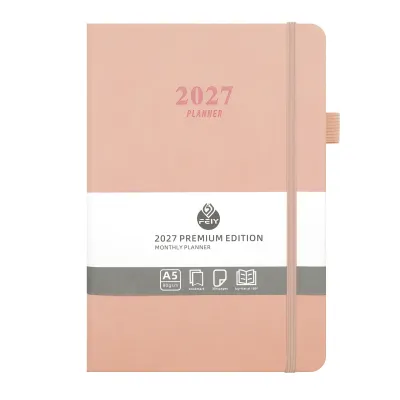
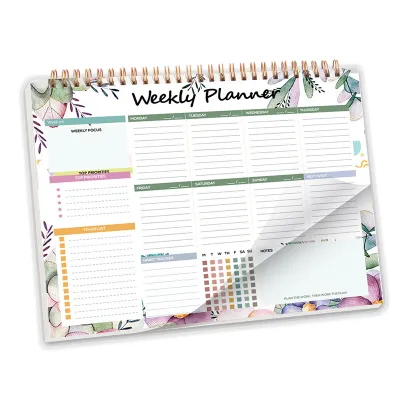
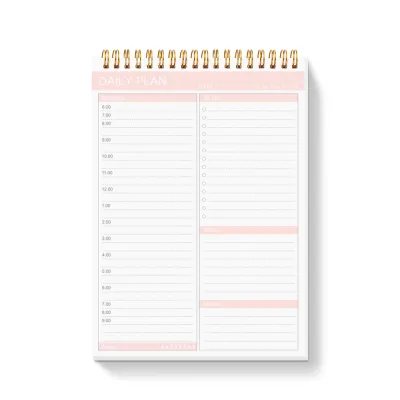
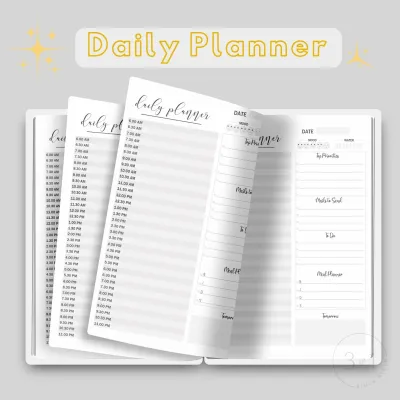
Prices are valid at publication and may change. Please refer to the product page for the latest price.
- What is the nature of your daily schedule? Do you manage back-to-back client meetings, patient consultations, or class periods that require strict time-blocking?
- How do you prioritize your tasks? Do you need to log hourly progress, or do you prefer working from a general list of daily goals?
- What is your project horizon? Are you managing long-term campaigns with distant deadlines, or are you executing immediate, fast-paced micro-tasks?
- How do you interact with blank space? Do you feel comforted by structured grids and checkboxes, or do you require open, unlined pages for spontaneous brain dumps?
Once you analyze these patterns, you can map your habits directly to a layout category. If you answered yes to strict hourly schedules and structured prompts, a daily layout is your best match. If your work relies on balancing weekly deliverables without rigid hourly commitments, a weekly spread offers the ideal middle ground. For those who manage macro-level goals, travel dates, or content calendars, a monthly layout provides the necessary bird’s-eye view.
Daily Planner Layout: Best for Detailed Schedules and Task Tracking
A daily planner layout allocates one full page—and sometimes two—to a single day. This format provides the highest level of time granularity, allowing you to map out your schedule with extreme precision. Typical daily spreads feature hourly or half-hourly time-blocking columns, dedicated priority boxes, expansive to-do lists, and specialized tracking sections for meals, water intake, or fitness. Many daily designs also incorporate structured spaces for morning intentions and evening reflections, turning your planner into a hybrid of a scheduler and a mindfulness journal.

This high-granularity structure is highly beneficial for individuals with complex, time-sensitive routines. University students balancing lectures, study groups, and extracurricular activities find daily pages invaluable for preventing scheduling conflicts. Similarly, medical professionals, busy corporate executives, and freelancers managing multiple hourly clients rely on these detailed grids to keep their days on track. If you practice time-management methods like the Pomodoro Technique or time-blocking, a daily layout provides the physical framework required to execute these strategies effectively.
However, daily planners come with distinct physical and psychological trade-offs. Because they require at least 365 pages for a full year, these planners are significantly thicker and heavier than other formats. Carrying a bulky book during a humid commute on the MRT or jeepney in Manila can quickly become a physical burden. Furthermore, daily layouts can feel psychologically overwhelming or wasteful if your schedule lightens up; leaving multiple consecutive pages blank often induces planning guilt, which frequently leads to abandoning the notebook entirely.
Weekly Planner Layout: Balancing the Big Picture and Daily Execution
The weekly planner layout is the most popular and versatile format, typically displaying an entire week across a two-page spread. This layout allows you to view your upcoming commitments at a single glance, helping you allocate your time and energy efficiently without getting bogged down in micro-details. It bridges the gap between daily execution and long-term planning, making it an exceptional tool for general time management.
Weekly layouts generally fall into two structural designs: vertical and horizontal.
- Vertical Layouts: These present each day as a vertical column, often lined with hourly time stamps. This style is ideal for visual planners who prefer to see their days side-by-side, allowing them to block out chunks of time for specific projects or meetings.
- Horizontal Layouts: These divide the two-page spread into horizontal rows or open boxes for each day. This format is highly suited for task-based planners, journalers, and individuals who write longer narrative notes rather than chronological appointments.
This layout is particularly well-suited for office workers, freelancers, and busy parents who need to coordinate multiple schedules simultaneously. It allows you to track weekly deadlines, project phases, and social commitments alongside your daily tasks. By eliminating the bulk of a daily page, a weekly notebook remains highly portable, fitting easily into work bags or backpacks for daily travel.
Monthly Planner Layout: Ideal for Macro Goals and Long-Term Projects
A monthly planner layout features a double-page calendar grid that provides a comprehensive overview of a four-to-five-week period. This format prioritizes macro-level organization, focusing on long-term deadlines, major events, and high-level objectives rather than daily micro-tasks. Beside the monthly grid, you will typically find dedicated sections for monthly goal-setting, habit trackers, financial budgets, and project milestone checklists.
This layout is the ideal tool for project managers, content creators, and educators who must plan several weeks or months in advance. For instance, a social media manager can use a monthly spread as an editorial calendar to map out content themes, while a student can use it to track exam dates and project deadlines across a semester. It is also highly effective for tracking recurring monthly events, such as utility bill payments, travel itineraries, and family birthdays.
The primary limitation of a monthly layout is its lack of physical space. The small squares in a monthly grid cannot accommodate detailed daily to-do lists, hourly meetings, or extensive meeting notes. If your daily routine requires active task tracking, a monthly planner must either be paired with a separate daily notepad or integrated with a digital task manager to ensure no details slip through the cracks.
Hybrid Layouts and Custom Inserts: When One Format Isn't Enough
For many planners, a single fixed layout fails to address the complexities of their personal and professional lives. You might require a macro-level monthly view to track project deadlines alongside a highly detailed daily layout for execution. To solve this, stationery manufacturers offer hybrid planners. These books often combine 12 monthly spreads with a limited section of undated daily or weekly pages, allowing you to use high-granularity tracking only when your workload demands it, thereby reducing the physical bulk of the book.
If pre-printed hybrid planners do not fit your workflow, customizable modular systems offer an excellent alternative. Disc-bound notebooks, classic multi-ring binders (such as A5 or Personal sizes), and traveler’s notebooks allow you to curate your own planner. You can insert monthly calendar spreads for long-term tracking, insert weekly columns for standard weeks, and add daily sheets during peak project seasons.
When building a customizable system, verifying physical compatibility is critical. Always check the exact binding mechanism—such as the number of rings (6-ring versus 3-ring) or the specific disc spacing—before purchasing refills. Additionally, verify paper dimensions and hole-punch patterns, as standards can vary significantly between international and local brands. Ensuring these specifications match prevents the frustration of purchasing beautiful inserts that do not fit your existing cover.
Final Pre-Purchase Checklist for Your Notebook Organizer Planner
Once you have determined the ideal layout for your planning style, you must evaluate the physical construction of the notebook organizer planner. A planner is an everyday tool that must withstand constant handling, page-turning, and travel. Paying attention to structural details ensures your notebook remains functional and intact from January through December. Planners in the local market generally range from budget-friendly options starting around ₱300 to premium imported systems exceeding ₱1,500.
To make an informed purchase, run through this final physical checklist:
- Size and Portability: Consider where you will do most of your planning. An A5 size (roughly 148mm x 210mm) offers a balanced compromise between writing space and portability, making it easy to carry in a backpack or tote bag. B5 and A4 sizes provide expansive writing areas but are best suited to remain permanently on a desk. Pocket or Personal sizes (such as A6) offer maximum mobility but require compact handwriting.
- Paper Quality and Ink Compatibility: Check the paper weight, measured in grams per square meter (GSM). For general use with ballpoint pens, 80 GSM is sufficient. However, if you prefer gel pens, rollerballs, or fountain pens, look for 100 GSM to 120 GSM paper to prevent ink bleeding and ghosting (where writing is visible on the reverse side of the page). In humid tropical climates like the Philippines, paper naturally absorbs ambient moisture over time; high-quality, coated paper is crucial to keep ink from feathering or drying too slowly. Perform a quick, observable trial on a back page to test drying speed and bleed resistance before committing to heavy ink use.
- Binding and Lay-Flat Ability: Ensure the planner features a 180-degree lay-flat binding, such as thread-sewn (Smyth-sewn) or double-loop wire-o coil binding. If a planner resists staying open, you will constantly struggle to write near the center gutter, particularly on the left side of weekly two-page spreads. A true lay-flat design ensures a comfortable, unobstructed writing surface across the entire page.
Frequently Asked Questions (FAQ)
Can I use a digital planner instead of a physical notebook organizer planner?
Yes, you can use either, or even combine both into a hybrid system. Physical planners offer a tactile, distraction-free environment that helps improve memory retention and cognitive focus through the physical act of handwriting. They require no battery, do not ping you with digital notifications, and allow for creative expression. On the other hand, digital planners excel at searchability, instant synchronization across multiple devices, and automated alarm reminders for time-sensitive meetings. Choosing between them depends on whether you value handwriting for mental processing or automated coordination for execution.
What if my planning style changes halfway through the year?
It is common for planning needs to evolve as your academic, professional, or personal circumstances shift. If you find your current layout is no longer working, do not discard the notebook. You can easily repurpose unused pages; for example, blank daily pages can be converted into open-ended journals, meeting note pages, or mind-mapping canvases. If you find yourself consistently needing more or less structure, consider transitioning to a modular ring-bound or disc-bound system, which allows you to swap out layouts instantly without buying an entirely new planner.
Community discussion
Share your experience or ask a question. Comments are reviewed before publication.