
Choosing the right organza pouch size requires measuring your gift’s three dimensions—length, width, and thickness—and adding a specific buffer of at least 3 to 5 centimeters to account for the drawstring closure and the item’s volume. In the Philippines, where celebrations like weddings, christenings, corporate giveaways, and holiday gift exchanges are central to daily life, presentation is everything. Organza pouches offer an elegant, sheer, and budget-friendly wrapping solution, but selecting the wrong dimensions can quickly make a thoughtful gift look awkward or unfinished.
Finding the perfect fit is a simple process once you understand how the pouch’s flat dimensions translate to a three-dimensional object. By taking accurate measurements and applying a few basic rules of thumb, you can ensure your gifts are beautifully framed and securely packaged every time.
How to Measure Your Gift and Calculate Pouch Dimensions
To find the perfect organza pouch size, you must look beyond the simple flat length and width of your item. A flat, two-dimensional measurement only works for completely flat items. If your gift has any depth, it will occupy space in three dimensions, which naturally pulls the sides of the pouch inward and reduces both the usable width and height.
Products mentioned in this guide
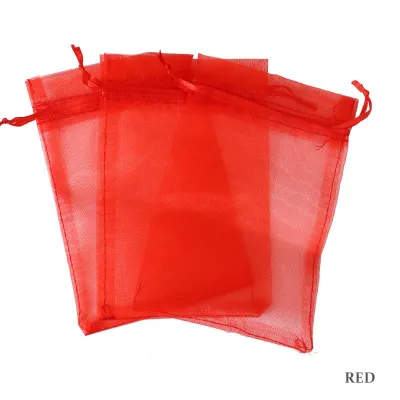
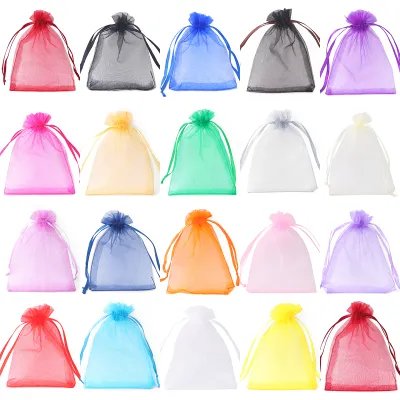
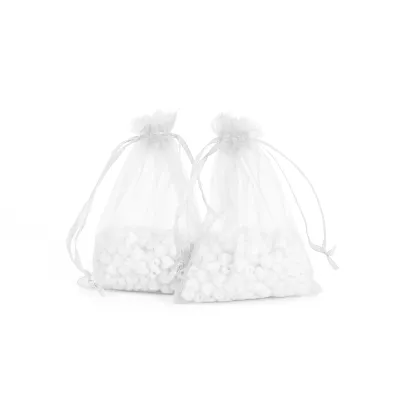
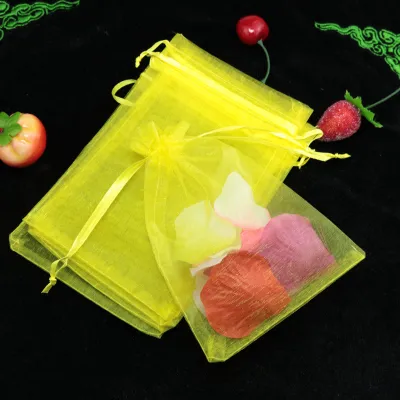
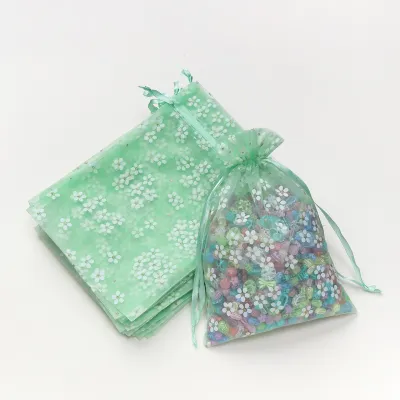
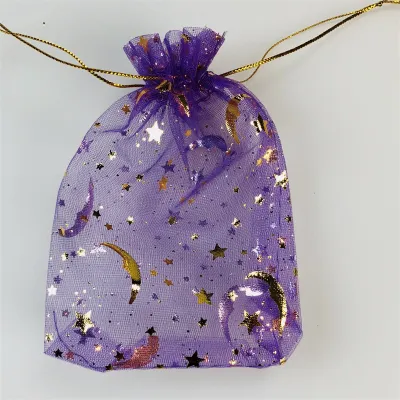
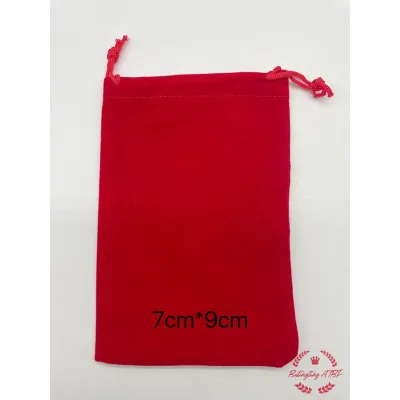
Prices are valid at publication and may change. Please refer to the product page for the latest price.
Start by placing your gift on a flat surface. Using a standard ruler or a flexible measuring tape, measure the three primary dimensions:
- Length (Height): Measure from the very bottom of the item to its highest point.
- Width: Measure the widest part of the item from left to right.
- Depth (Thickness): Measure how thick the item is from front to back.
Once you have these numbers, you must apply the “drawstring rule.” The total height of an organza pouch listed by manufacturers always includes the decorative ruffle above the drawstring. The actual usable space ends at the drawstring line, which is typically 2 to 3 centimeters below the top edge. Furthermore, when you pull the drawstrings tight, the fabric bunches together, which further reduces the vertical space inside. To prevent your gift from peeking out or preventing the pouch from closing, you must always add a generous height buffer.
For flat items like gift cards, flat jewelry cards, or custom stickers, calculating the minimum pouch size is straightforward. You simply add 1.5 to 2 centimeters to the width of the item, and at least 3 to 4 centimeters to the height.
For three-dimensional (3D) items like bottles, jars, or boxes, you must account for the item’s thickness. A reliable formula for determining the minimum flat pouch width is to add the item’s width and its thickness together, then add an extra 2 to 3 centimeters for clearance. For the pouch height, add the item’s height and its thickness together, then add 4 to 5 centimeters to account for both the depth and the drawstring casing. If you are packaging a cylindrical item, you can also measure its circumference (the distance all the way around), divide that number by two, and add 2 to 3 centimeters to find the minimum flat width.
Size Guide: Matching Organza Pouches to Common Gifts
While calculating custom dimensions is the most accurate approach, organza pouches are generally sold in standardized sizes on online marketplaces and in local stationery shops. Understanding how these common sizes match up with typical gift categories will save you time and ensure a beautiful presentation.

Jewelry and Small Accessories
Delicate items such as rings, stud earrings, dainty silver necklaces, or beaded bracelets require a snug, secure fit. For these gifts, standard small pouch sizes like 7×9 centimeters or 9×12 centimeters are ideal.
A tighter fit is highly preferred for jewelry because it keeps the pieces from sliding around excessively. If a necklace or bracelet has too much room to move, the chain can easily slide, shift, and knot itself during transport, creating a frustrating experience for the recipient. A smaller pouch holds the item gently in place, though you should still leave just enough room to slide in a small cardboard backing card or a thin layer of protective tissue paper to keep the jewelry looking pristine.
When choosing a pouch for accessories, always inspect the items for sharp or protruding parts. Intricate metal clasps, sharp earring hooks, or raised gemstone prongs can easily snag on the delicate, open-weave mesh of the organza fabric. If your jewelry has sharp edges, wrapping it in a small piece of acid-free tissue paper before placing it in the pouch will protect both the gift and the sheer fabric.
Cosmetics, Soaps, and Candles
Medium-sized, rigid items like artisanal soap bars, essential oil roller bottles, lip balms, or small scented jar candles require careful depth calculations. These items are typically best suited for mid-sized pouches, such as 10×15 centimeters or 13×18 centimeters.
Artisanal soaps, which are incredibly popular as souvenirs for Philippine weddings and baptisms, often feature thick, hand-cut edges. A standard bar of soap might measure 8 centimeters wide and 2.5 centimeters thick. If you attempt to squeeze this into a flat 10-centimeter-wide pouch, the thickness of the soap will pull the fabric taut, making it impossible to slide the bar all the way to the bottom or close the drawstring.
For cylindrical items like lotion bottles or jar candles, the pouch must be significantly wider than the item’s actual diameter. Because the fabric must wrap entirely around the circular shape, a flat pouch essentially needs to accommodate half of the item’s total circumference.
Additionally, consider the rigidity of the organza fabric itself. Budget-friendly organza pouches are often made from stiffer synthetic fibers that have absolutely no stretch or give. If you force a rigid, hard-edged item into a pouch that is slightly too small, the stiff fabric will resist, leading to unsightly strained seams or even tearing at the drawstring casing. Opting for a slightly larger size ensures the fabric drapes smoothly over the item’s contours.
Candies, Favors, and Bulk Items
When you are packaging loose items like wrapped chocolates, local delicacies like pastillas or polvoron, bath salts, or fragrant potpourri, volume matters much more than flat dimensions. For these applications, pouches measuring 10×15 centimeters, 13×18 centimeters, or 15×20 centimeters are highly versatile.
Instead of measuring a single flat object, you must estimate the collective volume of the loose items. When multiple small items are placed inside a pouch, they do not stay flat; they pile up and expand the pouch outward in all directions.
To achieve a professional, abundant look, always leave extra space at the bottom of the pouch. This allows the loose items to settle naturally, creating a full, rounded base that stands upright beautifully. If you pack the pouch too tightly to the top, the items will look squeezed and uncomfortable, and the drawstring will be difficult to pull shut. Aim to fill the pouch no more than two-thirds of the way up to the drawstring line.
Be mindful of the packaging of your bulk items. Many wrapped candies feature stiff, metallic foil wrappers with sharp, crimped edges. These sharp plastic or foil corners can easily catch on the delicate sheer organza, snagging the threads and ruining the smooth appearance of the pouch. Choosing a slightly larger pouch allows the candies to sit loosely without pressing their sharp edges firmly against the fabric.
Common Sizing Mistakes That Ruin Gift Presentation
Avoiding common pitfalls during the selection process will save you from last-minute packaging emergencies and ensure your gifts look polished and professional.
The most frequent mistake is forgetting to account for the drawstring casing space. Many buyers look at the total dimensions of a pouch—for example, 10×15 centimeters—and assume they have a full 15 centimeters of vertical space to work with. In reality, the drawstring is placed a few centimeters below the top edge. If your gift is exactly 14 centimeters tall, it will stick out of the top, and you will not be able to pull the strings closed. Always subtract at least 3 centimeters from the advertised height to find the true usable height.
Another common error is ignoring the thickness of three-dimensional objects. It is easy to assume that a box measuring 8×8 centimeters will fit perfectly into a 9×9 centimeter pouch. However, if that box is also 4 centimeters thick, it will pull the front and back of the pouch together so tightly that the opening will shrink, preventing the box from even entering the bag.
On the other end of the spectrum, choosing a pouch that is far too large is a major aesthetic mistake. While it might seem safer to buy oversized pouches to ensure everything fits, an excessively large pouch ruins the presentation. The gift looks tiny and lost inside a sea of excess fabric, making the gesture look thoughtless or rushed. Practically, a loose item in an oversized pouch will slide around constantly, increasing the risk of damage or causing the item to slip out entirely if the drawstring loosens.
Finally, never assume that generic size labels like “small,” “medium,” or “large” are standardized across different manufacturers. A “medium” pouch from one online supplier might be 10×15 centimeters, while another supplier’s “medium” is 13×18 centimeters. Relying on these vague labels often leads to receiving bags that are completely unusable for your specific project. Always look for the exact measurements in centimeters or inches provided in the product specifications before making a purchase.
How Organza’s Material Traits Affect the Perfect Fit
Understanding the unique physical characteristics of organza fabric will help you make better sizing decisions and elevate your gift presentation.
Unlike cotton, linen, or velvet, organza is a plain-weave fabric made from tightly twisted yarns—traditionally silk, but now almost exclusively polyester or nylon for consumer packaging. This construction gives organza its defining characteristic: a complete lack of elasticity. It has absolutely zero stretch. If your calculations are off by even a few millimeters and the pouch is too small, the fabric will not yield or conform to the shape of your gift. This rigidity makes precise measurements and generous sizing buffers absolutely essential.
However, this same stiffness and crispness is also organza’s greatest strength. The structured nature of the fabric allows the pouch to hold its shape beautifully, creating a full, voluminous look even when holding lightweight items. When you pull the drawstrings tight, the stiff fabric naturally flares out at the top, forming a beautiful, crisp ruffle that adds a touch of sophistication to the presentation.
The sheer, semi-transparent quality of organza also plays a critical role in how you size your packaging. Because the gift inside is visible through the delicate mesh, the pouch acts as a frame rather than a cover. A perfectly sized pouch hugs the item neatly, allowing its colors and shapes to shine through in an elegant, filtered way. If the pouch is too large, the excess fabric will bunch up in thick, awkward folds, obscuring the gift and creating a cluttered, unrefined appearance.
Frequently Asked Questions (FAQ)
How much extra length should I add for the drawstring closure?
As a general rule of thumb, you should add at least 3 to 4 centimeters (approximately 1.5 inches) of extra length to the height of your item. This buffer ensures there is enough room for the fabric to gather smoothly beneath the drawstring, allows you to pull the ribbons tight without straining, and leaves a beautiful, decorative ruffle at the very top of the pouch.
Can I use a flat organza pouch for a thick, spherical item?
Yes, you can use a flat organza pouch for a spherical item like a bath bomb or a round ornament, but you must scale up the width significantly. To accommodate a sphere, the flat width of the pouch should be at least 1.6 times the diameter of the sphere. Alternatively, look for gusseted organza pouches, which feature a folded bottom seam that expands to accommodate round or thick items naturally.
What can I do if the chosen organza pouch is slightly too large?
If your pouch is too large, you can easily salvage the presentation by adding decorative fillers. Placing a bed of shredded paper, colorful tissue paper, or dried flower petals inside will cushion the gift, fill out the empty space, and keep the item centered. You can also tie a secondary satin ribbon tightly around the neck of the pouch, positioning it lower down to cinch the fabric closer to the gift.
Community discussion
Share your experience or ask a question. Comments are reviewed before publication.