
Choosing the right payment tracker notebook in the Philippines requires balancing your personal financial habits with the physical durability of the stationery. In a landscape where daily transactions are split between cash, digital wallets, and bank transfers, keeping a physical record offers a grounding, tactile experience that digital apps often cannot replicate. Writing down your expenses by hand builds immediate financial awareness, helping you stay on top of household bills, business cash flow, or debt payoff goals. However, not all notebooks are created equal, and selecting the wrong layout or paper type can quickly lead to tracking fatigue or ruined pages.
Define Your Financial Tracking Needs
To find a notebook that you will actually use consistently, you must first define your primary financial tracking scenario. Personal bill tracking, small business payment monitoring, and debt repayment planning each demand a completely different structural approach. For instance, personal tracking focuses on recurring monthly cycles, whereas business tracking requires continuous, chronological logging of incoming and outgoing funds.
The volume of your daily or monthly transactions is a critical factor in determining the physical size and page count of your notebook. If you only need to track a dozen recurring utility bills and subscription payments each month, a slim, pocket-sized notebook with fewer pages will easily suffice. Conversely, if you run a small local business or a busy household with daily market trips, grocery runs, and transport expenses, you will require a thick ledger with hundreds of pages to avoid running out of space mid-year.
Products mentioned in this guide
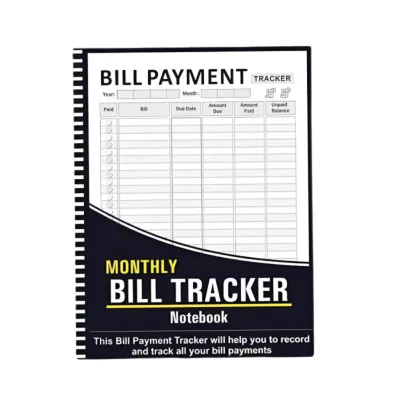
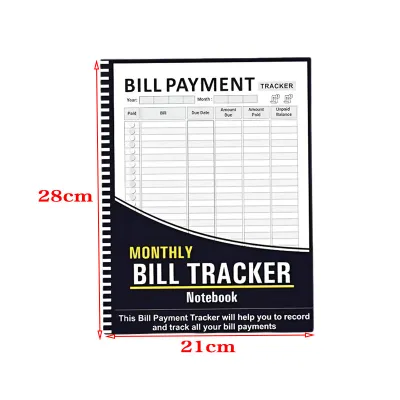
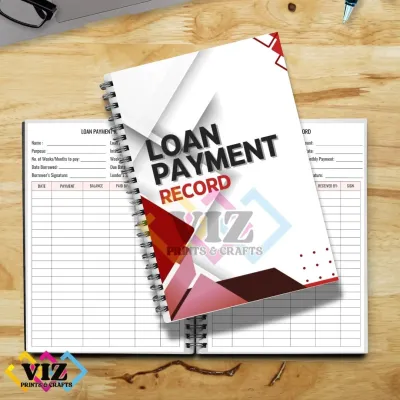
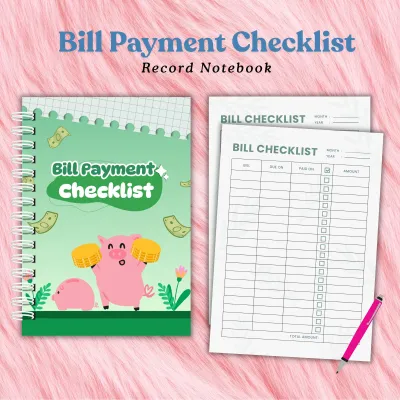
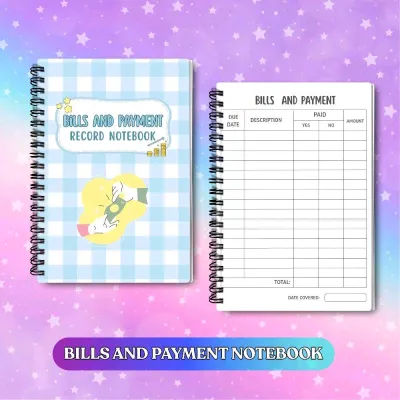
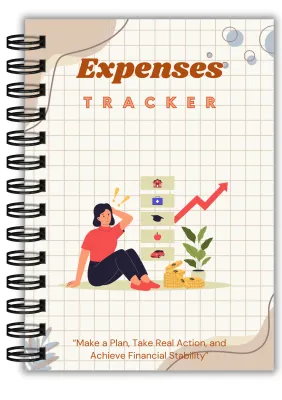
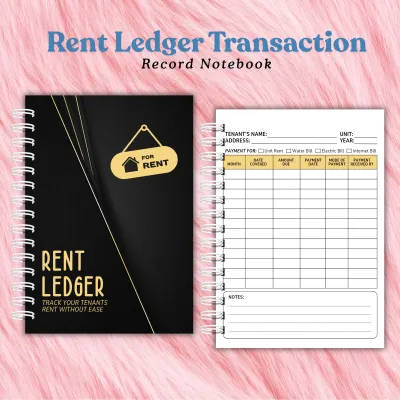
Prices are valid at publication and may change. Please refer to the product page for the latest price.
Portability is another essential consideration that dictates the form factor of your tracker. If you prefer to log expenses immediately after making a purchase—such as paying for transportation or buying supplies at a local market—a compact A6 or pocket-sized notebook is highly practical. On the other hand, if you prefer to gather receipts and log your transactions at a dedicated desk at the end of the day or week, a larger A5 or A4 notebook provides a more comfortable writing surface and ample space for detailed entries.
Key Features to Evaluate Before Choosing
Before committing to a specific payment tracker, you must evaluate its physical construction to ensure it can withstand daily use. Paper quality is the most critical technical specification to check, especially if you prefer writing with gel pens, fountain pens, or colorful highlighters. Look for paper weight measured in GSM (grams per square meter); while standard school notebooks often use thin 50 to 70 GSM paper, a reliable financial tracker should ideally feature 80 to 120 GSM paper to prevent ink from bleeding through to the other side of the page.

The binding of the notebook significantly impacts how comfortable it is to write in, especially when filling out wide, multi-column tables. Spiral or wire-o binding allows the notebook to lay completely flat on a table, making it easy to write near the margins and utilize the entire width of the page. Stitched or case-bound notebooks offer a classic look and excellent durability for long-term archiving, but they may require you to hold the pages down while writing. Alternatively, disc-bound or loose-leaf systems allow you to rearrange, add, or remove pages as your tracking system evolves.
You must also weigh the convenience of pre-printed layouts against the ultimate flexibility of blank, lined, or dotted pages. Pre-printed trackers are incredibly convenient because they come with pre-labeled columns for dates, descriptions, amounts, and payment statuses, saving you the time and effort of drawing grids. However, if your financial tracking needs are highly customized, a dotted or grid notebook allows you to design your own layouts using stencils and rulers, adapting the structure to your exact preferences.
Finally, consider the cover material and overall protective features of the notebook, particularly in a tropical climate. High humidity, sudden rain showers, and accidental spills can easily ruin paper-bound notebooks. Opting for a tracker with a water-resistant plastic (polypropylene) cover or a durable polyurethane (PU) leather cover will help protect your valuable financial records from moisture, warping, and daily wear and tear inside your bag.
Match Notebook Layouts to Your Specific Use Cases
The layout of your payment tracker is the bridge between your financial goals and your daily habits. Choosing a layout that aligns with your specific tracking needs reduces the friction of record-keeping, making it much easier to maintain consistency over several months or years.
Personal Bill Tracking and Budgeting
For managing household expenses and recurring personal bills, look for a notebook that offers a clear monthly overview grid alongside daily expense logs. A monthly grid allows you to map out all your fixed bills—such as electricity, water, internet, and rent—by their due dates, ensuring you never miss a payment deadline.
It is highly beneficial to choose a tracker that includes built-in categories to help you separate your fixed expenses from variable costs like groceries, dining out, and entertainment. This separation makes it much easier to identify areas where you might be overspending. Additionally, look for integrated budget summary pages at the end of each month, which allow you to calculate your total income, total savings, and total expenses to review your financial progress and make necessary adjustments for the upcoming month.
Small Business Payment Monitoring
If you are monitoring payments for a small business, such as an online retail shop, a freelance service, or a local retail store, your notebook needs to function as a reliable cash flow ledger. Look for multi-column layouts that allow you to record essential transaction details, including invoice numbers, client or vendor names, due dates, payment methods, and payment statuses (such as pending, partial, or completed).
Depending on your business workflow, you may want to look for notebooks that feature detachable or perforated pages. This allows you to easily tear out physical records to file them in a binder, hand them to an accountant, or provide a written receipt to a client. Furthermore, ensure there is adequate blank space or a dedicated notes column on each page to write down transaction details, tax categorizations, or delivery tracking numbers.
Debt Repayment Planning
Tracking debt repayment requires a layout that emphasizes long-term progress and visual motivation. When you are working toward paying off credit cards, personal loans, or installment plans, visual trackers like coloring charts, progress bars, or thermometer diagrams can make a massive psychological difference in keeping you motivated over many months.
Your tracker should feature dedicated sections to log the critical details of each debt, including the creditor’s name, the total starting balance, the interest rate, the minimum monthly payment, and the target payoff date. It is also important to have a structured log where you can record each payment, specifically distinguishing between the amount that goes toward the interest and the extra amount applied directly to the principal balance.
As your balances decrease, ensure the notebook provides ample space for milestone tracking and payoff date adjustments. Celebrating small milestones—such as paying off the first 20% of a loan—helps maintain your momentum, and having a clear, physical record of your declining balance serves as a powerful reminder of your financial progress.
Final Checks Before Purchasing Your Notebook
Once you have identified the ideal layout and style for your financial tracking needs, perform a few final checks before making your purchase on an e-commerce platform or at a local stationery store. First, carefully verify the exact physical dimensions, paper weight (GSM), and total page count listed in the product description. Product photos can often make a notebook look larger or thicker than it actually is, so checking the written specifications is crucial to avoid disappointment.
Next, take the time to read through user reviews, focusing specifically on real-world feedback regarding paper quality and binding durability. Look for reviews from buyers who mention using gel pens or fountain pens, as they will often note whether the ink bleeds through or ghosts on the pages. Pay attention to any comments about the binding breaking or pages falling out after a few weeks of regular use, which can indicate poor manufacturing quality.
Finally, confirm the return and refund policy of the online marketplace or retailer you are buying from. Because paper texture, line spacing, and layout usability are highly personal preferences, you want to ensure you can easily return or exchange the notebook if the physical product does not suit your writing style or preferred pen type. Taking these precautionary steps will ensure that your chosen payment tracker becomes a valuable, long-lasting tool in your financial journey.
Frequently Asked Questions (FAQ)
Can I use a regular notebook instead of a pre-printed payment tracker?
Yes, you can absolutely use a regular blank, lined, or dotted notebook to track your payments, though it requires a higher initial time investment. Using a standard notebook gives you the ultimate flexibility to design custom grids that fit your exact financial workflow, which is a core benefit of the bullet journaling method. However, to maintain neatness and readability over time, you will need to invest in quality rulers, stencils, and fine-liner pens to draw your grids consistently. If you prefer immediate convenience and want to start tracking right away without the effort of drawing lines, a pre-printed payment tracker is the more practical choice.
How do I prevent ink from bleeding through the pages?
To prevent ink from bleeding through and ruining the reverse side of your pages, always check the paper’s GSM rating before buying, aiming for at least 100 GSM for heavy ink usage. Before writing extensively in your new tracker, perform a quick pen test on the very last page or an inconspicuous corner using your favorite gel pens, fountain pens, or highlighters to observe how the paper reacts. If you notice slight ghosting or bleed-through, you can place a thick sheet of cardstock or a piece of blotter paper directly underneath the page you are writing on to protect the subsequent sheets from ink transfer.
Community discussion
Share your experience or ask a question. Comments are reviewed before publication.