
Selecting the ideal Pentel pen permanent marker is not about finding a single, all-purpose writing tool, but rather about aligning the marker’s specific design features with your immediate task. In tropical environments where high humidity and elevated temperatures can affect ink drying times and surface adhesion, making an informed choice ensures your markings remain legible and durable over time. By evaluating the physical characteristics of your writing surface, the level of detail your project demands, and the environmental conditions the mark must endure, you can confidently select a marker that delivers consistent results.
Whether you are organizing a home workspace, labeling inventory in a warehouse, or creating high-visibility signage for a local business, the right marker prevents smudging, fading, and surface damage. Understanding the technical differences between various models allows you to choose a tool that matches your workflow and budget, ensuring that your markings remain permanent and clear under diverse conditions.
Key Dimensions for Comparing Permanent Markers
To make an effective purchase decision, you must evaluate several critical performance dimensions. The first is tip geometry, which dictates the line width and the overall visual impact of your writing. A marker designed for fine labeling will perform poorly if used to create highly visible outdoor signage, while a broad chisel tip is impractical for filling out small paper forms or detailed charts.
Products mentioned in this guide
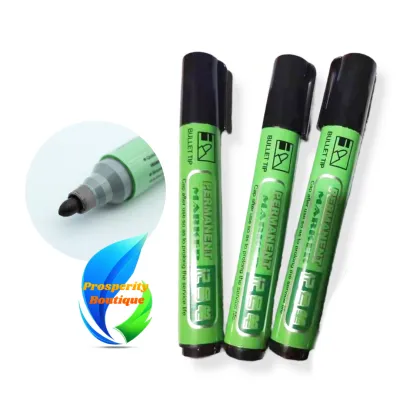
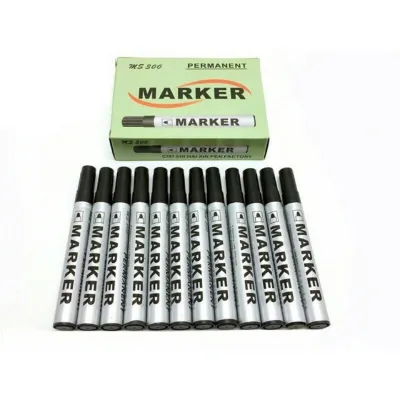
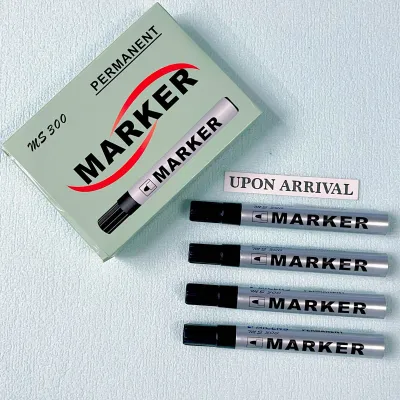
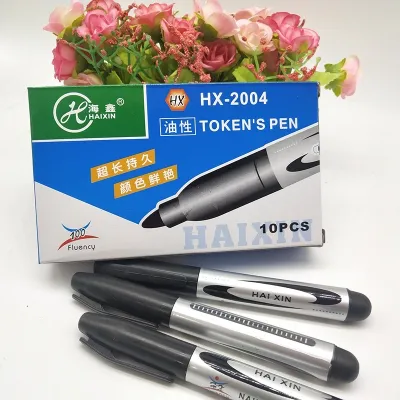
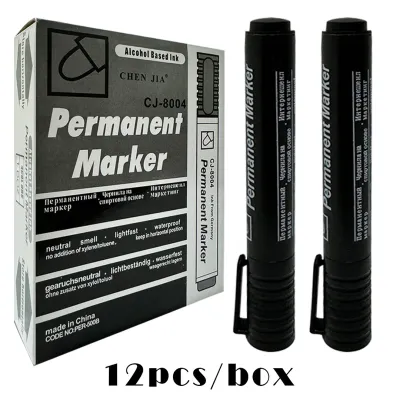
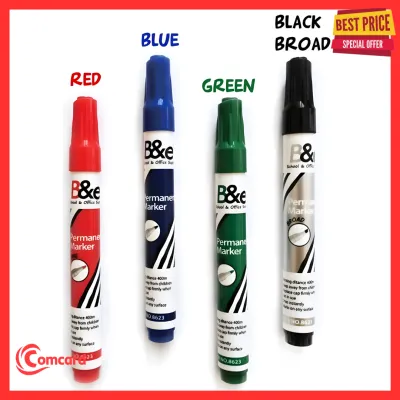
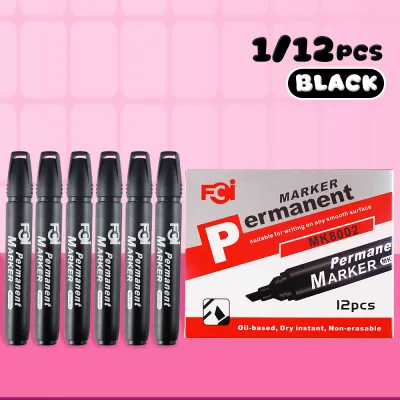
Prices are valid at publication and may change. Please refer to the product page for the latest price.
The second dimension is the ink base composition. Permanent marker inks typically rely on alcohol, water, or specialized solvent bases. This composition directly influences the drying speed, the intensity of the color, and how the ink behaves when exposed to moisture or sunlight. In humid climates, drying speed is particularly crucial to prevent accidental smudging immediately after application, making alcohol-based inks highly desirable for fast-paced environments.
Surface adhesion and environmental resistance determine the longevity of the mark. Some inks are formulated to bond permanently with porous materials like cardboard and paper, while others are engineered to cling to non-porous surfaces like glass, plastic, or metal. Assessing whether your marked items will be stored indoors, exposed to direct tropical sunlight, or subjected to moisture helps you choose a marker with the appropriate resistance level.
Finally, the physical construction of the marker body plays a role in durability. Heavy-duty models often feature robust aluminum barrels that withstand rough handling in industrial settings, while standard office models utilize lightweight plastic barrels. Choosing the right barrel material ensures the marker remains intact and functional throughout its usable lifespan, even in demanding work environments.
Matching Tip Shapes to Your Marking Tasks
The physical shape of the marker tip, or nib, determines how ink is delivered to the surface and the variety of line widths you can achieve. Pentel offers several distinct tip profiles designed for specific writing and marking tasks, allowing users to select the exact tool required for their projects.

Bullet tips are the standard choice for general writing, labeling, and organizing. These rounded nibs provide a consistent line width regardless of the angle at which you hold the pen. They are highly reliable for marking cardboard boxes, plastic storage bins, and paper documents where uniform readability is the primary goal.
Chisel tips feature an angled, flat edge that allows for versatile line creation. By adjusting the angle of the marker, you can produce broad strokes for high-visibility signage or thin lines for detailed accents. This makes chisel-tip markers excellent for creating posters, warehouse labeling, and basic calligraphy where visual emphasis is required.
Fine and ultra-fine tips are engineered for precision work in restricted spaces. These thin nibs are ideal for labeling small laboratory vials, marking electronic components, or writing detailed notes on compact schedules and charts. Because the tips are delicate, they require a lighter touch to prevent premature wear or bending of the nib fibers.
To help you visualize these differences, the following table maps common tip types to their typical applications and observable line characteristics:
| Tip Type | Observable Line Width | Ideal Applications | Key Advantage |
|---|---|---|---|
| Ultra-Fine | Very narrow (approx. 0.5mm or less) | Detailed labeling, small forms, technical schematics | High precision in tight spaces |
| Fine / Bullet | Medium (approx. 1.0mm to 2.0mm) | General labeling, shipping boxes, office organization | Consistent line width at any angle |
| Chisel | Variable (approx. 2.0mm to 5.0mm+) | Signage, posters, warehouse marking, bold headings | Dual-line capability (thick and thin) |
Understanding Ink Formulations and Surface Compatibility
The chemical interaction between the marker ink and your target material determines whether the mark will remain permanent or smudge off over time. Surfaces are generally divided into porous and non-porous categories, each requiring different ink behaviors to achieve optimal adhesion.
Porous surfaces, such as uncoated cardboard, paper, and raw wood, absorb ink deeply into their fibers. Standard alcohol-based permanent inks excel on these materials because they dry almost instantly as they penetrate the surface. However, highly absorbent paper can cause some inks to bleed or feather, which reduces the sharpness of your writing and may require a finer tip to maintain legibility.
Non-porous surfaces, including glass, polished metals, glazed ceramics, and smooth plastics, do not absorb ink. Instead, the ink must form a cohesive film that adheres to the surface as the solvent evaporates. On these materials, standard inks can easily smudge if they are touched before drying completely, especially in high-humidity environments where evaporation is naturally slower.
When selecting a marker for demanding conditions, it is essential to check the manufacturer’s packaging and product specifications for explicit performance claims. Look for labels indicating water resistance and fade resistance if your marked items will be exposed to rain or direct sunlight. For specialized industrial environments—such as marking on oily metal parts, wet concrete, or items stored in cold refrigeration units—standard office markers may fail to adhere, requiring heavy-duty industrial formulations designed to cut through surface contaminants.
Decision Framework: Choosing the Right Marker Category
To simplify your selection process, you can use a conditional decision framework based on your primary writing environment and the materials you handle daily. This structured approach ensures you do not overspend on specialized industrial markers when a standard office model would suffice, or conversely, use an inadequate marker for a critical industrial task.
First, choose a fine-point or bullet-tip model if your primary need is everyday labeling on standard office materials, paper documents, or shipping cartons. These markers are highly efficient, offer quick drying times on paper, and provide the legibility required for organizational tasks. They are the practical choice for home, school, and administrative office environments.
Second, select a chisel-tip model if your work involves creating high-visibility signage, warehouse labels, or promotional posters. The ability to switch between broad and thin strokes allows you to craft clear, readable headings that can be seen from a distance. This category is highly suited for retail displays, educational settings, and logistics facilities where quick visual identification is necessary.
Third, opt for an industrial or specialized series if you must mark on challenging surfaces such as wet plastics, oily metal sheets, dusty construction materials, or items subjected to extreme temperatures. These markers utilize robust ink formulations and durable acrylic nibs that resist fraying when used on rough textures. They are designed to maintain adhesion where standard inks would bead up or wash away.
Before finalizing any purchase, always verify the specific product specifications printed on the packaging or detailed in the manufacturer’s official product catalog. Checking these details ensures that the marker’s chemical properties and physical design align perfectly with your intended application, preventing costly marking errors or damaged materials.
Checking Safety, Ventilation, and Storage Requirements
Using and storing your permanent markers correctly not only ensures user safety but also maximizes the lifespan of your writing instruments. Because permanent inks contain solvents that evaporate to dry the mark, proper handling is essential for maintaining product quality.
When working in confined or poorly ventilated spaces, such as small storage rooms or tightly sealed offices, prioritize low-odor marker options. Standard permanent markers can release strong volatile organic compounds (VOCs) that may cause discomfort during prolonged use. Checking the product safety data sheets (SDS) or looking for low-odor certifications on the packaging can help you identify safer alternatives for sensitive users.
To maintain optimal ink flow and prevent the marker tips from drying out prematurely, always recap the markers tightly immediately after use. You should hear a distinct click, which indicates an airtight seal has been formed. Additionally, store your permanent markers horizontally when not in use; this position keeps the ink evenly distributed throughout the reservoir and prevents it from pooling at the back of the pen or oversaturating the writing tip.
In warm tropical climates, storing your markers in a cool, shaded drawer away from direct sunlight is highly beneficial. Excessive heat can accelerate solvent evaporation inside the marker body, even when capped, leading to a shorter overall lifespan. Proper storage habits ensure that your markers remain ready for use whenever you need them.
Frequently Asked Questions (FAQ)
Can You Revive a Dried-Out Permanent Marker?
Before attempting to revive a dried-out marker, inspect the physical condition of the tip and check if any ink remains in the reservoir. If the nib is severely frayed, split, or physically worn down, or if the marker is completely empty of ink, revival attempts will not be successful, and the marker should be replaced.
If the marker has dried out simply because the cap was left off temporarily, you can often restore the ink flow using safe, reversible methods. Try capping the marker tightly and storing it horizontally or tip-down for several hours to allow the remaining solvent to migrate back to the nib. For alcohol-based permanent markers, placing a few drops of high-concentration isopropyl alcohol directly onto the nib, capping it, and letting it sit can help re-solubilize the dried ink particles and restore smooth writing performance.
Community discussion
Share your experience or ask a question. Comments are reviewed before publication.