
Finding the right permanent marker pen requires looking beyond the simple black cap. While a standard marker might work well on a cardboard box, using that same pen on a wet plastic crate in a humid warehouse or a delicate canvas art piece can lead to smudging, bleeding, or rapid fading. To make the right choice, you must match the ink formulation and tip style to your specific surface material and working environment.
In the high humidity of a tropical climate like the Philippines, drying times and ink adhesion can vary significantly depending on the surface. Selecting a marker with the wrong ink base can result in smeared labels or ruined craft projects. By understanding how different markers interact with various materials, you can ensure your markings remain clear, legible, and durable over time.
Understanding Permanent Marker Ink and Tip Types
Permanent marker inks are formulated with different solvents and pigments, each designed to adhere to specific surfaces. Alcohol-based inks are the most common standard for general use. They dry exceptionally fast because the alcohol solvent evaporates rapidly, making them highly effective on non-porous surfaces like plastic, glass, and metal. However, they can easily bleed through thin paper or porous cardstock.
Products mentioned in this guide
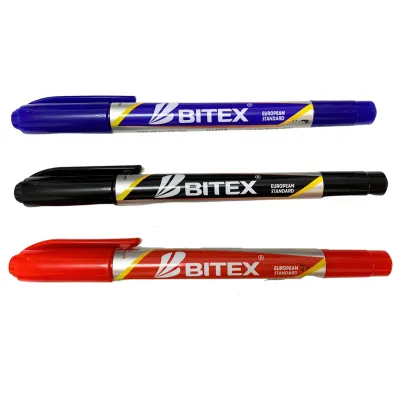
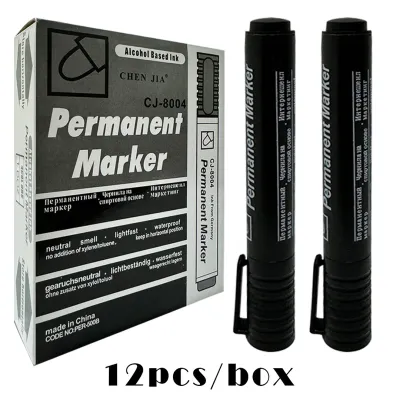
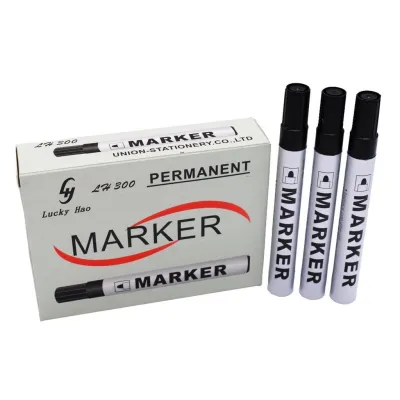
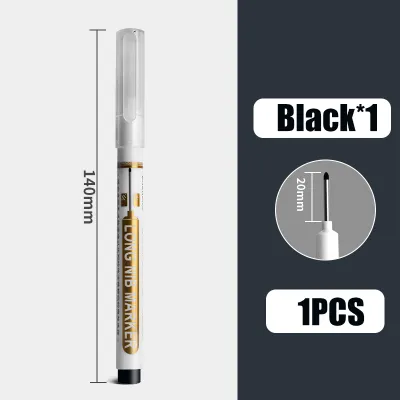
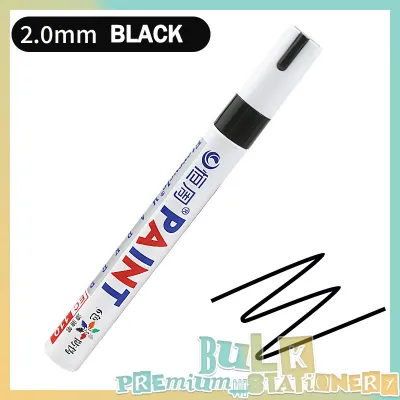
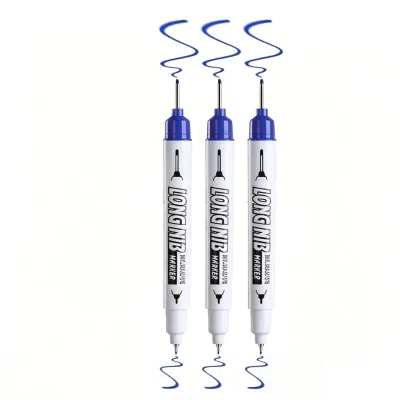
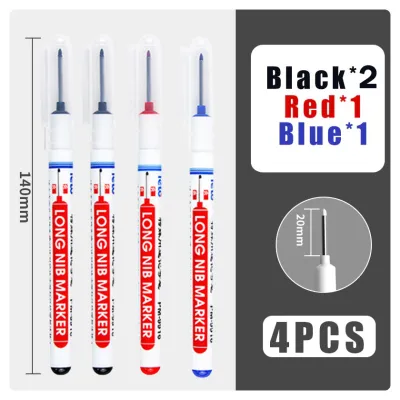
Prices are valid at publication and may change. Please refer to the product page for the latest price.
Water-based and acrylic-based inks offer a different set of characteristics. These inks are less prone to bleeding through paper, making them a preferred choice for flip charts, journals, and paper-based office organization. Because they lack harsh chemical solvents, they are also virtually odorless. However, they generally require a longer drying time, especially in humid environments, and can wash away if exposed to heavy moisture before they fully cure.
Paint-based inks utilize a liquid paint suspension rather than a traditional dye. Instead of soaking into a material, paint-based ink sits on top of the surface, creating a thick, opaque layer. This makes paint markers ideal for dark, rough, or highly textured surfaces like concrete, dark wood, and rusted metal where standard dye-based inks would simply disappear.
The shape of the marker tip, or nib, directly dictates your writing control and visibility. Fine and ultra-fine tips, usually made of hard plastic or compressed fiber, are designed for precise line control, making them ideal for writing small text on labels or detailed outlines in art. Chisel tips feature an angled edge that allows you to draw both broad strokes and thin lines depending on how you hold the barrel, offering excellent versatility for general labeling. Bullet tips provide a consistent, rounded line width that is easy to read from a distance, which is highly practical for warehouse signage and large storage bins.
Because smoothness, bleed resistance, drying speed, and water resistance depend entirely on the exact combination of ink and surface material, you should always verify manufacturer claims on the packaging. Look for specific labels such as “waterproof,” “fade-resistant,” or “low-odor.” Before starting a major labeling or crafting project, perform an observable trial on a small, inconspicuous area of your material to verify that the ink dries quickly and does not bleed or smudge.
Selecting a Permanent Marker Pen for Office Labeling
Daily office organization, document filing, and small-item tagging require markers that are clean, reliable, and comfortable to use indoors. In enclosed office spaces with limited ventilation, low-odor ink formulations are essential. Choosing a marker labeled as low-odor or alcohol-free helps maintain a comfortable working environment during extended labeling sessions.

Bleed resistance and rapid drying are critical when organizing paper files, cardboard storage boxes, and plastic tab folders. A quick-drying ink prevents accidental smudging as you handle and stack folders. For paper documents, a water-based permanent marker is often the best choice to prevent the ink from bleeding through to the next page, while an alcohol-based marker is better suited for glossy plastic folders and laminated labels.
Matching the tip size to the labeling task ensures maximum legibility. For fine tasks like writing on file tabs, date-stamping small labels, or marking asset tags, a fine-point or ultra-fine-point tip is necessary to keep the text sharp and readable. For larger storage boxes, shipping cartons, or whiteboards, a chisel tip allows you to write bold, high-visibility headers that can be read from across the room.
The physical design of the marker also plays a significant role in daily office use. Ergonomic barrels with soft rubber grips reduce hand fatigue during seasonal archiving or inventory tasks. Additionally, look for caps with anti-roll designs, such as a molded plastic ridge or a sturdy pocket clip. This simple feature prevents the marker from rolling off your desk and getting lost under furniture.
Choosing the Right Marker for Industrial and Warehouse Marking
Industrial and warehouse environments present harsh conditions that standard office markers cannot handle. Dust, grease, moisture, and extreme temperatures will quickly clog a standard fiber tip or prevent the ink from adhering to the surface. Marking rough concrete, oily metal pipes, or wet plastic shrink-wrap requires specialized industrial markers.
For these demanding surfaces, valve-activated paint markers are highly effective. These markers require you to shake the pen to mix the internal pigment and press the tip down to prime the ink flow. The resulting paint layer is thick, opaque, and highly resistant to environmental wear. When marking oily or wet surfaces, look for specialized industrial markers formulated with solvents that can penetrate surface film to bond directly with the underlying material.
When selecting an industrial marker, always verify the manufacturer’s technical specifications for specific durability traits. If you are marking outdoor equipment, structural steel, or items stored in direct sunlight, check for UV resistance to prevent premature fading. For manufacturing, automotive, or laboratory environments, verify chemical tolerance or high-temperature resistance if the marked parts will undergo heating, washing, or chemical processing.
Visibility is paramount in a busy warehouse setting. Bold bullet tips or extra-large chisel tips allow you to create thick, high-contrast marks that warehouse staff can easily read from several meters away. These large tips also allow for rapid coverage when marking large shipping crates or pallet wraps, improving overall operational efficiency.
Picking Permanent Markers for Crafting and Art Projects
Artistic applications require a balance of color vibrancy, blending capabilities, and surface compatibility. Standard permanent markers often lack the pigment density needed for professional-looking art and can bleed unpredictably on porous craft materials. For creative projects, specialized art markers are highly recommended.
Alcohol-based art markers are designed specifically for layering, shading, and smooth color transitions on high-quality marker paper. They feature dual tips—typically a brush tip on one end for fluid strokes and a chisel tip on the other for broad coverage. For non-porous craft surfaces like ceramics, glass, polished wood, or canvas, acrylic paint pens provide a vibrant, opaque finish that sits cleanly on top of the material without soaking in or running.
Before starting a craft project, verify the curing or sealing requirements of the ink to ensure your work lasts. For example, fabric markers often require heat-setting with a household iron to remain permanent through laundry cycles. Ceramic markers may need to be baked in a home oven to cure the paint, while glass projects might require a clear acrylic sealant spray. Always check the manufacturer’s instructions for these specific aftercare steps.
When budgeting for craft supplies, decide whether to purchase multi-color sets or individual pens. While a multi-color set offers a wide palette for immediate use, buying individual open-stock markers allows you to replace only the colors you use most frequently. Whether you are budgeting ₱150 for a basic black marker or ₱1,500 for a professional multi-color set, matching the pen to your project saves money. Some premium art markers also feature replaceable tips and refillable ink reservoirs, which can significantly lower your long-term costs.
Cross-Scenario Compatibility and Storage Tips
While it is tempting to use a single general-purpose marker for all your tasks, doing so often leads to poor results and ruined tools. A standard office marker used on rough concrete or rusty metal will quickly fray and ruin the fiber tip, rendering the pen useless. Conversely, using a heavy-duty industrial paint marker on thin notebook paper will cause severe bleeding and ruin multiple pages.
To maximize the lifespan of your permanent markers, proper storage is essential. Most standard permanent markers should be stored horizontally. This position keeps the ink evenly distributed throughout the barrel, preventing the tip from drying out or becoming oversaturated. For paint markers, follow the manufacturer’s specific storage instructions, as some require vertical storage with the tip pointing upward to prevent the valve mechanism from clogging.
If a standard fiber-tip marker begins to dry out prematurely, you can sometimes recover it by dipping the tip in a small amount of isopropyl alcohol for a few seconds, then capping it and letting it sit tip-down for an hour. However, if the tip is physically frayed, split, or completely clogged with paint or dust, it is time to replace the marker. Continuing to use a damaged tip will result in messy, illegible lines and can ruin your work surface.
Frequently Asked Questions (FAQ)
How can I remove permanent marker ink from a non-porous surface?
To remove permanent ink from smooth, non-porous surfaces like whiteboards, glass, or metal, apply a small amount of isopropyl alcohol or rubbing alcohol to a soft cloth and gently wipe the mark. Alternatively, drawing over the permanent mark with a dry-erase marker and immediately wiping it away can lift the permanent ink. Always test these methods on an inconspicuous area first to ensure the solvent does not damage or discolor the underlying surface, and avoid abrasive scrubbing pads that can scratch the material.
Are permanent markers safe for children to use?
Standard solvent-based permanent markers are generally not recommended for unsupervised use by young children due to the strong fumes from organic solvents and the difficulty of removing the ink from skin and clothing. When children are participating in art projects, opt for water-based, non-toxic markers specifically labeled as child-safe and washable. If standard permanent markers must be used for a specific craft, ensure the workspace is well-ventilated and provide close adult supervision to prevent accidental skin contact or inhalation of fumes.
Community discussion
Share your experience or ask a question. Comments are reviewed before publication.