
Selecting the ideal personalized pencil requires analyzing how, where, and by whom the writing instrument will be used. A custom pencil is not merely a writing tool; it is a tactile representation of a brand, a practical study companion, or a memorable keepsake. To make the correct choice, you must align the pencil’s physical characteristics—such as casing material, lead type, and customization durability—with the specific needs of your target audience.
This guide breaks down the essential factors to consider, from structural durability under tropical humidity to the longevity of different printing methods, helping you secure the best value for your investment.
How to Match the Pencil Type to Your Target Audience
Before committing to a bulk order, you must define who will hold the pencil and in what environment they will use it. The needs of a student in a classroom differ from those of a corporate executive in an air-conditioned boardroom or an attendee at a crowded outdoor convention in Manila. Environmental factors, particularly high relative humidity, play a significant role in how materials behave; low-quality wood can warp, and cheap outer lacquers may become sticky over time.
Products mentioned in this guide
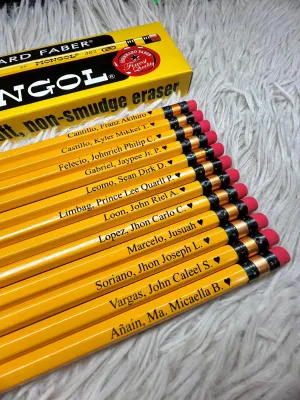
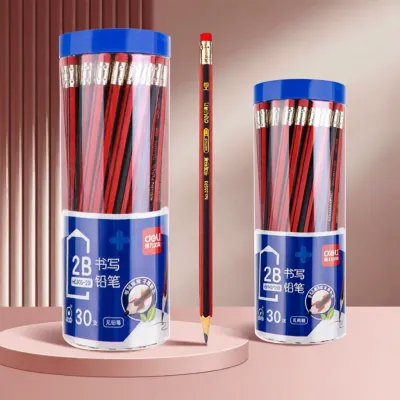
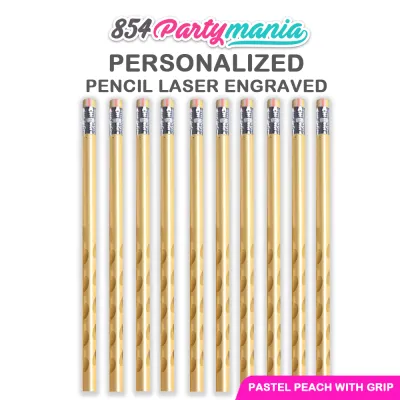
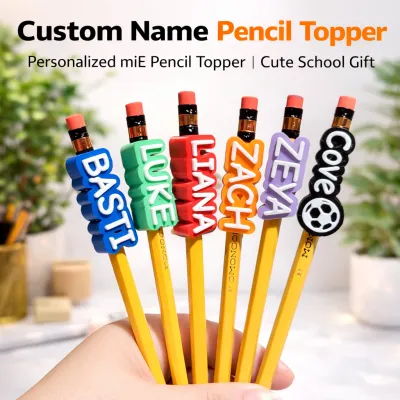
Prices are valid at publication and may change. Please refer to the product page for the latest price.
To establish a reliable decision-making framework, you must balance four critical dimensions: your total budget (including setup fees and shipping costs), the perceived value, the actual writing performance, and the visibility of your branding. A high-end laser-engraved mechanical pencil communicates prestige but is financially impractical for mass distribution. Conversely, a budget-friendly wooden pencil is highly efficient for large-scale promotional campaigns but may fall short as a milestone corporate token. The best personalized pencil is the one that achieves the optimal equilibrium among these competing priorities.
Choosing Personalized Pencils for Students and Daily Writing
Daily writing in educational and academic environments demands high durability, reliable ergonomics, and excellent cost-to-performance ratios. Students and heavy writers put immense pressure on their writing instruments, meaning the chosen pencil must withstand frequent drops, constant sharpening, and long study sessions without causing hand fatigue.

Traditional Wooden Pencils for Heavy Writing
For standard classroom tasks, the classic wooden pencil remains an enduring standard. A hexagonal barrel is highly recommended because the flat sides prevent the pencil from rolling off slanted school desks and provide a secure grip. When sourcing these in bulk, look for standard HB or No. 2 graphite cores, which offer the ideal balance of darkness and hardness for standard test sheets and daily notebook entries.
Customization for these pencils is typically achieved through hot foil stamping or silk-screen printing. Because these pencils undergo frequent sharpening, the custom text or logo should be concentrated near the eraser end to ensure the branding remains visible. Before finalizing an order, verify the manufacturer’s specifications regarding wood quality—such as genuine basswood—and check that the graphite core is fully bonded to the wooden casing to prevent internal breakage during sharpening. Because writing smoothness and erasability depend on the exact combination of graphite and paper, always conduct an observable trial on standard school pad paper to ensure the lead erases cleanly without leaving dark smudges or tearing the sheet.
Mechanical Pencils for Consistent Note-Taking
For older students, university lectures, or technical courses, mechanical pencils offer a modern, highly efficient alternative. The primary advantage of a mechanical pencil is its ability to maintain a consistent line width without the need for a sharpener, making it excellent for dense note-taking, mathematical formulas, or precise sketching.
Personalizing mechanical pencils usually involves pad printing or laser engraving on plastic or metal barrels. When selecting a model, verify the lead size compatibility, typically 0.5 mm for fine, detailed work or 0.7 mm for general writing where a sturdier lead is preferred to prevent breakage under heavy hand pressure. Buyers should also check the durability of the internal advancing mechanism and ensure that matching replacement leads and eraser refills are widely available on the local market. A mechanical pencil loses its utility entirely if the user cannot easily source compatible refills once the initial lead runs out.
Selecting Premium Personalized Pencils for Corporate Gifts
Corporate gifting requires a deliberate shift away from sheer utility toward tactile satisfaction, aesthetic refinement, and long-term brand alignment. A corporate gift is an extension of your company’s professional image, meaning the materials, weight, and finishing of the pencil must convey high quality and attention to detail.
High-Grade Wooden and Carpenter Pencils
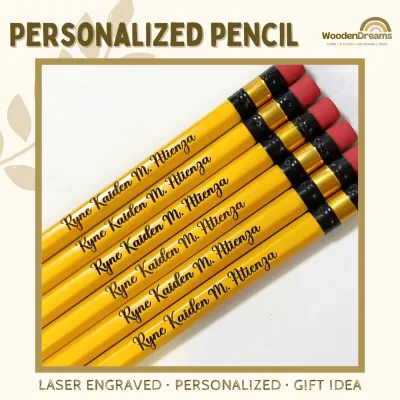
For businesses seeking a rustic yet sophisticated aesthetic, high-grade wooden pencils crafted from premium incense cedar or sustainably sourced basswood offer an exceptional tactile experience. These premium woods release a pleasant, natural aroma when sharpened and possess a smooth, tight grain that accepts high-definition laser engraving beautifully. Laser engraving burns the custom logo directly into the wood, creating a permanent, elegant, and tactile debossed finish that will not rub off or fade over time.
As a memorable, industry-specific alternative, custom carpenter pencils are highly effective for firms in real estate, architecture, construction, or interior design. Their flat, rectangular shape prevents rolling on active jobsites and provides a broad canvas for prominent branding. When ordering, verify the actual wood species and outer finish quality on the manufacturer’s technical sheet; avoid generic hardwood labels that do not specify the material, as low-grade woods are prone to splintering and uneven wear.
Executive Mechanical Pencils
When the target audience consists of executives, business partners, or high-value clients, a premium metal-barreled mechanical pencil is the premier choice. These instruments feature weighted brass, aluminum, or stainless steel bodies that provide a balanced, substantial feel in the hand, reducing writing fatigue during long signing sessions.
Branding on executive mechanical pencils should remain subtle and sophisticated, typically achieved through precise laser engraving that reveals the contrasting metal beneath the outer lacquer. To ensure a premium writing experience, carefully review the manufacturer’s specifications for weight distribution—ideally balanced slightly toward the tip—and the quality of the grip section, whether it uses textured knurling or comfortable rubber. To maximize the impact of your corporate gift, consider pairing the personalized mechanical pencil with a matching ballpoint pen in a custom-branded presentation box or a sleek leather sleeve, creating a complete, high-value writing set.
Cost-Effective Personalized Pencils for Events and Giveaways
Large-scale marketing campaigns, trade shows, and public festivals require promotional items that combine high visual impact with a low cost per unit. The goal is to maximize brand exposure and reach hundreds or thousands of recipients without exceeding a strict marketing budget.
Eco-Friendly and Recycled Materials
As sustainability becomes a core focus for organizations, eco-friendly personalized pencils have grown immensely popular for green campaigns and corporate social responsibility events. These pencils are frequently constructed from recycled newspapers, rolled post-consumer paper, or sustainable bamboo. A unique and highly engaging variant is the plantable seed pencil, which features a biodegradable capsule containing herb, flower, or vegetable seeds at the tip; once the pencil becomes too short to write with, the user can plant the stub in soil.
When purchasing eco-friendly options, it is critical to verify the exact material composition and biodegradability claims on the product packaging. Be aware that recycled paper and bamboo barrels have different surface textures than traditional lacquered wood, which can limit the complexity of your custom print or restrict the printing process to eco-friendly, water-based inks. Always check the manufacturer’s specific planting instructions to ensure the seeds are viable for the local tropical climate, as certain plant species thrive better in warm, humid conditions than others.
Colored Pencils for Creative and Youth Events
For events targeting children, art schools, creative workshops, or family-oriented festivals, personalized colored pencils offer an interactive and highly visual promotional tool. Customizing colored pencils allows you to print your brand name or event logo on the outer barrel, while the vibrant lead colors inside encourage immediate creative use.
When selecting colored pencils, look closely at the specifications for pigment quality and break resistance. Low-quality colored pencils often have hard, waxy leads that deposit very little color on the paper and break easily under light pressure, which can frustrate young users and reflect poorly on your brand. To elevate the presentation, package the personalized colored pencils in custom-printed cardboard tubes, kraft paper boxes, or metal tins featuring your full-color event graphics. This approach not only protects the pre-sharpened tips during transit but also increases the perceived value of the giveaway.
Comparing Customization Methods and Ordering Specifications
The method used to apply your logo or text to a personalized pencil directly affects its visual appeal, tactile feel, durability, and production cost. Understanding the technical differences between these customization techniques is essential for making an informed purchasing decision.
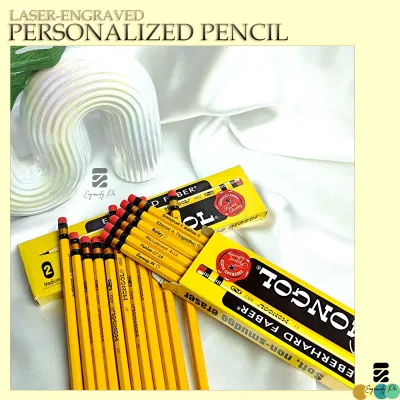
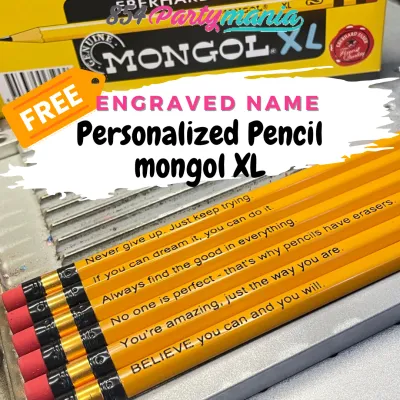
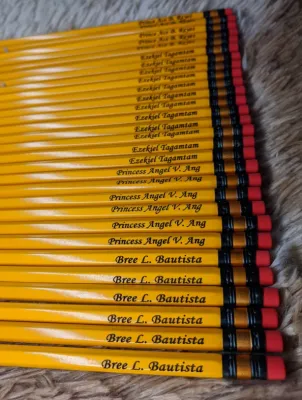
- Laser Engraving: Uses a high-precision laser beam to etch your design directly into the barrel. On wooden pencils, it burns the wood to create a dark, permanent, tactile debossed finish. On metal mechanical pencils, it cuts through the outer lacquer to expose the metal beneath. It is highly durable and resistant to smudging, though limited to a single monochrome color.
- Silk-Screen Printing: Presses ink through a stenciled mesh screen onto the pencil barrel. Highly cost-effective for large bulk orders, it allows for vibrant, multi-color designs. However, because the ink sits on top of the barrel, it can wear off or peel over time, especially when exposed to frequent handling, sweat, or high tropical humidity.
- Foil Stamping: Uses heat and pressure to transfer a thin metallic or colored foil onto the pencil. It produces an eye-catching, shiny metallic finish (often in gold or silver) that looks highly professional. It is excellent for classic wooden pencils but is generally limited to simple text or basic logos.
When planning your order, you must also navigate key commercial specifications. The Minimum Order Quantity (MOQ) varies significantly: complex silk-screen setups often require an MOQ of 500 to 1,000 units to offset screen creation costs, whereas laser engraving may have lower MOQs of 50 to 100 units. Be sure to factor in setup fees, which are one-time charges for preparing screens or digital files, as well as production lead times.
To safeguard your investment, always request a physical pre-production sample from the supplier. This step allows you to physically test the print’s resistance to smudging, verify the color accuracy against your brand guidelines, and check the alignment of the logo on the curved or hexagonal barrel before authorizing the full production run.
Evaluating Cross-Scenario Compatibility for Versatile Use
Many organizations wonder if they can streamline their purchasing by ordering a single, versatile personalized pencil that serves multiple distinct target audiences. For example, can a mid-tier wooden pencil with a clean, minimalist logo work effectively as both a giveaway at a student career fair and a basic writing tool in a corporate office?
While consolidating your order under a single design can significantly reduce unit costs by unlocking bulk discounts and eliminating multiple setup fees, it involves clear trade-offs in perceived value. A pencil designed to be budget-friendly enough for mass distribution may feel cheap to a high-value corporate client. Conversely, a high-quality, weighted mechanical pencil that impresses corporate partners is too expensive to hand out freely at large public events.
To decide whether to unify or segment your orders, evaluate your target audiences’ expectations. If they have overlapping needs—such as university students and entry-level job applicants—a single, high-quality wooden pencil with a matte finish and a clean, single-color print strikes an excellent balance. However, if your audiences are highly polarized, such as primary school children and corporate executives, segmenting your order into two distinct products is highly recommended. This ensures that you do not waste budget on expensive items for audiences that do not require them, nor disappoint premium clients with low-cost promotional goods.
Frequently Asked Questions (FAQ)
What is the typical minimum order quantity (MOQ) for personalized pencils?
The typical minimum order quantity (MOQ) for personalized pencils ranges from 100 to 1,000 units, depending heavily on the customization method. Simple laser engraving or digital printing often features lower MOQs (around 50 to 100 units), while traditional silk-screen printing or custom foil stamping usually requires a minimum of 500 to 1,000 units to offset the initial setup costs of the printing plates and screens. Always verify the exact threshold with your supplier.
How can I verify the quality of the custom print before a large order?
To verify print quality, you should request a physical pre-production sample from the manufacturer. Once received, perform a hands-on trial: firmly rub the printed area with your thumb to check for smudge resistance, scrape it gently with a fingernail to test scratch resistance, and inspect the alignment and color accuracy under bright, natural light. If a physical sample is unavailable due to tight timelines, request a high-resolution, close-up photograph of a test print on your chosen pencil model.
Are personalized pencils safe for young children?
Yes, but you must verify the product specifications on the packaging or manufacturer’s safety data sheet. Ensure that the pencils are certified non-toxic (such as holding an EN71 or AP non-toxic seal) and that the outer paint or lacquer is lead-free. For very young children, avoid pencils with small, detachable parts like plastic cap erasers or loose decorative toppers, which can present a choking hazard, and opt for thick, triangular wooden barrels that are easier for developing hands to grip safely.
Community discussion
Share your experience or ask a question. Comments are reviewed before publication.