
To choose the right Pilot Kakuno fountain pen variant, you must match its nib size to your handwriting scale, select a body style that fits your aesthetic and functional needs, and decide between a standard or limited-edition model. This beginner-friendly fountain pen offers an accessible entry point into fine writing, but its diverse configurations mean that a single choice can drastically alter your daily writing experience. By evaluating how you intend to use the pen—whether for rapid note-taking in school, detailed journaling, or professional tasks—you can easily pinpoint the exact combination of nib, body, and edition that will serve you most effectively.
In tropical climates like the Philippines, factors such as high humidity can influence how fountain pen ink behaves on paper. This makes selecting the correct variant even more critical, as ink drying times and paper absorption rates vary significantly. Understanding the core specifications of each Kakuno model will help you avoid common pitfalls like smudging or bleeding, ensuring a smooth and enjoyable writing experience from your very first stroke.
Core Selection Criteria for the Pilot Kakuno
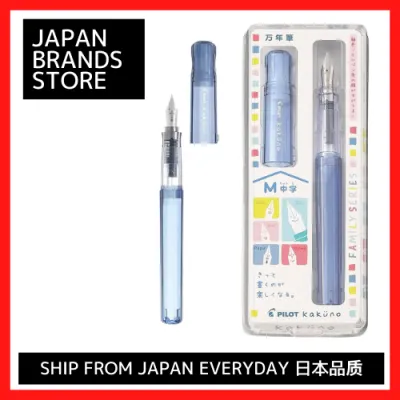
The Pilot Kakuno was originally designed as an entry-level fountain pen, but its exceptional performance has made it a favorite among stationery enthusiasts of all ages. The lightweight plastic body reduces hand fatigue during long writing sessions, making it highly suitable for students taking exams or professionals drafting long reports. Its signature hexagonal cap and barrel prevent the pen from rolling off slanted desks, a simple yet highly practical design feature that protects the delicate steel nib from accidental drops.
Products mentioned in this guide
![Pilot Kakuno Fountain Pen [Clear]](https://img.lazcdn.com/g/p/d1c144c8bbb520fd83584e353dd332c5.jpg_400x400q80.jpg_.webp)
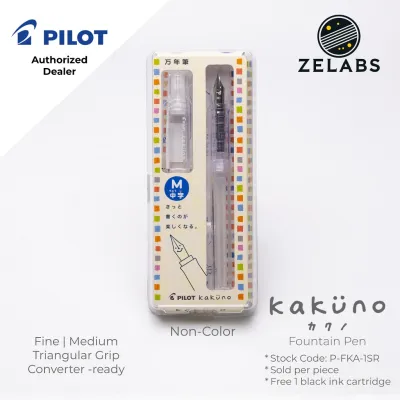
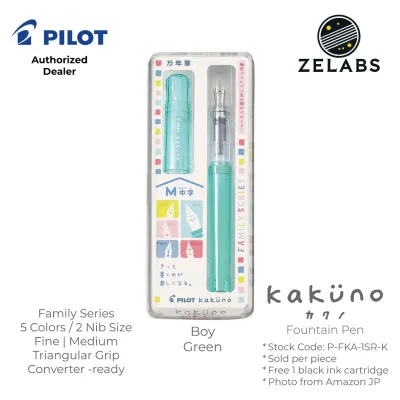
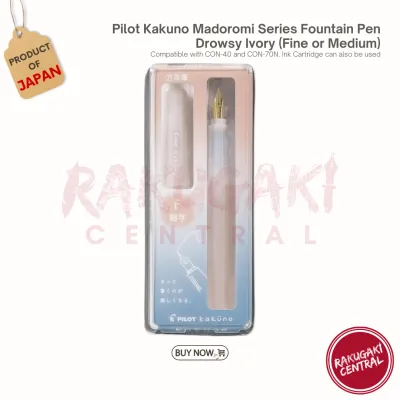
Prices are valid at publication and may change. Please refer to the product page for the latest price.
When browsing through stationery shops or online marketplaces, you will encounter three primary decision points: the nib width, the body and cap colorway, and the release type. The nib width determines the line thickness and ink flow, which directly impacts how the pen behaves on different paper types. The colorway ranges from playful pastels to transparent demonstrator bodies, allowing you to express your personal style. Finally, the release type dictates whether you are buying a standard, widely available model or a limited-edition collaboration that might require a premium or extra effort to source.
Mapping these variables to your specific daily routine is the key to making the right purchase. For instance, a student who needs to write quickly on standard, thin notebook paper will have vastly different requirements than a hobbyist who enjoys using shimmering inks on premium, heavy-weight paper. Gifting also introduces aesthetic considerations, where pastel or special-edition packaging might take precedence over pure utility. Understanding these distinct axes ensures that your purchase aligns closely with your daily writing habits and environment.
Choosing the Right Nib Size for Your Paper and Notes
The nib is the heart of any fountain pen, and the Pilot Kakuno features a high-quality steel nib adorned with a signature smiley face that guides beginners to hold the pen at the correct angle. Pilot’s Japanese nib sizes run significantly finer than Western brands, meaning a Japanese Fine is closer to a Western Extra Fine. This distinction is crucial when selecting your variant, as it directly affects line definition, ink consumption, and how the pen interacts with various paper qualities.

The Extra Fine (EF) nib is the thinnest option available for the Kakuno. It is highly recommended for individuals with very small, compact handwriting or those who frequently write complex characters where clarity is paramount. In environments where standard school notebooks and cheap copy papers are common, the EF nib is exceptionally practical. Because it deposits a minimal amount of ink onto the page, it minimizes the risk of feathering (where ink spreads sideways along paper fibers) and bleed-through (where ink leaks to the back of the page), even on low-grade paper.
The Fine (F) nib represents the sweet spot for the vast majority of users. It offers a highly versatile balance between precision and smoothness. While the EF nib can sometimes feel slightly feedback-heavy or “scratchy” on rough paper, the F nib glides more effortlessly while still maintaining a line thin enough for standard college-ruled notebooks. It is the ideal choice for rapid note-taking, daily journaling, and general office work, performing reliably across a wide variety of paper qualities without requiring specialized stationery.
The Medium (M) nib is the broadest standard option for the Kakuno, delivering a rich, wet line that showcases the unique properties of fountain pen inks, such as shading and sheen. If you enjoy using premium, high-density paper or specialize in large, expressive handwriting and signatures, the M nib is an excellent choice. However, because it lays down a generous amount of ink, it is highly prone to bleeding and feathering on standard, absorbent paper. In humid tropical climates, the increased ink volume from an M nib can also result in significantly longer drying times, which might lead to accidental smudging if you turn the page too quickly.
Before committing to a bulk purchase of pens or notebooks, it is highly recommended to perform a simple ink flow and paper compatibility check. Apply a small stroke of ink on an inconspicuous corner of your preferred notebook. Observe how long the ink takes to dry completely in your typical environment and check the reverse side of the page for any signs of bleeding. This verification step ensures that your chosen nib size matches the physical limitations of your daily writing materials.
Selecting Body Colors and Cap Styles
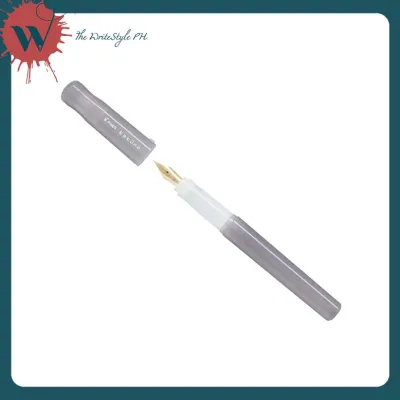
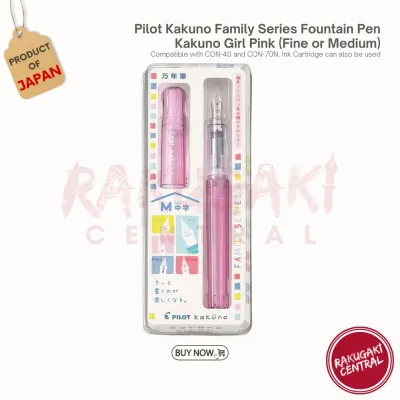
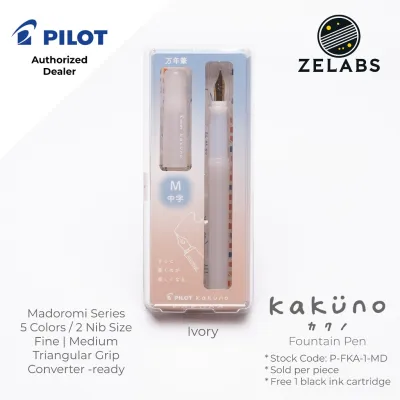
The visual design of the Pilot Kakuno is not merely about aesthetics; it also serves several practical functions. The pen is available in three primary body styles: transparent (often referred to as a demonstrator), solid grey or white with colorful caps, and soft pastel tones. Each style appeals to different user preferences and environments, making it easy to find a model that fits your personal or professional identity.
Transparent demonstrator models are highly favored by students and heavy writers because they allow you to monitor your remaining ink level at a single glance. Instead of unscrewing the barrel to check if you are running low during an exam or a meeting, you can see the ink cartridge or converter directly through the clear plastic. This transparency also adds a dynamic visual element, as the pen’s overall color scheme changes depending on the color of the ink you choose to load.
Solid and pastel colorways offer a more traditional or playful aesthetic. The classic grey body with a brightly colored cap provides a professional yet cheerful look suitable for office environments, while the pastel series features soft, muted tones that make excellent gifts for stationery enthusiasts. These opaque bodies hide the internal mechanism and ink staining, maintaining a clean, uniform appearance over years of continuous use.
Beyond color, the physical shape of the cap and barrel plays a vital role in daily usability. The hexagonal design of both the cap and the body prevents the pen from rolling off flat surfaces, protecting the delicate steel nib from catastrophic drops. Additionally, when you post the cap (place it on the back of the pen while writing), the hexagonal shape helps balance the lightweight pen in your hand, providing a comfortable grip that prevents hand strain during extended writing sessions.
If you plan to use specialized, light-sensitive, or UV-reactive fountain pen inks, it is important to consider the opacity of the pen’s body. Prolonged exposure to direct sunlight can degrade certain ink formulas, causing them to fade or change color inside a fully transparent demonstrator pen. For these specific inks, choosing a solid, opaque body variant provides a protective barrier against light exposure, preserving the quality and longevity of your ink.
Evaluating Standard vs. Limited and Special Editions
Pilot regularly releases the Kakuno in both standard production runs and limited or special editions. Standard editions are widely available, highly affordable, and come in consistent colorways such as the classic grey body or the clear demonstrator. These are the most practical choices for everyday utility, as they can be easily replaced at standard retail prices if lost, stolen, or damaged during your daily commute.
Special and limited editions, such as regional exclusives or collaborations with popular characters and stationery brands, offer unique design elements that appeal to collectors. These variants may feature custom illustrations on the nib (replacing the standard smiley face with other expressions or characters), tinted transparent bodies, or exclusive cap colors not found in the standard lineup. They often come in specially designed packaging, making them highly desirable as collector’s items or premium gifts.
However, opting for a limited-edition Kakuno involves several trade-offs that you must carefully evaluate. Because these models are produced in restricted quantities, they often command higher prices on the secondary market or from specialty importers. If a limited-edition pen is damaged or lost, finding an identical replacement can be difficult and expensive. Furthermore, ordering these variants from international sellers may result in shipping delays and potential customs complications.
To avoid overpaying or purchasing counterfeit goods, it is essential to set a realistic budget and verify the authenticity of the special edition before making a purchase. Genuine Pilot Kakuno pens feature precise molding, a high-quality steel nib with clean engravings, and specific packaging markings. Always cross-reference the product details with official Pilot catalogs or purchase from authorized dealers and reputable stationery shops to ensure you are receiving a genuine, high-quality product.
Purchasing Checklist and Pre-Checkout Verification
When you are ready to purchase your Pilot Kakuno, navigating the local retail landscape carefully will ensure a smooth transaction. In the Philippines, counterfeit stationery products can occasionally surface on major online marketplaces. To safeguard your purchase, prioritize buying from authorized physical stationery stores or official online storefronts that carry genuine Pilot products. This guarantees that you receive an authentic pen that performs according to the manufacturer’s standards.
Price comparison is another crucial step in the pre-checkout process. A standard Pilot Kakuno typically retails within a specific price range in Philippine Pesos (₱). If you encounter a listing with a price that seems unusually low, it may be a counterfeit or a damaged unit. Additionally, check whether the listing is a bundle deal that includes essential accessories, such as a proprietary Pilot ink converter or extra ink cartridges, which can offer better overall value than buying each item separately.
Carefully inspect the product description and images for specific nib size indicators before finalizing your order. The nib size (EF, F, or M) is typically printed on a sticker on the pen’s cap and is clearly marked on the external packaging. Because online listings can sometimes have confusing dropdown menus, double-checking your selected variant in your shopping cart prevents the frustration of receiving a medium nib when you specifically required an extra-fine nib for your schoolwork.
Finally, always review the seller’s return and exchange policies before clicking the checkout button. Even with careful selection, you may find that the physical feel of the nib does not suit your writing style, or the pen may rarely arrive with a manufacturing defect such as misaligned tines. A flexible and clear return policy allows you to exchange the pen promptly, ensuring that your investment in a quality writing instrument is fully protected.
Frequently Asked Questions (FAQ)
Can I use a standard ink converter with the Pilot Kakuno?
Yes, you can use a proprietary Pilot ink converter with the Pilot Kakuno, but it does not accept standard international converters. The Kakuno is compatible with the Pilot CON-40 and the larger CON-70 button-filler converter, which fits securely inside the pen’s barrel and allows you to use a wide variety of bottled fountain pen inks. It is important to note that these converters are typically sold separately from the base pen, so you will need to purchase one additionally if you plan to move away from disposable ink cartridges.
Is the Kakuno fountain pen suitable for left-handed writers?
The Pilot Kakuno can be successfully used by left-handed writers, though certain adjustments will optimize the experience. The pen features a subtle triangular grip section designed to encourage proper finger placement, which most left-handed writers find comfortable, though those with an unconventional grip style should test it first. To prevent smudging as your hand moves across the page from left to right, left-handed writers are highly encouraged to choose an Extra Fine (EF) or Fine (F) nib, which deposits less ink and dries much faster, especially when paired with a quick-drying fountain pen ink.
Community discussion
Share your experience or ask a question. Comments are reviewed before publication.