
Finding the right pocket calendar is a balancing act between physical portability and your mental workflow. The ideal pocket planner fits seamlessly into your daily carry while matching how your brain processes tasks, appointments, and goals. By aligning your layout choice with your scheduling frequency, selecting a size that survives your daily commute, and verifying that the paper handles your favorite pens, you can establish a reliable analog system that digital apps cannot replicate.
Quick Diagnostic: Match Your Planning Style to a Calendar Format
To choose the right pocket calendar, you must first understand how you naturally organize your thoughts. Forcing your mind into an incompatible layout will only lead to an abandoned planner.
If you visualize your day in blocks of time, scheduling meetings, gym sessions, and study hours back-to-back, you are a time-blocker. You require an hourly or daily layout that provides a clear chronological timeline.
Products mentioned in this guide
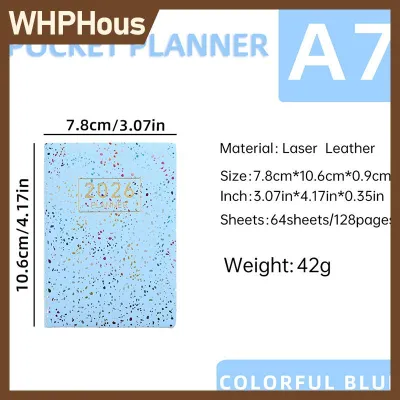
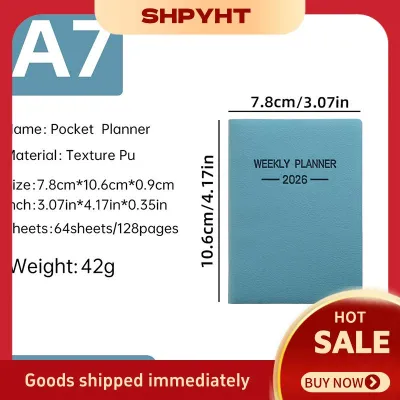
![[COD] SHGMYD A7 Specification 2026 English Planner Book Mini Portable Pocket Daily Schedule Book Thin Weekly Calendar](https://img.lazcdn.com/g/p/2fc6c880c2e2b6483982684dd7d358b8.jpg_400x400q80.jpg_.webp)
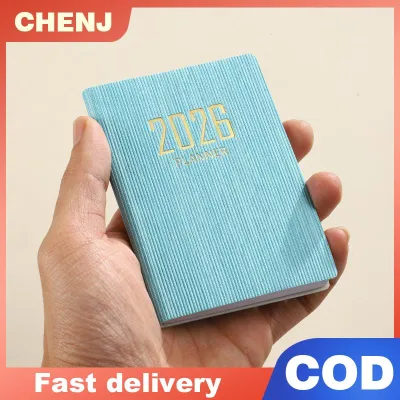
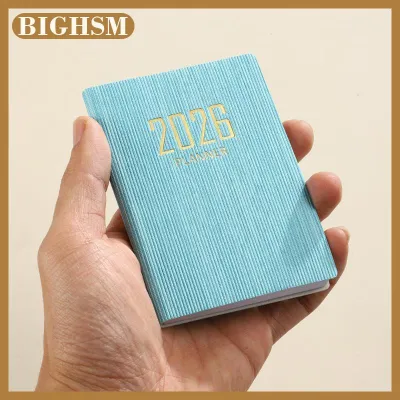
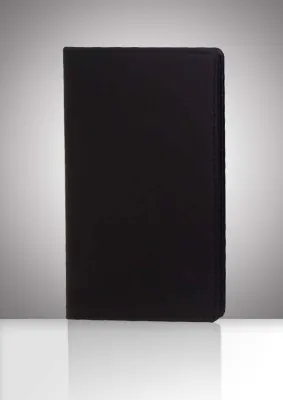
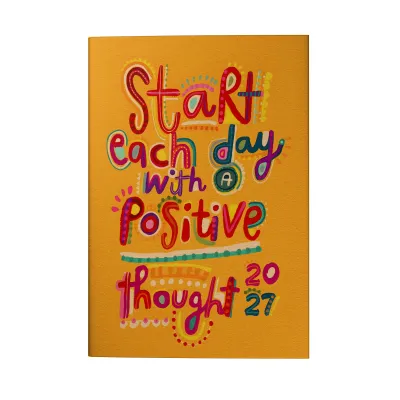
Prices are valid at publication and may change. Please refer to the product page for the latest price.
If your days are driven by to-do lists, checkmarks, and project milestones rather than strict appointment times, you are a task-lister. A weekly horizontal or vertical layout will serve you best, offering dedicated spaces for lists without forcing you to assign a specific hour to every action.
For those who use their planner to record memories, track daily habits, or write down quick reflections, you fall into the journaler category. A daily layout with ample blank space or grid lines is essential to accommodate your writing.
If you only need to keep track of major deadlines, travel dates, birthdays, and high-level goals, you are a minimalist planner. A monthly-only format strips away the daily clutter, giving you a bird’s-eye view of your month in an ultra-slim profile.
The core trade-off in any pocket calendar is writing space versus portability. A larger planner offers room for detailed notes but becomes a burden to carry. A tiny planner is highly portable but forces you to write in micro-script.
Transitioning from digital apps to a physical pocket planner is highly beneficial if you find yourself constantly distracted by phone notifications, losing track of tasks in buried app menus, or needing a tactile sense of time. A physical pocket calendar provides a focused, offline space to organize your day without digital noise.
Choose the Right Size and Portability for Daily Carry
The physical dimensions of your pocket calendar dictate how often you will actually carry it. If a planner is too bulky, it will end up left behind on your desk; if it is too small, you will struggle to fit your handwriting onto the pages.

Standard pocket sizes generally fall into three categories: A6, B6, and Passport size.
A6 (approximately 105 x 148 mm) is the classic pocket size. It is roughly the size of a standard postcard, making it highly portable while still offering enough surface area for legible daily entries. It fits comfortably in most small bags, backpack sleeves, and larger jacket pockets.
B6 (approximately 125 x 176 mm) is slightly larger than A6. While it might stretch the definition of “pocket-sized” for clothing, it is the perfect size for a small handbag, tote, or messenger bag. It offers a significant increase in writing space, making it ideal for those who want a portable planner but dislike writing in tiny print.
Passport size (approximately 90 x 124 mm) is the ultimate option for ultra-portability. It is designed to match the dimensions of a standard passport, allowing it to slip effortlessly into a shirt pocket, breast pocket, or rear trouser pocket. However, this size requires a highly minimalist writing style, as space is extremely limited.
In tropical climates like the Philippines, daily travel often involves navigating crowded public transit, sudden rain showers, and high humidity. These environmental factors make cover materials a critical consideration for daily carry durability.
Vegan leather and genuine leather covers offer excellent durability and a professional aesthetic, but they can be heavy and may absorb moisture if exposed to high humidity over long periods. Hardcovers provide a stable, rigid writing surface, which is incredibly useful when you need to jot down a quick note while standing on a train or waiting in line. However, they do not conform to tight pocket spaces.
Flexible PVC or treated, water-resistant cardstock covers are highly practical for tropical daily carry. They are lightweight, resist sweat and light splashes, and bend slightly to fit comfortably against your body when stored in a pocket.
Before purchasing a pocket calendar, use this physical checklist to test its usability:
- Pocket fit: Does the planner slide in and out of your usual pocket or bag compartment smoothly, or does it catch on the edges?
- One-handed hold: Can you comfortably hold the closed planner in one hand while walking or standing?
- Page-turning ease: Do the pages turn smoothly without sticking together, even if your hands are slightly warm or damp?
- Spine flexibility: Does the planner stay open with minimal pressure, or does it constantly snap shut while you are trying to write?
Select a Page Layout That Fits Your Scheduling Workflow
The internal layout of your pocket calendar is the engine of your planning system. It determines how you visualize your time and structure your daily tasks.
Hourly and daily layouts are designed for heavy time-blockers and individuals with meeting-heavy schedules. An hourly layout typically features a vertical column for each day, broken down into hourly or half-hourly increments. This allows you to see exactly when your commitments lie and identify open gaps in your schedule. Daily layouts dedicate an entire page to a single day, providing maximum writing space for detailed schedules, task lists, and notes. The trade-off is thickness; a daily pocket planner will naturally be much thicker and heavier than other formats.
Weekly layouts are the most popular choice for general planning, offering a balance between a high-level view and daily detail. These are generally split into vertical and horizontal formats.
Weekly vertical layouts present the week across a two-page spread, with each day represented by a vertical column. This is excellent for task-oriented users who like to organize their day chronologically or divide their columns into sections (such as work, personal, and urgent tasks).
Weekly horizontal layouts present the days of the week in horizontal blocks across a two-page spread. This format reads like a traditional book, offering wider lines that are perfect for writing out full sentences, detailed task descriptions, or brief daily reflections. It is highly suited for project trackers who need to write linear notes rather than hourly schedules.
Monthly-only or minimalist formats are designed for high-level overview planners who need maximum flexibility. These planners consist solely of monthly calendar grids, followed by a few blank or grid pages for notes. They are incredibly thin, often only a few millimeters thick, making them virtually weightless in your bag or pocket. This format is ideal if you primarily use digital calendars for your daily schedule but want a physical monthly overview to track major deadlines, travel plans, or academic exams.
Verify Paper Quality and Binding for Your Preferred Pens
A beautiful layout is useless if your favorite pen bleeds through the paper, ruining the next page. Verifying paper quality and binding specifications before you buy is essential for a frustration-free writing experience.
Paper weight is measured in GSM (grams per square meter). Pocket planners typically range from 52 GSM to 100 GSM.
Ultra-thin paper (around 52 to 60 GSM) is often used in high-page-count planners, such as daily pocket calendars, to keep the overall book slim. While some high-end thin papers are specially coated to resist ink bleeding, standard thin paper is highly prone to ghosting (where you can see the writing through the back of the page) and bleed-through (where the ink physically seeps through).
Medium-weight paper (70 to 80 GSM) is the standard for most pocket planners. It offers a good balance between thickness and durability, handling standard ballpoint pens and fine liners with ease.
Heavyweight paper (90 to 100+ GSM) is ideal if you prefer using wet gel pens, fountain pens, or mild markers. It provides a sturdy writing surface that resists feathering and bleeding, though it results in a thicker planner.
In humid environments, paper fibers naturally absorb moisture from the air, which can make even decent paper more absorbent and prone to ink feathering. If you use fountain pens or gel pens, look for paper specifically labeled as fountain-pen-friendly, or opt for a slightly heavier GSM. Always perform a small patch test on an inconspicuous back page before writing your main entries.
The binding of your pocket calendar determines how easily it opens and how long it will survive daily wear.
Stitched or thread-bound binding is the gold standard for pocket planners. It allows the book to lie completely flat when opened, making it easy to write near the center seam. It is highly durable, ensuring that pages will not fall out even with frequent handling.
Wire-O or spiral binding allows the planner to fold completely back on itself, which is incredibly useful when you need to write while standing or commuting. However, the metal or plastic coils add physical bulk, can catch on pocket linings, and may bend out of shape over time.
Perfect bound (glued) binding is common in budget-friendly planners. While it keeps the profile slim, cheap glue can crack over time, causing pages to detach. Perfect-bound planners also rarely lie flat, requiring you to hold the pages down constantly while writing.
Avoid physical red flags such as rough, highly absorbent paper that mimics cheap newsprint, rigid spines that resist opening, or sharp wire ends that can snag your clothing or scratch your belongings.
Prioritize Useful Features and Avoid Unnecessary Bulk
It is easy to be seduced by pocket calendars packed with habit trackers, budget logs, goal-setting worksheets, and world maps. However, in a pocket-sized format, these extra pages can quickly turn into feature bloat, adding unnecessary thickness and weight without providing daily utility.
Evaluate supplementary features based on your actual habits. Built-in trackers and habit grids are excellent if you enjoy visual progress, but if the grids are too small to write in comfortably, they will remain blank.
Instead, prioritize practical physical features that enhance your daily workflow:
- Pen loops: A built-in pen loop ensures you always have a writing instrument attached to your planner. Look for elasticated loops that can accommodate different pen barrel thicknesses.
- Elastic closures: An elastic band keeps the planner securely shut inside your bag or pocket, preventing the pages from getting crumpled, bent, or torn.
- Expandable back pockets: A small paper or accordion pocket at the back of the planner is incredibly useful for holding loose receipts, stamps, business cards, or small sticky notes.
To avoid unnecessary bulk, remember that you can always add functionality to a minimalist planner. Use small sticky notes for temporary lists, or carry a separate slim notebook for long-form brainstorming. Keep your pocket calendar focused strictly on scheduling and immediate tasks.
Build and Compare Your Final Pocket Calendar Shortlist
Before making a purchase, compile a shortlist of potential candidates and evaluate them systematically. This prevents impulse buys that do not fit your actual planning style.
Begin by defining your non-negotiables, which should always be your required size and page layout. Next, filter your options by paper weight and binding type to ensure compatibility with your writing instruments. Finally, rank the remaining candidates by their supplementary features and overall aesthetic appeal.
To help you compare options from local stationery boutiques or online marketplaces, use this structured comparison matrix template:
| Size | Layout | Paper Weight | Binding | Price Range |
|---|---|---|---|---|
| Passport | Monthly | 52-68 GSM | Stitched | ₱150 – ₱400 |
| A6 | Weekly Horizontal | 70-80 GSM | Stitched | ₱300 – ₱800 |
| B6 | Weekly Vertical | 80-100 GSM | Wire-O | ₱400 – ₱1,200 |
| A6 | Daily | 80 GSM | Perfect Bound | ₱250 – ₱600 |
When browsing online marketplaces or local shops, always check customer reviews for real-world feedback. Look specifically for comments on how well the binding holds up to daily wear, whether the planner truly lies flat, and if users experience bleed-through with common gel pens. Finally, verify the seller’s return policy in case the physical item does not match your expectations upon arrival.
Frequently Asked Questions (FAQ)
Can I use a pocket calendar for both personal and work scheduling?
Yes, integrating both personal and professional schedules into a compact format is highly achievable. Use a simple color-coding system with multi-color slim gel pens—for example, write work tasks in black ink and personal errands in blue or green. Alternatively, utilize the monthly spread for high-level personal events like birthdays, bill due dates, and travel, while reserving the weekly or daily spreads strictly for work-related tasks and deadlines. This physical separation keeps your mind organized without requiring you to carry two separate books.
How do I prevent my pocket calendar pages from tearing or dog-earing?
To protect your daily-carry planner from wear and tear, always use a protective cover; clear PVC or vinyl covers are excellent for keeping moisture, dirt, and sweat away from the paper. If your planner does not have a built-in elastic band, wrap a standard elastic band or hair tie around it to keep the pages flat and secure. Avoid overstuffing the back pocket with thick items, as this strains the binding and causes the edges of the pages to flare and tear. When not in use, store the planner in a dedicated sleeve or pocket inside your bag rather than letting it float freely.
Community discussion
Share your experience or ask a question. Comments are reviewed before publication.