
Choosing the right Sakura Pigma pen nib size depends on matching the pen’s proprietary numbering system to your specific creative task, paper type, and drawing style. These pigment-based fineliners are highly valued by artists, bullet journalers, and architects worldwide, but their labeling can be confusing at first glance. By understanding how these sizes translate to real-world lines and how they interact with different paper surfaces, you can avoid common pitfalls like ink feathering, crushed tips, or mismatched line weights.
Unlike standard gel pens that use dye-based inks, these pens utilize a specialized pigment ink formulation. This pigment sits on top of the paper fibers rather than soaking deep into them, which is why selecting the correct nib size is so critical to the final visual weight of your work. Whether you are sketching fine details, writing daily journal entries, or creating bold hand lettering, finding the right tool ensures your lines remain crisp, clean, and permanent.
Decoding the Sakura Pigma Micron Sizing System
Understanding the numbering system on the cap of a Sakura Pigma pen is the first step toward making an informed purchase. The numbers printed on the barrels—such as 003, 005, 01, 03, 05, and 08—are proprietary size codes rather than exact millimeter measurements. For example, a 05 pen does not draw a 0.5 mm line; it actually produces a line width of approximately 0.45 mm. Similarly, a 01 pen draws a line of about 0.25 mm, making it significantly finer than the number suggests.
Products mentioned in this guide
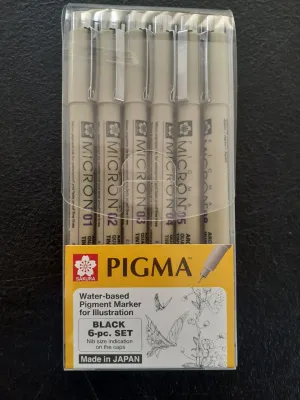
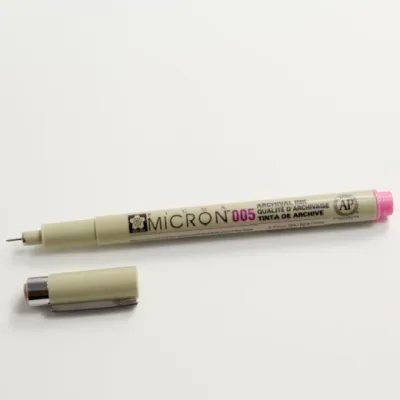
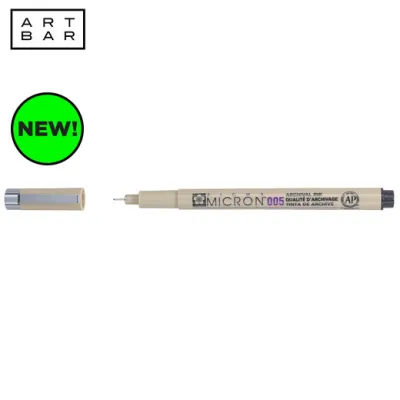
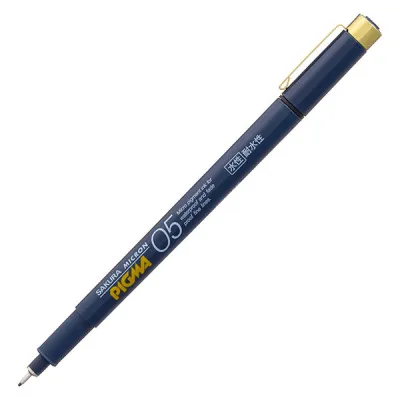
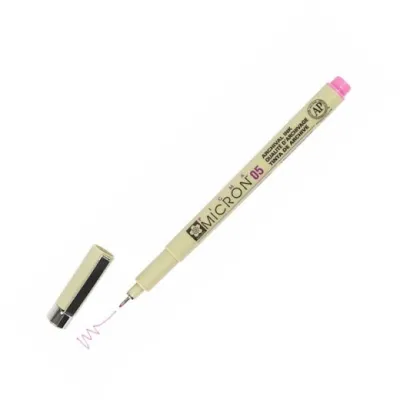
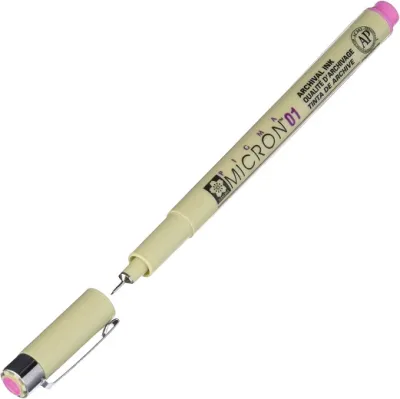
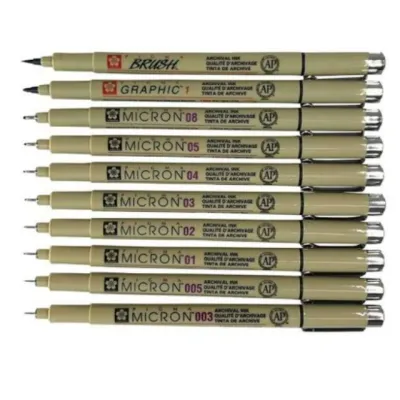
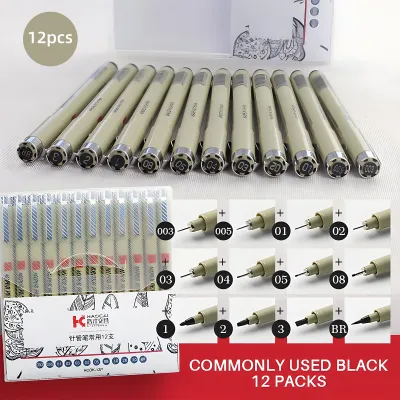
Prices are valid at publication and may change. Please refer to the product page for the latest price.
To find the actual millimeter measurement, you must look closely at the manufacturer’s packaging or the fine print on the pen barrel. Sakura lists the approximate line width in millimeters alongside the bold size code to help technical users who require precise tolerances for drafting or illustration. Knowing these exact measurements prevents surprises when you transition between different brands of technical pens.
In addition to standard technical felt nibs, the product line includes specialty tips designed for distinct creative applications. The Brush and Soft Brush variants feature flexible fiber tips that respond to hand pressure, allowing you to transition from thin lines to thick sweeps in a single stroke. The Graphic tips are flat, chisel-like nibs designed for bold, blocky strokes, while the PN (Plastic Nib) option features a durable polyacetal tip designed to withstand the heavy pressure of everyday writing and note-taking.
Matching Nib Sizes to Your Art and Journaling Tasks
Selecting the perfect nib size requires analyzing the scale of your project and the level of detail you want to achieve. For micro-linework, intricate cross-hatching, and tiny facial features in illustrations, the smallest size codes like 003, 005, and 01 are indispensable. These ultra-fine tips allow you to layer delicate lines closely together without creating muddy patches of ink, making them a favorite for stippling and detailed architectural renderings.

For general sketching, standard outlining, and daily journaling, mid-range codes such as 02, 03, and 05 offer the best balance of legibility and durability. In the Philippines, where standard grid and dotted notebooks are highly popular for bullet journaling, a 03 or 05 nib provides a clean, readable line that fits perfectly within 5mm grid spacings. These sizes deliver enough ink to be highly visible without feeling too thick or overwhelming your handwriting.
When your work demands bold lettering, thick borders, or filling in large dark areas, you should reach for the larger codes like 08, 10, or 12, or transition to the flexible brush tips. These larger sizes lay down a generous amount of ink, making them ideal for title pages, modern calligraphy, and dramatic outlines that pop off the page. Using a larger nib to fill in dark spaces also saves wear and tear on your finer pens, which are not designed for heavy coloring.
Testing Line Width and Ink Behavior on Your Paper
Paper is the silent partner in any writing or drawing experience, and its characteristics directly affect how a nib performs. In humid tropical climates, paper fibers naturally absorb ambient moisture from the air over time. When you write with a water-based pigment ink on paper that has absorbed moisture, the ink is more likely to spread outward, a phenomenon known as feathering. This can make a fine 03 line look as thick as a 05 line.
To ensure consistent results, always create a dedicated swatch chart on a back page of the exact notebook or sketchbook you plan to use. Draw a series of straight lines, write a few words, and create a small hatching pattern with each nib size in your collection. This simple test allows you to observe how the paper handles the ink flow and helps you calibrate your hand pressure to the specific surface texture.
Pay close attention to ink bleed-through, ghosting, and drying times during your test. Highly absorbent, unsized papers like cheap copy paper or low-weight notebook pages will pull ink rapidly from the nib, increasing the risk of bleeding through to the other side of the page. Conversely, smooth, coated papers will preserve the crispness of your ultra-fine lines but will require a few extra seconds of drying time before you can safely turn the page or apply other mediums.
Maintaining Your Pigma Pens for Consistent Line Quality
Proper maintenance is essential to protect the delicate felt tips of your fineliners and ensure a steady flow of archival ink. Always store your pens horizontally when they are not in use. Storing them vertically can cause the heavy pigment particles to settle at the bottom of the barrel or clog the microscopic feed channels in the tip, leading to scratchy lines or premature drying.
Controlling your writing pressure is another critical factor in preserving the life of your pens. The fine tips of these pens consist of a delicate bundle of plastic fibers held together by a protective metal sleeve. Pressing down too hard on the paper will not make the line darker or thicker; instead, it will bend, splay, or permanently push the felt tip back into the metal collar, ruining the pen long before the ink reservoir is empty.
Finally, always listen for the distinct click when putting the cap back on your pen. The archival pigment ink is formulated to dry quickly and resist water once cured, which means that leaving the cap off even for a short period can cause the ink to dry inside the feed mechanism. Keeping the caps securely fastened when the pen is not actively touching paper ensures that the ink remains fluid and ready for your next creative session.
Frequently Asked Questions (FAQ)
Are Sakura Pigma Micron pens waterproof once dry?
Yes, the Pigma ink formula is archival and highly water-resistant once it has fully cured on the paper surface. However, the exact drying and curing time can vary depending on the humidity of your environment and the absorbency of your paper. In humid conditions, it is best to wait a few minutes before applying watercolors, markers, or highlighters over your linework. Always perform a quick water-brush test on a scrap piece of the same paper to verify that the ink has completely set before proceeding with mixed-media layers.
What should I do if my Pigma Micron pen stops writing?
If your pen begins to skip or stops writing, first inspect the nib under bright light to check for physical damage. If the felt tip is frayed, split, or pushed entirely inside the metal sleeve, the pen has suffered physical wear and cannot be repaired. If the tip appears physically intact but dry, try capping the pen tightly and storing it horizontally for 24 hours to allow the ink to saturate the feed mechanism. Because these are disposable technical pens with sealed internal reservoirs, they are not designed to be refilled, and a permanently dried or empty pen must be replaced.

Community discussion
Share your experience or ask a question. Comments are reviewed before publication.