
Choosing the right metal spacer beads requires balancing two distinct factors: structural compatibility and visual proportion. To ensure your jewelry is durable, the inner hole diameter of your spacer bead must be at least 0.1 mm to 0.2 mm wider than your stringing material, allowing room for knots, crimps, or multiple thread passes. For visual harmony, the outer diameter of the spacer should generally be slightly smaller than or equal to your focal beads. Choosing the wrong dimensions can lead to structural failure, such as frayed cords, or design flaws like awkward spacing and unbalanced weight.
Decoding Spacer Bead Dimensions: Outer Diameter, Thickness, and Hole Size
To select the correct metal spacer beads, you must first understand how manufacturers measure these tiny components. Spacer beads are defined by three critical measurements: outer diameter, thickness (or length), and hole diameter.
The outer diameter refers to the total width of the bead from one outer edge to the opposite outer edge. This dimension dictates how prominent the bead appears in your design. Thickness, sometimes referred to as length, is the linear distance the bead occupies along the wire or cord. Thin, disc-like spacers take up very little space, while thick, tube-like spacers push adjacent beads further apart.
Products mentioned in this guide
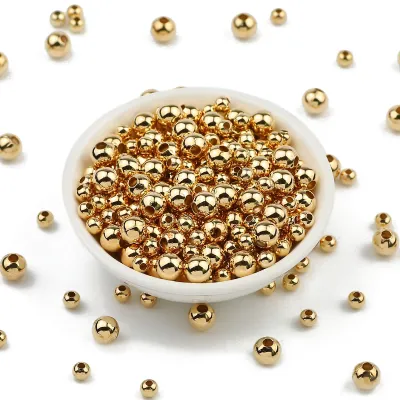
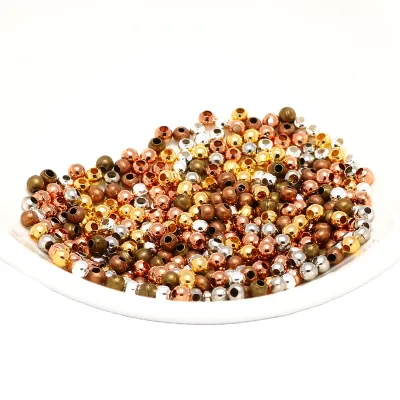
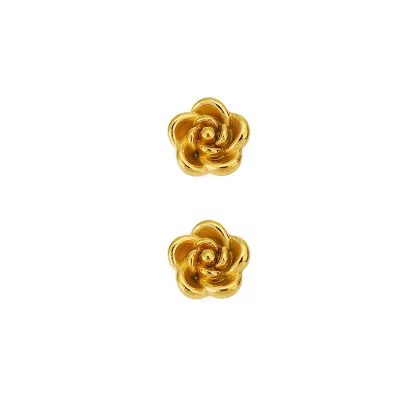
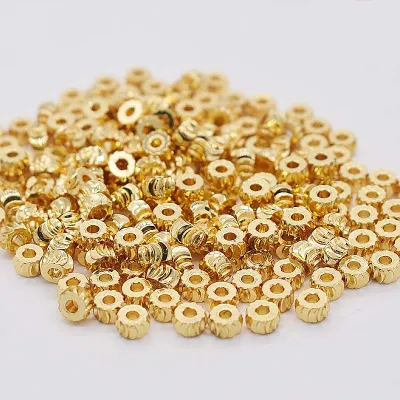
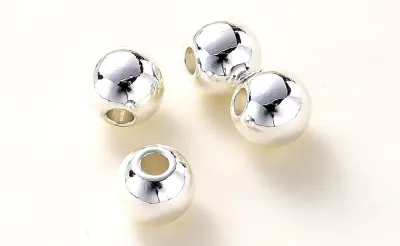
Prices are valid at publication and may change. Please refer to the product page for the latest price.
The hole diameter is the measurement of the hollow inner opening. This is the most critical structural dimension because it determines which stringing materials can pass through the bead.
A common mistake among beginners is assuming that a large outer diameter automatically means a large hole size. Many solid cast metal beads have incredibly thick walls, leaving only a tiny 0.5 mm hole in a bead that is 8 mm wide. Conversely, thin, hollow metal beads might have very thin walls and a spacious 2 mm hole. When sourcing components, always check the technical specifications for each of these three dimensions separately rather than relying on visual estimates from product photos.
Matching Hole Diameter to Your Stringing Material
The structural integrity of your jewelry relies on a precise fit between the bead hole and your stringing material. As a rule of thumb, always apply the clearance rule: the hole diameter must be slightly larger than the thickest part of your cord, wire, or thread. This calculation must also account for any areas where the material is doubled over, such as near clasps, crimps, or knots.

Different stringing materials require unique considerations:
- Beading wire: Nylon-coated stainless steel wire is highly durable but unforgiving if bent too sharply. Ensure the spacer bead hole is wide enough to accommodate the wire's diameter without forcing it. If you are finishing a necklace with crimp beads, the spacer adjacent to the clasp must have a hole large enough to fit two passes of the wire.
- Elastic cord: Popular for local Philippine streetwear and beach-themed bracelets, elastic cord needs room to stretch. In hot, humid climates, friction against sharp metal edges can accelerate the degradation of polyurethane or rubber elastics. Choose spacer beads with smooth, slightly larger holes to prevent fraying, and ensure the hole is wide enough to hide the knot securely inside the bead.
- Leather or suede cords: Natural materials are highly susceptible to shearing. Metal spacer beads with sharp, narrow holes can easily slice into leather over time. Opt for large-hole metal spacers (typically 1.5 mm to 3 mm or larger) with rounded, polished edges to preserve the structural life of the cord.
If the hole is too tight, the friction will wear down your stringing material, leading to sudden breakage. If the hole is excessively large, the spacer bead will slide unevenly, tilt sideways, or swallow adjacent smaller beads, ruining the symmetry of your piece.
Sizing for Aesthetics: Balancing Spacer and Focal Bead Proportions
Beyond structural fit, metal spacer beads serve as visual transitions. They provide breathing room between vibrant gemstones, glass beads, or native Philippine wood beads, allowing the eye to appreciate each focal element.
To achieve professional-looking visual balance, use the following proportion guidelines:
First, the outer diameter of your metal spacer should generally be smaller than or equal to the focal beads. For example, if you are using 8 mm jasper beads, a 4 mm or 6 mm metal spacer bead creates a clean, tapered transition. A spacer bead that is larger than the focal beads can overpower the design, making the piece look disjointed.
Second, consider the thickness of the spacer. Thin spacers, such as daisy spacers or flat rondelles, offer subtle glints of metallic texture without adding significant length. They are ideal for creating a continuous, cohesive look. Thick spacers, such as metal tubes or heavy corrugated rounds, create bold, distinct separations and are excellent for highlighting individual premium focal beads.
Third, be mindful of the physical weight of metal. Solid brass, copper, or pewter spacers add substantial weight to a piece. In the tropical climate of the Philippines, heavy jewelry can feel uncomfortable on hot days. Furthermore, placing heavy metal spacers on lightweight elastic bracelets can make the bracelet top-heavy. This causes the bracelet to spin constantly on the wrist, putting uneven tension on the elastic and causing it to stretch out prematurely. Balance heavy metal spacers with lighter materials, or use hollow metal beads to keep the piece comfortable and durable.
How to Measure and Verify Bead Fit Before Stringing
Visual estimation is rarely accurate when dealing with millimeter-level measurements. Before committing to a full jewelry-making project, take a few moments to measure and verify your materials.
Invest in a digital caliper or a physical bead sizing gauge. These tools, which typically cost around ₱250 to ₱600 locally, allow you to measure the exact outer diameter, thickness, and hole size of your beads with sub-millimeter precision.
Next, perform a simple “test string” check. Thread a short, scrap piece of your chosen stringing material through one of the metal spacer beads. Pull the material taut and slide the bead back and forth. It should glide smoothly without catching, snagging, or showing signs of friction.
Finally, inspect the inside of the bead hole. Low-cost metal casting processes can leave behind tiny metal burrs or sharp ridges inside the channel. If you feel resistance or see tiny shavings of your cord during the test run, use a bead reamer or a small round diamond file to gently smooth the inner edges. If the burrs cannot be removed, discard the bead to protect your stringing material from being sliced over time.
Frequently Asked Questions (FAQ)
Can I force a stringing material through a spacer bead if the hole is slightly too small?
No. Forcing a cord or wire through a tight metal hole will damage the protective coating of your stringing material, leading to fraying and eventual breakage. Additionally, forcing wire can cause permanent kinks that weaken the structural integrity of your jewelry. It is always best to select a bead with a properly sized hole or choose a thinner stringing material.
Does the size of a metal spacer bead affect how quickly it tarnishes?
The size of a metal spacer bead does not directly affect the chemical rate of tarnishing, which is determined by the metal alloy, plating quality, and environmental factors like humidity and sweat. However, larger metal beads have more surface area, making tarnish and oxidation much more visible. If you live in a warm, humid climate, choose high-quality plated or treated metal spacer beads and store your finished jewelry in airtight bags with anti-tarnish strips.
Community discussion
Share your experience or ask a question. Comments are reviewed before publication.