
Finding the perfect birthday gift is only half the battle; presenting it beautifully is what completes the gesture. When using birthday gift bags, choosing the wrong size can quickly turn a thoughtful gesture into an awkward display of bulging paper, torn handles, or a gift that spills out from the top. To choose the right size birthday gift bag, you must measure your gift’s three-dimensional footprint and match it against the bag’s width, height, and gusset depth, leaving a clear margin of safety for tissue paper and structural integrity.
In the tropical climate of the Philippines, where high humidity can soften paper fibers and weaken adhesive seams, selecting a bag with the correct dimensions and material strength is even more essential. A bag that is too small forces the seams to stretch, which, when combined with moisture in the air, can cause the bottom to drop out entirely. By taking a few moments to measure your gift and calculate the necessary clearances, you can ensure your presentation looks polished, stands securely on the gift table, and protects your present from transit to the celebration.
Step 1: Measure Your Gift's True Dimensions
Before browsing for birthday gift bags, you need to establish the exact physical boundaries of your present. Guessing the size of an item by eye frequently leads to buying bags that are either comically oversized or frustratingly narrow. To avoid this, grab a standard measuring tape or a rigid ruler and place your gift on a flat, stable surface. You will need to record three distinct measurements: length (the longest side across the front), width (the depth from front to back), and height (the vertical distance from the base to the highest point).
Products mentioned in this guide
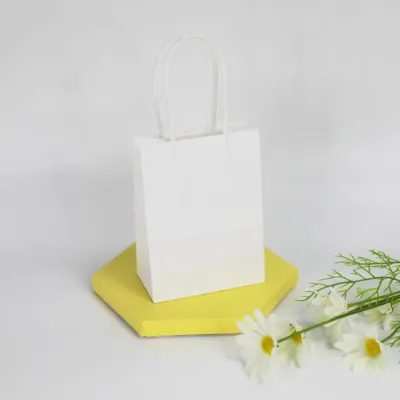
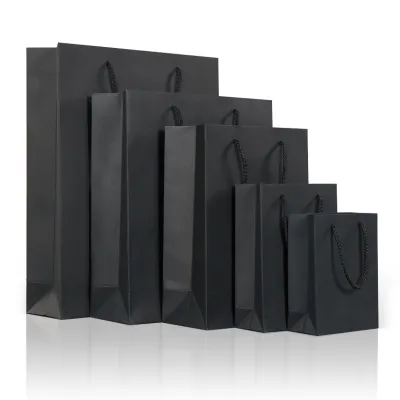
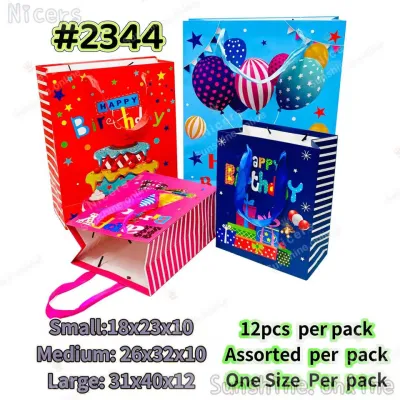
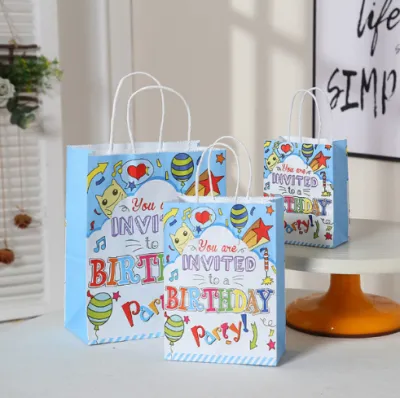
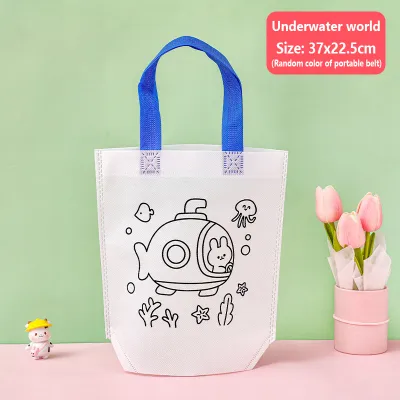

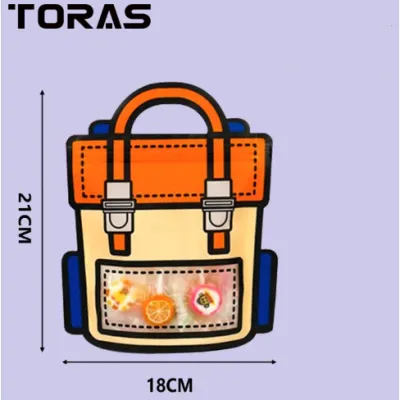
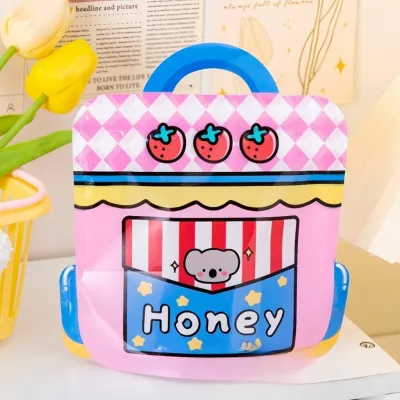
Prices are valid at publication and may change. Please refer to the product page for the latest price.
For standard boxed items, such as board games, perfumes, or boxed shoes, the process is straightforward. Align your measuring tool along the sharp edges of the box, recording each dimension to the nearest half-inch or centimeter. Make sure you do not ignore any protruding elements, such as decorative bows, plastic hangtags, or outer sleeves, as these minor additions can easily snag on a tight bag opening.
If your gift is irregularly shaped—such as a plush toy, a sculpted ceramic mug, a rolled-up beach towel, or a piece of local artisanal home decor—you must use the “bounding box” method. Imagine the item is enclosed inside a tight, invisible rectangular box. Measure the absolute maximum points of the object in three dimensions. For a stuffed animal, this means measuring from the tip of the nose to the back of the tail for depth, from ear to ear for width, and from the bottom of the feet to the top of the head for height.
To prevent calculation errors later, record all measurements in a single unit. Whether you prefer inches or centimeters, consistency is key. In the Philippines, stationery items and gift wrapping supplies may display dimensions in either metric or imperial units depending on the brand, so having both measurements noted on your phone or notepad will make comparing bag sizes much easier when you shop.
Step 2: Decode Gift Bag Sizing and Gussets
When shopping for birthday gift bags, you will notice that manufacturers label their products with a series of numbers, typically formatted as Width x Depth x Height (or sometimes Width x Gusset x Height). Understanding what these numbers represent is crucial to finding a bag that matches your recorded measurements. The first number represents the horizontal span across the front face of the bag. The last number represents the vertical height from the very bottom seam to the top rim.

The middle number, often referred to as the “depth” or the “gusset,” is the most critical yet frequently overlooked dimension. The gusset refers to the folded paper panels on the sides and bottom of the bag that expand outward when the bag is opened. When a gift bag sits flat on a retail shelf, these panels are folded inward. Once you open the bag and place an object inside, these gussets expand to create a flat, rectangular base. If your gift has a depth of 4 inches, but the bag’s gusset is only 3 inches, the gift will force the front and back panels of the bag to bulge outward, distorting its shape and putting immense pressure on the bottom seams.
Additionally, it is vital to recognize that the stated height of a gift bag almost never includes the handles. The handles—whether made of twisted paper, satin ribbon, or braided cord—are attached near the top rim and extend upward. The usable internal vertical space stops at the top collar of the bag. Relying on the total height including the handles will leave you with a bag that is far too short, leaving your gift exposed and preventing you from using decorative tissue paper effectively.
Step 3: Calculate the Perfect Fit with Allowances
To ensure your present slides into the bag smoothly and sits elegantly, you must apply a simple calculation formula that adds a margin of “ease” to your gift’s physical dimensions. This ease prevents the paper from stretching, tearing, or buckling under tension.
For the width and depth of the bag, use the flat-width formula. As a general rule, the flat width of the bag must be comfortably larger than the width of your gift plus its depth. Specifically, the bag’s depth (gusset) should match or slightly exceed the gift’s depth, while the bag’s width should be at least 1 to 2 inches wider than the gift’s width. This extra 1 to 2 inches of ease allows the gussets to open naturally without pulling the front and back of the bag taut.
For the height of the bag, apply the vertical clearance formula. The bag must be at least 2 to 3 inches taller than the height of your gift. This vertical clearance serves two purposes. First, it ensures the gift is completely concealed from view, maintaining the element of surprise. Second, it leaves ample space to tuck in sheets of decorative tissue paper, which should billow elegantly from the top without being crushed by the weight of the gift or squeezed out by a tight fit.
In some cases, you might want to place a flat, square item diagonally inside a square bag to save space. If you choose this method, you must calculate the diagonal measurement of your gift (using the Pythagorean theorem or by measuring from corner to corner) and ensure the bag’s width is wider than this diagonal line. However, for most standard presentations, keeping the gift parallel to the bag’s walls is the safest approach to prevent corner punctures.
To simplify your shopping, you can categorize common gifts into standard bag sizes based on these formulas:
- Small Bags (approx. 5 x 3 x 7 inches): Ideal for small jewelry boxes, gift cards, standard perfume bottles, or small cosmetics.
- Medium Bags (approx. 8 x 4 x 10 inches): Perfect for standard novels, framed photos, apparel boxes containing a folded shirt, or medium-sized candles.
- Large Bags (approx. 12 x 5 x 15 inches): Best suited for standard adult shoeboxes, lightweight electronics, larger toys, or folded hoodies and light jackets.
- Jumbo Bags (approx. 16 x 6 x 20 inches or larger): Necessary for large board games, kitchen appliances, bulky bedding, or oversized plush toys.
Step 4: Adjust for Fragile, Heavy, or Oddly Shaped Items
Not all gifts are neat, lightweight boxes. When dealing with specialized items, you must adjust your sizing calculations and pay close attention to the bag’s material construction.
Cylindrical or round gifts, such as scented jar candles, bottles of wine, or spherical home decor, present a unique spatial challenge. Because a gift bag opens into a rectangular prism, a round object will leave empty, unused space in the four corners of the bag’s base. To accommodate this, you must measure the diameter of the cylinder and treat it as both the width and the depth. Always add an extra half-inch of ease to your measurements for round items, as their curved profiles tend to roll and shift during transport, which can cause the bag to lean if the fit is too snug.
Heavy items, such as thick hardcover books, pottery, or electronic gadgets, require you to look beyond simple dimensions. A large, heavy item placed in a thin paper bag will quickly rupture the bottom seam, especially in the humid Philippine climate where moisture can compromise paper strength. When choosing a bag for heavy items, check the paper weight (look for thick cardstock or high-GSM kraft paper) and ensure the bottom is reinforced with a thick cardboard insert. Look for sturdy handles, such as braided nylon cords secured with metal grommets or knotted ends, rather than simple glued paper loops.
Furthermore, the material finish plays a significant role in durability. In the tropical climate of the Philippines, high humidity can quickly soften standard uncoated kraft paper bags, making them prone to tearing under pressure. For heavier or more valuable items, consider choosing laminated paper bags. The plastic or matte film lamination acts as a moisture barrier, preserving the bag’s structural stiffness even when exposed to humid outdoor air during transport.
Fragile items, such as glassware, ceramics, or delicate handmade crafts, require protective cushioning. If you plan to wrap your gift in bubble wrap, foam sheets, or layers of crinkle paper, you must measure the item after it has been wrapped in these protective layers. Alternatively, add an extra 2 to 3 inches to your initial width, depth, and height calculations to ensure the cushioned bundle fits comfortably inside the bag without compressing the protective materials.
Step 5: Test the Fit and Finish the Presentation
Once you have selected your birthday gift bag and placed your present inside, perform a few quick quality checks to ensure the presentation is flawless and secure. Start by placing the loaded bag on a flat table. The bag should stand completely upright on its own without leaning to one side, sagging, or showing bulging side panels. If the sides are bowing outward or the bottom is sagging downward, the bag is too small or the paper is too weak for the gift’s weight.
If you find yourself with a minor sizing mismatch, there are several professional styling tricks you can use to salvage the presentation. If the bag is slightly too tall for your gift, leaving a large, empty void at the top, do not leave it looking hollow. You can neatly fold the top collar of the bag downward by an inch or two to create a decorative cuff, or fill the bottom of the bag with a layer of crumpled kraft paper or tissue paper to elevate the gift to a more pleasing height. If the bag is slightly too short and the gift peeks over the rim, use layered sheets of colored tissue paper. Arrange the tissue paper sheets so they stand tall and fan out from the opening, creating a visual canopy that hides the gift while adding a festive, high-end look.
Before heading out to the birthday party, perform a final lift test. Lift the bag by its handles and gently carry it around for a few seconds. Ensure the handles bear the weight evenly without pulling or tearing at the attachment points, and check that the bottom insert remains flat. If you notice any straining, reinforce the base with a piece of cardboard cut from a clean shipping box, or transfer the gift to a sturdier bag to ensure it arrives safely at the celebration.
Frequently Asked Questions (FAQ)
What size gift bag do I need for a standard shoebox?
A standard adult shoebox typically measures around 13 inches in length, 8 inches in width, and 5 inches in height (approximately 33 x 20 x 12 centimeters). Applying our sizing formulas, you will need a large gift bag that measures at least 14 to 15 inches in width, 6 inches in depth (gusset), and 11 to 12 inches in height. This ensures the box sits flat at the bottom of the bag without stretching the sides, leaving about 3 inches of vertical space at the top to add decorative tissue paper to conceal the shoebox.
Is it okay to force a gift into a slightly small bag?
No, you should never force a gift into a bag that is too small. Forcing a tight fit puts excessive tension on the paper seams and handles, which can easily lead to a sudden tear or a ruptured base during transport. Furthermore, a tight fit ruins the aesthetic of the presentation by causing unsightly bulges, creases, and tears. If you do not have a bag of the correct size, it is much better to wrap the gift in traditional wrapping paper, place it in a decorative gift box, or use a fabric gift wrap alternative rather than risking damage to both the bag and the present.
Community discussion
Share your experience or ask a question. Comments are reviewed before publication.