
Choosing the right size fireproof document box requires looking beyond the external shell to find a balance between your current filing system and the physical space available in your home or office. Because fire-resistant insulation significantly reduces the usable interior space, selecting a box based solely on its outer dimensions often leads to cramped folders, bent documents, or a lid that refuses to latch. To find a suitable fit, you must inventory your active paperwork, account for the thickness of your chosen filing media, and verify that your storage furniture can support the substantial weight of a fully loaded fireproof container.
Assess Your Current Document Volume and Filing Format
Before browsing online marketplaces or office supply stores, you need a clear picture of what you are actually storing. Gather all the documents you intend to protect and group them by their physical format. You might have loose certificates, standard manila folders, hanging files, or bulky multi-ring binders. Each format demands a different type of physical support and spatial clearance inside the box.
Next, measure the physical dimensions of your largest documents. In the Philippines, office paperwork commonly utilizes three distinct standards: A4, Letter (often called “short bond paper”), and Legal (commonly referred to as “long bond paper”). Legal-size documents are significantly longer than standard Letter sheets, measuring 8.5 by 13 inches. If you have land titles, contracts, or legal briefs printed on long bond paper, a box designed strictly for Letter or A4 sheets will force you to fold these critical documents, potentially damaging official seals or signatures.
Products mentioned in this guide
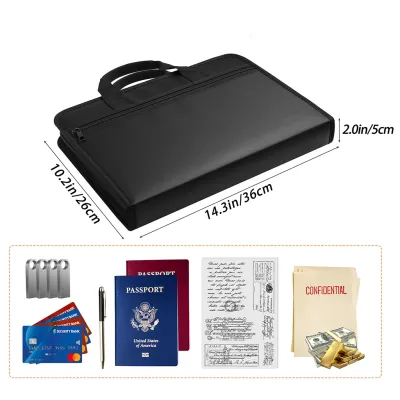
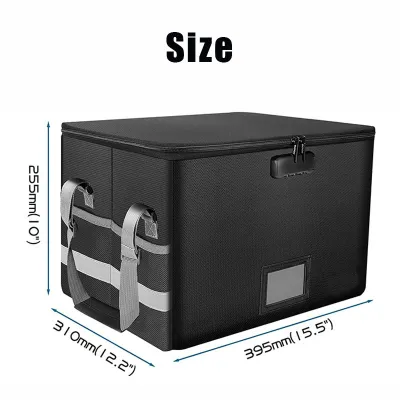
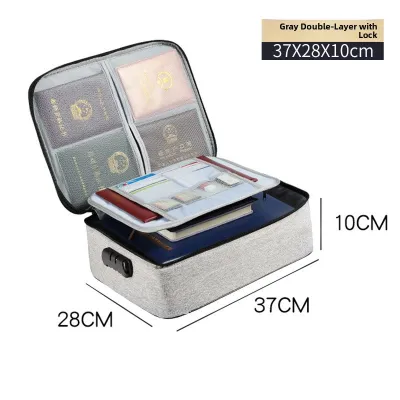
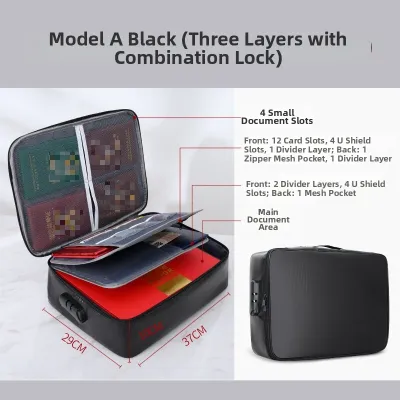
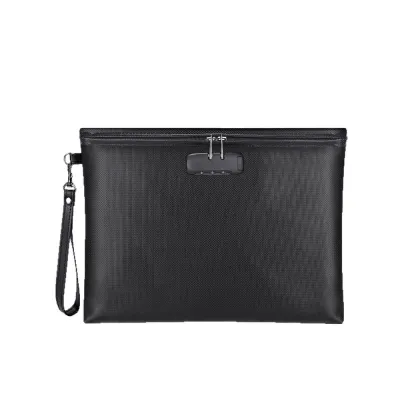
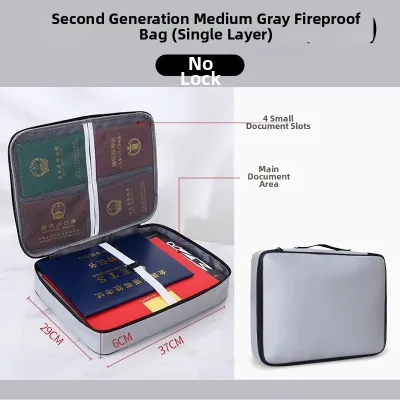
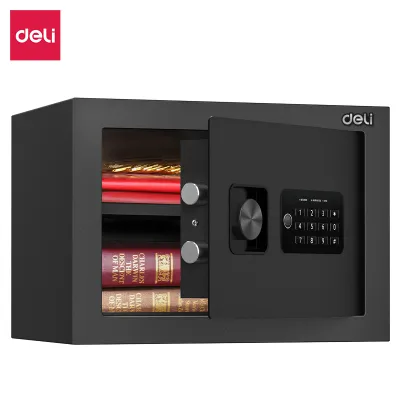
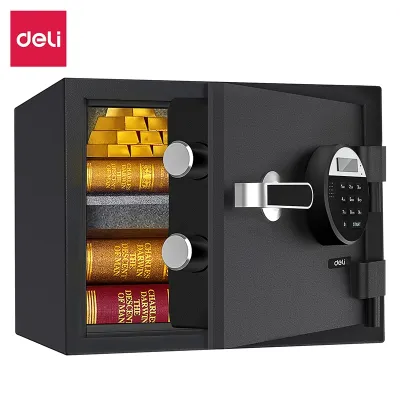
Prices are valid at publication and may change. Please refer to the product page for the latest price.
Once you have categorized your documents, stack them flat to measure their total height. This physical stack height represents your baseline volume. However, filing systems are rarely static. It is wise to add a margin of at least 20 to 30 percent to your current stack height to accommodate future document accumulation, such as annual tax returns, insurance renewals, or property documents, without needing to purchase a second box later.
Understand External Dimensions Versus Internal Capacity
One of the most common surprises when purchasing a fireproof document box is discovering how little space exists on the inside compared to its bulky exterior. Fire-resistant boxes rely on thick, heavy insulation layers embedded within their walls to protect paper from extreme heat. This insulation—often composed of gypsum, specialized concrete composites, or proprietary moisture-releasing hydrates—can easily measure 1 to 2 inches thick on every side, including the lid and the base.

Consequently, a box that appears large enough to sit comfortably on a standard bookshelf might only have enough internal clearance to hold a modest stack of loose papers. When evaluating product listings, ignore the external dimensions during your initial capacity calculations. Instead, search the manufacturer specifications specifically for the “internal dimensions” or “usable interior dimensions.”
Manufacturers often express internal capacity in liters or cubic inches. While these metrics are helpful for comparing overall volume, they do not translate directly to paper storage because paper is rigid. A 15-liter box might sound spacious, but if its internal width is narrower than your widest folder, that volume is practically useless. Always convert those volume numbers back to physical linear measurements—width, depth, and height—to ensure your document formats will actually slide in smoothly.
Furthermore, because these boxes are designed to be airtight to keep out heat and water, they can trap ambient moisture. In the humid tropical climate of the Philippines, this trapped moisture can lead to mold or mildew on your paper documents. It is highly recommended to place a few silica gel packets inside the box alongside your files to absorb excess humidity.
Match Box Capacities to Common Filing Systems
The internal layout of your fireproof box must align perfectly with how you organize your paperwork. A box that accommodates loose sheets perfectly might fail completely when tasked with housing hanging folders or rigid lever arch files. Your choice of filing media dictates the internal shape and depth you require.
Storing Loose Sheets and Flat Files
If your filing system consists primarily of loose sheets, certificates, passports, and slim envelopes, a flat, briefcase-style fireproof box is often an efficient choice. These boxes are designed to lay flat, allowing you to stack documents horizontally.
When choosing a flat box, focus on the internal width and length to ensure standard paper sizes lie completely flat without their edges curling against the interior walls. While these slim boxes are highly portable and slide easily under a bed or onto a low shelf, their vertical capacity is strictly limited. They are ideal for protecting a curated selection of vital records rather than an entire household filing system.
Accommodating Standard Folders and Hanging Files
For those who organize documents using standard manila folders or hanging files, a medium-depth chest or file box is necessary. Hanging files require specific internal features, such as built-in metal rails or molded plastic ridges along the inner sides, to keep the folders suspended.
When verifying dimensions for hanging files, check both the internal width and the internal height. The box must be wide enough to accommodate the hanging folder hangers without binding, and deep enough so that the plastic tabs sticking up from the folders do not prevent the lid from sealing completely. If the lid presses down on the tabs, it can compromise the airtight seal or bend your documents over time.
Fitting Large Binders and Lever Arch Files
If your filing system relies on heavy-duty ring binders or lever arch files, you will need a large-capacity fireproof safe or utility box. Binders are exceptionally bulky because of their rigid covers and wide spines, which do not compress like loose paper.
Prioritize the internal depth and height clearance of the box to ensure the spine of the binder can stand upright or lay flat without obstructing the door or lid. Measure the widest part of the binder, including any protruding rings or locking mechanisms. The box door must close and latch fully without applying pressure to the binder spines, as constant pressure can warp the binder mechanism and damage the fireproof seal of the box.
Evaluate Storage Space and Placement Constraints
Finding a box that fits your documents is only half the battle; you must also ensure the box fits safely within your living or working environment. Measure the designated storage area—whether it is a closet shelf, a filing cabinet drawer, or a dedicated corner of your home office floor. Remember to account for the clearance required to fully open the lid or door of the box, as some top-loading chests require significant vertical clearance to remain open while you retrieve files.
Weight is another critical factor that is easily overlooked. Fireproof materials are inherently dense and heavy. A medium-sized empty box can easily weigh 10 to 15 kilograms, and once filled to capacity with dense paper stacks, that weight can double. Ensure that any wooden shelves, glass-fronted cabinets, or lightweight desks are rated to support this concentrated load. In tropical climates like the Philippines, high humidity can also affect wooden shelving, making it more prone to sagging under heavy loads over time.
Additionally, consider the physical effort required to move the box. If you plan to store the box in a closet but need to bring it to your desk regularly, ensure it features sturdy, ergonomic handles. Verify that the pathways, doorways, and cabinet openings in your home are wide enough to allow you to carry the heavy box safely without scraping your knuckles or straining your back.
Avoid Common Sizing and Capacity Mistakes
One of the most frequent errors is purchasing a fireproof box based solely on its external appearance, assuming it will fit standard folders because it looks large from the outside. Always double-check the internal specifications against your actual folder measurements before making a purchase.
Another mistake is overloading a shelf or cabinet without calculating the combined weight of the box and its contents. If a shelf collapses, it can damage surrounding furniture and pose a safety hazard to anyone nearby. Always place heavier fireproof boxes on lower shelves or directly on the floor whenever possible.
Finally, avoid the temptation to buy a smaller, cheaper box with the plan to “make things fit.” Cramming documents into a space that is too small forces pages to bend, crease, or tear. More importantly, an overstuffed box may prevent the lid from latching securely, leaving a gap in the seal that allows heat, smoke, or moisture to enter during an emergency. Investing in a slightly larger box with a comfortable margin of space ensures your vital records remain flat, organized, and fully protected.
Community discussion
Share your experience or ask a question. Comments are reviewed before publication.