
To choose the right size transparent bag with a handle, you must measure your gift’s maximum dimensions—length, width, and height—and add a clearance margin of at least 1 to 2 centimeters on all sides, plus extra vertical space for the handle attachment and closure. A bag that is too small will stretch, warp, or tear, while an oversized bag makes the contents look unstable and messy. Finding the perfect fit ensures your carefully curated items—whether they are artisanal candles, baked goods, or multi-item gift bundles—remain secure, upright, and beautifully presented.
In the Philippines, gift-giving is a vibrant part of every celebration, from birthdays and weddings to corporate giveaways and holiday fiestas. Transparent bags with handles have become incredibly popular because they showcase the colors and details of the gift itself, turning the packaging into part of the present. However, because plastic and acetate materials lack the natural stretch of paper or fabric, selecting the correct dimensions is critical to achieving a polished, professional look.
How to Measure Your Gift for a Transparent Bag
To ensure your gift fits perfectly inside a transparent bag with a handle, you must start with precise physical measurements. Do not rely on visual estimation or the manufacturer’s standard size labels like “small” or “medium,” as these terms vary widely between brands. Instead, grab a standard ruler or measuring tape to determine the exact dimensions of your item.
Products mentioned in this guide
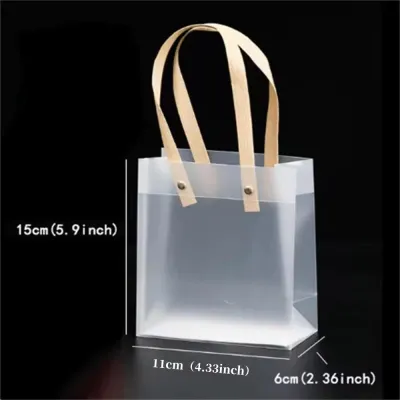
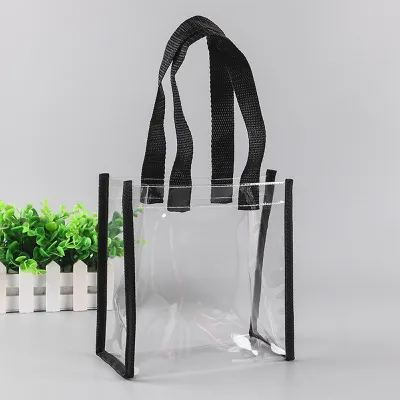
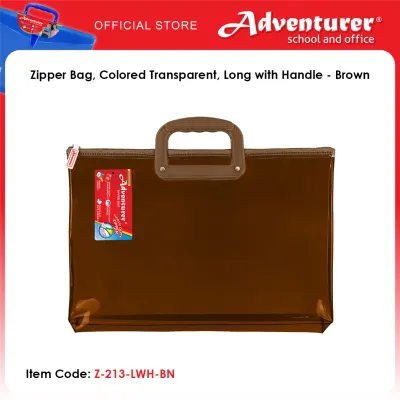
Prices are valid at publication and may change. Please refer to the product page for the latest price.
Begin by measuring the three primary dimensions of your gift: the length (the front-facing horizontal width), the width (the depth from front to back), and the height (from the base to the absolute tallest point). Always measure at the widest and tallest points of the object. For example, if you are packaging a decorative mug, make sure your width measurement includes the protruding handle, not just the diameter of the cup itself.
When dealing with irregularly shaped items, such as plush toys, handmade soaps, or asymmetrical ornaments, visualize a rectangular bounding box around the object. Imagine the item sitting inside a tight cardboard box; the dimensions of that imaginary box represent the minimum space your transparent bag must accommodate. Measuring only the flat base of an irregular item will inevitably result in a bag that is too tight at the top or middle.
Beyond the raw dimensions of the gift, you must account for the functional space required by the bag’s design. A transparent bag with a handle requires extra vertical clearance at the top. This clearance ensures that the handle attachment points, heat-sealing lines, or ribbon-tying areas do not press down on or damage your gift. As a general rule, add at least 2 to 3 centimeters of vertical clearance above the tallest point of your item to allow the bag to close naturally without crushing the contents. If you plan to seal the top with a heat sealer or tie it with a decorative abaca string, factor in an additional 3 to 5 centimeters of space above the gift.
Sizing Strategies for Common Gift Categories
Different types of gifts present unique structural challenges when placed inside a transparent bag. Tailoring your sizing strategy to the specific category of your gift ensures that the package remains stable, looks balanced, and protects the contents during transport.

For flat items like books, journals, apparel, or stationery sets, your primary focus should be on the bag’s length and width. Because these items have minimal depth, they will slide easily into flat or envelope-style transparent bags. However, you must ensure that the handle placement and any top folds do not obscure the main design, cover art, or personalized text on the item. Choose a bag height that allows the handle to sit completely clear of the item’s top edge, maintaining a clean and unobstructed view of the gift’s face.
Cylindrical or bulky items, such as scented candles, ceramic mugs, or jars of local preserves, require a different approach. For these gifts, you must prioritize the bag’s base gusset or bottom width. A gusset is the extra fold of material that expands to create a flat bottom. If the bag’s bottom gusset is narrower than the diameter of your jar or candle, the item will stretch the plastic outward, causing the bag to tilt, warp, or tip over. Ensure the fully expanded gusset matches or slightly exceeds the diameter of your cylindrical item so it can sit perfectly flat on a table or shelf.
Fragile or padded gifts, including delicate cookies, bath bombs, or glassware, require extra physical space for protective packaging. In the warm and humid Philippine climate, baked goods like cookies or pastries may need individual plastic wrapping or greaseproof liners before being placed in the main bag. If you are using shredded paper, bubble wrap, or cardboard dividers to protect fragile glass items, you must measure the item after it has been wrapped in these protective layers. Failing to account for the volume of bubble wrap or tissue paper will result in a bag that is far too tight, putting dangerous pressure on the fragile contents.
Multi-item bundles, such as curated spa sets or assorted snack packs, require a collective measurement strategy. Instead of measuring each item individually, arrange the items exactly as you want them to appear in the final presentation. You can place them side-by-side or stack them on a small cardboard base. Once the arrangement is complete, measure the overall footprint (the total length and width of the base) and the maximum height of the entire bundle. This collective measurement will guide you to a bag with a wide enough base and sufficient height to hold the entire arrangement securely without the items shifting or piling on top of one another during transit.
Accounting for Packaging Extras and Bag Structure
The physical construction of a transparent bag and the decorative elements you add inside can significantly alter the actual usable space. Understanding these factors prevents the common disappointment of a gift that fits on paper but fails to fit in reality.
Decorative fillers, such as colorful crinkle paper, shredded tissue, or wood shavings, are excellent for cushioning gifts and adding a festive touch. However, these fillers displace a surprising amount of volume inside the bag. If you plan to nestle a candle or a jar into a bed of crinkle paper, you must choose a bag that is slightly wider and taller than the gift itself. The filler will push the sides of the bag outward and raise the height of the item, reducing the available space at the top.
The type of bag construction also dictates how the material behaves when filled. Flat bags with side gussets expand laterally, which naturally reduces the overall width of the bag’s face when it is fully loaded. For example, a flat bag listed as 15 centimeters wide might only accommodate a 10-centimeter-wide item once the side gussets expand to their full depth. Always check whether the dimensions listed on the packaging refer to the flat, empty bag or the fully expanded, usable space. If in doubt, opt for a bag with a pre-formed, rigid bottom block, which maintains its shape and dimensions regardless of how it is filled.
Finally, pay close attention to the handle drop length. The handle drop is the distance from the top of the handle loop to the top edge of the bag. If the handle drop is too short, the recipient’s hand will press directly against the top of the gift or any decorative bows when they carry it. This is particularly problematic for delicate items like frosted cupcakes or gifts with elaborate ribbon toppers. Ensure there is comfortable clearance between the handle grip and the top of your gift to allow for easy carrying without crushing your beautiful presentation.
Common Sizing Mistakes to Avoid
Avoiding a few frequent measurement and selection errors can save you from wasted packaging materials and damaged gifts. One of the most common mistakes is ignoring the bottom gusset entirely. Many people purchase flat transparent bags expecting them to hold three-dimensional items like jars or small toys. Without a proper bottom gusset, the bag will pinch at the bottom corners, forcing the item upward and preventing the bag from standing upright on its own. This not only looks unprofessional but also increases the risk of the gift tipping over and breaking.
Another frequent error is choosing a bag that is too tight. When a transparent bag is packed to its absolute limit, the plastic material stretches and distorts. This tension creates unsightly wrinkles, clouds the clarity of the transparent material, and puts immense stress on the seams and handle joints. Under tension, a simple bump or a sudden movement can cause the seams to split or the handles to tear completely off, potentially dropping and ruining your gift. Always leave a comfortable margin of error; a slightly loose bag can always be adjusted with decorative ribbon, but a bag that is too small is completely unusable.
Lastly, do not overlook the weight-to-size ratio of your package. Transparent bags are made from various materials, including lightweight OPP (oriented polypropylene), PVC, or heavy-duty PET. A large bag might have the physical dimensions to hold a heavy ceramic pot or a set of stone coasters, but if the material is thin and the handles are lightly glued, the bag will fail under the weight. Always match the thickness and handle reinforcement of the bag to the weight of your gift. For heavy items, look for bags with reinforced cardboard bases and thick, riveted, or heat-welded handles to ensure your gift arrives safely at its destination.
Community discussion
Share your experience or ask a question. Comments are reviewed before publication.