
Choosing the right smiley beads depends on matching the bead’s shape, material, and hole size to your specific jewelry design and stringing cord. For lightweight, everyday accessories like friendship bracelets, flat polymer clay or acrylic disc beads work best, while chunky keychains and phone straps benefit from larger, durable round resin or glass beads. By understanding how different bead characteristics interact with your stringing materials, you can create beautiful, long-lasting pieces that do not break, fade, or feel uncomfortable to wear.
Smiley beads have become a staple in modern DIY jewelry making, bringing a cheerful, nostalgic aesthetic to everything from simple wristbands to elaborate beaded necklaces. Selecting the wrong type can lead to frustrating crafting issues, such as cords that fray against sharp hole edges, heavy beads that make bracelets sag, or prints that rub off after a few days of wear in warm, humid weather.
To ensure your jewelry projects are both durable and visually appealing, you must evaluate several key factors before making a purchase. This guide breaks down the essential aspects of smiley bead selection, including shape dynamics, sizing compatibility, material performance, and practical project matching, helping you make an informed decision for your next creative endeavor.
Products mentioned in this guide
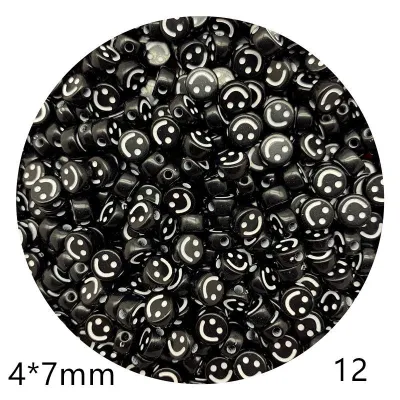
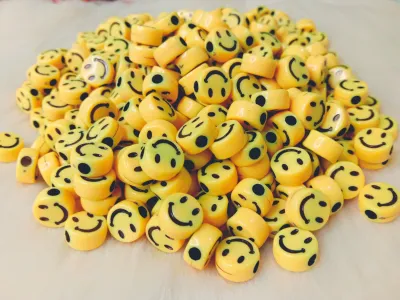
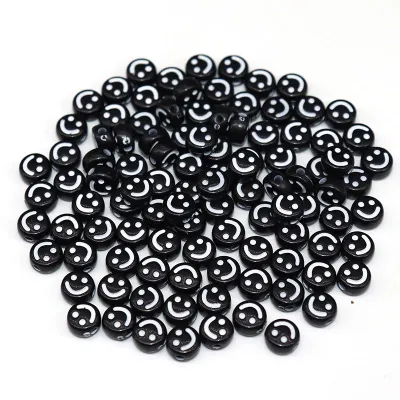
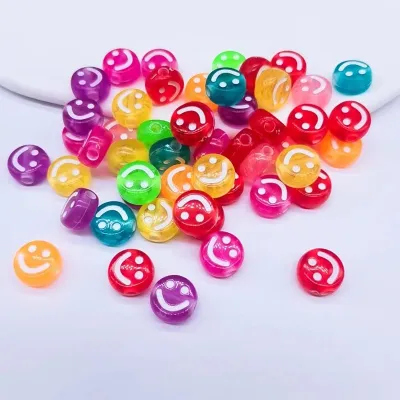
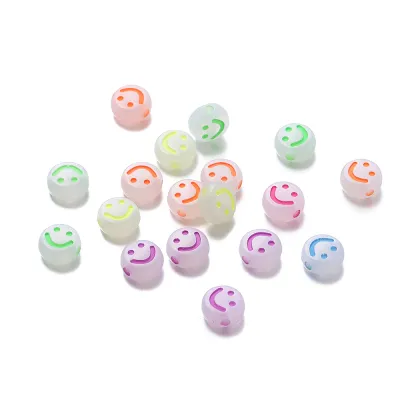
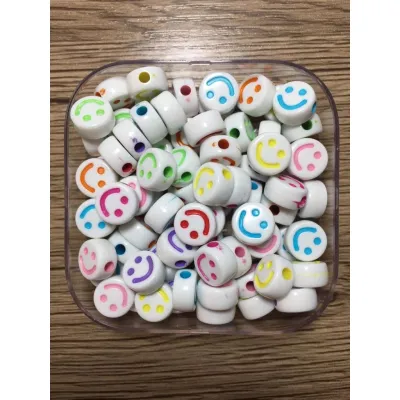
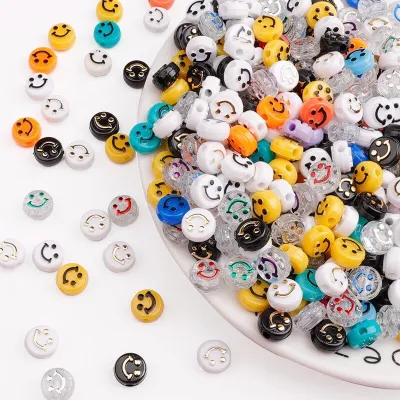
Prices are valid at publication and may change. Please refer to the product page for the latest price.
Understanding Smiley Bead Styles and Shapes
The shape of your smiley beads determines how your finished jewelry piece sits against the skin and how the individual elements flow together. The three most common shapes you will encounter are flat discs, round spheres, and specialized spacer or letter combinations. Each shape offers distinct structural advantages and aesthetic qualities that suit different design styles.
Flat or disc-shaped smiley beads, often made from polymer clay or flat-cut acrylic, are exceptionally popular for stacking. Because they have a low profile, these beads lay flat against the skin, minimizing the risk of the jewelry catching on clothing. When strung together, flat discs create a highly flexible, fluid strand that mimics the drape of fabric. This makes them comfortable for close-fitting accessories like chokers, anklets, and multi-layered stretch bracelets.
In contrast, round or spherical smiley beads add immediate three-dimensional volume and structural presence to a design. These beads roll naturally along the stringing material, allowing the smiley face to catch the light from various angles. Because of their visual weight, round beads work beautifully as focal points or centerpieces in a design, surrounded by smaller, neutral beads. They are ideal for creating classic beaded bracelets, chunky necklaces, and decorative bag charms where you want the cheerful face to stand out.
Letter and spacer beads are excellent companions to smiley beads, allowing you to customize your designs with names, phrases, or patterns. Spacer beads, which can be tiny metallic rings, seed beads, or flat discs, serve a vital structural purpose: they prevent the larger smiley beads from rubbing directly against one another. This spacing protects the printed faces from friction and adds a professional, polished look to the layout.
When planning your layout, consider how the chosen shape influences the overall drape and flexibility of the piece. A bracelet made entirely of large, round beads can feel stiff, whereas alternating flat discs with round focal beads offers a balanced compromise. By matching the bead shape to the natural movement of the body, you ensure that your jewelry is both beautiful and comfortable for daily wear.
Sizing and Hole Dimensions for Your Project
One of the most common mistakes in jewelry making is overlooking the relationship between bead size, hole diameter, and stringing material. Smiley beads are available in a wide range of dimensions, and selecting the wrong combination can result in broken cords, loose designs, or beads that simply will not fit onto your thread.

Standard bead diameters typically range from 4mm to 12mm. Small beads (4mm to 6mm) are perfect for delicate, minimalist designs, such as dainty rings, subtle anklets, or fine layering necklaces. Medium beads (8mm to 10mm) represent the classic size for standard friendship bracelets, offering a clear, readable smiley face without feeling overly heavy. Large beads (12mm and above) are best reserved for bold statement pieces, keychains, and phone straps where high visibility and durability are required.
Equally important is the hole diameter, which is the channel running through the center of the bead. For elastic cords, which are commonly used in stretch bracelets, you generally need a hole size of at least 0.8mm to 1.0mm to allow the cord to pass through smoothly without fraying. If you are using thicker materials like leather cord, waxed cotton, or braided nylon for keychains, you will need beads with wide holes measuring 1.5mm to 2.0mm. Conversely, delicate beading wire or nylon thread (0.3mm to 0.5mm) works best with smaller holes to prevent the beads from wobbling or sliding over your finishing knots.
If a product description online does not specify the hole size, you can verify compatibility through a few simple methods. Look at customer review photos to see what type of cord other crafters have successfully used. You can also test them by threading a needle or wire of a known thickness through the hole. If the fit is tight, do not force it, as the sharp internal edges of the bead can slice through elastic cord over time under tension.
It is also important to prepare for minor size variations within the same manufacturing batch, especially with budget-friendly bead packs. When sorting, you may notice minor thickness or hole size variations. Plan your design so that beads with the largest holes are placed near the clasp or knot, where you will need to tuck the cord ends inside the bead to hide them. Adjusting your stringing tension slightly can also help accommodate these minor variations, ensuring your finished piece remains straight and uniform.
Material and Finish Considerations
The material of your smiley beads dictates how long your jewelry will last, how it feels against the skin, and how it responds to daily wear, moisture, and sunlight. Understanding the characteristics of different materials allows you to choose the right option for your budget and durability requirements.
Acrylic and plastic smiley beads are the most widely available and budget-friendly options. They are incredibly lightweight, making them comfortable for large, multi-beaded designs, and they come in an endless array of bright, vibrant colors. However, inspect mass-produced plastic beads for visible mold lines or rough edges around the holes. These imperfections can scratch the skin or wear down your stringing cord, so look for high-quality acrylics that have been polished or tumbled to remove sharp edges.
For a more premium, substantial feel, glass or resin alternatives are excellent choices. Glass beads are heavier, cool to the touch, and offer a high-end aesthetic that elevates simple designs. They are highly resistant to scratching and do not fade easily under sunlight. Resin beads offer a great middle-ground; they are more durable and impact-resistant than glass, making them less likely to shatter if dropped, while still providing a smooth, solid feel that feels superior to cheap plastic.
The surface finish of the bead also influences how it interacts with light and surrounding design elements. Matte finishes offer a modern, soft appearance that pairs well with clay beads, while glossy finishes reflect light to make colors look rich and saturated. Translucent or “jelly” finishes allow light to pass through the bead, creating a beautiful glowing effect when worn outdoors.
In warm, tropical climates, colorfastness is a critical consideration. Sweat, sunscreen, and humidity can cause printed smiley faces to smudge, fade, or peel off over time. To prevent this, look for beads where the smiley face is deeply engraved or molded into the material rather than simply stamped on the surface. If you are using printed beads, you can verify their durability by rubbing a sample bead vigorously with a damp cloth or checking if the print scratches off easily with a fingernail. Opting for beads with a clear protective topcoat will ensure the cheerful faces remain bright and intact for a long time.
Matching Beads to Specific Jewelry and Craft Projects
To achieve the best results, it is helpful to match specific bead types and sizes to the practical demands of your intended craft project. Different accessories experience different levels of friction, tension, and exposure to the elements.
For friendship bracelets and anklets meant for daily wear, comfort and low maintenance are key. Choose flat polymer clay discs or small, uniform 6mm round acrylic beads. These materials are lightweight, water-resistant, and lay smoothly against the skin, reducing the likelihood of the jewelry snagging on bedsheets, towels, or delicate clothing.
Phone charms and keychains, on the other hand, are subjected to constant handling, drops, and friction inside pockets and bags. For these high-wear items, prioritize durability by selecting larger 10mm to 12mm resin or heavy-duty acrylic beads. Pair them with thick, non-stretch nylon cord or braided thread rather than elastic, as elastic will quickly stretch out and snap under the weight of a phone or keys. Ensure the bead holes are perfectly smooth to prevent them from slowly sawing through the cord during daily use.
If you are organizing a crafting activity for children, safety and ease of handling should be your primary focus. Choose large smiley beads (at least 10mm to 12mm in diameter) with exceptionally wide holes (2mm or larger). This allows children to thread beads easily using blunt plastic needles or thick yarn without frustration. Large beads are also much easier for small hands to grip, helping them develop fine motor skills while keeping the activity fun and accessible.
Regardless of the project, creating a balanced layout is essential to prevent your design from looking cluttered or chaotic. Instead of stringing dozens of smiley beads back-to-back, use them strategically as focal points. Try placing a single smiley bead in the center of a bracelet, flanked by neutral spacer beads, solid-colored seed beads, or natural wooden beads. This contrast draws the eye directly to the smiley face, making the design look intentional, balanced, and professionally crafted.
What to Check Before Buying Smiley Beads Online
Shopping for craft supplies on online marketplaces offers incredible variety, but it also requires a careful eye to avoid common purchasing pitfalls. Because you cannot physically touch or inspect the beads before buying, relying on a structured checklist will help ensure you receive high-quality materials.
First, always verify the exact quantity per pack rather than relying solely on the product image. Sellers often display large piles of beads, but the actual listing may only be for a small pack. Read the product description carefully to confirm the count. To find the best deal, calculate the cost per piece in Philippine Pesos (₱) by dividing the total price by the number of beads in the pack. This allows you to make accurate value comparisons between different sellers.
Next, examine user reviews and customer-uploaded photos. Product renders are often digitally enhanced, making colors appear brighter and prints sharper than they are in reality. Customer photos provide a realistic view of the bead colors, print alignment, and overall quality. Look specifically for reviews that mention whether the smiley faces are centered, if there are many deformed beads in the batch, or if the colors match the seller’s description.
It is also wise to check the seller’s return or replacement policy, especially when ordering bulk quantities. Because beads are mass-produced, it is common for a small percentage of a batch to arrive with blocked holes, misprinted faces, or minor deformities. A reliable seller should offer a straightforward return or refund process if a significant portion of your order is defective or if the batch does not match the specified dimensions.
Finally, consider starting with smaller sample packs if you are experimenting with a new design, color palette, or supplier. Buying a small sample first allows you to test durability and hole compatibility without a large financial commitment. Once you are satisfied with the quality, you can confidently order in bulk to save on shipping costs and ensure color consistency across your projects.
Frequently Asked Questions (FAQ)
Can I mix different smiley bead styles in one project?
Yes, you can absolutely mix different smiley bead styles, but you must maintain structural balance to ensure the finished piece drapes correctly. Make sure that all the different beads you choose have compatible hole sizes so your stringing material can pass through them evenly without causing uneven tension. To keep the design visually balanced, try alternating flat disc beads with round smiley beads, or use small, neutral spacer beads between different shapes to create a clean, rhythmic pattern that prevents the different styles from clashing.
What stringing material works best with smiley beads?
The ideal stringing material depends entirely on the type of project you are creating and the hole size of your beads. For stretch bracelets, a high-quality elastic cord (typically between 0.7mm and 1.0mm) is the best choice, provided it matches the bead’s hole diameter closely to prevent wobbling. For non-stretch items like necklaces, phone charms, or keychains, use durable nylon thread, braided cord, or flexible beading wire secured with crimp beads, as these materials offer the high tensile strength needed to withstand daily wear and tear.
Community discussion
Share your experience or ask a question. Comments are reviewed before publication.