
Selecting the ideal Staedtler pencil depends on matching your specific task—whether it is high-volume note-taking, precise architectural drafting, or expressive fine art sketching—to the correct graphite formulation and casing design. While the brand is globally recognized for its consistent quality, its various product lines are engineered with distinct lead hardness levels, break-resistant bonding, and wood casings tailored to different environments. In the tropical climate of the Philippines, where high humidity can soften paper fibers and increase graphite smudging, choosing the right pencil line ensures your work remains clean, legible, and structurally intact. By understanding the functional differences between everyday options like the Noris and Tradition lines and professional-grade tools like the Mars Lumograph series, you can optimize your workflow and avoid the frustration of frequent lead breakage or messy smudges.
Decoding Staedtler Pencil Grades and Lead Technologies for Your Tasks
To choose the right pencil, you must first understand the graphite grading scale and how lead composition affects performance. The standard HB scale measures the hardness (H) and blackness (B) of the graphite core. Harder leads, such as 2H or 4H, contain a higher proportion of clay binder, resulting in lighter, thinner lines that resist smudging but can scratch soft paper if too much pressure is applied. Conversely, softer leads, such as 2B or 4B, contain more graphite, yielding darker, richer lines that blend easily but are highly prone to smearing. For general writing, an HB or F grade provides a balanced middle ground, offering sufficient darkness with minimal smudging.
Beyond graphite hardness, lead bonding technology plays a critical role in the durability of a pencil. Staedtler utilizes a specialized manufacturing process where the entire length of the graphite core is bonded directly to the protective wood casing. This break-resistant design prevents the lead from shattering internally when the pencil is dropped or subjected to heavy writing pressure. When shopping, you can verify these features by looking for specific indicators on the packaging, such as “A·B·S” (Anti-Break System) or explicit break-resistance certifications printed on the box.
Products mentioned in this guide
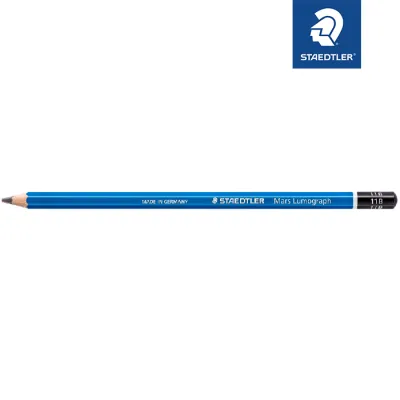
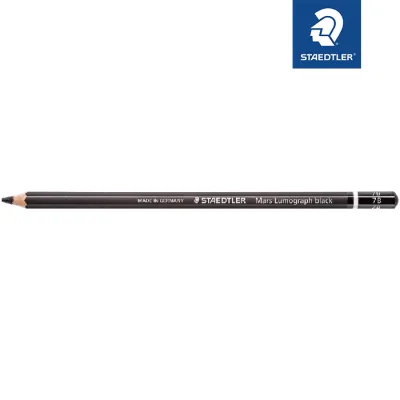
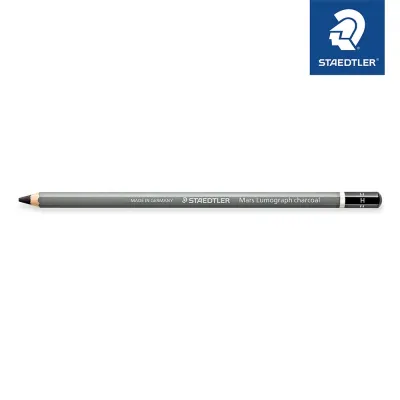
Prices are valid at publication and may change. Please refer to the product page for the latest price.
The quality of the wood casing also directly influences the sharpening consistency and overall lifespan of the pencil. Premium lines use sustainably sourced, straight-grained wood that cuts smoothly under a sharpener blade, leaving a clean, even collar around the lead. Low-quality wood casings tend to splinter, causing the lead to break during sharpening and leading to premature wear. In humid tropical conditions, high-quality wood casings are particularly important because they resist warping and maintain a tight, protective grip on the graphite core over time.
Everyday Writing and Note-Taking: Navigating the Noris and Tradition Lines
For students, teachers, and office workers who require reliable tools for high-volume daily writing, the Noris and Tradition lines are the primary options. The iconic yellow-and-black striped Noris line is engineered for durability and comfort. Its hexagonal barrel prevents the pencil from rolling off desks and provides a secure, ergonomic grip that reduces finger fatigue during long writing sessions. The red-and-black striped Tradition line offers a similar hexagonal profile but features a slightly different lacquer finish, appealing to those who prefer a classic aesthetic for professional office environments.

When comparing the two for rapid note-taking or standardized exams, the Noris line is highly favored in school settings due to its robust break resistance, making it resilient against the heavy-handed writing style typical of younger students. Both lines are available in standard HB and 2B grades, which are ideal for optical mark recognition (OMR) answer sheets used in local examinations. The graphite in these lines is formulated to deposit smoothly on standard pad paper or newsprint without requiring excessive pressure, ensuring clear legibility and fast writing speeds.
To maintain clean work during frequent editing, it is essential to check eraser compatibility and wood casing quality. While some variations of the Noris and Tradition lines come with built-in eraser tips, using a separate high-quality vinyl or dust-free eraser is recommended to prevent smearing on thin paper. The wood casings of both lines are designed to sharpen cleanly in standard manual or electric sharpeners. This ensures that you can quickly restore a sharp point during a busy lecture or meeting without worrying about the wood splitting or the lead snapping off inside the sharpener mechanism.
Technical Drawing and Drafting: Evaluating the Mars Lumograph Series
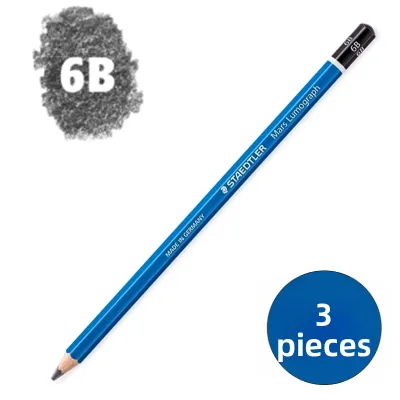
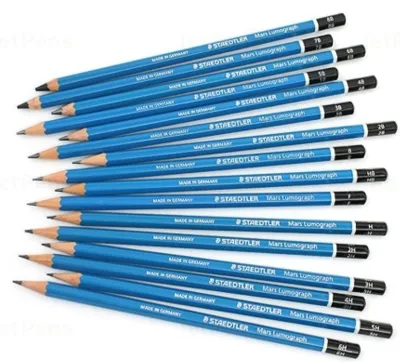
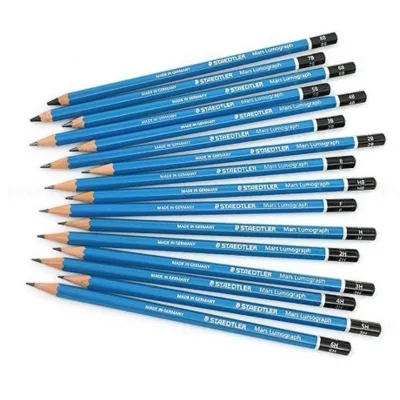
For architects, engineers, and design students, precision and consistency are paramount, making the Mars Lumograph series the industry standard. This premium blue pencil line is specifically engineered for technical drawing, drafting, and layout work. The graphite core is formulated to glide effortlessly across specialized mediums like drafting paper, vellum, or tracing paper. Unlike standard writing pencils, the Mars Lumograph line offers an exceptionally wide and precise range of grades, allowing professionals to maintain exact line weights across complex technical drawings.
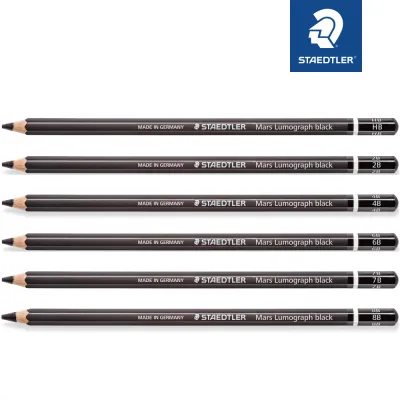
One of the most significant challenges in technical drafting is graphite glare, which occurs when bright overhead lights reflect off the shiny surface of standard graphite lines. To address this, Staedtler offers specialized matte finishes within the Mars Lumograph range, such as the Mars Lumograph Black. These pencils incorporate a high-carbon formulation that reduces light reflection, providing deep, matte black lines that remain highly visible and legible under bright office lighting or when scanned for digital archiving.
Matching the correct graphite grade to your specific drafting task is crucial for a professional finish. Harder grades, such as 2H to 6H, are ideal for initial layout lines, construction grids, and faint guidelines because they produce clean, light lines that are easy to erase without damaging the paper surface. Medium grades, such as F, HB, and B, are best suited for lettering, dimension lines, and general details. Softer grades, like 2B and 3B, should be reserved for final object outlines, borders, and section shading to ensure maximum contrast against the lighter layout lines.
Before purchasing bulk sets of Mars Lumograph pencils, it is important to verify their physical compatibility with your existing drafting tools. The standard hexagonal barrel of the Mars Lumograph fits securely into universal compass attachments, rolling rulers, and mechanical drafting arms. Ensuring a precise fit prevents the pencil from slipping during circular sweeps or long parallel lines, preserving the geometric accuracy of your technical drawings.
Artistic Sketching and Shading: Selecting Pencils for Creative Expression
Artists and hobbyists require pencils that offer a broad tonal range, smooth blending capabilities, and deep contrast for expressive sketching. While standard Mars Lumograph pencils are excellent for traditional sketching and fine detail work, specialized high-carbon or matte black variants are preferred for dramatic shading. The Mars Lumograph Black series, for example, contains a higher proportion of carbon mixed with the graphite, allowing artists to achieve intense, light-absorbing blacks that standard graphite cannot replicate.
When selecting sketching pencils, you must evaluate smudge resistance, tonal range, and how the lead interacts with the texture, or “tooth,” of your paper. Softer grades (4B to 9B) deposit a generous amount of material onto the page, making them highly blendable with tortillons, blending stumps, or chamois cloths. However, this high deposit rate also makes them more susceptible to accidental smudging, especially in humid environments where paper fibers hold more moisture. Testing different grades on your preferred paper weight allows you to observe how well the graphite adheres and how cleanly it can be lifted with a kneaded eraser.
For those starting their artistic journey, purchasing a pre-curated starter set containing a balanced range of grades (such as 2H, HB, 2B, 4B, and 6B) is highly recommended. This allows you to explore different shading techniques and tonal values without a significant initial investment. Professional artists, or those who specialize in specific styles like high-contrast portraiture or delicate architectural sketching, often prefer buying individual open-stock pencils. This approach allows you to replace your most frequently used soft grades without accumulating unnecessary hard pencils from pre-packaged sets.
Quick Selection Matrix: Matching Staedtler Lines to Your Primary Goals
To help you make an efficient purchasing decision, the following matrix maps the primary Staedtler pencil lines to their ideal use cases, user profiles, and key physical characteristics.
| Pencil Line | Primary Use Case | Ideal User | Key Features | Sharpening & Break Resistance | Packaging & Budget |
|---|---|---|---|---|---|
| Noris (Yellow/Black) | School & Office Writing | Students, Clerks | Hexagonal grip, classic design, robust lead | High resistance; easy to sharpen with standard tools | Cardboard boxes, blister packs; Budget-friendly (₱) |
| Tradition (Red/Black) | General Paperwork | Professionals, Students | Hexagonal barrel, smooth lacquer finish | High resistance; clean sharpening without splintering | Cardboard boxes, single packs; Budget-friendly (₱) |
| Mars Lumograph (Blue) | Technical Drafting & Art | Architects, Designers, Artists | Wide grade range, consistent line weights, minimal glare | Excellent resistance; precise sharpening for fine points | Metal tins, cardboard boxes, open stock; Premium (₱₱) |
| Mars Lumograph Black | Fine Art & Shading | Portrait Artists, Illustrators | High-carbon formula, deep matte black finish, no glare | Moderate resistance; requires gentle manual sharpening | Metal tins, open stock; Premium (₱₱) |
Pre-Purchase Checklist: Verifying Authenticity and Specifications
Because Staedtler is a highly sought-after brand, counterfeit pencils can occasionally be found on online marketplaces and unauthorized retail channels. To ensure you are purchasing genuine products that deliver the promised break resistance and graphite quality, use the following verification checklist:
- Inspect the Hot-Stamping: Genuine Staedtler pencils feature crisp, perfectly aligned gold or silver hot-stamping on the barrel. The lettering should be easy to read, and the iconic Mars head logo must be sharp and detailed.
- Check the Paint Finish: The lacquer coating on authentic pencils is smooth, even, and free of bubbles, runs, or strong chemical odors. Cheap counterfeits often have rough, uneven paint jobs.
- Examine the Wood Casing: Genuine Staedtler pencils use high-quality, straight-grained wood (often cedar for premium lines), which has a natural, pleasant scent and a reddish-brown hue. Counterfeits frequently use cheap, dyed white wood that splinters easily.
- Verify Lead Centering: Look at the unsharpened end of the pencil. The graphite core must be perfectly centered within the wood casing. Off-center leads are a common sign of counterfeit manufacturing and will result in constant breakage during sharpening.
- Look for Official Distributor Markings: When purchasing in the Philippines, check the packaging for official distributor labels or holographic security stickers that confirm authenticity.
Additionally, consider the packaging format that best suits your storage and usage needs. Blister packs are ideal for occasional writers or students who only need a few pencils at a time, as the plastic packaging protects the tips during transport. Metal tins are highly recommended for artists and drafting professionals because they provide a durable, portable storage solution that prevents pencils from rolling around and breaking inside bags. For schools, offices, or high-volume users, bulk cardboard boxes offer the most cost-effective price-per-pencil value.
Finally, always inspect the physical condition of pre-sharpened pencils immediately upon delivery. If you are ordering online, check that the tips are intact and that there are no visible cracks along the wooden barrels. Rough handling during transit can cause internal lead fractures that may not be visible until you attempt to sharpen the pencil, so prompt inspection helps you identify and return damaged stock quickly.
Frequently Asked Questions (FAQ)
How do I prevent my Staedtler sketching pencils from smudging on the page?
To protect your graphite drawings from smudging, place a clean sheet of tracing paper, parchment, or a heavy blotter sheet under your drawing hand while working. This physical barrier prevents the natural oils from your skin from transferring to the paper and dragging the graphite across your work. Additionally, try to work from the top-left to the bottom-right of the page (or top-right to bottom-left if you are left-handed) to avoid resting your hand on completed sections. Once your artwork is finished, apply a high-quality artist’s fixative spray. Always check the fixative label to ensure compatibility with your specific pencil line, especially when using high-carbon or matte black leads, as some heavy aerosol sprays can alter the tonal values or cause the fine graphite particles to run.
Can I use Mars Lumograph pencils for standard school exams?
Yes, you can use Mars Lumograph pencils for standard school exams, provided you select the correct grade. Most optical mark recognition (OMR) scanners used for automated grading in the Philippines require an HB or 2B grade to ensure the filled bubbles are dark enough to be read accurately. The Mars Lumograph line in these grades will perform exceptionally well, offering clean, dark marks with minimal smudging. However, because the Mars Lumograph is a premium drafting pencil, it is generally more cost-effective to use standard school pencils like the Noris or Tradition lines for everyday exams. This allows you to reserve your high-end drafting pencils for technical drawing or artistic projects where their precise grading and glare-resistant properties are fully utilized.

Community discussion
Share your experience or ask a question. Comments are reviewed before publication.