
Selecting the correct stretch film is the difference between a shipment that arrives intact and one that ends up damaged or scattered. Whether you are packing small parcels for an online shop, wrapping furniture for a household move, or securing heavy pallets for transport, the type of plastic wrap you choose directly impacts your packaging efficiency. By matching film characteristics to your specific tasks, you can minimize material waste, lower packaging costs, and ensure your items remain tightly bound throughout their journey.
Assess Your Packaging Scenario and Load Characteristics
Before purchasing stretch film, you must evaluate the physical nature of the items you intend to secure. The shape, weight, and vulnerability of your load dictate the level of containment force and puncture resistance your film must provide.
Begin by examining the load profile. Uniform loads consist of neatly stacked boxes with flat, even sides, making them relatively easy to wrap with standard films. In contrast, irregular loads feature mismatched box sizes, sharp edges, or protruding corners. These irregular profiles present high puncture risks, requiring a film with superior tear resistance and high elastic recovery to prevent the wrap from snapping during application.
Products mentioned in this guide
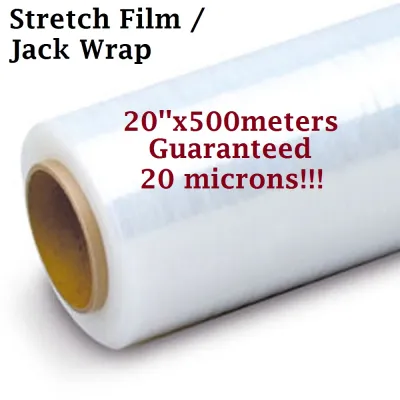
122 Lazada user ratings
Antagal dumating. Wala sa expected delivery date.I’ve seen it on the delivery history namasyal sa bulacan from QC bago nakarating sa Mandalu…Read full reviewShow less
Antagal dumating. Wala sa expected delivery date.I’ve seen it on the delivery history namasyal sa bulacan from QC bago nakarating sa Mandaluyong
Durability: .......................looks durable......... Clarity: very clear....................... Ease of Use: easy
Ease of Use:good Durability:good Clarity:good nice ang item nagustuhan ng asawa ko sya kc gagamit nyan legit seller
great value for money Clarity:should last me a very long time. pretty strong also dkes not tear easily
Received my order on time and in good condition, well packed 👍👍👍 Thank you seller and delivery rider 👍 👍👍👍👍
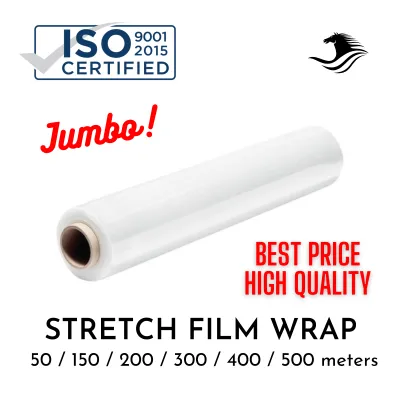
1,119 Lazada user ratings
Efficient packaging solution., Great value for the price., Convenient size for various packaging needs., Provides a tight and secure wrap., …Read full reviewShow less
Efficient packaging solution., Great value for the price., Convenient size for various packaging needs., Provides a tight and secure wrap., High-quality material for reliable protection., Ideal for shipping and storage., Durable stretch film for secure packaging., Perfect for pallet wrapping.,
Durable stretch film for secure packaging. Efficient packaging solution. Easy to use and handle. Perfect for wrapping of many files and stor…Read full reviewShow less
Durable stretch film for secure packaging. Efficient packaging solution. Easy to use and handle. Perfect for wrapping of many files and storybooks.
Received package just in time well package with bubble wrappers intact start to use it good as of now value for the money
Provides a tight and secure wrap., Efficient packaging solution., looks okey. Good for packaging items for shipping.
Strong adhesive for a secure wrap., Efficient packaging solution., Durable stretch film for secure packaging.,
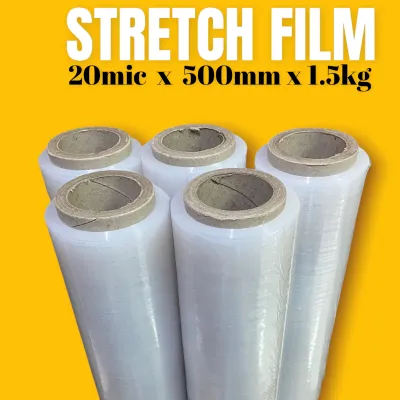
7,066 Lazada user ratings
Strong and tear-resistant, Easy to use and handle, Securely wraps and protects items, Convenient size for wrapping, Yahweh mush njgbah nugah…Read full reviewShow less
Strong and tear-resistant, Easy to use and handle, Securely wraps and protects items, Convenient size for wrapping, Yahweh mush njgbah nugah mga nvhha nbhah
Ease of Use:10/10 Durability:0/10 Clarity:10/10 what you see is what you get certainly will order again fast delivery and well packed
what you see is what you get,, super affordable ang price, fair pricing, fast delivery, courteous ang courier. more sales
napakaayos ang package ng items .medyo manipis yung na order ko ..pero ok n yun nextime nlang ulit .salamat seller
Useful tlga sya..maganda at mura dto sa shop na to..Salamat po
Prices are valid at publication and may change. Please refer to the product page for the latest price.
Weight and stability are equally critical. Lightweight items, such as empty plastic bottles or small cardboard cartons, require minimal containment force; using a film that is too thick or applied with excessive tension can crush the products. Conversely, heavy, dense items like ceramic tiles or stacked beverage cans demand high containment force to prevent shifting. For these heavy loads, you need a film that maintains its tension over long periods without stretching out.
Finally, consider the environmental and transit conditions. If your goods will be stored in hot, humid warehouses or exposed to direct sunlight during transit, the film must withstand these temperature fluctuations without degrading. Long-distance shipping also subjects loads to continuous vibrations. Your chosen wrap must have enough elastic memory to absorb these movements and keep the entire load unified from the warehouse floor to the final destination.
Hand Wrap vs. Machine Wrap: Choosing the Right Application Method
The way you apply stretch film depends largely on your operational volume, physical workspace, and available equipment. Choosing between hand wrap and machine wrap is a balance of labor efficiency and initial setup costs.

Hand wrap is designed for manual application and is the most common choice for small businesses, home offices, and individual movers. These rolls are lighter, typically weighing between three to five kilograms, making them easy for a single person to lift and maneuver. Hand wrapping is highly versatile and ideal for low-volume tasks, such as preparing a few dozen e-commerce parcels a day or wrapping furniture during a house move. It allows the user to adjust tension dynamically around irregular shapes, though it relies on physical effort.
Machine wrap is engineered for automated or semi-automated stretch wrapping equipment and is suited for high-volume operations. Warehouses that secure dozens of pallets daily benefit from machine wrapping because it ensures consistent tension, precise film overlap, and rapid packaging speeds. Machine rolls are much larger and heavier than hand rolls, requiring mechanical dispensers or turntable wrapping machines to apply. While the initial investment in machinery is higher, it significantly reduces labor costs and minimizes material waste through controlled pre-stretching.
For small businesses, ergonomic considerations and workspace limitations are key. If your workspace is tight or you only wrap items occasionally, hand wrap paired with a simple plastic dispenser or a roll with extended cores is highly practical. This setup avoids the footprint and expense of machinery while protecting your hands from friction burns. However, as your shipping volume grows, transitioning to a mechanical dispenser or a low-profile turntable wrapper can prevent physical fatigue and ensure every pallet meets a uniform standard of security.
Decoding Stretch Film Thickness (Microns) and Width
To select the right stretch film, you must understand the technical specifications printed on the product labels, specifically thickness and width. These measurements determine how well the film resists punctures and how quickly you can cover a load.
Thickness is commonly measured in microns. Checking the manufacturer’s label for these ratings is essential for assessing puncture resistance. Standard hand films typically range from 12 to 20 microns. A thinner film of 12 to 15 microns is highly flexible and cost-effective for lightweight, uniform boxes. For heavier or sharp-edged loads, a thicker film of 17 to 23 microns is necessary to prevent tearing. Knowing these numbers helps you avoid buying a film that is either too weak for your heavy goods or unnecessarily thick and expensive for light parcels.
Roll width is another critical dimension that affects both application speed and material waste. Narrow rolls, ranging from 50 to 250 millimeters, are excellent for bundling small items, securing loose cables, or wrapping individual boxes. Standard wide rolls, usually around 500 millimeters, are the industry standard for pallet wrapping and large furniture protection. Matching the roll width to your load dimensions ensures you can cover the item in fewer rotations, which speeds up the packaging process and reduces the overlapping layers that lead to wasted material.
You will also encounter the choice between standard cast film and pre-stretched film. Standard film stretches as you apply it, requiring physical strength to achieve the necessary tension. Pre-stretched film, on the other hand, is mechanically stretched during manufacturing, often up to 90 percent of its maximum limit. This means the roll is lighter, requires much less physical effort to apply, and provides high containment force with minimal walking or pulling. For manual wrapping operations, pre-stretched film can significantly reduce operator fatigue and lower overall material consumption.
Matching Stretch Film Specs to Common Use Cases
To make your final purchasing decision easier, you can match these technical specifications directly to your specific packaging scenario. Different tasks require distinct combinations of width, thickness, and application style.
For e-commerce shipping and small parcel bundling, efficiency and neatness are paramount. You should look for narrow-width hand-applied films, typically between 100 to 250 millimeters, with a lower thickness of 12 to 15 microns. This setup is perfect for securing small, lightweight boxes together, wrapping individual items to prevent scratches, or bundling loose parts. The smaller roll size is easy to handle at a packing desk, speeds up fulfillment times, and keeps your shipping weights low to manage courier fees.
When it comes to house moving and furniture protection, your primary goal is shielding items from dust, moisture, and surface scratches. For this task, choose a standard-width hand wrap of 500 millimeters with a medium thickness of 15 to 17 microns. This width allows you to cover large surfaces like sofas, cabinets, and mattresses quickly. The medium thickness provides enough durability to resist tears from wooden corners or metal drawer handles without being overly stiff, ensuring the film clings tightly to irregular furniture shapes.
For warehouse pallet wrapping and securing heavy industrial loads, you need maximum strength and containment. Opt for wide rolls of 500 millimeters or more, with a higher thickness of 20 to 23 microns. If you are wrapping sharp-edged crates, heavy machinery parts, or unstable stacks of building materials, this heavy-duty film is essential to prevent shifting during transit. Depending on your daily output, you can use heavy-duty hand rolls with tension-control dispensers or transition to machine-grade rolls for automated wrapping systems.
Before finalizing your purchase, always perform a few verification steps. Check the product labels carefully to confirm the exact micron rating and roll length rather than relying solely on visual thickness. Compare the cost per roll in ₱ across different suppliers, keeping in mind that a cheaper roll might have less length or lower puncture resistance. Finally, test a single roll on your typical load to observe its cling, stretch, and tear resistance before committing to a bulk order for your business.
Frequently Asked Questions (FAQ)
Can I use stretch film instead of shrink wrap for my products?
No, stretch film and shrink wrap serve entirely different packaging functions and cannot be used interchangeably. Stretch film is highly elastic and relies on tension to hold items tightly together. It is applied by wrapping it around a load, making it ideal for securing boxes on a pallet or bundling loose items without any specialized heating equipment.
Shrink wrap is a loose plastic film that requires an external heat source, such as a heat gun, to shrink tightly around an object. It is commonly used for individual product packaging, such as sealing books or food items, to provide a tamper-evident seal. It lacks the elasticity or structural strength required to hold heavy, shifting pallet loads together during transport.
How do I store unused stretch film rolls to maintain their elasticity?
To preserve the elasticity of your unused stretch film, store the rolls in a cool, dry environment. Avoid exposing the film to direct sunlight or extreme heat, which can cause the plastic layers to melt and fuse together on the roll, making it impossible to unwind. Heat can also degrade the tack additives that allow the film to cling to itself.
Additionally, store your stretch film rolls vertically on their flat ends or keep them supported on their designated cardboard cores. Avoid laying rolls flat on rough surfaces where the edges can get nicked or scratched. Even a tiny tear on the edge of a roll can cause the film to snap repeatedly during application, leading to significant material waste.
Community discussion
Share your experience or ask a question. Comments are reviewed before publication.