
Selecting the right writing instrument is a highly personal decision that directly impacts your daily productivity, creative expression, and physical comfort. The Uni-ball One has gained significant popularity among stationery enthusiasts, students, and professionals due to its innovative bead pigment ink, which is engineered to sit on top of paper fibers rather than absorbing deeply into them. This unique chemical formulation results in exceptionally crisp, high-contrast lines that make your writing stand out with remarkable clarity. However, because this pen is available in an array of tip sizes, color assortments, and barrel designs, finding the specific variant that aligns with your writing style requires a closer look at its physical and functional characteristics.
To make an informed choice, you must evaluate how you intend to use the pen, the environments in which you write, and the types of paper you use most frequently. For instance, a student taking rapid lecture notes on standard notebook paper has vastly different requirements than a planner enthusiast detailing a compact pocket journal or a professional signing documents in an office. Furthermore, environmental factors such as local humidity can influence how gel ink behaves on the page, making paper compatibility and drying times critical factors in your decision. This comprehensive guide breaks down the essential selection criteria, matches specific variants to common writing tasks, and provides practical verification steps to ensure you select the ideal Uni-ball One configuration for your needs.
Core Selection Criteria for Uni-ball One Variants
To navigate the diverse lineup of Uni-ball One pens, you must first understand the primary design variables that differentiate each model. These variables include the point size of the pen tip, the formulation and color profile of the ink, and the physical ergonomics of the pen barrel. By analyzing these three core dimensions, you can narrow down the options to the variants that will perform most reliably in your daily routine.
Products mentioned in this guide
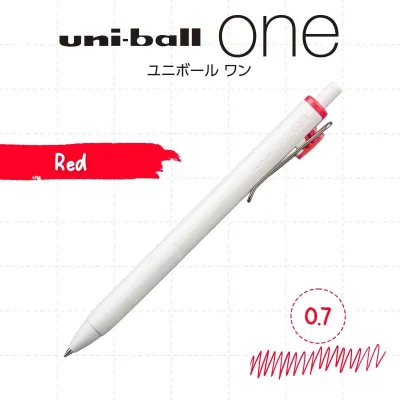
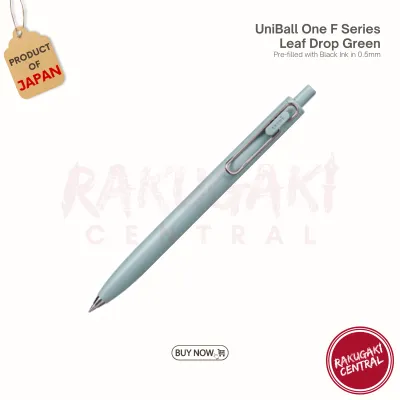
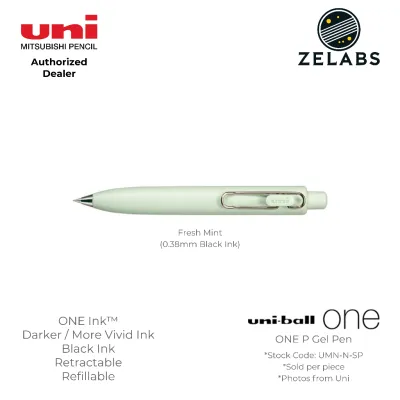
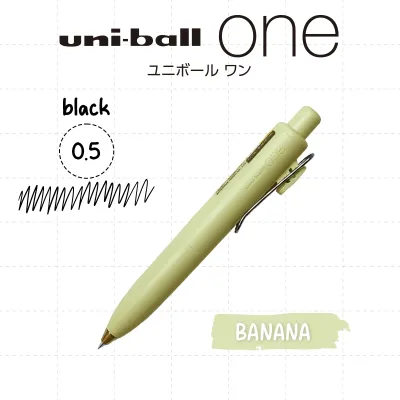
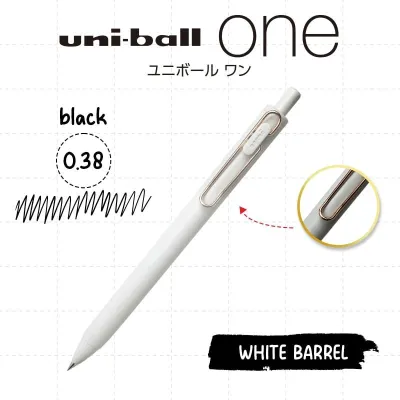
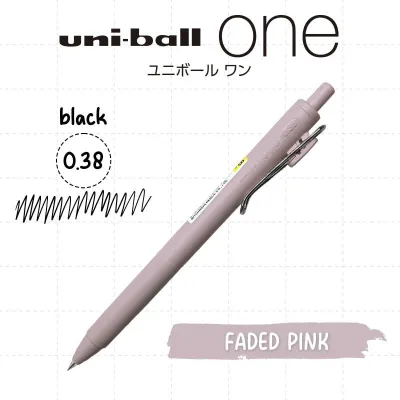
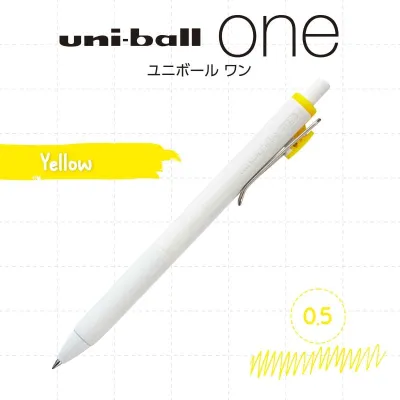
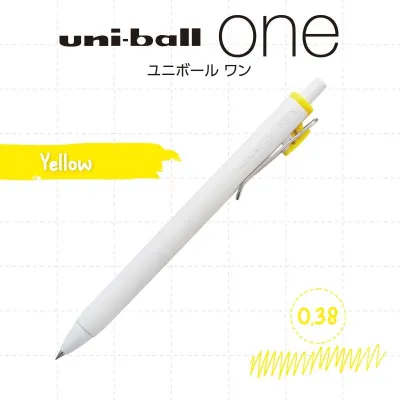
Prices are valid at publication and may change. Please refer to the product page for the latest price.
Point Size Trade-Offs: Precision vs. Smoothness
The two most common tip sizes available for the Uni-ball One are 0.38mm and 0.5mm. Choosing between them is a matter of balancing your need for fine-line precision against your preference for a smooth, gliding writing experience. The 0.38mm ultra-fine tip is highly suited for individuals with small, compact handwriting or those who work within tight spaces, such as pocket planners, monthly calendar grids, or margin annotations. Because it dispenses a minimal amount of ink, it produces sharp, clean lines that do not blur together, even when writing intricate characters or numbers. However, because the metal tip is so fine, it creates more physical feedback—often described as a “scratchy” sensation—when dragged across textured or low-grade paper.
In contrast, the 0.5mm medium-fine tip offers a noticeably smoother writing experience. The larger ball bearing allows the pen to glide effortlessly across the page, making it an excellent choice for rapid, continuous writing where hand fatigue is a concern. The 0.5mm tip lays down a slightly thicker line of ink, which maximizes the visual impact of the Uni-ball One’s high-contrast pigment. The trade-off is that this broader line requires slightly more space on the page and may take a fraction of a second longer to dry, particularly on coated or non-absorbent paper surfaces.
Color Palette Categories: Visual Impact and Organization
The Uni-ball One is celebrated for its extensive color range, which goes far beyond standard office blue and black. The brand organizes its colors into several distinct palettes, each serving a different aesthetic and functional purpose. Standard colors, including deep black, royal blue, red, and blue-black, are designed for maximum legibility and formal document compliance. The blue-black variant, in particular, is highly favored by professionals who want a subtle alternative to standard black while maintaining a highly sophisticated, clean look on the page.
For creative applications, you can explore muted, pastel, and bright color assortments. Muted tones, such as olive, bordeaux, and brown-black, offer an understated aesthetic that is perfect for reflective journaling or sketching. Pastel sets provide soft, low-contrast hues that are ideal for background elements, habit trackers, and decorative accents in planners. Bright assortments, featuring vibrant pinks, oranges, and lime greens, are excellent for visual cues, highlighting key terms in study notes, or color-coding complex schedules. When selecting a color palette, consider how the ink will contrast with your paper; for example, pastel inks may require bright white paper to remain legible, while muted tones perform beautifully on cream-colored or off-white pages.
Barrel Design and Ergonomics: Weight and Portability
The physical structure of the pen barrel plays a crucial role in how comfortable the pen feels during extended writing sessions. The standard Uni-ball One features a lightweight, cylindrical plastic barrel with a clean, minimalist aesthetic. It is equipped with a distinctive, spring-loaded wire pocket clip that opens wide, making it easy to secure to thick notebook covers, clipboards, or clothing pockets. The grip section is slightly rubberized, providing a secure hold without adding bulk to the pen’s slim profile.
For writers who prefer a more substantial feel, the Uni-ball One F variant introduces a refined design with a lower center of gravity. The F series features a metal tip mechanism and stabilizer that shifts the pen’s weight forward, closer to the paper. This weight distribution reduces the amount of downward pressure you need to apply while writing, resulting in a highly stable, controlled stroke that minimizes hand strain during long writing sessions. The barrel of the F series is finished in smooth, matte, earth-toned plastics that appeal to those who appreciate a modern, professional aesthetic.
Additionally, the Uni-ball One P variant offers a compact, pocket-sized alternative. The P series features a shorter, slightly wider barrel that fits comfortably in small pouches, pockets, or compact planner loops. Despite its diminutive length, the wider grip ensures that it remains comfortable to hold, making it an excellent “on-the-go” writing instrument for quick notes, signatures, and spontaneous ideas.
Aligning Variants with Your Primary Writing Tasks
Once you understand the core specifications of the Uni-ball One, the next step is to align these features with your specific daily writing activities. Different tasks demand different combinations of tip size, ink color, and barrel ergonomics to achieve optimal performance.

Journaling and Creative Planning
Journaling is often a slow, deliberate process where visual presentation and creative expression are highly valued. If your primary use case is bullet journaling, creative planning, or sketching, your priority should be precision and color variety. For these tasks, the 0.38mm tip is highly recommended, as it allows you to write neatly within small 5mm dot grids or graph paper without your letters bleeding together. This fine tip is also ideal for drawing intricate borders, tracking habits, and creating detailed illustrations.
To enhance the visual appeal of your journal, pair the 0.38mm tip with specialized color packs, such as the seasonal or muted assortments. These colors allow you to establish a cohesive color theme for each month or section of your planner. Because journaling often involves writing on high-quality, fountain-pen-friendly papers, the 0.38mm tip’s lower ink output is advantageous, as it dries relatively quickly on these smooth, non-porous surfaces, preventing accidental smudges as you turn the page.
Rapid Note-Taking and Studying
For students and professionals who engage in rapid, high-volume note-taking, the primary goals are writing speed, legibility, and physical comfort. During long lectures or brainstorming sessions, a pen that requires excessive pressure or feels scratchy can quickly lead to hand fatigue and cramping. To mitigate this, the 0.5mm tip is the ideal choice, as its larger ball bearing glides smoothly across standard notebook paper with minimal resistance.
To further enhance comfort, consider pairing the 0.5mm refill with the Uni-ball One F barrel. The forward-weighted metal stabilizer in the F series does much of the work of pressing the pen against the paper, allowing your hand to remain relaxed even during rapid writing. For study notes, a combination of high-contrast standard colors (like black or blue-black) for main text and a few select bright colors for headings and key terms will help you organize information visually. Keep in mind that in warm, humid tropical climates, paper can absorb ambient moisture, which may slightly increase the drying time of a 0.5mm gel line. Left-handed writers, in particular, should be mindful of this and allow a few extra seconds before running their hand over freshly written notes.
Everyday Professional Writing
In a professional office environment, your writing instruments should be reliable, clean, and distraction-free. Whether you are signing contracts, taking minutes during a meeting, or jotting down daily tasks, a minimalist and sophisticated pen design is highly appropriate. The Uni-ball One F series, with its muted, professional barrel colors and clean lines, fits perfectly into corporate settings.
For professional tasks, stick to standard ink colors such as black or blue-black. The blue-black ink is particularly useful, as it is dark enough to look formal and professional while remaining distinct from photocopied black text. A 0.5mm tip is generally preferred for signing documents, as it produces a bold, authoritative line that looks clean and official. The sturdy, spring-loaded wire clip of the Uni-ball One is also highly practical in a professional setting, allowing you to clip the pen securely to your leather portfolio, suit pocket, or clipboard without fear of it slipping off.
Pre-Purchase Verification and Paper Compatibility
Before purchasing your chosen Uni-ball One variant, it is essential to perform a few simple checks to ensure the pen will perform well with your existing stationery collection and that you are purchasing an authentic product.
Testing Ink Behavior on Your Paper
Because the Uni-ball One uses a unique bead pigment ink designed to sit on top of the paper fibers, its performance can vary significantly depending on the paper’s texture, weight, and coating. Highly absorbent, low-grade paper (such as cheap copy paper or newsprint) may pull the ink deeper into the page, causing the line to feather (spread sideways) or bleed through to the other side. Conversely, highly coated, smooth papers may resist ink absorption entirely, leading to extended drying times and a higher risk of smudging.
To verify compatibility, we recommend conducting a simple physical test on a spare page of your favorite notebook. Draw a series of straight lines and write a few words, then run your finger over the writing at intervals of one, three, and five seconds. This test will help you determine the exact drying speed of the ink on your specific paper under your local environmental conditions. In humid tropical climates, paper naturally holds more moisture, which can delay drying times; performing this quick test ensures you won’t accidentally ruin your notes or journal layouts.
Refill Compatibility and Long-Term Maintenance
One of the most sustainable and cost-effective aspects of the Uni-ball One is its refillable design. However, before buying refills in bulk, you must verify that the refill cartridge matches your pen barrel. The standard refills for the Uni-ball One are designated as UMR-38S (for the 0.38mm tip) and UMR-05S (for the 0.5mm tip).
Fortunately, these refills share identical physical dimensions, meaning you can easily insert a 0.38mm refill into a barrel that originally came with a 0.5mm tip, and vice versa. This cross-compatibility applies to the standard, F, and P barrel styles. When swapping refills, always inspect the internal spring mechanism and the tip opening of the barrel. Ensure the spring is seated correctly on the refill shoulder and that the tip extends smoothly through the opening without any lateral wobble, which can affect writing precision. Always refer to the model numbers printed on the refill packaging to confirm compatibility before completing your purchase.
Authenticity and Specifications Verification
Due to the popularity of the Uni-ball One, counterfeit pens and low-quality imitations are occasionally found on online marketplaces and unauthorized retail channels. To ensure you are getting the genuine bead pigment ink performance, always purchase your pens from authorized stationery retailers or official brand stores on major ecommerce platforms.
When inspecting a pen, examine the packaging and the barrel closely. Authentic Uni-ball One pens feature crisp, clear branding, precise molded plastic parts, and a smooth, reliable spring action on the wire clip. The tip size (either 0.38 or 0.5) is typically printed clearly on the packaging or indicated by a small color-coded dot on the pen’s push button or clip. If you are purchasing a multi-color set, check the back of the packaging for the official color list and manufacturing details to ensure you are getting the exact palette you desire.
Frequently Asked Questions (FAQ)
Are Uni-ball One refills interchangeable across all barrel styles?
Yes, the core refill cartridges for the Uni-ball One series, specifically the UMR-38S (0.38mm) and UMR-05S (0.5mm), share identical physical dimensions. This standardized design allows you to swap refills freely between the standard plastic barrel, the weighted Uni-ball One F, and the compact Uni-ball One P. For example, if you prefer the weighted feel of the F barrel but want the ultra-fine precision of a 0.38mm line, you can easily install a 0.38mm refill into an F barrel that originally came with a 0.5mm tip. To ensure a perfect fit, always verify that the refill model number matches the official manufacturer specifications and check that the internal spring is correctly positioned during reassembly.
Will the 0.38mm tip feel scratchy on standard notebook paper?
A 0.38mm gel pen tip is exceptionally fine, which means the metal housing around the tiny ball bearing has a smaller surface area in contact with the paper. This design naturally produces more physical feedback, or friction, which can feel scratchy on standard, highly textured, or low-weight notebook paper. To minimize this feedback, try adjusting your writing angle so the pen is held more vertically (around 60 to 90 degrees) and reduce the downward pressure you apply while writing. For the smoothest possible experience with a 0.38mm tip, pair the pen with high-density, smooth-finish papers specifically designed for gel or fountain pens, which allow the fine tip to glide without catching on loose paper fibers.
Community discussion
Share your experience or ask a question. Comments are reviewed before publication.