
Selecting the perfect vintage fabric for your next needlework project brings a unique character, history, and texture that modern, mass-produced textiles rarely replicate. However, successful stitching on aged textiles requires matching the fabric’s structural properties to your chosen technique. For counted thread work like cross-stitch, you need an evenweave fabric with a perfectly uniform grid, whereas freeform surface embroidery demands a stable, tightly woven plain-weave fabric that can support heavy decorative stitches without puckering.
In tropical climates like the Philippines, high relative humidity can cause natural fibers to expand and contract, making fabric selection and preparation even more critical. Moisture in the air affects how threads sit in the weave and how the fabric behaves under hoop tension. Understanding how to evaluate, test, and prepare these heirloom textiles ensures your handiwork remains beautiful and structurally sound for generations.
Understanding Vintage Fabric Weaves and Thread Counts
The foundation of any successful embroidery project lies in the weave of the background material. Vintage textiles generally fall into two primary categories: evenweave and plain weave. Evenweave fabrics are woven with the exact same number of threads per inch in both the warp (vertical) and weft (horizontal) directions, resulting in perfectly square spaces between the threads. Plain-weave fabrics, such as vintage muslin, calico, or standard dress weight cottons, often have a tighter, more irregular weave where the warp and weft counts differ, or where the threads themselves vary in thickness.
Products mentioned in this guide
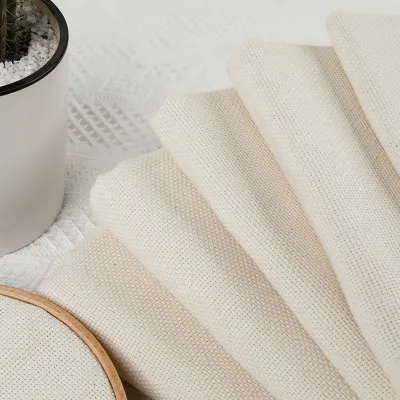
Prices are valid at publication and may change. Please refer to the product page for the latest price.
To determine if a vintage fabric is suitable for your project, you must manually count the threads per inch (TPI). Place a clear ruler or a specialized thread counter—often called a linen tester—directly onto the flat fabric. Under a magnifying glass or bright light, count the individual threads within a one-inch (2.54 cm) square, checking both the horizontal and vertical directions. If the counts match, the fabric is an evenweave; if they differ significantly, it is a plain weave.
Weave consistency directly dictates how your finished stitches will look. In counted thread work, any variation in thread thickness or spacing will distort your patterns, turning a perfect square stitch into an awkward rectangle. For surface embroidery, however, the subtle irregularities and slubs of a vintage plain-weave fabric can add a beautiful, rustic depth to your background, provided the weave is tight enough to support your stitches.
Best Vintage Fabrics for Cross-Stitch and Counted Thread Work
Counted thread embroidery, including traditional cross-stitch and hardanger, relies on a highly disciplined grid structure. Vintage Aida, evenweave linen, and hardanger fabrics are the premier choices for these techniques. Vintage Aida is characterized by its stiff, block-like weave, which clearly defines where the needle should pass. Vintage evenweave linen offers a more refined, traditional look, allowing you to stitch over one or two threads depending on the scale of your pattern. Hardanger fabric, typically a 22-count evenweave woven with double threads, provides the perfect foundation for delicate cutwork and geometric satin stitching.

Before purchasing or cutting into a vintage evenweave, perform a quick grid uniformity check. Hold the fabric up to a strong light source to inspect the consistency of the weave. Look closely for missing threads, broken fibers, or excessively large slubs that could disrupt your stitching path. If you notice significant gaps or areas where the threads have shifted out of alignment, the fabric may not yield clean, square stitches.
Matching your vintage fabric’s thread count with the correct number of embroidery floss strands is essential for proper coverage. Higher-count fabrics require fewer strands to prevent stitches from looking crowded. For low-count fabrics (11 to 14 count), use three to four strands of floss. Medium-count fabrics (16 to 28 count) typically require two to three strands, while high-count fabrics (30 count and above) perform best with one to two strands.
To verify your selection, always stitch a small 5×5 cross-stitch sample in an inconspicuous corner or on a scrap piece of the same fabric. This trial allows you to observe the stitch definition and adjust your thread count before committing to the main design.
Ideal Vintage Fabrics for Surface Embroidery and Freestyle Designs
Surface embroidery, which includes crewelwork, goldwork, and freestyle floral designs, does not rely on counting threads. Instead, it requires a fabric with a stable, supportive structure that allows the needle to penetrate smoothly while holding the weight of dense decorative stitches. Vintage cotton (such as old flour sacks, heavy bed linens, or cambric) and vintage linen-cotton blends are exceptional choices. These materials offer a smooth surface, excellent needle penetration, and a tight weave that prevents the background from showing through your stitches.
To prevent your fabric from puckering or distorting as you work, you must test its stability and hoop tension. Secure a sample of the vintage fabric tightly in your embroidery hoop, ensuring it is taut like a drum. Gently press your finger into the center of the hooped area; the fabric should resist the pressure and spring back into place without sagging. If the fabric distorts permanently or the weave pulls apart under moderate tension, it lacks the structural integrity required for heavy satin stitching or dense French knots.
Aged textiles are particularly vulnerable to chemical degradation, stiffness, and brittleness. Fabrics stored in hot, humid environments or wrapped in acidic paper can lose their natural elasticity over time. Gently flex a corner of the fabric between your fingers; if it feels unusually stiff, brittle, or leaves a dusty residue, the fibers have likely degraded. Brittle fibers will snap under the friction of repeated needle passes, causing your stitches to sag or the fabric to tear during the embroidery process.
How to Inspect and Prepare Vintage Fabric Before Stitching
Working with vintage textiles requires a careful inspection and preparation routine to ensure your hard work lasts. Lay the fabric flat under bright, natural light to conduct a thorough visual and tactile assessment. Pay close attention to fold lines and creases where the fabric has been folded for decades, as these areas are highly susceptible to fiber degradation and dust. Gently tug the fabric in opposite directions along these creases; if you hear a faint cracking sound or see the threads separating, the fabric is too weak to stitch.
If the fabric passes the strength test, clean and stabilize it before hooping. Hand-wash the fabric in lukewarm water using a mild, pH-neutral soap, avoiding harsh chemical bleaches that weaken vintage fibers. Lay the wet fabric flat on a clean, white towel and roll it gently to remove excess water. In humid tropical climates, hang the fabric to dry in a well-ventilated, shaded indoor area to prevent mold or mildew. Iron the fabric while it is still slightly damp on the reverse side to protect the weave, using high heat for pure linen and a medium setting for cotton blends. If the fabric has warped, block it by gently pulling it diagonally from opposite corners while damp to realign the warp and weft threads into a perfect right-angle grid.
Knowing when to stop is crucial when working with delicate heirlooms. If the fabric exhibits extensive dry rot, large areas of thinning, persistent musty odors that do not wash out, or rust stains that have eaten through the fibers, it is too fragile for embroidery. Forcing a needle through compromised fibers will only cause further damage. In these cases, preserve the textile as a historical artifact rather than using it as a canvas for new needlework.
Frequently Asked Questions (FAQ)
Can I use vintage clothing or household linens for embroidery projects?
Yes, repurposed vintage garments, pillowcases, and tablecloths make wonderful canvases for embroidery, but they require careful evaluation. Whether you are repurposing a family heirloom or spending ‛500 on vintage linens at a local market, first check the seam allowances to ensure there is enough excess fabric to grip securely in your embroidery hoop. Next, inspect high-wear areas—such as the shoulders of a vintage blouse or the center of an old tablecloth—which are often significantly thinner than the surrounding fabric. Finally, ensure the fabric grain is aligned straight; if you stitch on a distorted grain, the finished embroidery will warp and pucker once you remove it from the hoop.
How do I determine the fiber content of unlabelled vintage fabric?
You can identify unknown vintage fibers using simple visual and tactile cues. Vintage linen typically features natural slubs, feels cool to the touch, and has a subtle, elegant luster. Vintage cotton is generally softer, matte, and has a highly uniform thread thickness. Early synthetic blends may feel slightly slippery or have a springy stretch. If you have a small, unusable scrap of the fabric, you can perform a discreet burn test in a safe, outdoor area. Pure cotton and linen burn with a steady yellow flame, smell like burning paper, and leave a soft, crumbly gray ash. Synthetic fibers will melt, shrink away from the flame, produce a chemical odor, and leave a hard, dark bead. If the fabric is a valuable heirloom, avoid invasive testing and consult a textile professional.

Community discussion
Share your experience or ask a question. Comments are reviewed before publication.