
Selecting the ideal water coloring book for elementary school students in the Philippines requires balancing developmental needs with classroom practicalities. Lower elementary students need simple, high-contrast, mess-free formats to build basic motor skills, while upper elementary students require high-quality paper and detailed designs to explore actual painting techniques. Factors like high tropical humidity, limited desk space, and quick cleanup times make the choice of format, binding, and tool type critical for a successful art class. By matching the book’s specifications to the student’s grade level, teachers and parents can foster creativity without the stress of a messy cleanup.
When choosing these art supplies, understanding the physical properties of the paper and the mechanics of the water delivery system is essential. Different formats offer varying levels of durability, reusability, and artistic freedom. This guide outlines the core selection criteria and age-appropriate features to help parents and teachers choose the right water coloring supplies for school art classes.
Understanding Water Coloring Books for School Art Use
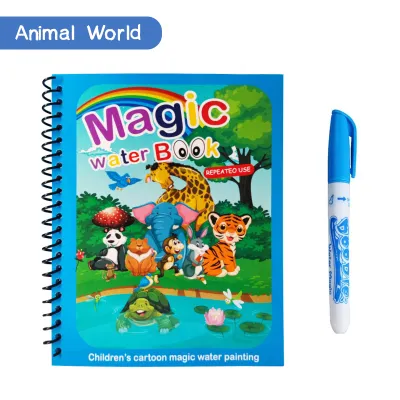
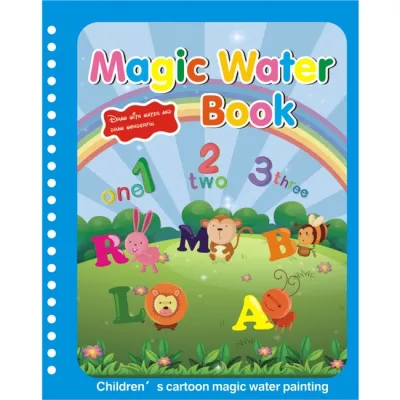
Water coloring books for school use generally fall into three distinct categories, each serving a specific educational and practical purpose in the classroom. The first format is the water-reveal pad or board. These books feature pages coated with a white, opaque chemical layer that becomes temporarily transparent when exposed to moisture. Once wet, the underlying pre-printed colored illustrations are revealed. As the water evaporates, the white coating becomes opaque again, hiding the colors and making the page reusable. This format is highly durable and completely mess-free, as it requires no actual paint or pigment.
Products mentioned in this guide
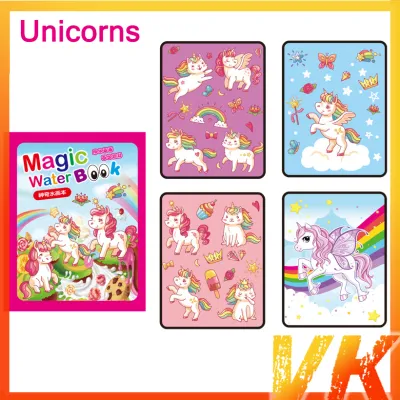
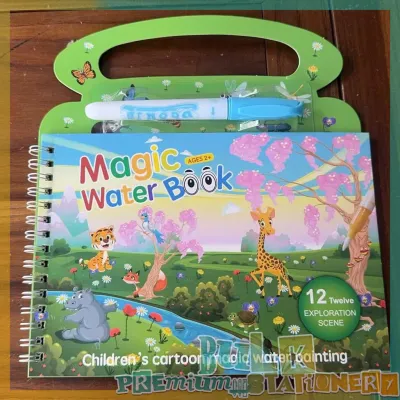
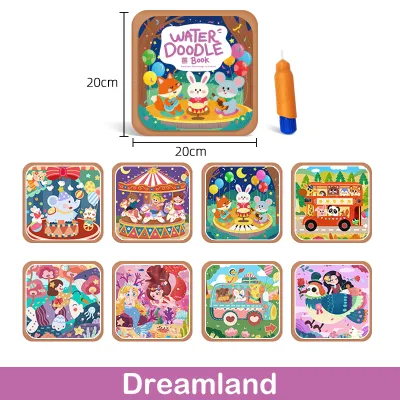
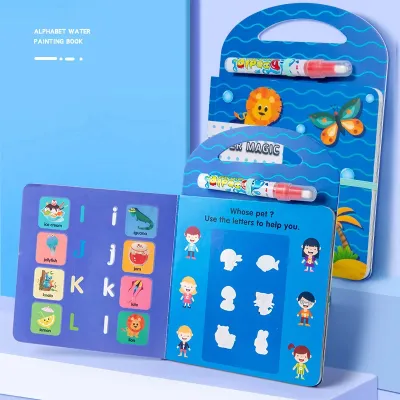
Prices are valid at publication and may change. Please refer to the product page for the latest price.
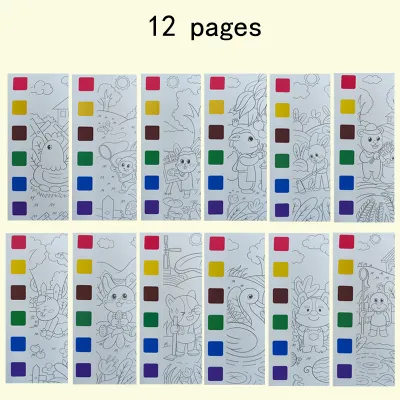
The second format is the palette-embedded water coloring book. These books contain single-use paper pages featuring line art, with a dry paint palette printed directly onto the top or side of each sheet. Students moisten a brush with clean water, touch it to the dry pigment swatches on the page to activate the paint, and then apply the color to the drawing. This format introduces children to the mechanics of traditional watercolor painting, such as color mixing and brush control, without the need for separate paint pans or tubes. Once the page is painted, the palette portion can be torn off, leaving a clean piece of artwork.
The third format is the blank watercolor sketchbook or pad. While not pre-printed with designs, these books consist of heavyweight, textured paper specifically engineered to handle wet media. They are designed for older students who are ready to create original compositions using external watercolor sets. Understanding these distinctions helps educators select the format that aligns with their lesson plans, whether they want a quick, repetitive sensory activity or a structured lesson in color theory.
Key Selection Criteria for Elementary Art Supplies
Evaluating paper weight and thickness is the first step in selecting a water coloring book that will survive the classroom. Paper weight is measured in grams per square meter (GSM). Standard coloring books typically use thin paper ranging from 70 GSM to 90 GSM, which warps, pills, and bleeds through almost immediately when exposed to water. For school art classes, look for books with a paper weight of at least 140 GSM for light water-reveal activities, and 200 GSM to 300 GSM for palette-embedded or traditional watercolor painting. To verify bleed resistance before buying in bulk, perform a simple water drop test: place a single drop of water on a sample page; if the moisture saturates the fibers and shows through the reverse side within five seconds, the paper is too thin for classroom use.

Page size and binding type directly impact how easily a student can work at a standard school desk. Classroom desks in the Philippines are often compact, sometimes featuring integrated armrests or shared double-desk configurations. Large, floppy books that do not stay open can easily slide off these small surfaces, leading to spills. Spiral-bound books are highly recommended because they can fold completely back on themselves, cutting the book’s physical footprint in half. Alternatively, top-glued pads allow students to cleanly tear out a single sheet to work on, keeping the rest of the book safe from accidental water splashes.
Tool compatibility is another critical factor to assess. Many water coloring books come packaged with their own water pens or brushes. Refillable water brushes feature a hollow plastic barrel that serves as a water reservoir, feeding moisture directly to a nylon brush tip. These are excellent for preventing spills because they eliminate the need for open water cups on the desk. However, they require a certain level of hand strength and coordination to squeeze the barrel gently. For younger students, pre-filled, sealed water pens or felt-tipped water markers are often better because they release a controlled, minimal amount of moisture without requiring manual squeezing.
Finally, consider the drying time and physical storage footprint of the books. In the warm, humid tropical climate of the Philippines, paper retains moisture much longer than in dry environments. A book that dries in five minutes in an air-conditioned room may take fifteen to twenty minutes to dry in a naturally ventilated classroom, especially during the rainy season. If pages are closed while still damp, they will stick together, ruining the illustrations and potentially encouraging mold growth. Ensure the classroom has flat shelf space where books can be left open to air-dry completely before they are stacked or packed into school bags.
Matching Water Coloring Books to Elementary Grade Levels
As children progress through elementary school, their fine motor control, hand-eye coordination, and cognitive development change significantly. A water coloring book that delights a Grade 1 student will likely bore a Grade 5 student, while a complex painting book designed for older children will only frustrate a younger child.
To ensure a positive learning experience, parents and teachers must match the complexity of the book’s designs and the mechanics of its tools to the specific developmental stage of the grade level. A tailored approach keeps students engaged and helps them build confidence in their artistic abilities.
Lower Elementary (Grades 1-3): Building Fine Motor Skills
For students in Grades 1 through 3, the primary artistic goals are developing a proper pencil grip, mastering hand-eye coordination, and learning to control the pressure applied to a page. At this stage, children are still refining their fine motor skills and often apply excessive downward force when holding a pen or brush. Therefore, the physical durability of the coloring book is paramount.
Look for water coloring books featuring large, simple outlines with thick, bold borders. These high-contrast designs are highly forgiving of imprecise water application, helping young children feel successful even if their brush strokes stray outside the lines. The themes should align with early learning milestones, focusing on basic geometric shapes, familiar animals, and block letters. This integration of art and basic concepts reinforces classroom learning in a visual, tactile format.
Tool selection for this age group should focus on ease of grip and spill prevention. Chunky, short-handled water pens or thick, non-roll brushes are ideal for small hands that are still transitioning from a palmar grasp to a mature tripod grip. Refillable pens with firm nylon tips are highly recommended because they do not shed fibers when subjected to heavy scrubbing. These pens should have a secure, leak-proof seal at the threads to prevent water from pooling on the desk when students squeeze the barrel too hard.
To prevent tearing, choose books with thick, rigid pages, such as laminated cardboard or heavy-duty board book pages. These materials can withstand repeated, wet friction without pilling or tearing. Reusable water-reveal boards are particularly excellent for this age group, as they allow for repetitive sensory play and can be used multiple times throughout the school year, maximizing the value of the classroom’s art budget.
Upper Elementary (Grades 4-6): Exploring Detail and Techniques
Students in Grades 4 through 6 have developed precise fine motor control and are capable of sustained focus. They are ready to move beyond simple color-reveal activities and begin exploring genuine artistic techniques, such as color blending, shading, and creating gradients. For these older students, the water coloring book should serve as a bridge to traditional painting.
Select books that feature intricate patterns, mandalas, detailed landscapes, or narrative scenes. These complex designs require precise water control and encourage students to plan their color schemes carefully. Themes that support creative storytelling, architectural drawing, or nature studies are highly engaging for this age group and can easily be integrated into science or social studies projects.
At this level, students can transition to refillable water brushes with finer, tapered nylon nibs. These tools allow them to paint fine details and experiment with varying line widths by adjusting the angle and pressure of the brush. If the book’s paper quality allows, this is also the ideal stage to introduce traditional watercolor pans or palette-embedded pages. Working with actual pigments teaches students how to control the water-to-paint ratio, a fundamental skill in watercolor painting.
To support these advanced techniques, the paper must be of high quality. Look for books made with cold-pressed watercolor paper of at least 200 GSM. This textured surface holds water well, allowing students to practice techniques like wet-on-wet painting, color lifting, and blending without the paper warping or pilling. High-quality paper also allows students to add details using waterproof fine-liner pens or colored pencils once the watercolor layer has dried, introducing them to mixed-media art.
What to Check Before Buying for the Classroom
Before purchasing water coloring books for school use, especially when buying in bulk for an entire class, there are several practical checks to perform. First, verify the safety and compliance labels on the packaging. Look for non-toxic certifications, such as the AP (Approved Product) seal or EN71 compliance marks, which ensure the materials are safe for children who may have prolonged skin contact with the wet pages or tools. Check that the plastic components, such as the water pen barrels and caps, are free from sharp edges and do not emit strong chemical odors, which can indicate low-quality manufacturing.
Next, calculate the cost-effectiveness of the books relative to your classroom budget. When purchasing for a large group, compare the unit price in ₱ of individual books against bulk classroom sets or multi-packs. Consider the page count per book and how it aligns with your lesson plans; a book with fewer pages but higher-quality, reusable boards may offer better long-term value than a thick book with thin, single-use paper pages that tear easily.
Ensure the books feature a true flat-lay design. Books with stiff, glued spines that resist staying open are difficult for children to use on flat desks, often requiring them to hold the book down with one hand while painting with the other. This increases the likelihood of the book snapping shut on wet pages, causing smudges and tears. Spiral-bound books or pads with easily detachable pages are the most practical choices for maintaining a flat, stable working surface.
Review the care and maintenance instructions for both the books and the accompanying water tools. In warm, humid climates, water left inside refillable brush barrels can quickly become a breeding ground for mold and bacteria. Check if the water pens are easy to disassemble, clean, and dry. The brush tips should be made of synthetic nylon that can be rinsed clean with tap water and reshaped easily.
Finally, confirm the availability of replacement parts. In a busy classroom, water pen caps are frequently lost, and brush tips can become frayed from rough use. Choosing a book format that is compatible with standard, widely available replacement water brushes ensures that a lost pen does not render the entire coloring book useless. Keeping a small stock of spare water brushes in the classroom art cabinet is a practical way to keep lessons running smoothly.
Frequently Asked Questions (FAQ)
Can water coloring books be reused for multiple art classes?
Whether a water coloring book can be reused depends entirely on its construction and material format. Reusable water-reveal books, which feature plastic-coated cardboard pages, are specifically designed for repeated use. When wet, the white coating becomes transparent to reveal the hidden image, and once the water evaporates completely, the page returns to its original white state. These boards can be used dozens of times if cared for properly. In contrast, palette-embedded books and traditional watercolor paper books are single-use formats; once the pigment is activated and applied to the paper, the artwork is permanent and cannot be washed away.
To determine if a reusable book is still fit for classroom use, perform a quick visual check. If the white coating has begun to flake, peel, or show permanent gray water stains when dry, the material has degraded, and the book should be replaced. To maximize the lifespan of reusable books, never close them while the pages are still wet. Stand the books upright with the pages fanned out in a well-ventilated area, away from direct sunlight, until they are completely dry to the touch before storing them.
Are water coloring books safe for unsupervised use in school?
Water coloring books are among the safest art supplies available for elementary classrooms because they rely primarily on clean water rather than liquid paints, chemical solvents, or strong adhesives. This significantly reduces the risk of accidental ingestion, eye irritation, or stained clothing. However, the level of supervision required depends on the age of the students and the specific design of the water tools provided with the books.
For lower elementary grades, the primary safety concern is the presence of small, detachable parts that could pose a choking hazard. Check the size of the water pen caps and the small plugs used to seal the water reservoirs. If a cap or plug is small enough to fit through a standard cardboard tube, it requires close teacher supervision. Always consult the manufacturer’s age recommendations on the packaging and ensure that water pens are filled only with clean, potable tap water to maintain hygiene during use.

Community discussion
Share your experience or ask a question. Comments are reviewed before publication.